
Keystone Development Partnership (KDP) launched 20 years ago after a massive skills gap derailed Pennsylvania’s transportation industry. Now, America’s metal industry faces a similar situation. An unprecedented labor gap has emerged, and KDP, Jobs for the Future (JFF) and METAL are working fast to repair it.
For the first time since WWII, America needs more metal workers.
By 2033, there could be nearly 4 million manufacturing jobs available across the country. But without stronger training pipelines, almost half those jobs could go unfilled, threatening national defense and U.S. supply chains.
An aging workforce and reindustrialization have lit a fire under metal manufacturers — and the nation.
“American prosperity and security depend on the development and promotion of competence,” President Donald Trump wrote in the 2025 National Security Strategy. “Cultivating American industrial strength must become the highest priority of national economic policy.”
But the most experienced metal workers are tired of keeping the irons hot.
Millions of Baby Boomers are retiring, or trying to. Debra Killmeyer, a KDP project consultant and former dean of workforce at the Community College of Allegheny County, says labor shortages keep metal manufacturers and their employees under strain.
“I talk to companies with people who’ve been there 44 and 46 years about how they can’t retire because they don’t have their replacement,” Killmeyer said.
Since 2000, workers 55 and older have been the fastest-growing age group in the workforce, according to the United States Census Bureau. In manufacturing, the shift has been more pronounced. In 2022, 40% of employers had workforces made up of at least one-quarter older workers, nearly triple the rate of two decades earlier. States with older populations, including Maine, Pennsylvania, New York and Illinois, rely more on workers who are 55 and older.
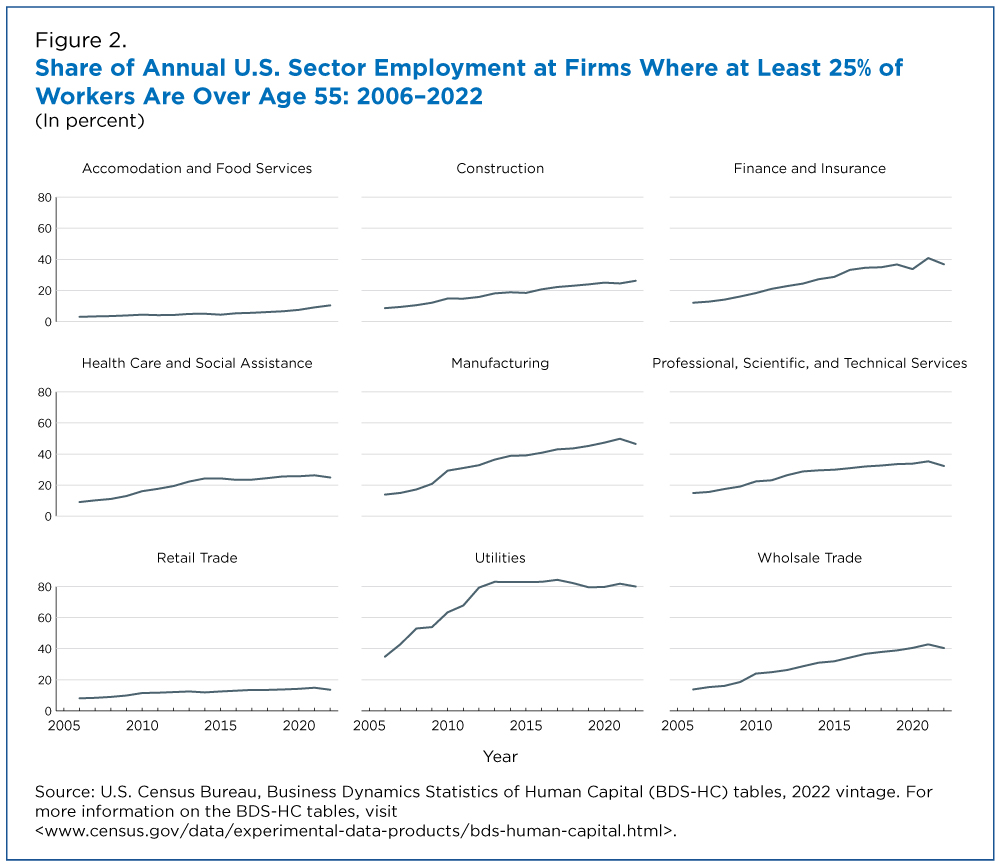
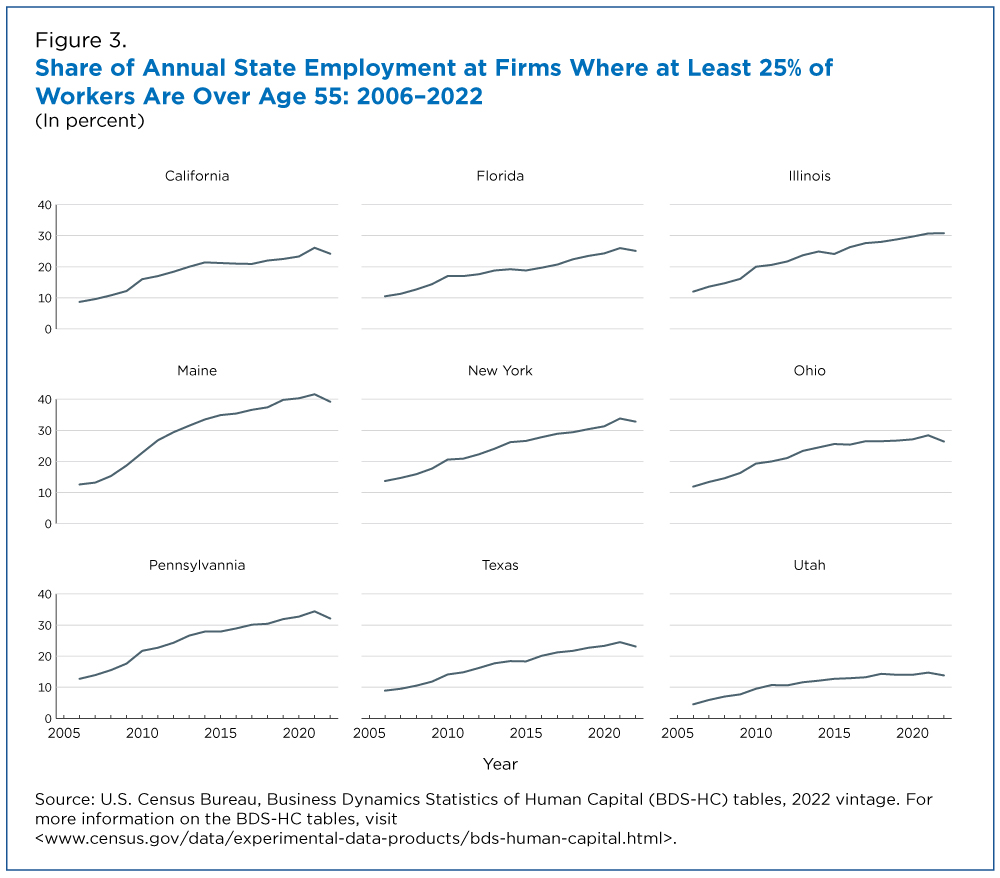
Source: https://www.census.gov/library/stories/2025/12/older-workers.html
“That is where apprenticeships help,” Killmeyer said.
In partnership with METAL, a program led by IACMI – The Composites Institute®, with funding from the Department of War’s IBAS Program, and Jobs for the Future, KDP is forging Pennsylvania’s next generation of metal workers through registered apprenticeships.
History Repeats Itself
This is not the first time KDP Executive Director John Tkach has watched an essential industry fall behind.
In the 1990s, Tkach worked for the Public Transit Agency in Pittsburgh as Pennsylvania’s buses underwent a technological transformation. The old General Motors “fishbowl” buses were being replaced with higher-tech Neoplan models. Before long, more than 1,000 Neoplan buses were on the roads.
“One day, buses became computers on wheels,” Tkach said. For years, the buses stayed under warranty and went back to the manufacturer for repairs. When the warranties expired, transit mechanics were suddenly responsible for maintaining machines they had never been trained to understand.
“When they went out of warranty, these vehicles had between 500,000 and a million miles on them,” Tkach explained. “Then it was the transit worker who had to take care of it, and they didn’t have the experience or knowledge.”
Today’s metal industry faces the same challenge.
Automation is creating safer, more accessible foundries — and deepening the industry’s skills gap. More training is required to operate the robotic arms, automated pouring systems, and autonomous cranes that now do the heavy lifting.
“It’ll always be a process with people,” said Dr. Robert Voigt, a professor of industrial and manufacturing engineering at Penn State University. “But the demands on the workforce have gone up in terms of the application of knowledge at all levels.”
In 2000, Tkach conducted a skills gap analysis for the Public Transit Agency, learning what skills the mechanics and technicians needed to repair modern buses and developed a training curriculum. Soon, Pennsylvania’s Department of Labor and Industry wanted in-depth labor research conducted for other industries. Five years later, the Pennsylvania AFL-CIO, a statewide federation of labor unions, launched the Keystone Development Partnership.
“My passion is to ensure businesses have the skilled workers they need and workers have the opportunities,” Tkach said.
Today, KDP is the driving force behind Pennsylvania’s manufacturing ecosystem, connecting employers and workers to the training resources they need to thrive.
Forging the Future Together
KDP has partnered with Jobs for the Future, a nonprofit transforming education and workforce systems, to strengthen manufacturing apprenticeships for nearly a decade. They’ve expanded industrial manufacturing technician programs across the state, supporting almost 900 workers in everything from metal fabrication to food processing to bio-medical production. In total, KDP has managed program administration for 3,600 apprentices.
Brian Paterniti, the director of workforce development of The Manufacturers’ Association, said one benefit to working with KDP is its extensive community network, including union and non-union companies, local workforce development boards, job centers, training providers, and community organizations.
KDP also offers the Registered Apprenticeship Navigator program, a registered apprenticeship program that prepares people to assist employers and other organizations in developing and registering apprenticeships across Pennsylvania. So far, KDP has trained 150 people through the program.
“Apprenticeships are not easy. It’s difficult. It’s a lot for the apprentices and the employer,” Paterniti said. “KDP, JFF and METAL make it easy. John and Deb are right there, holding the manufacturers’ hands.
METAL’s partnership with JFF and KDP is helping manufacturers do more than fill open jobs. It’s offsetting training costs and revitalizing a metal workforce that’s built to last. Training an apprentice without experience can cost nearly $9,000, according to one Department of Labor study. That doesn’t include the price of an apprentice’s travel, salary and equipment.
Through METAL and JFF, casting, forging and plate rolling companies across the country can receive assistance in developing an apprenticeship or other work-based learning programs. This funding is also eligible for training equipment and instructor costs, curriculum development, program design and implementation, and support services for apprentices.
“We’re seeing a growing gap in the workforce. Experienced, highly skilled workers are retiring, and too few younger workers have the training needed to step into those roles,” Tkach explained. “Employers are looking for quick fixes, but the real solution is a long‑term strategy. That’s what registered apprenticeships provide — a reliable pipeline to develop your own skilled workers.”
More than 65% of manufacturers say attracting and retaining talent is their top business challenge. Apprenticeships are solving this problem — and introducing younger generations to career options that don’t require college. According to the Department of Labor, 94% of people who complete a registered apprenticeship stay employed with average salaries of $84,000 a year.
“Apprenticeships reduce the risk for the employer with a tried and true system,” Killmeyer said. “With METAL’s funds, I’m able to sit down with casting and forging companies and take the time to listen to each of their challenges and help them find solutions.”
More than anything, foundries need people who are ready to be hands-on in casting America’s future.
Your Apprenticeship Starts Here
Tkach and Killmeyer have spent decades navigating workforce challenges for one reason: apprenticeships create careers — and change lives.
KDP’s network reaches veterans, immigrants and refugees, women in trades, formerly incarcerated individuals, and people in addiction recovery through community partners and apprenticeship sponsors. With decades of experience, Tkach’s team is connecting underrepresented communities to meaningful work in metalcasting and forging.
“It’s been really nice helping populations that may not otherwise know or have been exposed to these types of careers,” Killmeyer said. “Being able to do that makes a difference.”
Tkach will never forget one apprentice he met through Pennsylvania’s Office of Vocational Rehabilitation, which helps people with disabilities enter the workforce. The apprentice, a young man, was eager to pursue a career in metal manufacturing, but needed additional support in the classroom.
“He said, ‘I’m not stupid. I learn differently. This apprenticeship program was exactly what I needed,’” Tkach remembered.
The apprentice told Tkach he never imagined he would have a career — or a house and a family of his own. Today, he has all three. His employer is even considering him for a supervisor role.
“All because of an apprenticeship,” Tkach said. “That’s what it’s all about.”
Ready to forge a stronger workforce? Learn how JFF can help your company implement an apprenticeship or other work-based learning programs here.
Cast your career in metal. Register for our free online training, then visit our events page to attend the next METAL bootcamp near you.