
Like many who find their way into the world of metalworking, North Carolina State University alum Patrick Rorie’s journey began with a practical need and a sudden abundance of time. Rorie had some familiarity with metalwork through his power equipment company and blacksmithing during one of his college courses. When the Covid-19 pandemic occurred, it gave him time to pursue forging to a greater extent, and eventually starting a new business.
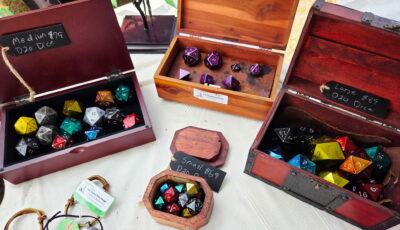
Patrick Rorie crafts a variety of metal items as owner of Kilted Tree Forge.
“When COVID hit and you couldn’t really do anything, I was like, hey, why not just… I got time now because we’re all sitting around,”Rorie recalled. “I’ve always wanted to do this, let me get the stuff so that I could actually start blacksmithing. And so that’s how I got started in it.”
He fired up his own forge and launched a side business crafting a wide variety of goods. Today, he operates Kilted Tree Forge and makes everything from custom knives, axes, crosses, and ornament hangers to metal game dice and dinner bells. As he puts it, “If it’s metal, I’ve made some version of it.”
While shaping steel by hand provided a phenomenal creative outlet, Patrick soon recognized the limitations of his home forge, particularly in terms of material waste and the expansion of his product line. He wanted to incorporate different metals that were easier to cast than forge, while also finding a sustainable solution for his scrap steel.
“I’ve been wanting to have some more options and use different metals, which would be easier to cast, like aluminum,” Patrick explained. “Plus, I wanted to learn how to do some casting to try to take all the little pieces of steel that I’ve got, melt them down, and reuse them because I end up with hundreds of thousands of little one-inch, two-inch nubs… I hate to throw them away.”
When a colleague shared information about an upcoming METAL bootcamp at NC State, it offered the perfect opportunity to expand Rorie’s knowledge of metalworking. The METAL program is designed with a specific, workforce-driven goal in mind: providing individuals with the foundational competencies necessary to step onto a foundry floor and contribute immediately. 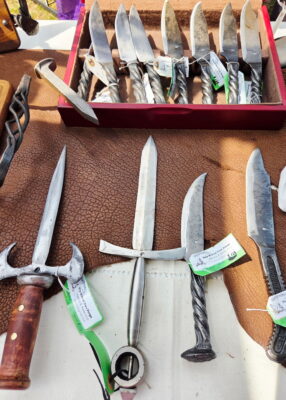
METAL, led by IACMI – The Composites Institute®, and funded by the Department of War’s Office of Industrial Base Policy, was built to revitalize American manufacturing through hands-on training in casting and forging.
Supported by industry leaders and academic institutions, METAL offers K-12 outreach programming and university bootcamps, METAL introduces students and career seekers to modern metalcasting and forging careers. Participants can complete METAL’s before attending immersive, in-person bootcamps led by professional metallurgists and manufacturing experts who can share their knowledge and expertise.
The curriculum utilizes a blended learning approach, pairing online educational modules with intensive, in-person training. For Patrick, the online coursework helped unlock the science behind the craft. While he already knew how to harden a knife edge through traditional techniques, the modules provided a deeper, scientific understanding of heat-treating phases and material properties.
“I had the blacksmith’s version of how to make the knife hard so that it held an edge,” he said. “But I learned more of that in the class. I understood it better.”
The coursework also introduced him to the reality of modern factory automation in mold casting, offering a glimpse into industrial processes he had never previously witnessed. However, the true transformative power of the METAL program lies in its hands-on application. Transitioning from a solitary home setup to NC State’s state-of-the-art industrial engineering facilities allowed participants to connect theoretical concepts with tangible skills. 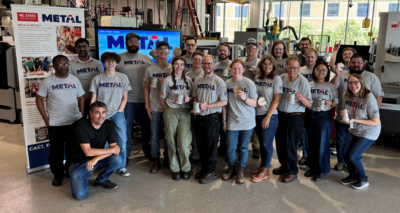
“I really enjoy it because it’s hands-on. I get to really connect the dots, and I got to see their facilities and how they do stuff,” Patrick shared. “It’s a different thing when you’re doing it, seeing how they do it, and getting a feel for what I need to get to be able to do it too.”
For Patrick, the highlight of the entire experience was executing the physical pour of molten metal. Getting to handle industrial molds and work alongside seasoned instructors provided a real-world perspective that cannot be replicated through a screen. This level of exposure breaks down the barriers to entry for America’s next generation of manufacturing talent, ensuring that transitioning workers can bypass entry-level hurdles and step directly into well-paying careers.
“If nothing else, you can walk into a foundry and know what each thing is. Like, oh, that’s just a giant crucible, and that’s a mold,” Patrick noted. “Honestly, I had never seen casting like that done before, so that was kind of nice to learn about.” 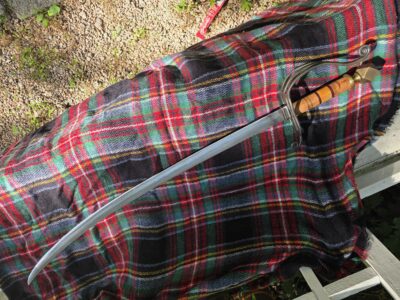
As METAL continues to expand across the country, the curriculum is already evolving to meet the cutting-edge demands of the industry. Future, higher-level boot camps will dive even deeper into the technological advancements driving American manufacturing, integrating advanced robotics, artificial intelligence monitoring, and high-tech design software. Patrick is already looking forward to the next steps.
“It’d be nice to come up with designs, 3D print them, and take them through the whole process from start to finish,” he said, reflecting on what a Level 2 program might offer.
By taking passionate makers, students, and transitioning workers and equipping them with these critical skills, the METAL program is actively forging the workforce of tomorrow. For Patrick, the boot camp provided not only the knowledge to innovate at his own anvil, but a foundational understanding of the modern, automated foundries that keep American manufacturing moving forward.