
When Shannon Partick was 18, he applied for a job in the metal industry and was turned down.
Patrick grew up working with tools. He knew he could quickly learn the skills needed for the machine shop role he wanted, but the hiring manager told him he needed industry experience.
“He said, ‘Go out and get some experience and come back,’” Patrick remembered. “I asked him, ‘How am I supposed to get experience if nobody will hire me?’”
The manager didn’t have an answer.
“At that point, I said to myself, if I ever got into that position, I was never going to be that guy,” Patrick said. He’s been true to that promise.
Patrick worked his way up from the foundry floor to become plant manager and co-owner of Wisconsin Precision Casting Corporation, a precision investment casting manufacturer. Today, he does whatever he can to help metal workers get their start, including K-12 outreach and mentoring college students in the Cast in Steel competition.
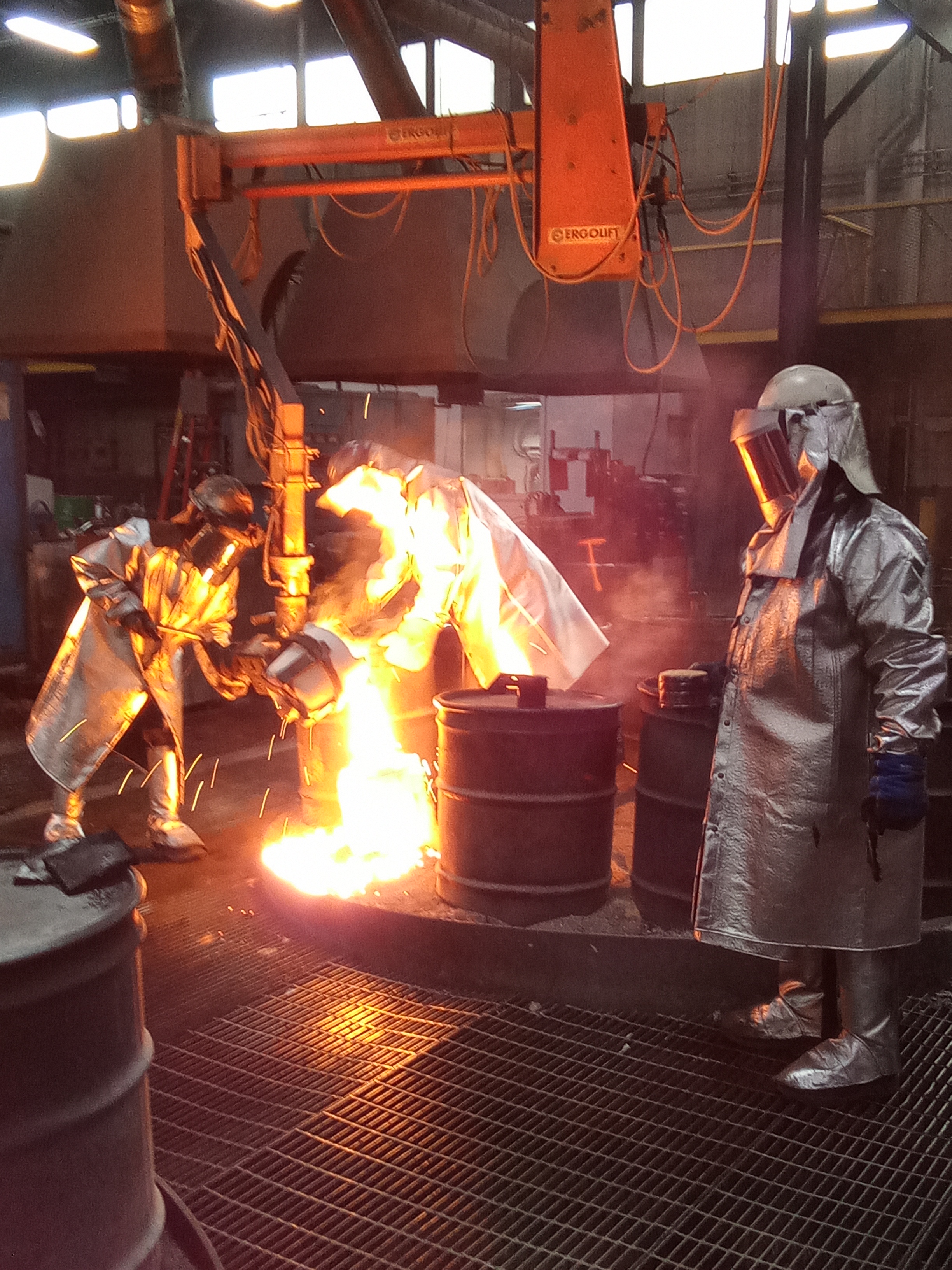
Wisconsin Precision Casting Corporation produces investment castings in more than 180 alloys for industries ranging from agriculture and construction to medical equipment and food processing.
Lighting the Way to Metalcasting and Forging
When Patrick began his manufacturing career in the 1980s, U.S. steel employment had fallen 57% as foreign competition contributed to layoffs and plant closures. Jobs were scarce, and newcomers often struggled to find opportunities to learn skilled trades.
Now, manufacturers face a different challenge. By 2033, there could be almost 4 million manufacturing jobs available in the U.S., without enough workers to fill nearly half the positions. As the nation rebuilds its metal workforce, employers like Wisconsin Precision Casting are looking for applicants who are reliable and eager to join the foundry’s mission.
“If someone is willing to learn, if they’re open-minded about things, I can teach anybody how to be successful in this environment,” Patrick said.
METAL, led by IACMI – The Composites Institute®, and Cast in Steel provide students and entry-level workers more opportunities to gain hands-on metal manufacturing experience — before applying for a foundry job.
From immersive K–12 workshops to metallurgy bootcamps and paid apprenticeships, METAL introduces learners of all ages and backgrounds to metalcasting and forging. Cast in Steel challenges college engineering students to push their problem-solving skills by designing and casting a fully functional metal tool or weapon. Teams from across the country then come together to test their castings in a three-day competition.
Both METAL and Cast in Steel are supported through funding by the Department of War’s (DoW) Office of Industrial Base Policy, which manages investments made pursuant to the Industrial Base Fund (10 U.S.C. §4817), to accelerate the development of a highly skilled, self-sustaining U.S. workforce.
Watch new episodes of Cast in Steel on YouTube.
Learning Beyond the Classroom
Zachary Plett, a mechanical and manufacturing engineering technology student at the University of Northern Iowa, realized he was in over his head when he signed up to compete in the 2026 Cast in Steel Horseman’s Axe Challenge.
Plett, 20, had learned sandcasting in his university’s foundry, but his team needed professional guidance to produce an axe strong enough for the competition’s performance tests. The students drove almost four hours to Wisconsin Precision Casting, hoping the foundry team could help bring their axe design to life.
Plett remarked it “blew my mind” when he saw the scale of the operation.
“The same guys are back and forth all day pouring, putting in different molds,” Plett said. “It was a really good experience because it opened my eyes to how big it all truly is.”
Michael Malek found a different path into the foundry. The 25-year-old product engineer accepted a job with Wisconsin Precision Casting right out of college. He knew he wanted a career in manufacturing but wasn’t sure how he could use his mechanical engineering degree to solve real industry problems.
“I didn’t know I was going to find my way to investment casting. That wasn’t necessarily covered,” Malek said about his college courses.
In Patrick’s experience, most engineers who apply to the foundry immediately after graduation are “very, very green” in investment casting.
“Very few universities offer investment casting, and when they do, everybody I’ve talked to said it’s maybe one chapter,” Patrick stated.
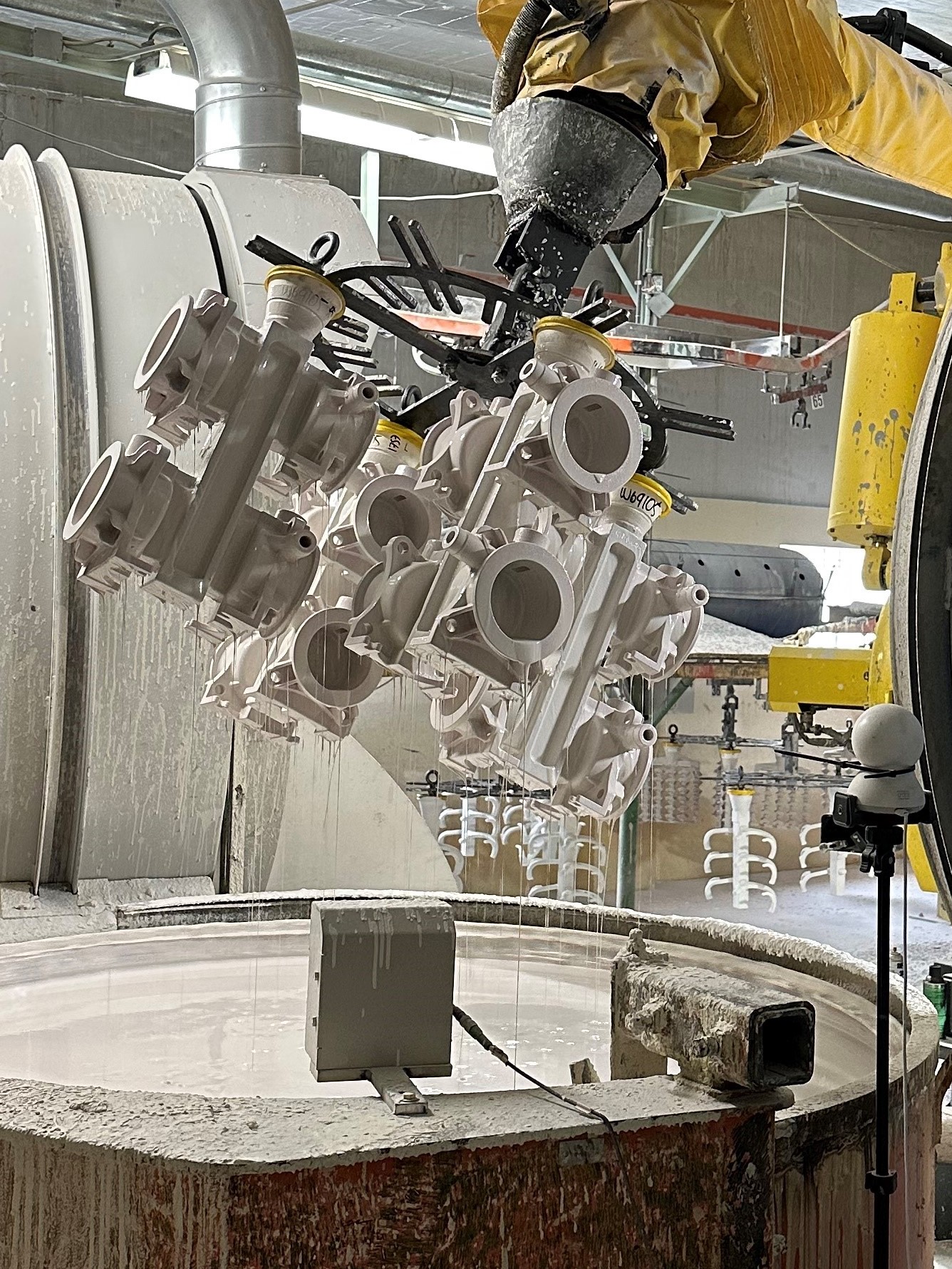
At Wisconsin Precision Casting, Malek began developing hands-on skills that built on his college education. Only two years into his role, Malek works directly with customers on part designs, optimizes mold production and maintains the foundry’s robot. The robot is central to the shell-building stage of investment casting. It coats injected wax parts in ceramic, creating shells that are later filled with molten metal to produce the final castings.
“Until you get into the field, you don’t know what skills you will need to sharpen,” Malek said. “Coming here has been really fun and interesting because you learn something new every single day. You’ll never be bored.”
METAL’s metallurgy bootcamps help bridge the gap between classrooms and metalcasting. For up to a week, students and career seekers get an in-depth look at industry design and simulation software, material compositions and pouring processes.
Anyone interested in learning metalcasting, forging or advanced manufacturing topics can start the experience with METAL’s free online training. After completing the required online training and earning a Credly badge, participants travel to one of METAL’s partner universities. There, leading metallurgists mentor them through their first casting pour.
“You walk into the foundry and watch metal being poured. You’re taking something that’s a liquid at 3,000 degrees, and you’re going to turn it into a solid shape,” Patrick said. “It’s cool.”
Whether it comes through a METAL course, Cast in Steel or an internship, Patrick believes any time spent in a professional foundry is invaluable. By working with the Wisconsin Precision Casting team, students learn about investment casting, foundry automation and the expectations they will face in the workplace.
“They learn about what your boss will ask you, which can be a tough lesson,” Patrick noted. “Sometimes you get that in the moment at work instead of as an intern or a college student.”
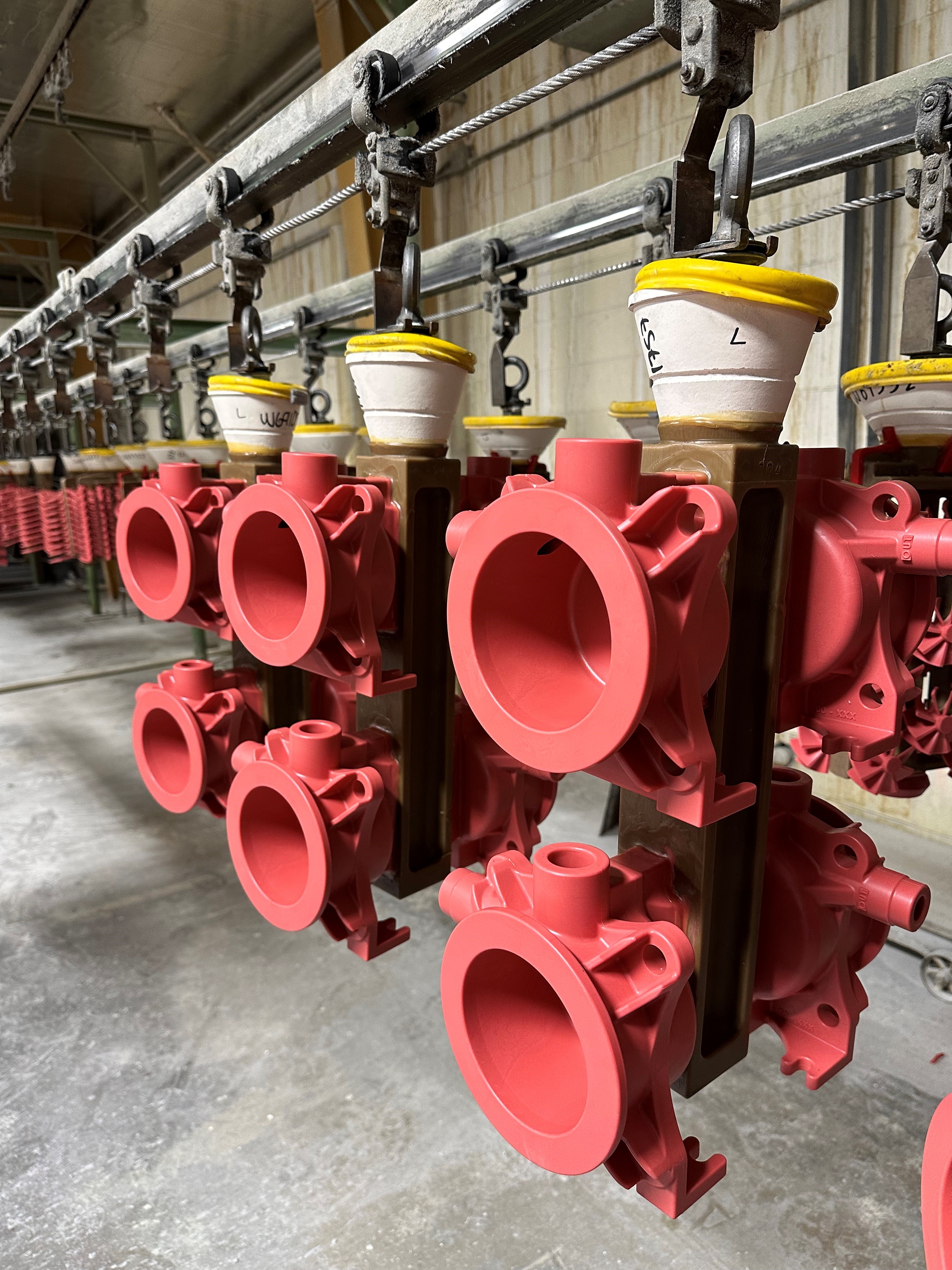
Wisconsin Precision Casting’s robot builds ceramic shells around wax patterns, preparing them to be filled with molten metal. Product engineer Michael Malek helps maintain and program the system, which he says has made the process safer and expanded the range of castings the foundry can produce.
What Do American Foundries Need Most?
Exposure.
Jose Duran, a supervisor at Wisconsin Precision Casting, has been with the company for more than 20 years. But until he applied for a job there, he didn’t know what a foundry was.
Interested in mechanics, Duran attended a technical school after high school and realized he didn’t want to turn his love for cars into a career. He decided to return home to Wisconsin to figure out his next move.
“I just had to get a job, and then I got this opportunity to see what a foundry was,” Duran said. “I never knew what a foundry was until I started working here. It was different from everything else.”
Duran accepted an entry-level role setting castings. He discovered life in the foundry wasn’t easy — it was interesting, exciting and hot — but he was up for every challenge it offered. Duran soon moved into a melter role, where he received extensive training in alloy chemistry from his teammates and supervisors. Like generations of foundry workers before him, Duran developed his skills on the job as experienced employees passed down their knowledge.
“It’s an industry where it’s fun. You learn from it. You get better at it. You don’t have to have a master’s or Ph.D. or anything. We’ll show you,” Duran said. “That’s how I came up. I worked through all these years and I got to the position where I’m at because I understood the job.”
More than two decades later, Duran has turned a skilled trade he didn’t know existed into a career with purpose.
Patrick believes more people might choose this career path if they learned about metalcasting sooner.
“To be honest with you, it should go back to junior high — the middle school levels of metal shops and the industrial arts, exposing kids to power tools and saws and drills,” Patrick said. “Show them you can make things and you can fix things.”
“When they started taking industrial arts out of the middle schools and even out of high schools, I think they did a disservice to this country,” he added.
Patrick does what he can to create those early experiences. He donates materials to local high schools, including 500 pounds of aluminum for one school’s sandcasting program, and provides foundry tours to interested student groups. He encourages teachers to reach out to see how they can introduce more young people to the possibilities of metal manufacturing.
“If I see excitement, I’m going to give you all the time that you desire,” Patrick said.
METAL also offers mini foundry experiences for K–12 students. Typically organized through partnerships between METAL’s university hubs and local schools, the workshops introduce students to metalcasting careers through fun, hands-on projects they can take home.
For metal workers, Wisconsin Precision Casting continues investing in employees after they’ve been hired through tuition reimbursement and a paid tool-and-die apprenticeship.
“I don’t know how we could make it any more attractive,” Patrick said.
He added, “we get to see all the different things we make that have an impact on somebody else’s life.”
Patrick never forgot how difficult it was to get his start in metal. Now, whether he’s welcoming a student tour, mentoring a Cast in Steel team or hiring someone new, he’s dedicated to giving the next generation their chance.
Ready to begin your metalcasting career? Start with METAL’s free online training, then visit our events page to find a hands-on bootcamp near you.