
The first time Bruce Barron walked into Barron Industries’ investment casting facility, he found a dimly lit room with low ceilings, barely the size of a basketball court, and a team of nine employees. What he saw was opportunity.
“It looked like a place where you get toured by your parents and they tell you, ‘If you don’t go to school and work hard, you’ll end up working in a place like this,’” he said.
At the time, Barron, a chemical engineer, hadn’t yet entered his family’s Michigan-based metallurgy business. But when his father decided to expand by acquiring an investment casting facility, Barron became intrigued by its process and potential. He still remembers his father’s surprise the day he showed up for the newly acquired foundry’s first official meeting.
“I drove in from Chicago and he said, ‘What are you doing here?’ And I said, ‘I’m coming to work for you,’” Barron laughed. “I was not asked to come into the business. I was not expecting to, but it was interesting. I forced my way in and started from ground zero.”
With roots dating back more than 100 years, Barron Industries has fueled growth and innovation in American metalcasting. What began in Detroit as an iron sand foundry, producing 60 ton castings for customers like Henry Ford, has evolved into a global precision castings business that develops everything from missile launchers to jet engine components. Since 1923, the company’s products and processes have been shaped and refined by industrial revolutions. Today, the manufacturer integrates end-to-end automation into the timeless craft of metalcasting, including wax injection systems for molds, CNC machines that cut and drill metal, and water blasters to clean finished castings.
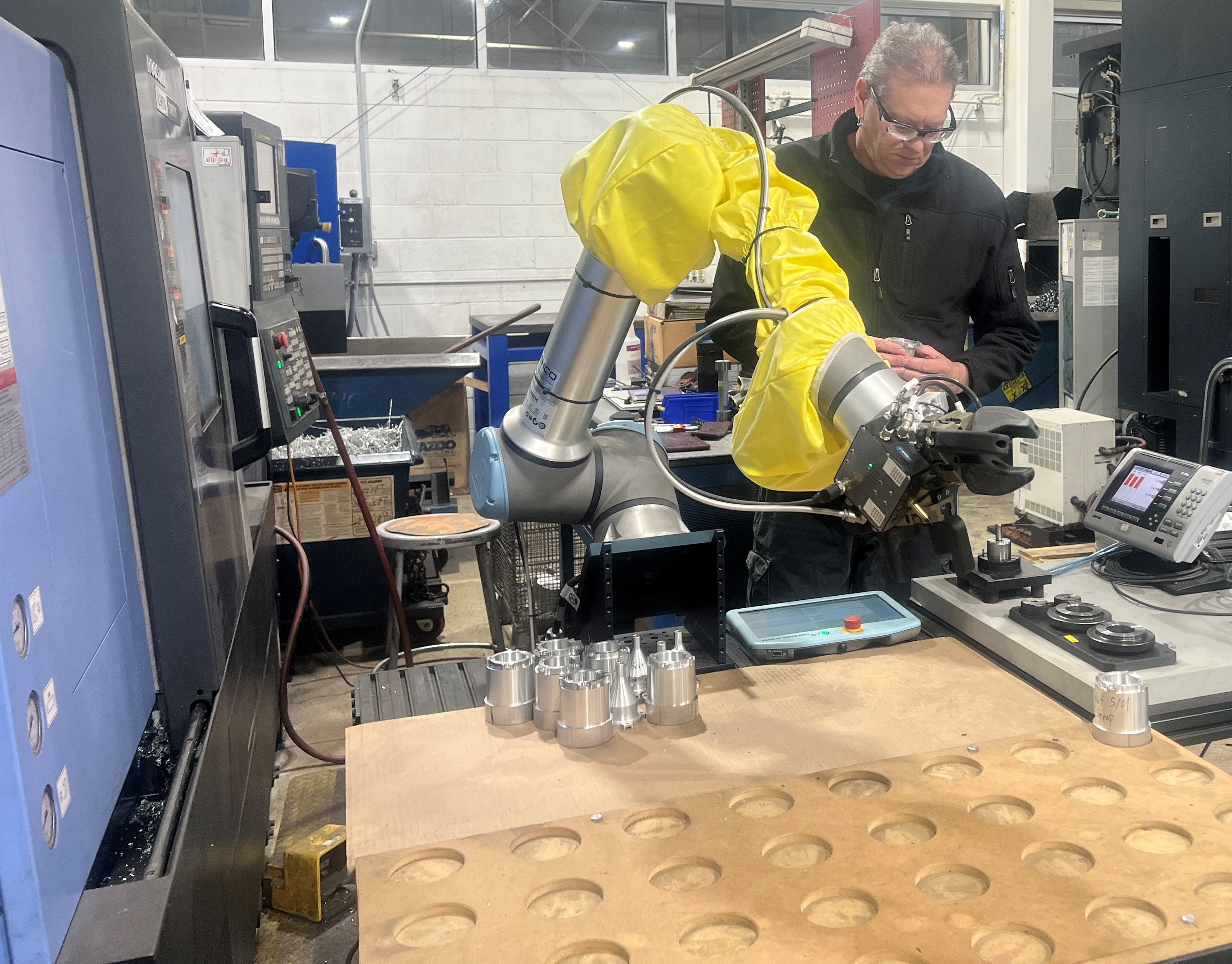
“We’re producing very high-strength, high-alloy parts. There’s a lot of metallurgical evaluation that goes on,” Barron said, leaving no room for error. “In many cases, failure of a component is not only loss of a mechanical system, but potentially loss of life.”
More than 40 years after that first meeting, Barron, now president and CEO, has transformed his family’s metal business into a vertically integrated aerospace and defense manufacturer, meeting America’s metal needs with speed, quality and integrity.
“It’s been quite an evolution over time,” he said. “It sounds good when I’m telling you, but it was really hard.”
Now, the manufacturer faces its next challenge: hiring metal workers.
Metal Workers are Hard to Find
Despite a century of innovation — from 3D printing to robotics — people remain the backbone of American manufacturing. But they’re in short supply. As millions of Baby Boomers retire, nearly 4 million manufacturing jobs could go unfilled by 2033.
What would the world look like without foundry workers? Hospitals, utility companies and entire cities would go dark. Transportation would screech to a halt. Supply chains would crumble, and the country’s defense would be left vulnerable.
It’s no longer enough for manufacturers to produce high-quality parts. They must mold and cast the next generation of metal workers — and they can’t do it alone.
Programs like METAL, led by IACMI – The Composites Institute®, with funding from the Department of War’s IBAS Program, are reigniting workforce development in metalcasting and forging industries. Through hands-on K-12 workshops, metallurgical bootcamps and apprenticeships, METAL sparks student curiosity, illuminates pathways to manufacturing careers and strengthens the industry’s talent pipeline.
At Barron Industries, the need is critical. Whether it’s building suspension systems for armored vehicles or ensuring precision through rigorous quality testing, every role directly supports America’s defense and infrastructure.
“If we could bring 20 more people on board tomorrow, we would,” Barron said, adding that there’s openings for almost every foundry position, from entry-level metalcasters to engineers. “We’ll train people. We just need someone who wants to work and learn, and we’ll take it from there.”
Michael Price is proof that success in manufacturing is possible for anyone driven by curiosity and dedication. A quality coordinator, Price applied to Barron Industries in 2021 without metalworking experience. He just knew he needed a change.
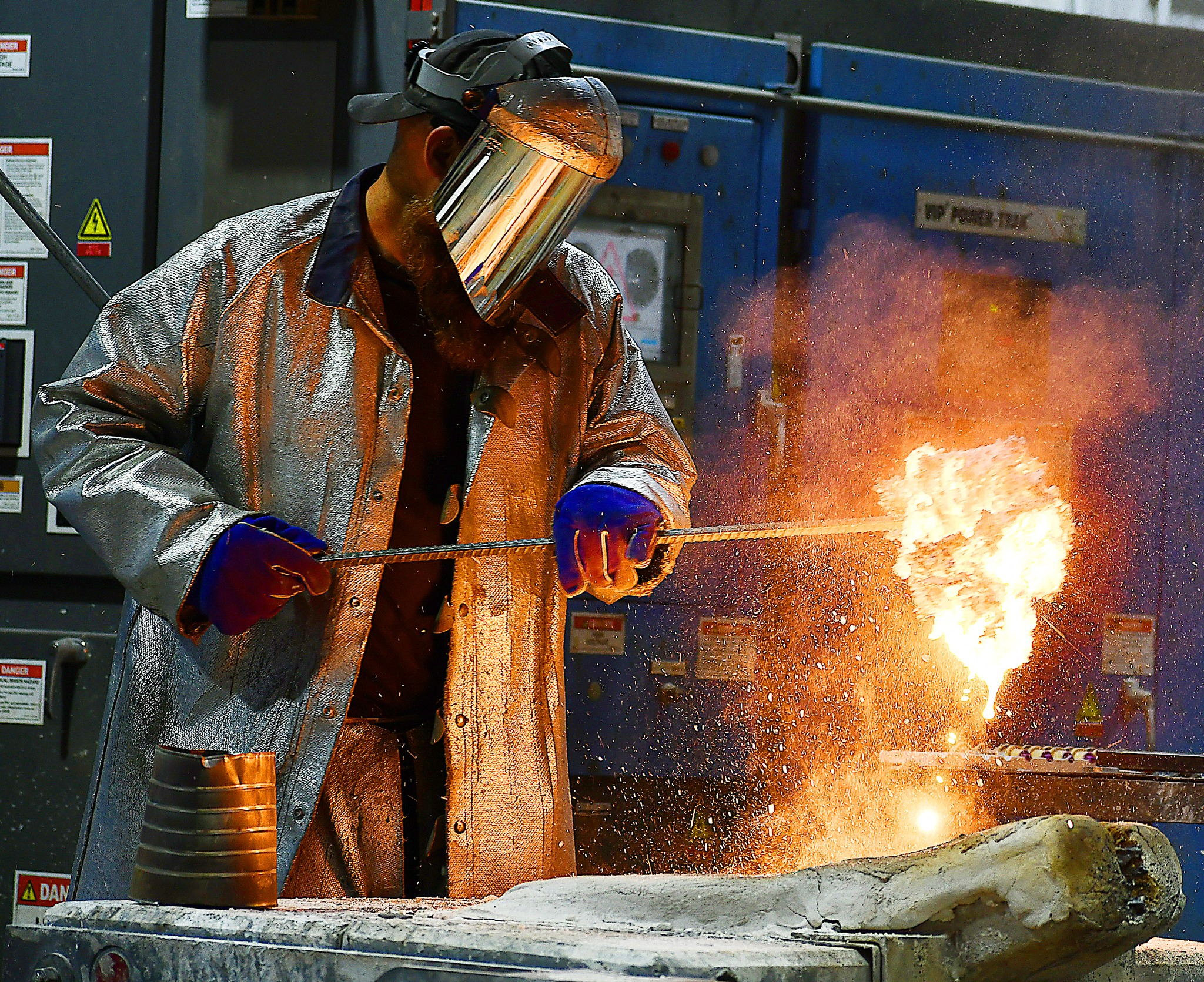
“During COVID, families had to make a lot of hard choices, which included pivoting careers,” said Price, who previously worked in marketing and the restaurant business. Inspired by his brother, an engineer, and his father who retired from General Motors, Price knew metal manufacturing was an industry where he could find a fresh start and support his family.
Price started in entry-level roles on the foundry floor, learning trade skills from the ground up. He worked with inspectors to validate casting designs, trained in finishing operations, and eventually experienced the adrenaline rush of pouring molten metal for the first time.
“What individual in this industry isn’t excited to work with hot metal?” Price said. “I was willing to go to any department. Getting hands-on experience is the quickest way to learn anything.”
In less than a year, Price was ready for the quality coordinator position. He describes the role as the bookends of the manufacturing process — from managing customer specifications to approving final products for shipment. With Barron Industries’ support, Price continued his training through the Michigan Manufacturing Technology Center, earned his auditor certification and is pursuing additional industry credentials.
“If you’re dependable, hardworking and eager to try new things, it’s never dull here,” Price said. “If I had entered this space right after college, I could have been here the entire time.”
The best part? Price is home from work in time to see his sons before they go to bed.
“It was a great move,” Price said about changing his career. “I’m fortunate to be at Barron Industries where I’ve been given opportunities to grow and learn along the way.”
A New Century for Metalcasting
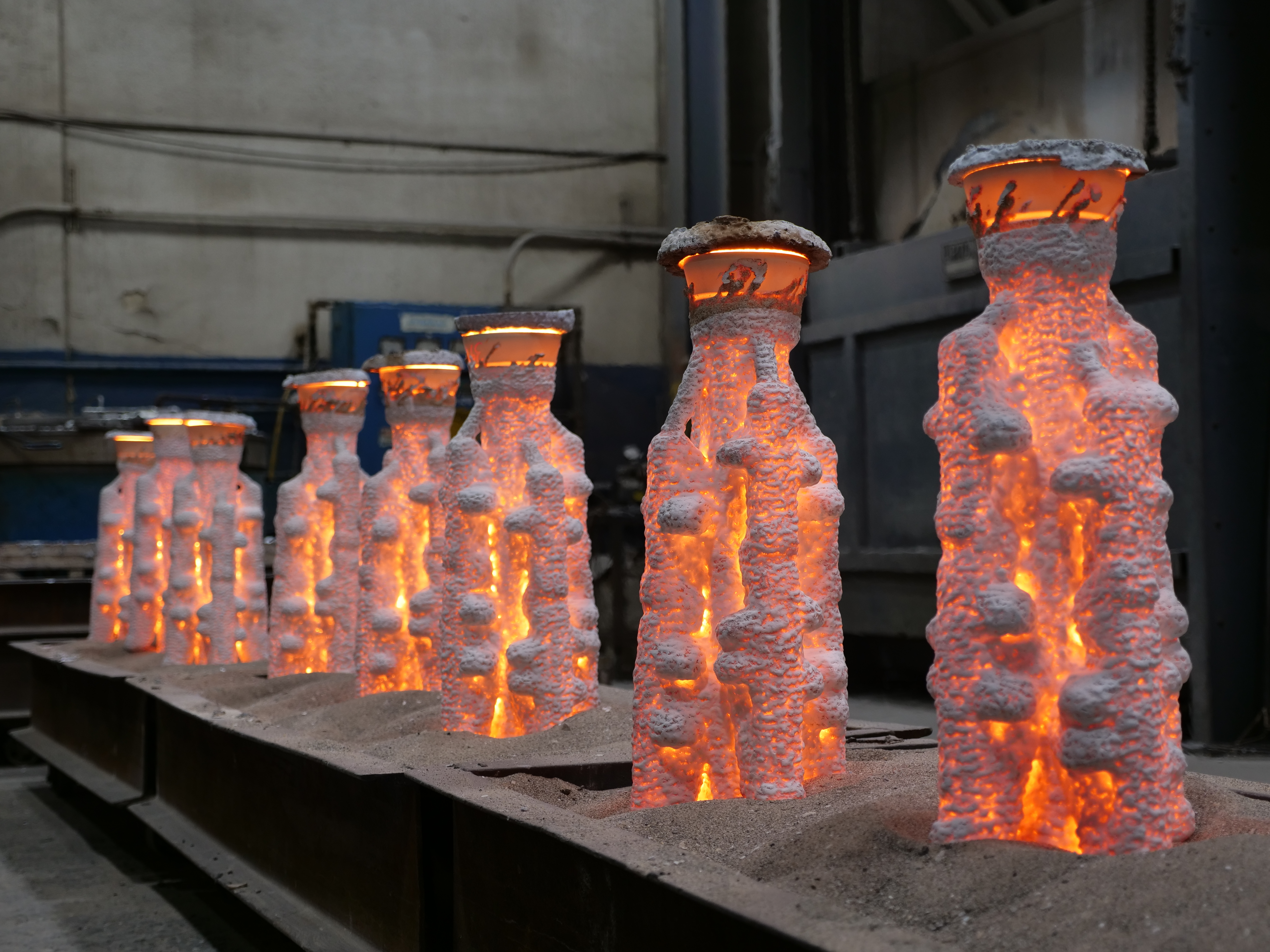
Recruiting new foundry talent isn’t just about training — it’s about changing perception. The biggest hurdle is outdated stigma, Barron said. While the science of metalcasting remains the same, today’s processes are faster, safer and far more automated than they were 50 years ago.
“We used to dip everything by hand,” Barron explained, remembering visits to his father’s foundry as a child. “You had guys with big arms and shoulder muscles dipping, sanding and drying molds all day.”
Now, robotic systems handle the heavy lifting.
“You’re pushing buttons to move parts into position,” he added. “You’re still in a metal manufacturing environment — it’s hot, sparks fly — so you’re not sitting behind a computer playing a video game. But I do try to give people joysticks as much as possible.”
Today, the barrier to entry is no longer physical strength. It’s mindset.
“We battle the idea that this is a dirty job nobody wants,” Barron said. “In reality, you learn a skill you can feel good about. It’s safe, pays well and I like to think you can support your family in a stable industry that has a future.”
In 2024, U.S. manufacturing workers earned more than $106,000 on average, while production workers and non-supervisors made about $61,000 and saw 4.2% annual wage growth.
At Barron Industries, employees receive on-site training and have opportunities to attend machining and software courses, industry certification classes and CNC machining apprenticeships. Employees interested in leadership can pursue management training at local technical centers.
METAL provides another entry point. Through metallurgical bootcamps, career changers learn foundational metalcasting and forging skills from metallurgists across the nation. Participants start with a free, self-paced online training before attending a week of hands-on training at a university foundry. They leave with castings they poured themselves — tangible proof of new skills, confidence and career potential.
Meanwhile, industry professionals can expand their expertise with METAL’s digital technologies, sand science and forging bootcamps.
“Finding experienced metal workers is almost impossible,” Barron said. “METAL helps manufacturers relieve training pressures and provides us with stronger, more qualified candidates. There’s no greater need in the industry right now.”
For Lissa Barron, Barron Industries’ communications director, continuous learning isn’t optional, it’s strategic. When employees sharpen their skills, they also create new opportunities for the company.
“We started as just a foundry,” she said. “We’ve expanded into defense by meeting our customers’ needs and adding departments, such as CNC machining, in-house non-deductive testing, welding and assembly. That’s our differentiator.”
Building the Future of Barron Industries
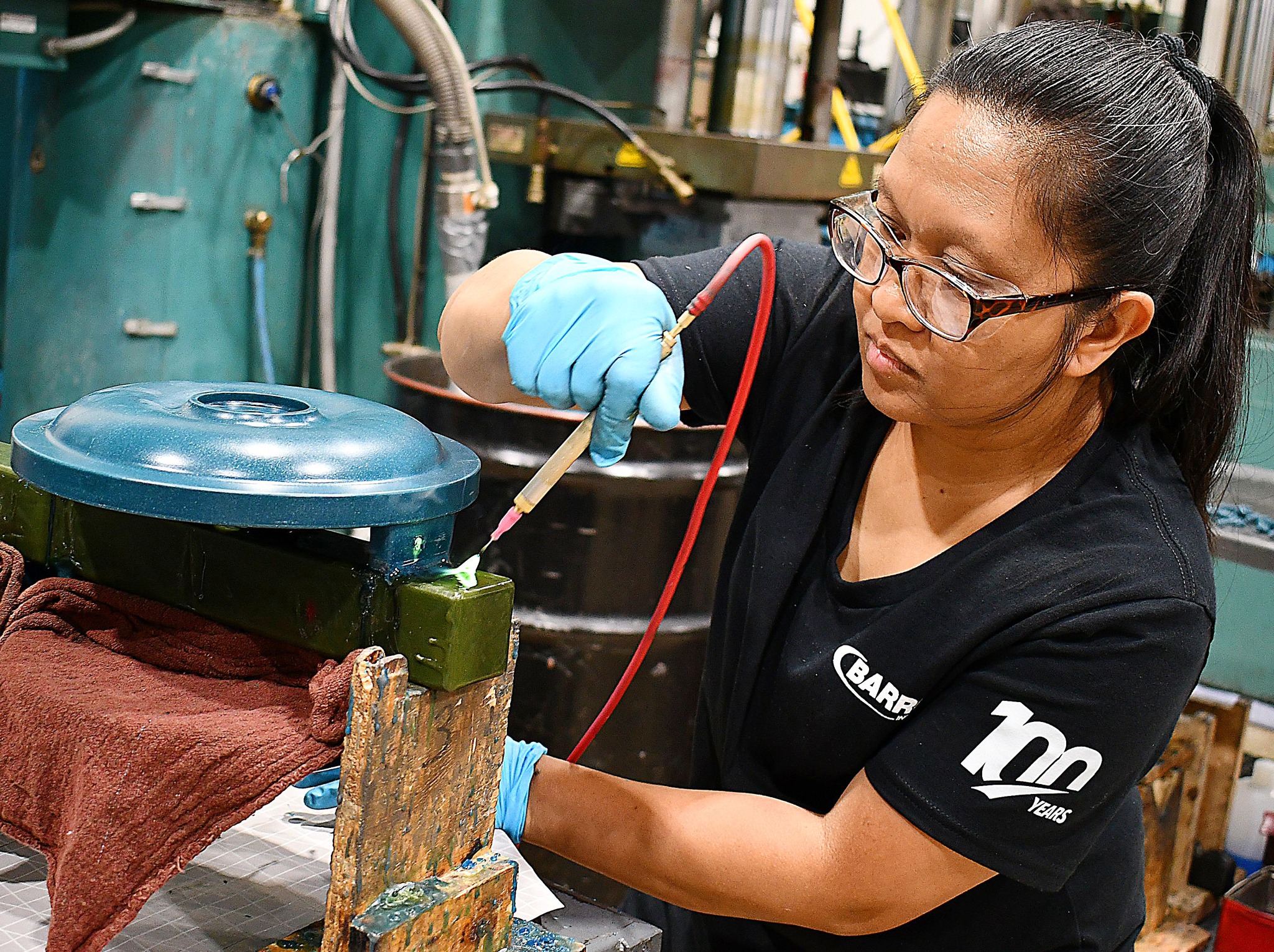
To meet growing product demand, Barron Industries is constructing a new aerospace and defense advanced manufacturing technical center in Oakland County, Michigan. Part of the expansion will include titanium melting for complex, incredibly durable castings.
The facility is expected to be fully operational by the end of this year. But first, the team needs more metalcasters.
No matter what comes next, Barron Industries remains committed to driving the industry forward — and being a place where people want to work. From competitive pay and health insurance to paid holidays, retirement fund matching and an interest-free employee loan program, the company invests in their workers beyond the foundry.
“We’re trying to make it as easy as possible for folks to not be burdened. We’re here to help support them and help them provide for their families,” Barron said. “When you’re here, you’re part of the Barron family.”
Cast a career that lasts. Start METAL’s free online training and visit our events page to attend the next METAL bootcamp or workshop near you.