
Russell Winter has spent most of his life on a machine shop floor.
As a third-generation tool and die maker, Winter cut his teeth at his grandfather’s company in Illinois, where he learned how to finish die castings and machine precision parts. What began as a small tool and die operation in the 1970s has evolved into Center Tool Co., the milling, turning and machining company Winter leads today.
But Winter wasn’t handed ownership of his family’s business — he had to earn it. Under the guidance of his father, Allan, the second CEO, Winter spent years mastering mills, CNC machines, CAD design software, welding and part repair. Like many manufacturers, he learned a few lessons the hard way, spending late nights on the shop floor making up for early-days mistakes.
Now 32, Winter is president of Center Tool Co., a champion for small businesses and founder of US MFG, a network that helps small metal manufacturers grow, scale operations and pass ownership to America’s next generation of industrial entrepreneurs.
At a recent METAL bootcamp, Winter spoke to us about his founder journey, the future of the metal industry — from CNC machining and precision tooling to metalcasting and forging careers — and how US MFG is reinforcing the manufacturing community for long-term success.
Listen to this interview (15min)
Why did you launch US MFG and how is US MFG helping small metal manufacturers grow?
Russell Winter: My story started with Center Tool, but then it led to US MFG, which is now what I spend most of my time on. After I bought the business from my dad in 2019, I started having more conversations with other owners of small businesses. I realized all these guys are retiring, they’re aging out of the workforce.
My dad’s generation was told, “You got to take over the family business. You’re the only one that’s going to do it.”
My generation was told, “Go to school, join the military, do what you have a passion for.” Those of us that grew up in family businesses saw how much stress it was running and managing it. So for good reasons, I think a lot of this generation hasn’t taken over family businesses. I was realizing that could be a problem.
What happens to all these companies that are owned by Baby Boomers looking to retire and no one is going to take them over? That got my wheels turning back in 2019 when I was having those conversations and that eventually led me to starting US MFG.
We built software that allows small businesses to connect with each other and streamline their operations and workloads between companies. What we realized was being a small business, you can easily get backlogged or easily be dead and have no work — there’s a lot of fluctuation. When we have two companies that work together, they can help balance their workloads.
Right now we’re focused on getting small manufacturers cybersecure so they can get into defense work. Then the platform is built to start getting them into the defense industrial base, get them more work and make them healthy. Succession I think will follow a healthy company.
What challenges did you face while building US MFG?
Russell Winter: I started it with the mission mindset of saving small shops and good jobs in small communities because that’s where I grew up. We wear steel toe boots and flannels and we like to go fishing and we’re not looking to be billionaires, but we want a fair salary or hourly rate and flexibility. So I started it with that intention and I thought if we built this software, we could raise money and buy all these small shops. It took me a few years. I was homeschooled, grew up on a farm, and grew up in the shop. There were a lot of things that I had to learn the hard way.
One of those things was, is it even worth buying small shops? Are they a good investment? It was a painful realization for me because I felt more of the mission drawn to buying these companies than the financial outcome. And I realized that a lot of them are not investible.
If they’re old and have depreciated equipment and old buildings and they’re making an 8% margin at the end of the year, it’s not an attractive investment. So how do you raise money to go buy those and say you’re going to pay back investors and buy new machines?
Then I had to refocus and tackle it by saying, “Well, let’s get these shops more work, and then they’ll grow and be healthy.” That’s how you can help sustain them.
I think there is a need for aggregating the capacity that small manufacturers have. A lot of us are operating one shift a week, 40 hours, probably utilizing half of the machines we have on the floor. So there’s a lot of unused capacity in these businesses. If you could get them to work together, even just on a platform level, you could utilize them more for bigger contracts.
We’re at the point where we have this software, we got into defense work on our own as a three person shop and got all our certifications. We know that we can help other people do it, but we’re at the stage where we need to raise money or get enough capital so we can hire a team to fully build US MFG out and expand it.
What challenges are small metal manufacturers in the U.S. facing today?
Russell Winter: I think one of them is that small manufacturers are really good at making parts. That’s what they want to spend their time on, not fighting to get work.
On the defense side, with cybersecurity certifications and requirements, when we did it, I basically spent my full time figuring out the compliance side, and my other buddy built the software, and my other one was doing the machining. It’s a lot to expect a small manufacturer to either be able to afford to hire someone for $100,000 to get compliant or to dedicate all their time to that when they’re already trying to fight for work. I think if they had more work and a better idea of what type of work best suited their facility, they would do great at making parts.
Another challenge is, culturally, a lot of people talk about how it’s hard to hire, and I’m probably not the best person to speak for it because we have four people. I’ve probably hired four people in my life. It’s never been an issue for me to find those people, but I’ve only hired four. So I think a big part of the hiring issue, though, has to do with culture and how do you attract new employees? It’s your company culture. That’s one of the top three selling points for how to attract people nowadays, and a lot of shops need to update their culture. They need to be a little bit more relevant and flexible, and there are plenty that are doing it, and they’re hiring people.
I would say let’s get more work, get your culture healthy, and then you’ll have the people to do it.
How can metal manufacturers attract more work and talent?
Russell Winter: On the culture side of things, I think something that would be very helpful for young people coming in is having a career roadmap. Our local high school has a shop program. By the time they get out, they could already have three or four years of hands-on programming and machining. By the time they get to employment, we probably already worked with them for a year or two. We did that with one apprentice. We brought them on while they were still in high school. But give them a roadmap — don’t just say, “Hey, you’re going to do this for the next 20 years you’re here.” Because they probably won’t be there for 20 years. But if you say, “This is what we need you for now, if you learn these skills, this is the kind of raise you’ll get,” and build something out that shows them the future of achieving what they want out of life.
And be open to new ideas. Even if you think it’s a bad idea, be open to it as long as it’s not going to be a catastrophic failure. Allowing someone to fail is really good for retention and growth, and isn’t that what you want?
I know that because that is how my dad ran the shop when I was growing up. I made a pretty big mistake one time and we had to scrap 10 grand worth of parts. I sent a part after heat treating, we machined it, hard machined it, sent it out. Normally, we send it out for nitriding because they were mold tooling inserts, and I sent it out for heat treating again. So when it came back, it was warped and we couldn’t fix them. All I did was sign the wrong stuff on the order sheet for the treatment.
When I realized that, it hit me like a ton of bricks.
I was like, “Oh, Dad, I just screwed up.”
He said, “All right, you just got to go remake them.”
I almost wanted him to blow up at me because I felt so bad about it. Nope, I just slept at the shop in front of the machine and made the parts. I got it done, but that taught me responsibility.
What made you want to join METAL’s metal manufacturing bootcamp?
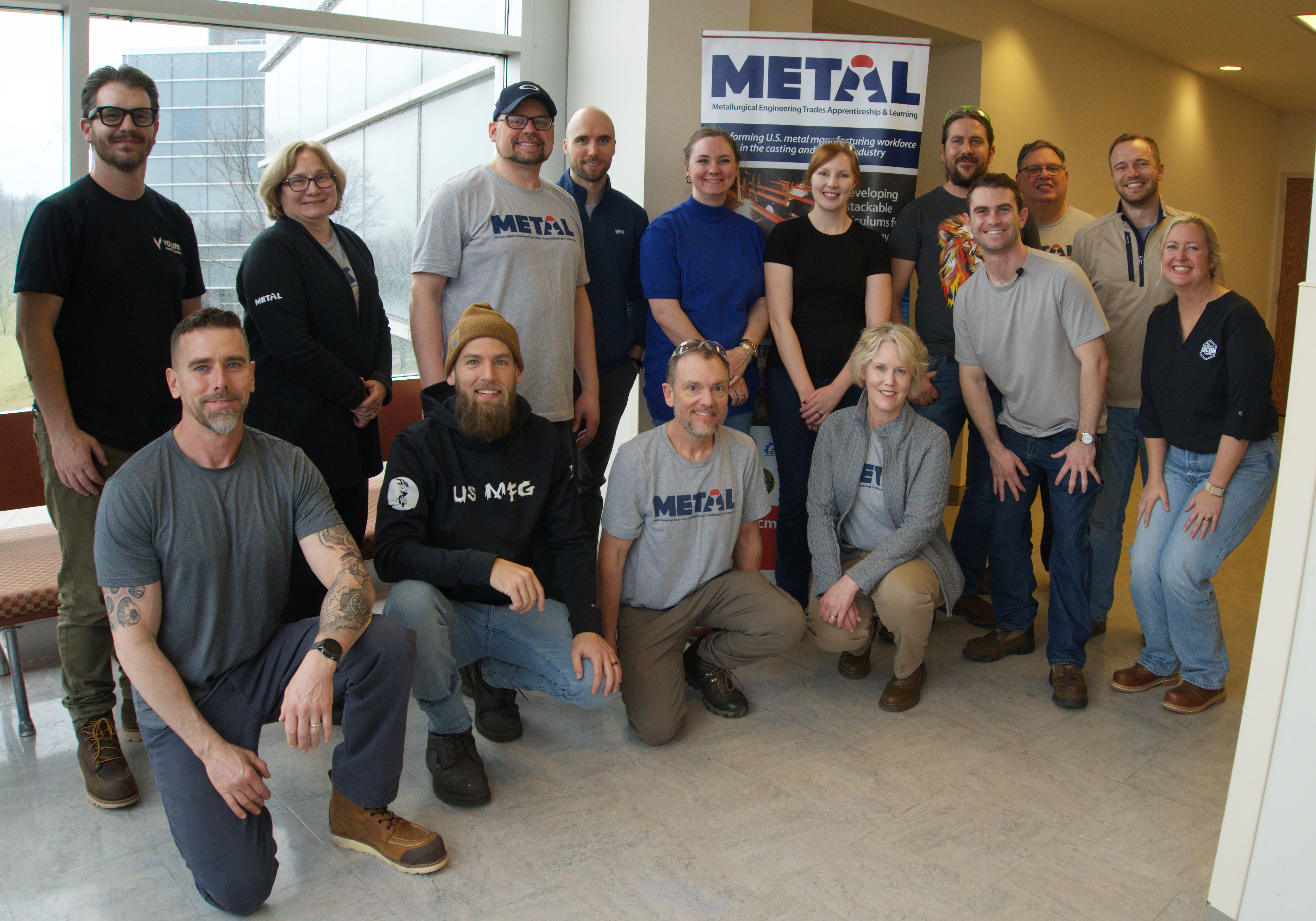
Russell Winter: I first heard about METAL’s bootcamp at Reindustrialize last year. I think this is such a huge opportunity when you have free training open to everybody, and getting into a career that gives you a lifestyle you want. I just had to see it for myself.
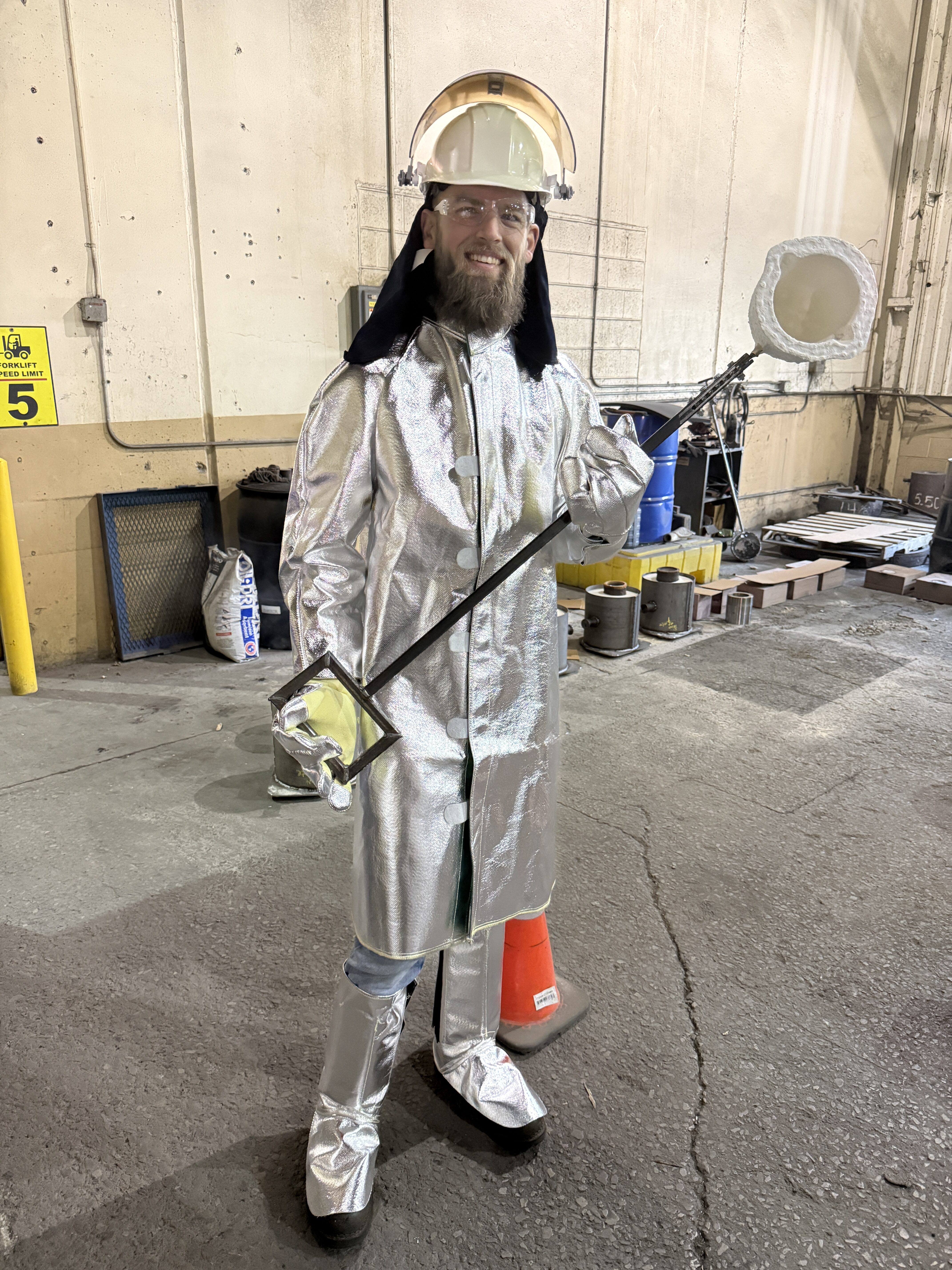
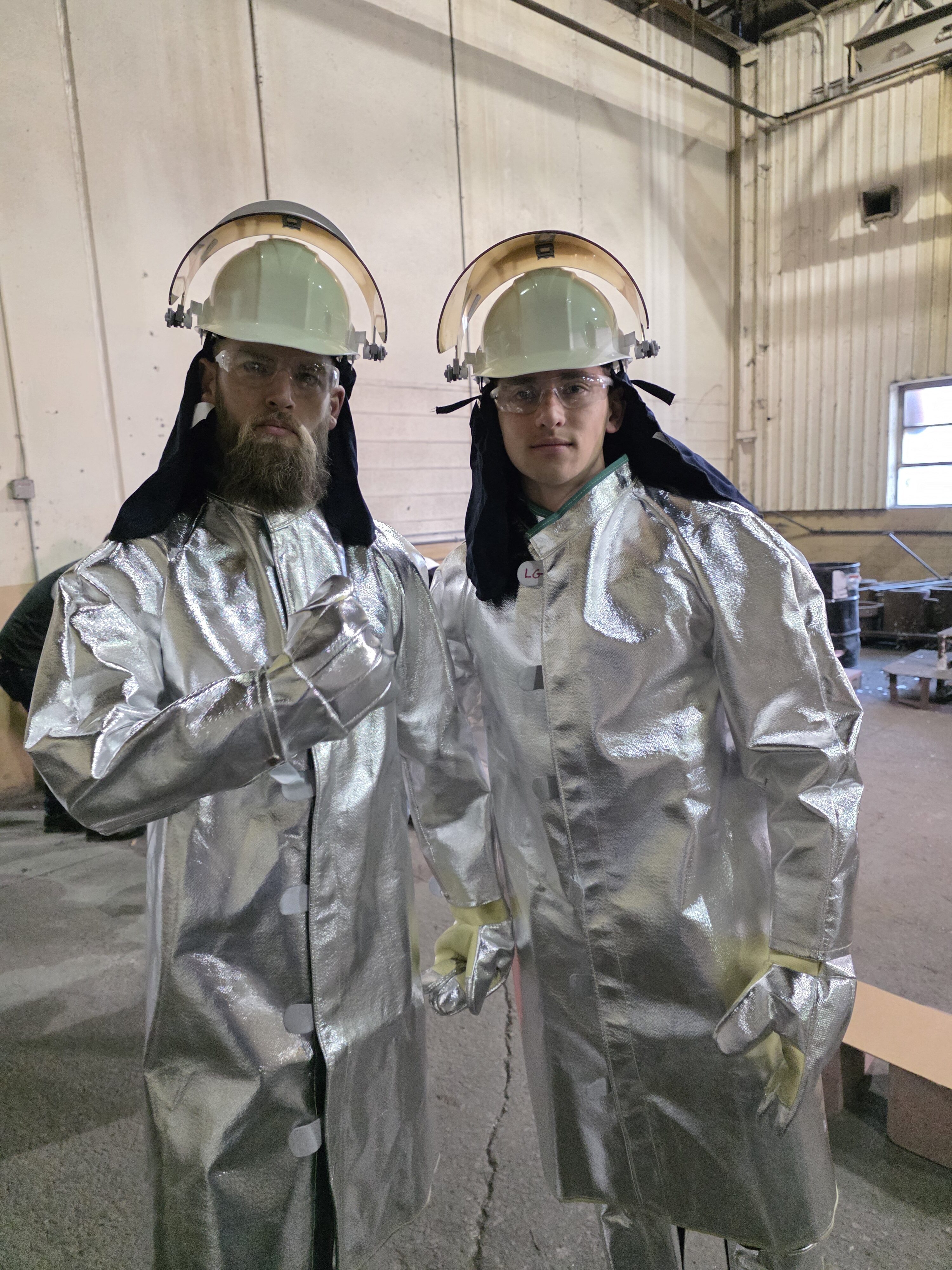
The METAL bootcamp being about casting and forging is outside of what I normally work on with machining and fabrication. That was a lot to learn, but I was like, “I wish I knew this already,” because it applies. There’s a lot of crossover. Even on the machining side, I learned about diamond turning. There’s always something to learn.
How do programs like METAL help manufacturers overcome workforce challenges?
Russell Winter: I definitely think more education and more awareness of the opportunities in manufacturing solves challenges because a big part of it is that people genuinely don’t understand it and don’t know about it. So bringing awareness to manufacturing and working with schools and getting kids that aren’t currently in the school system into the program, I think that works to solve it.
Mostly I’m looking at METAL as a huge resource to direct people when they’re not sure what they want to do. It’s just like, “What are you going to risk?” It’s a week. Learn about it and experience it, whether you’re from that background or not. You’ve got nothing to lose to learn about this opportunity. I think people will find it more interesting than you think. It’s pretty fascinating.
Why is rebuilding metal manufacturing critical to national security?
Russell Winter: There’s a certain level of industrial base that you need to maintain so that you can produce things that you need. You don’t need to make everything, right? I think there’s reasons to buy from other countries and to have allies. But on the national security side, if you’re playing on the global stage and you have other powers that are not aligned with your interests, you need to hold your own. If you don’t have an industrial base that can support holding your own, you lose. On the defense side, that’s very important. On the other side of national security, we saw with COVID we didn’t make a lot of the personal protective equipment. Well, when you need it, when the world needs it, whoever makes it keeps it.
There’s a lot of different ways that applies, but it’s a foundational sector of the economy and it’s been dying here for generations. Because I used to be focused on buying the small shops, people have reached out like, “Hey, I want to buy a small company. I want to buy a manufacturer.” That’s great there’s a lot of interest in it, but it helps to understand manufacturing before you want to own a company. They should come to METAL.
What excites you most about the future of the metal industry?
Russell Winter: It’s weird growing up and it never really being talked about. It was kind of like a hidden career. People didn’t talk about it like they were proud of it. But I see on Instagram and X people who have this lifestyle where they afford their house, they bought a car, they have a family. It’s like, “Oh wow, they’re 30 years old and they did this. What did you do? ‘I’m a welder. I’m a pipe fitter. I’m a machinist.’”
It really excites me that there’s more awareness of the need because that’s a lot of opportunity. I have little brothers, and their Gen Z uncertainty in careers is a big deal right now. I think these careers will be around for a long time. This is a healthy pathway to take for a while.
So mostly the opportunity that’s out there, and seeing that policies and government are getting behind manufacturing now — that’s what’s needed. That’s one of the main reasons why it diminished. As a country, we’re moving to support it and METAL is a direct result of that. This is the government saying, “We’re serious about this. We will pay for people to come and get trained just to show them the opportunity that’s here.” I see it as a pivotal moment in policy where it’s like things are changing, so that’s exciting to me.
Ready to build your future in metal? Start METAL’s free online training, explore hands-on bootcamps and discover careers in metalcasting and forging. Visit our events page to find a bootcamp near you.
Connect with Russell Winter on LinkedIn, X, or reach out to him at usmfg.com.
FAQs
What does a tool and die maker do?
A tool and die maker builds and repairs the tools used to manufacture metal parts, including molds, dies and fixtures. Tool and die makers often use precision machining, CNC machining, CAD software and welding to create highly accurate parts.
What is CNC machining in the metal industry?
CNC machining is a manufacturing process that uses computer-controlled machines to cut and shape metal. It is commonly used by metal manufacturers to make precise parts for industries like defense, automotive and aerospace.
Why are small manufacturers important to the metal industry?
Small manufacturers play a major role in the U.S. metal industry because they produce specialized parts, support local jobs and strengthen the domestic supply chain.
Are there good careers in the metal industry?
Yes. Careers in the metal industry include tool and die maker, machinist, welder, CNC operator, manufacturing engineer, and skilled roles in metalcasting and forging such as foundry technician, patternmaker, melt operator, forge press operator and metallurgist. Many of these metal manufacturing careers offer strong pay, hands-on work, long-term stability and opportunities for advancement across industries like defense, automotive and aerospace.
What is the difference between metalcasting and forging?
Metalcasting creates parts by pouring molten metal into a mold, while forging shapes solid metal using compressive force. Both are essential processes in modern manufacturing and offer strong career opportunities across defense, automotive and aerospace industries.
***