
Dr. Paul Sanders fell in love with metalcasting in the foundry at Michigan Technological University more than 30 years ago. Today, as a materials science and engineering professor at his alma mater, Sanders teaches more metalcasting students at the university than ever before.
Located just miles from Lake Superior in Michigan’s Upper Peninsula, Michigan Tech has built a legacy of preparing the next generations in American manufacturing. What began as a training school for copper mining engineers in the late 19th century has grown into one of the nation’s top institutions for STEM academics and research. With support from METAL, the university is fueling its metallurgical education — sparking curiosity in metalcasting for aspiring engineers and high school students. In only a few years, Michigan Tech’s metalcasting course has grown from 40 to 60 students, but Sanders plans to welcome more.
“We have untapped demand,” Sanders explained. “We’ve tried to figure out how to grow enrollment. How do we offer more students the opportunity to take metalcasting while maintaining the quality of the experience and meeting student needs?”
Through new equipment and staff funding, METAL is helping Michigan Tech meet its hot metalcasting demand.
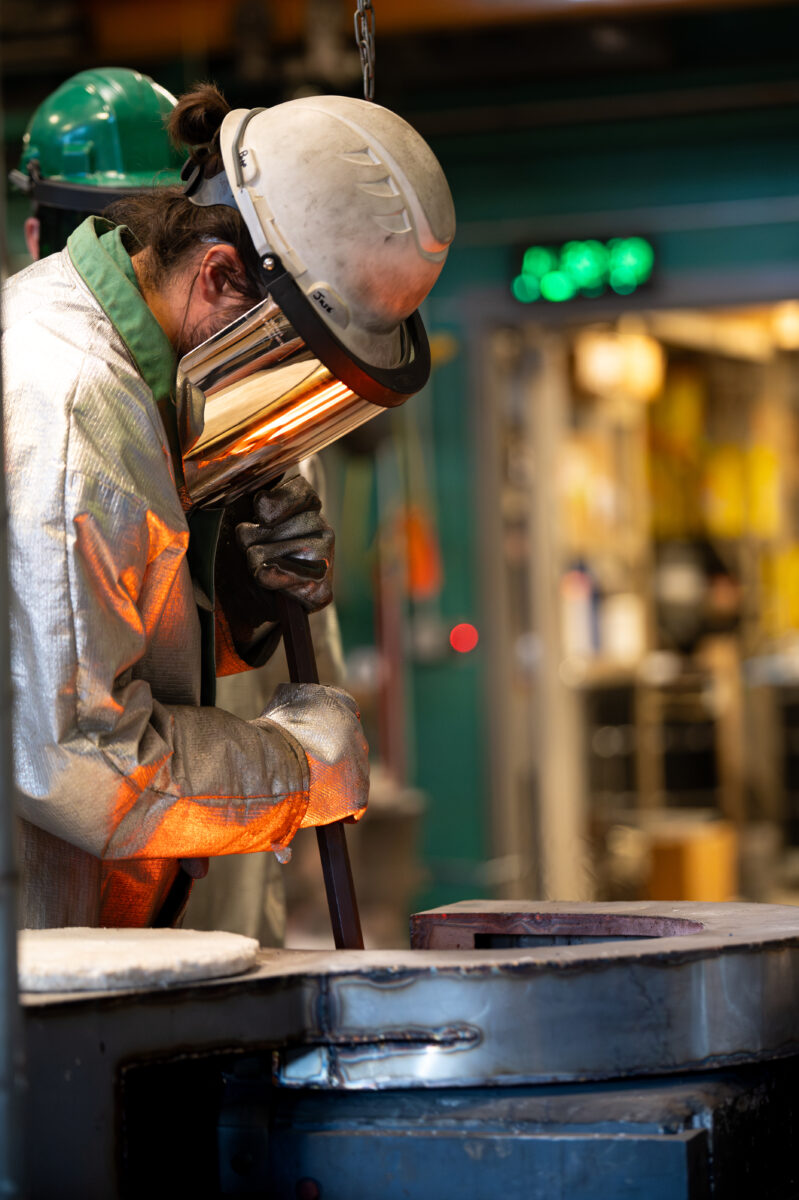
Stoked for Casting
Led by IACMI – The Composites Institute®, with funding from the Department of War’s IBAS Program, METAL is accelerating the development of a highly-skilled, adaptive workforce in the U.S. casting and forging industry. By 2033, nearly 4 million manufacturing jobs could be available in the U.S. without sufficient talent to fill them. METAL is working to change that.
Through hands-on K-12 workshops, metallurgical bootcamps and apprenticeships, METAL powers the curiosity, innovation and training that will revitalize American manufacturing.
“We’ve lost a lot of manufacturing to the rest of the world, in part because we didn’t value it and because we didn’t educate people on how to do it,” Sanders said. “By teaching our students to understand manufacturing again, we’ll be able to bring it back to our communities.”
Mahana Gallmeyer, a materials science and engineering major, enrolled in Michigan Tech’s metalcasting course for the chance to make her own cast-iron pan. But, gaining more than a skillet, Gallmeyer left with the knowledge and skills to propel her engineering career forward.
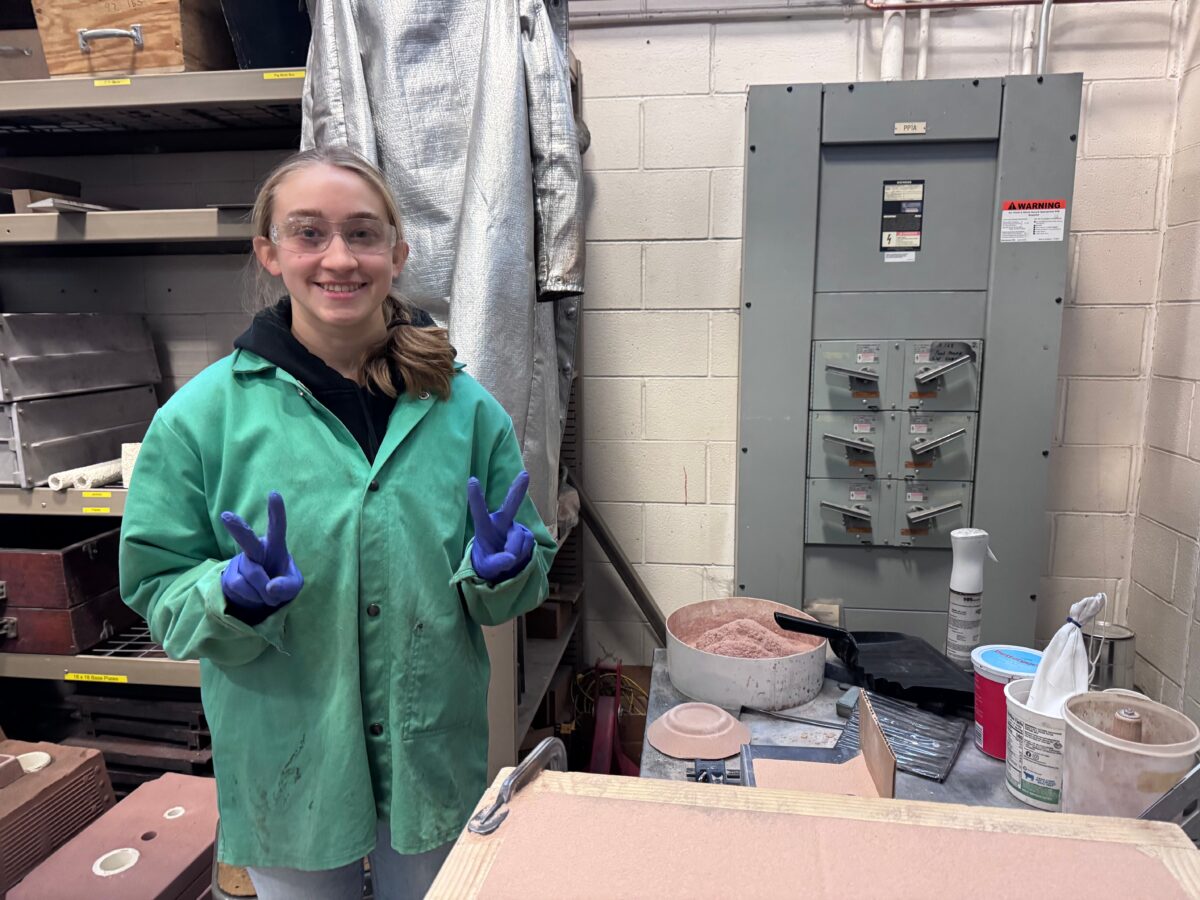
In one semester, Gallmeyer studied scientific theories and terminology while learning every step of the casting process in the foundry. She used CAD software to create and 3D-print molds, compared sand types, melted ingots, and ladled liquid metal in preparation for fiery pours. Along the way, Gallmeyer cast aluminum tokens and custom gray iron bookends etched with the College of Engineering and Science’s flame of knowledge.
“Maybe I didn’t have the best intentions first coming in,” Gallmeyer joked about the pan. “But I’m really glad I took the course. You get ownership of an entire project from start to finish, and no matter where you go in industry, there will be cast materials.”
Plus, she added, the class is just fun.
At the end of the semester, Sanders invites industry professionals to speak to students about foundry career opportunities. He’s especially eager for younger students to see the breadth of engineering roles across the metal industry, from molding materials to die casting aluminum, as well as investment and continuous iron casting.
“We’ve come to the realization that this is a valuable class to take before you’re a senior,” Sanders said. “We think metalcasting is important to the development of manufacturing engineers, and we want students to learn about it earlier in their careers.”
But safely teaching hands-on casting and forging requires a foundry filled with equipment and a team of trained faculty and staff. Only 20 colleges in the U.S. are certified by the Foundry Educational Foundation to prepare students for a future in metal manufacturing, and Michigan Tech is one of them.
“Most professors are severely short in technical staff, and they don’t have anyone to take care of the equipment or do industry projects,” Sanders explained. “METAL is not only setting up an infrastructure that helps us teach courses better, but also helps us support American manufacturing better.”
With METAL’s support, Michigan Tech has upgraded its foundry with new equipment, including a tumble blaster to clean and smooth finished castings, a jolt squeezer for compacting green sand, and resin 3D printers. Plus, with added staff resources, Sanders and his colleagues have been able to open the course to more underclassmen and add curriculum to the existing semester-long course.
“We’re hopefully going to see a transition to more U.S. manufacturing,” Sanders said. “METAL is helping us deliver more engineers with the experience we’ll need going forward.”
METAL’s support extends beyond the classroom, providing more staff and supplies for Michigan Tech’s K-12 Summer Youth Programs — where Gallmeyer first saw metalcasting in action.
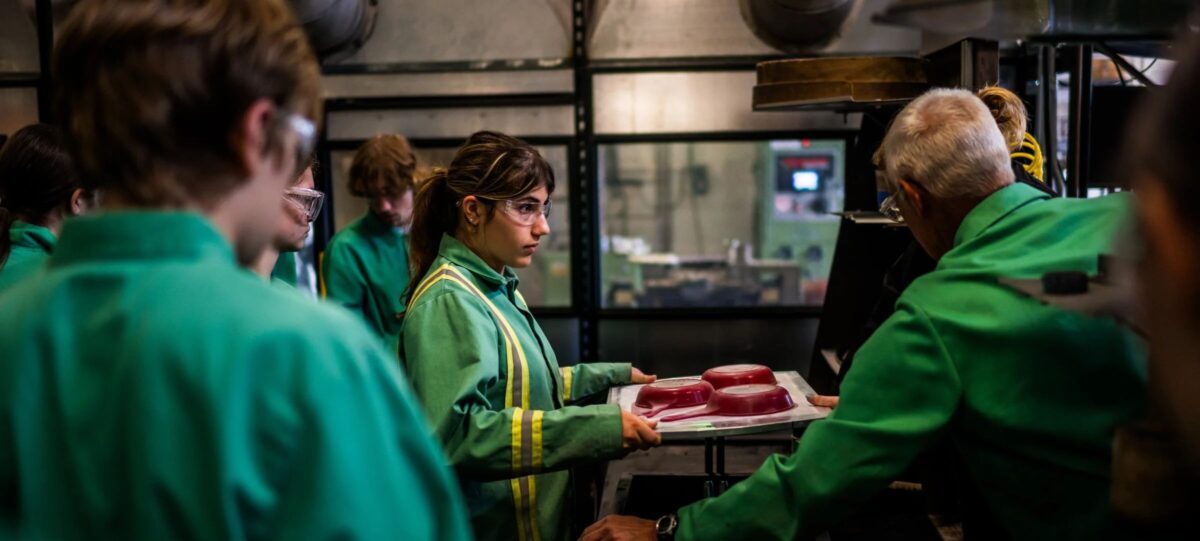
Soaking Up Foundry Fun
Raised in a family of engineers, Gallmeyer always knew she’d follow the same path. But she wasn’t sure which industry it would lead to. Before graduating from high school, Gallmeyer attended Michigan Tech’s Summer Youth Program and discovered a field she never considered: metallurgy and forging.
At the time, seeing sparks fly from a molten pour, Gallmeyer couldn’t believe her eyes.
“It was really cool to watch and then throwing a piece of metal on the fire was wild,” she remembered. “I was like, ‘Are you sure we should be doing this?’ But it was fun to be so hands-on.”
Dr. Alexandra Glover, an assistant professor in materials science and engineering who helps lead the “Metal Casting: Forge Your Future” program, said the best part is igniting students’ enthusiasm and teamwork. Thanks to funding from METAL, this experience is available to more Michigan high school students than ever before.
“It’s really fun to see the students come together and get excited about science,” Glover said. “I think that’s why a lot of people find these camps and metallurgy careers attractive — it’s hands-on, and making something you designed is pretty rewarding.”
For one week, campers learn how to create lost foam and sand castings, mix liquid nitrogen ice cream and practice casting techniques with chocolate. They also have a rare opportunity to explore Grede Foundry, a local manufacturer that specializes in safety-critical parts for automobiles, industrial machinery and commercial trucks.
“We take the students to see what a career in material science or metallurgy would look like,” Glover explained. Data shows that moments like this matter: About 60% of Gen Z survey respondents said they might have been interested in manufacturing if they’d had access to related programs in high school, yet more than half said they weren’t introduced to manufacturing opportunities before graduation.
“When we look at how to get more students into the foundry, meeting students where they are and aligning with their interests is the key,” said Glover, who discovered her love for metallurgy in her high school’s jewelry art class. “A lot of casting and forging programs are focused on blacksmithing, and that works for some students, but we try to have avenues for someone who might be interested from a creative arts background, too.”
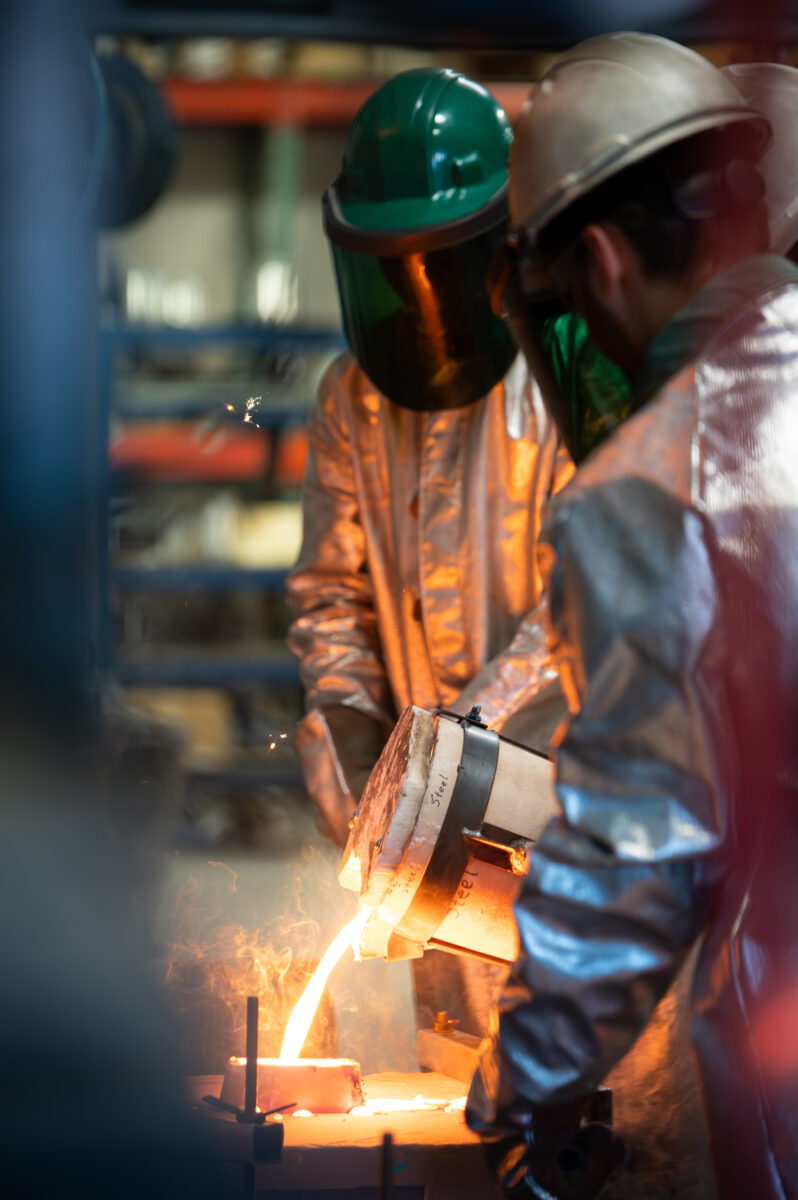
For Gallmeyer, stepping back into Michigan Tech’s foundry as a college student was a full-circle moment. Instead of watching faculty transform molten metal into new creations, she was the one donned with PPE, ready to cast science, creativity and her future.
“I got to watch casting from behind safety glass in high school,” Gallmeyer said. “It was exciting to actually pour and understand the science behind it this year.”
This spring, Michigan Tech plans to host hands-on bootcamps for career seekers, industry professionals and college students. Ready to ignite your future? Start METAL’s free online training and visit our events page to attend the next METAL bootcamp or workshop near you.