
John Mingst grew up in Bethpage, New York, a manufacturing town shaped by its long history of military and aerospace innovation. He remembers family members talking about working on the Apollo lunar module, and Grumman aircraft known as “the cats” — the Hellcat, Wildcat and Tomcat — were all part of his community’s identity.
When it was time to choose a career, Mingst had no doubt he’d follow that legacy. Today, the 24-year-old engineer leads project management for the Navy’s Nuclear Propulsion Program at Ashland Foundry & Machine Works, LLC (AFMW), a Pennsylvania manufacturer that specializes in fully machined iron castings for defense and other critical industries.
“You could say it was in my blood,” Mingst said, “to work in the military aspect of industry.”
Mingst is part of a growing number of Generation Z pursuing careers in manufacturing and the skilled trades. METAL is fueling their momentum, helping more young people discover paths into metalcasting and forging through hands-on training.
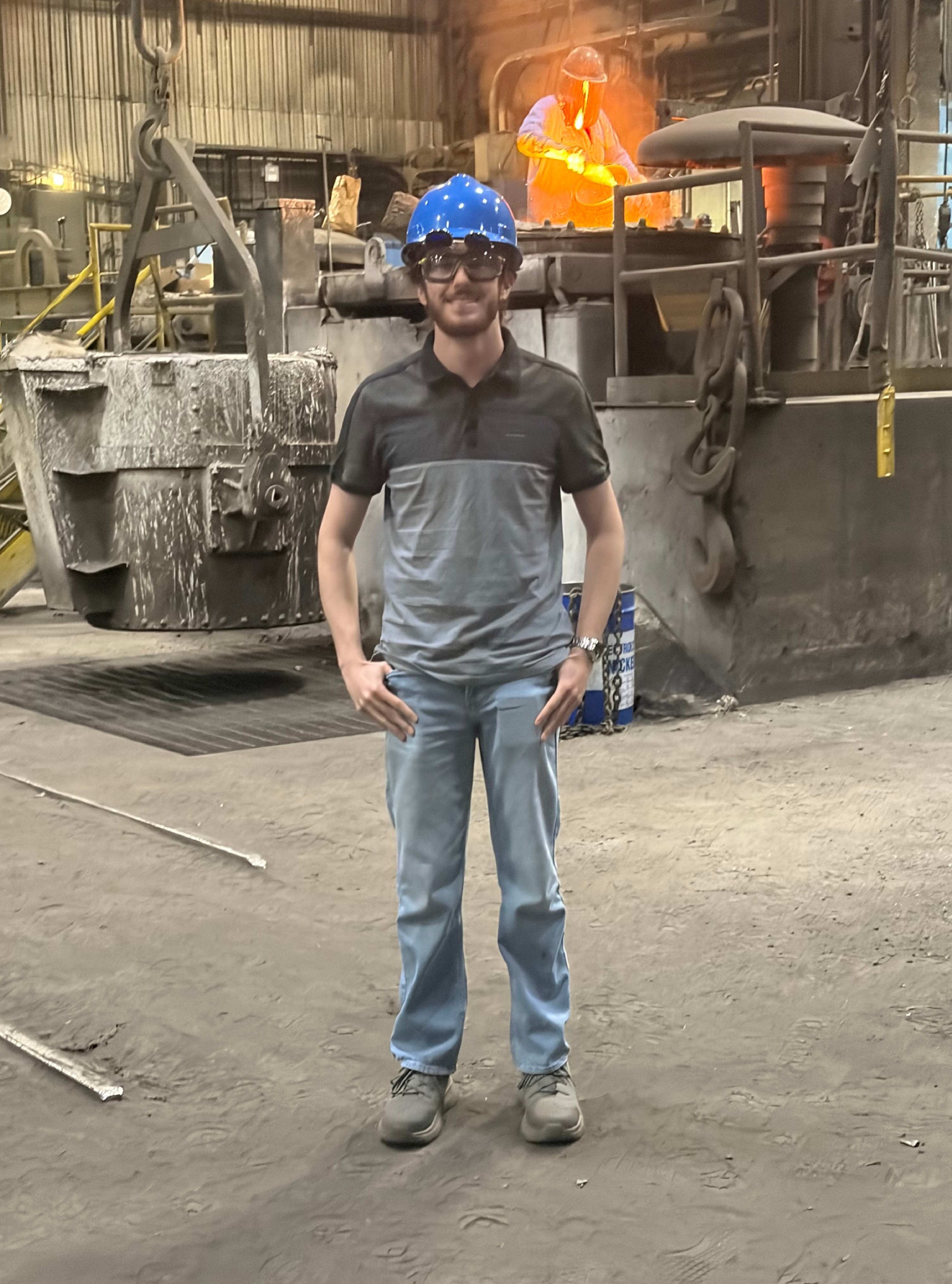
John Mingst, 24, is a project manager supporting the Navy’s nuclear manufacturing needs at Ashland Foundry & Machine Works, LLC.
Gen Z Redefines Career Success
Gen Z has officially overtaken Baby Boomers in the workforce, and more young adults are expanding their definition of desirable careers to include manufacturing and skilled trades.
In 2024, economists found that nearly 25% of new hires in trade industries were 18 to 25 years old. Even with this growing interest, U.S. manufacturers could have 3.8 million positions to fill by 2033 without enough workers for nearly half the roles.
“You’ll walk through just about any domestic foundry and see a lot of old gray-haired guys like me, and you’re missing a lot of younger people,” said Tony Badamo, AFMW vice president of sales, marketing and engineering. “We need to play catch up.”
As President Donald J. Trump prioritizes reindustrialization, manufacturers need workers with advanced skills to cast and forge parts for fighter jets, naval ships, aircraft turbines, heavy equipment and nuclear energy.
“There’s a lot of growth going on in nuclear power,” Badamo explained.
The stakes are especially high for the U.S. Navy’s Nuclear Propulsion Program, which maintains the nuclear-powered aircraft carriers and submarines that protect our nation. With ballistic missile submarine production expanding and shipbuilding and repair years behind schedule, foundries must be ready to deliver the castings the Navy depends on.
“I’m going to borrow a line from Uncle Sam: We need you,” Badamo said.
Building the Foundry’s Talent Pipeline
Led by IACMI – The Composites Institute®, METAL is accelerating the development of a highly-skilled metal workforce. Through hands-on bootcamps, K-12 workshops, free online training and apprenticeship support, METAL helps students and career seekers discover opportunities in the metal industry and gain the foundational experience to pursue them.
“A skilled engineer, in my opinion, is somebody that can walk in the foundry on day one and add value,” said Dr. Paul C. Lynch, an associate professor of industrial engineering who leads METAL’s bootcamps at Penn State Behrend. “How do you get there? It’s internships and real-world experiences working in the industry.”
AFMW is helping build that talent pipeline through research, internships and recruitment in partnership with Penn State Behrend. The foundry also sends new engineers to METAL’s bootcamps, where they can expand their knowledge of modern metalcasting and forging processes.
“METAL is a nice opportunity to give a young emerging engineer who’s never been in the industry a broad look at the foundry industry,” Badamo said.
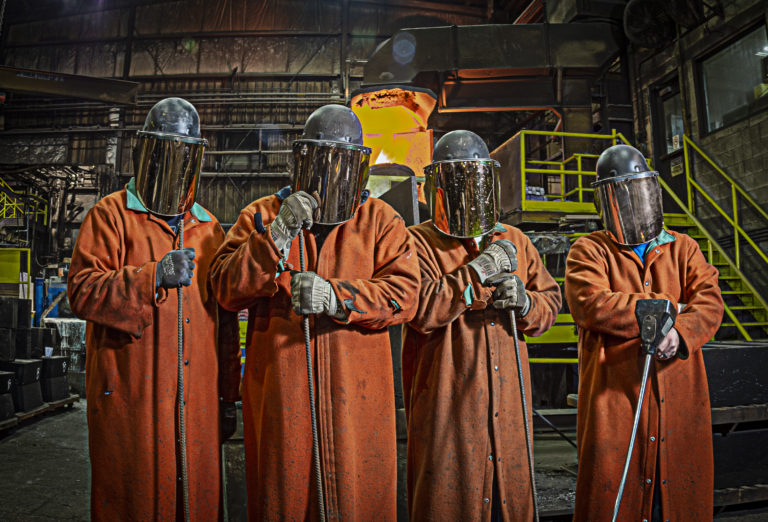
Ashland Foundry & Machine Works, LLC, a Pennsylvania iron manufacturer, partners with Penn State Behrend and METAL to give students and career seekers hands-on training and build stronger pathways to metalcasting and forging careers.
The Impact of Real-World Experience
Mingst had his first industry experience while he was in engineering school. He interned at TTM Technologies, a leader in advanced defense and aerospace communication, where he worked on microchips. Although the scale and processes differed from foundry work, Mingst said the internship provided him with the understanding to support the military’s manufacturing needs.
“TTM builds the communication systems for Air Force One and all the modern F-35 fighter jets,” Mingst explained. “I really got exposed to how things work with the government and the military and how important it is, which I brought to my first full-time position.”
After graduating from SUNY Polytechnic Institute, Mingst followed his curiosity about machining to a process engineer position with defense and high-tech manufacturer PRL Inc. It was his first time in a foundry, and watching red-hot liquid metal cool into solid parts changed Mingst’s future. He was hooked.
“I fell in love with getting down to the chemistry of the metals and the pouring practices,” he recalled. “That’s what led me down this path of ‘I want to continue to do this.’”
When an engineering position opened at AFMW, Mingst didn’t need much convincing to join the team. Badamo described the foundry as the manufacturing mothership for defense clients, with opportunities to help lead production of advanced metal products. Three months after Mingst joined AFMW as a project engineer, Badamo promoted him to program manager.
“We knew that we needed to shore up our talent pool,” Badamo explained. “There’s a real high demand for quality engineering support when you produce castings for the Navy’s Nuclear Program.”
For Jack Nemshick, a 21-year-old mechanical engineering senior at Penn State, his first day at AFMW’s foundry was eye-opening.
“When I first got in, there was a lot more to it than I thought there would be. I thought they just pour the metal and then shake it out,” Nemshick said. “But they do pretty much everything from start to the finish, and that was really interesting to me.”
As an intern, Nemshick spent his summer learning heat treatment processes, researching material microstructures, and preparing a presentation for the Steel Founders’ Society of America.
“We offer an immersive experience,” Badamo said. Whether training entry-level engineers, metal workers or student interns, AFMW prioritizes workforce development for industry newcomers.
“The first day you walk in the operation, you either say to yourself, ‘There’s no way I want to be here,’ or you’re like, ‘Hell yes, I’m all about this,’” Badamo said with a laugh.
Regardless of previous experience, Badamo believes the foundry is the best place to learn.
“We just need people who want to come and work, who want to make something with their hands,” he said. “That’s first and foremost, because we’ll teach it. We’ll show you what you need to do.”
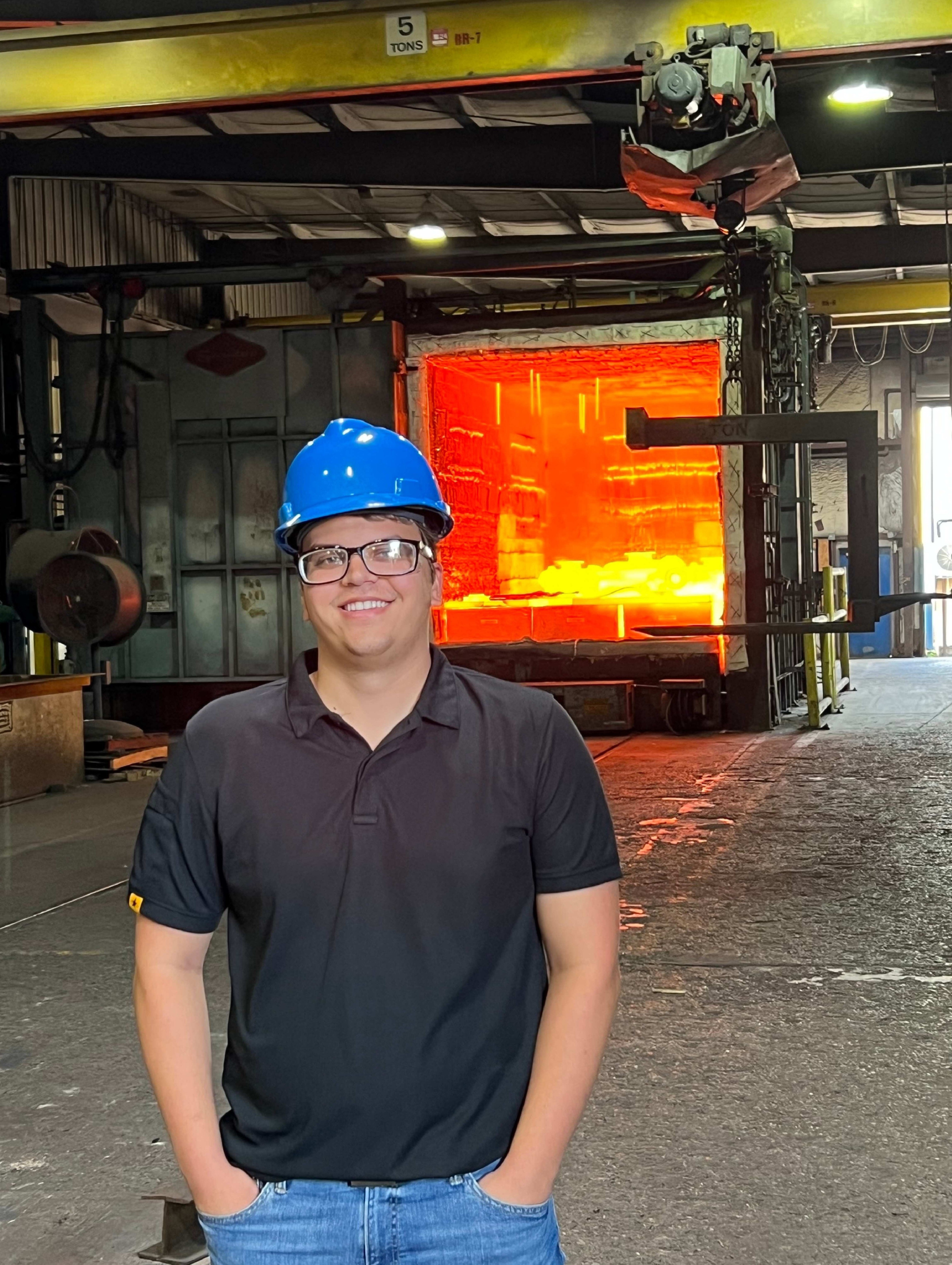
Jack Nemshick, 21, is a mechanical engineering senior at Penn State University who had his first hands-on foundry experience as a summer intern at Ashland Foundry & Machine Works, LLC.
Closing Metal’s Skills Gap
Thanks to METAL, students and potential metal workers don’t need to wait until their first day on the job to discover if they’re a good fit for the metal industry.
METAL’s metallurgical bootcamps provide up to a week of hands-on metalcasting and forging experience at university foundries nationwide. Participants begin with the fundamentals of the casting process, designing molds and testing pour simulations with CAD software. They also study quality tests that metallurgists use to evaluate bridge beams, aircraft components and products people depend on every day.
Before the bootcamp ends, participants suit up for the foundry. Clad from head to toe in fire-resistant gear, each one learns how to guide a ladle filled with molten metal and complete a safe pour. They leave with pieces they cast or forged themselves and a clearer picture of where these skills can take them.
“We need people to recognize there are career opportunities here,” Badamo explained.
AFMW recently collaborated with METAL on a virtual reality tour of its foundry for job candidates and bootcamp participants. The video offers a behind-the-scenes look at what it’s like to be a pattern maker, molder, operator, cleaning area worker, and quality inspector. METAL plans to share the tour with middle school students during week-long K-12 workshops, where they’ll also practice casting with chocolate and aluminum.
“If you don’t see it, you just have no idea what you’re getting into and you wouldn’t know if it’s a career you’d want,” said Crystal Bentley, communications and public affairs manager at IACMI. “It’s important to have visuals like this on the front and the back end of training.”
Mingst can’t imagine a more exciting career choice, and he’s following his dream: contributing to mission-critical work the nation depends on.
“You learn a lot coming right out of school very quickly in this industry,” Mingst said, adding, “this industry is going to stay in the United States. It has to, and the foundries are still strong.”
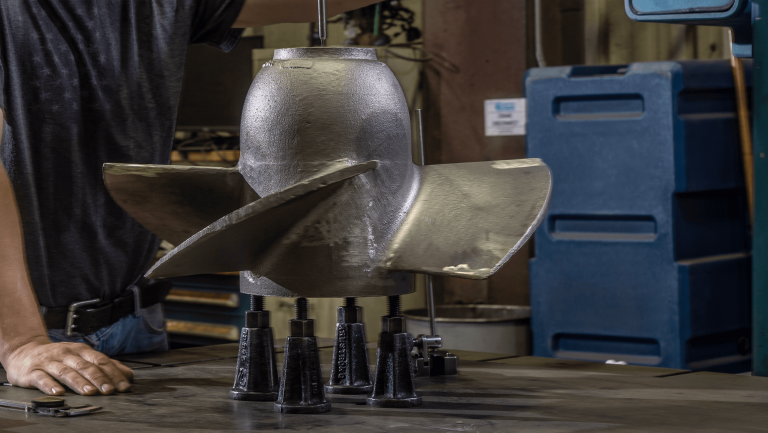
Ashland Foundry & Machine Works produces and tests iron castings weighing up to 10,000 pounds for naval vessels, defense systems and other critical applications.
Ready to forge America’s future? Explore METAL’s free online training and hands-on bootcamps to discover careers in metalcasting and forging. Visit our events page to find a bootcamp near you.
METAL is supported through funding by the Department of War’s (DoW) Office of Industrial Base Policy, which manages investments made pursuant to the Industrial Base Fund (10 U.S.C §4817).
***