Forging a New Passion: How Hannah Desai Cast Her Future in the Steel Industry with FEF

Hannah Desai comes from a family of engineers. Her three older brothers specialize in civil, mechanical and electrical, and aerospace engineering, but after a semester focused on cutting-edge metallurgy research as an FEF intern, Desai knew she wanted to forge her future in metalcasting.  

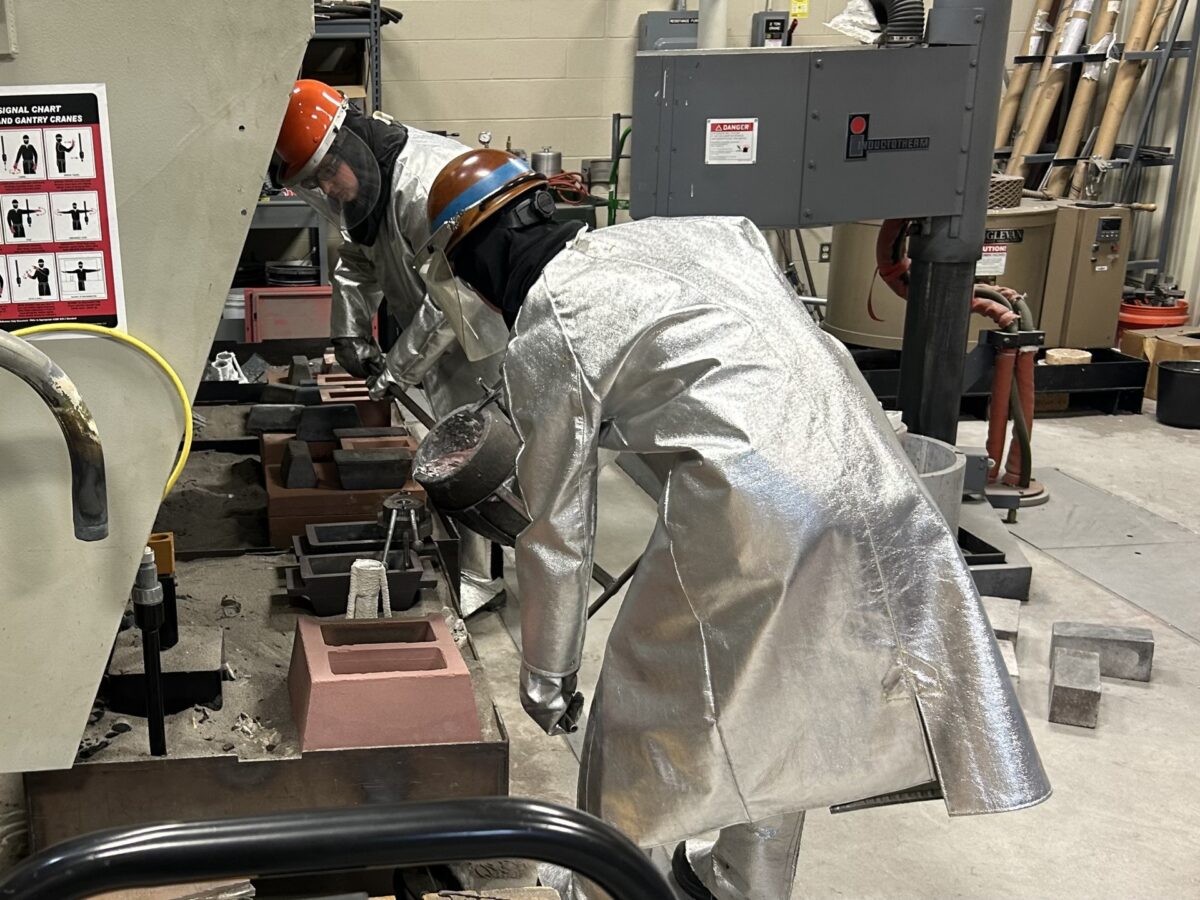
FEF intern Hannah Desai pours molten aluminum for a cast at Virginia Tech’s foundry.
The U.S. casting and forging industry will need 122,000 more skilled professionals by 2028 to meet national production demands. METAL and the Foundry Educational Foundation (FEF) have partnered to accelerate the development of a highly skilled, adaptive manufacturing workforce with hands-on training and internship programs. So far, 16 interns from seven universities have had the opportunity to gain foundry experience before graduating, propelling their careers and strengthening the workforce pipeline. 

Desai, a 2025 materials science and engineering graduate from Virginia Tech, was certain she’d go into ceramics before taking her first metalcasting class. She’d never seen molten metal, never experienced the teamwork it takes to melt and shape a material like iron. But after discovering what was possible in Virginia Tech’s foundry, Desai hit the ground running.  

She began to cast everything from HokieBirds and turtles to a detailed TI-89 calculator with inscribed buttons. For her advanced casting lab final project, she took on the challenge of casting small, thumbnail-size steel magnets for the pure joy of trying something new.

“I loved the hands-on learning and seeing the process take place right before my eyes,” Desai said. “It’s different than collecting data. It’s actually seeing the process, being a part of it and then learning something from it.”

Desai carried this enthusiasm and curiosity for metalcasting into her FEF internship experience. 

Driving Industry Impact 
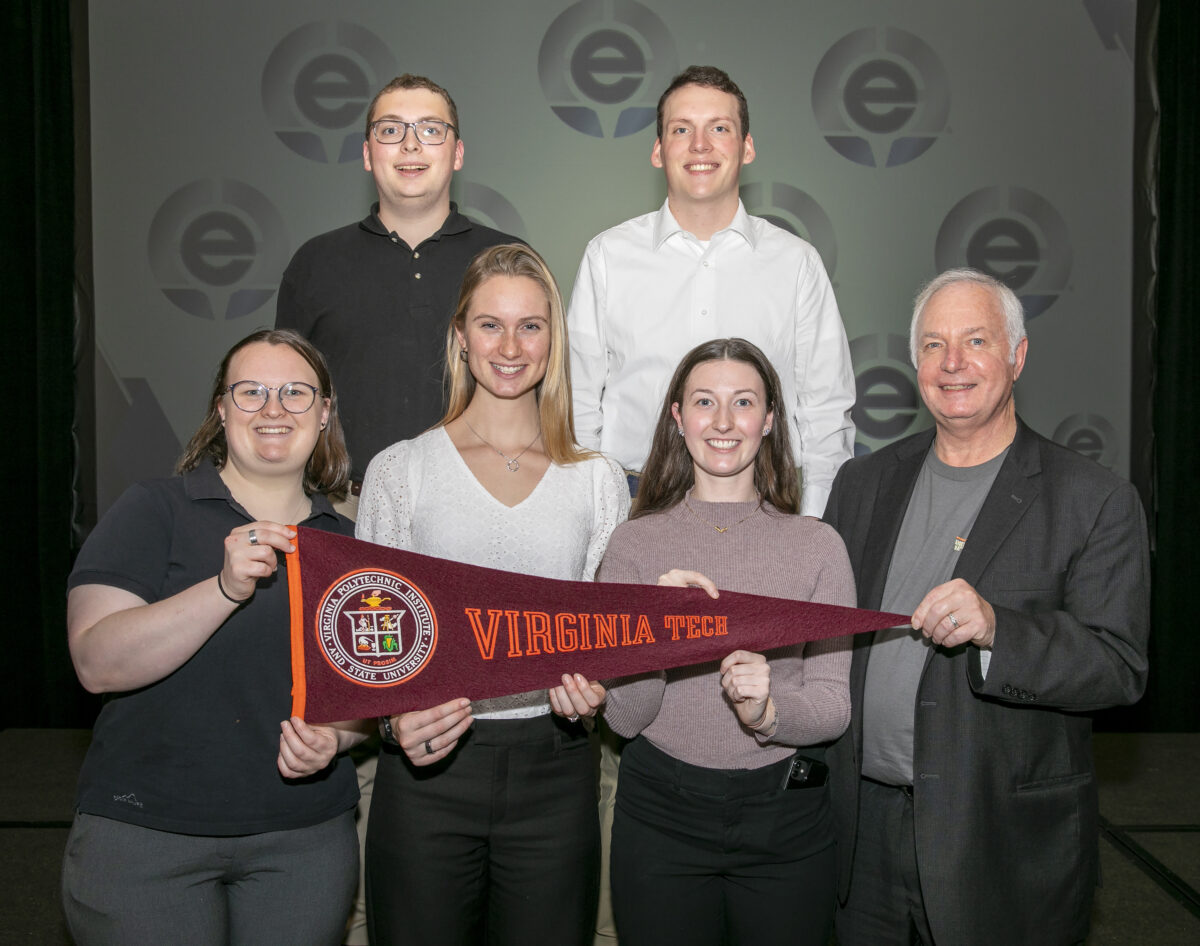
Hannah Desai, second from left, and FEF Key Professor Alan Druschitz, right, pose with Virginia Tech metallurgy students at the 2024 FEF College Industry Conference.

With guidance from FEF Key Professor Alan Druschitz, Desai applied her chemistry and engineering lessons to real-life foundry projects—from forging new combinations of metals to performing thermal and chemical analyses and even testing the electromagnetics of steel using a forklift battery.    

The foundry became Desai’s playground to experiment and learn, and that’s exactly what Druschitz wants for his metalcasting students. 

“If a student said, ‘can we come into the foundry and do something on a weekend or an evening?’ the answer’s going to be yes,” he said. “FEF professors are unique because we’re dedicated to the industry and growing the future workforce.”

Druschitz started the metalcasting program at Virginia Tech 15 years ago. Today, the school has an FEF-certified curriculum and operating foundry. Thanks to funding from FEF, Druschitz is able to buy new equipment, award scholarships, and pay student researchers who are eagerly driving the metal industry forward. 

Desai joined Druschitz and a team of metallurgy students in researching the impact of adding manganese to ductile iron, a high-strength metal used across manufacturing industries, instead of nickel. Nickel is mixed with ductile iron to make products such as pipes, automotive parts and agricultural equipment more durable in fluctuating temperatures, but it’s more expensive than manganese. 

His team’s research could help manufacturers make critical parts stronger and tougher at a lower cost, Druschitz said. “We’ve got the potential for some real industrial significance, and students love that.”

During her internship, Desai learned how to perform heat treatment, modeling, and charge calculations to determine the exact mix of raw materials and ideal melting temperatures for a pour. Then her team turned calculation into action. Together, Desai and three other researchers cast the ductile iron with manganese: two holding the ladle and pouring the molten metal, one running the overhead crane, and another student taking samples.     

Desai’s favorite part was seeing the sparks fly—and advancing the future of metal production.   

“Research in university foundries is so important because they can do smaller projects that large companies can’t take the time for. That’s why this FEF internship is so special,” she said. “I’m grateful I got the opportunity to help the industry in a small way, but it also made a big impact on my career.” 

Forging a Career in Steel

Today Desai works at Gerdau, a leading global steel producer, in the Petersburg, VA steel mill. As a trainee in the G.Future Leadership Development Program, she supports Gerdau’s production of steel products for the agricultural, automotive, construction, distribution, energy, industrial and mining industries—and now she enjoys watching the melt shop’s arc furnace spark as it melts 150 tons of steel.  

“It’s really cool to see what I did at the foundry, but on a much larger scale,” she said.

In the future, Desai hopes to continue advancing her education and career in the metalcasting industry. She’s not sure she would have ever explored this passion without her FEF internship and scholarships. 

“Without the foundry, I definitely would not be where I am today,” she said. “This experience has been pivotal in my career.” 

To learn more about METAL’s FEF internship opportunities, email lcurry@iacmi.org.
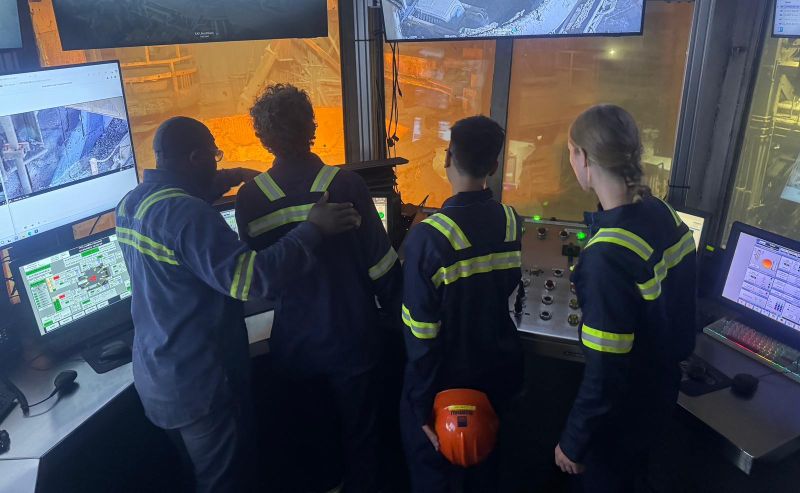
Hannah Desai, right, trains with fellow G.Future Leadership Development Program participants in Gerdau’s melt shop in the Petersburg, VA steel mill.
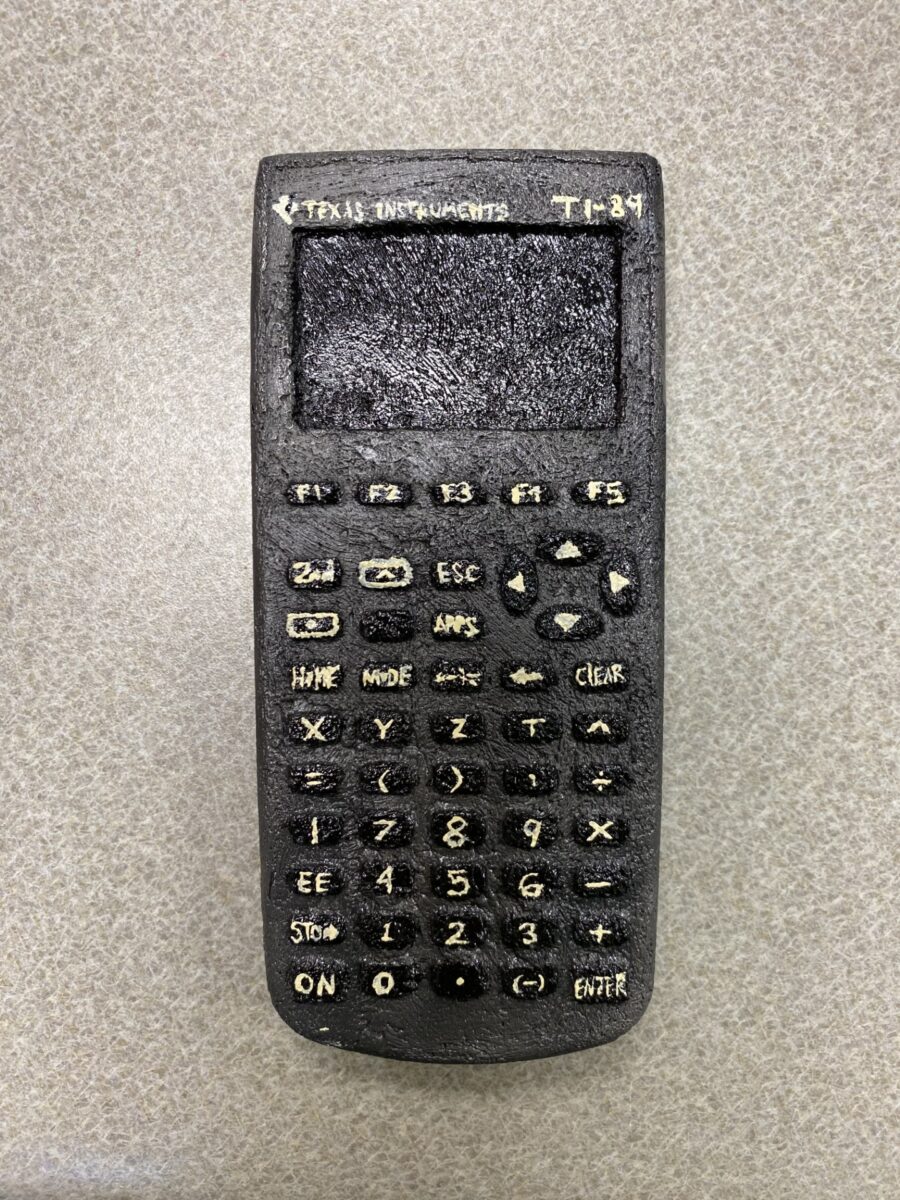
Life-size replica of TI-89 calculator cast by Desai at Virginia Tech’s foundry
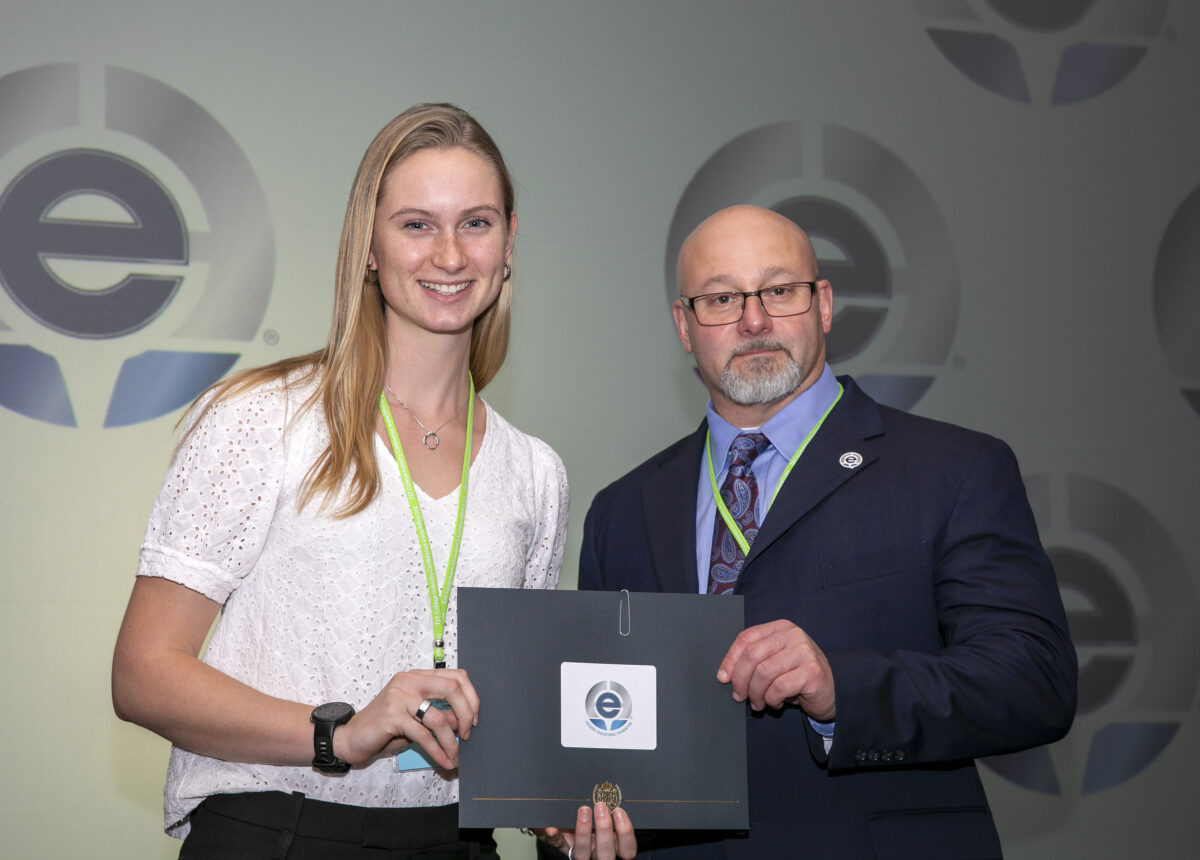
Hannah Desai, left, received FEF’s Chester V. Nass Memorial Scholarship in 2024.
Igniting Curiosity: Casting Dreams Winner Noah Miller Creates and Imagines with Metalcasting

Noah Miller never thought he’d win the Casting Dreams competition. But after learning how to metalcast, refine, and finish a miniature truck in his high school’s material science class, he was ready to give it a try—and he took home the national prize. 

Miller, 18, from Spring Hill, Kansas, got his first glimpse of metalcasting when his twin brother, Levi, won second place in the inaugural Casting Dreams competition last year. Through resources and materials provided by Foundry Educational Foundation (FEF) High School Outreach program, a METAL partner, Miller gained rare hands-on experience in a field he’d never learned about before. 

But, more than anything, Miller was excited to cast a creation of his own.

“What made it interesting to me was how you can make a mold of something and pour metal and it comes out so detailed, so perfect,” Miller said. “My favorite part was pouring the metal into the mold.”

Miller credits his material science teacher, Matthew Lundy, for igniting his interest in metalcasting.

Firing Up Curiosity in Manufacturing

Lundy’s class introduces students to a variety of manufacturing disciplines—from ceramics and glass, to polymers, plastics and composites, to metal material properties and casting. Using FEF’s Foundry in a Box kits and video tutorials, he walks students through simple sand casts and tin casts before they explore investment casting with FEF Key Professor Russell Rosmait.

With Lundy and Rosmait’s help, students learn how to metalcast small items such as school mascots, sports team logos, rings and even their favorite books. Each student designs their project in CAD, 3D prints the design, encases the object in plaster to create a ceramic mold, and finally has the chance to pour red-hot bronze or brass into the desired shape. 

“There’s not really any limitation,” Lundy said. “If you have the imagination for something that you want to cast and it can be made into three dimensions, you can cast it.”

 For both Lundy and Rosmait, the best part is seeing students’ eyes go wide and light up during the molten pour. Rosmait, a professor emeritus of engineering technology at Pittsburg State University, has partnered with Spring Hill High School for more than eight years to show high school students what’s possible in a metalcasting career—and many students continue on to engineering programs at Pittsburg State and other schools across the country. 

“Part of FEF is making sure students have great hands-on experiences,” Rosmait said. “I know I have a student hooked when I watch them pour the metal and their tongue is hanging out of their mouth. They’re just so excited and can’t wait to break out the mold and see their success.”

What’s most important is that students have the opportunity to try metalcasting, Rosmait added. “It teaches our youth today that you can build things to advance the future,” he said. 

For Miller, entering the Casting Dreams competition was an opportunity he couldn’t resist. 

Forging Ahead of the Competition

After learning the fundamentals of metalcasting, Miller was ready to design and cast his own creation for Casting Dreams. 

In its second year, Casting Dreams is hosted by the Steel Founders’ Society of America for seventh through twelfth grade students who want to test the skills they’ve learned with help from programs like METAL and FEF. In 2024, Casting Dreams had 67 students participate. This year, more than 600 students submitted their own metalcasted projects to be judged by professional metallurgists.  

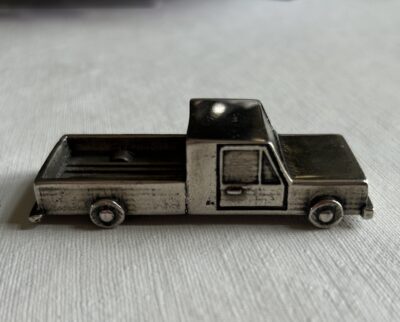
Miller’s project was inspired by his love of working on cars with his dad. He spent a month perfecting his investment cast Ford truck (complete with hubcaps and bumpers) before submitting it to Casting Dreams. After placing second and third at the local and regional levels, Miller said he was surprised when he won at nationals.  

“The most rewarding thing from participating in Casting Dreams was winning first place,” Miller said. “When I was making my truck, I felt most accomplished when I polished it up and saw how good it looked. It blew me away.”

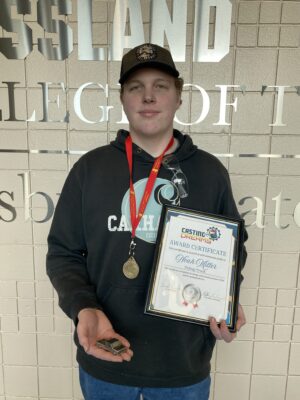
With help from FEF Key Professor Russell Rosmait, Spring Hill High School senior Noah Miller investment-cast an antique Ford truck and submitted it to the Casting Dreams student metalcasting competition where it won the national grand prize.

Michelle Kerns, program director for FEF’s Metalcasting High School Outreach, said reaching students in high school and middle school is the perfect time to engage, inspire, and get them curious about metalcasting careers.

“By the time we reach engineering students in junior or senior year of college, they’ve already decided where they want to go,” Kerns said. “We’re trying to get the best and brightest students into the metalcasting industry. There’s a lot of jobs coming back to the United States and we need talented people in the workforce to fill those jobs and meet the needs of the foundries.”

For now, Miller plans to pursue his passion for science at Kansas State University, putting his Casting Dreams prize money toward tuition. More than the grand prize, Miller’s grateful for the hands-on metalcasting experience and skills he gained, thanks to his teacher and FEF. 

Last year, FEF’s Metalcasting High School Outreach program piloted its two-week basic metalcasting unit in 13 schools. This fall, the program will launch in 50 high schools across the U.S. – teaching students of all ages how to create, imagine, and forge new paths in metalcasting.

For more information on METAL’s K-12 workshops, visit here

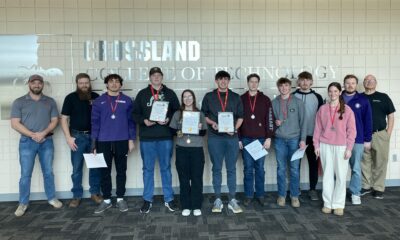
Casting Dreams winner Noah Miller, fourth from left, stands with his classmates, teacher Matthew Lundy, second from right, and FEF Key Professor Russell Rosmait, far right, at the local Casting Dreams competition at Pittsburg State University.

Spring Hill High School senior Noah Miller won the national Casting Dreams student metalcasting competition, judged by professional metallurgists, with a bronze Ford truck he investment casted with the help of FEF mentors and resources.