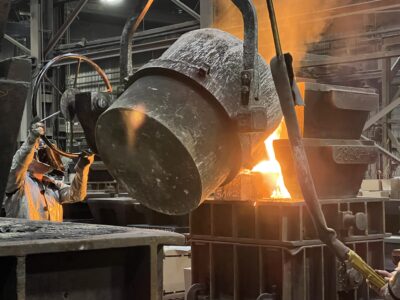
Harold Watson started HFW Industries Incorporated in 1947 in a two car garage.
World War II had ended only two years prior, and the United States emerged as a global manufacturing powerhouse. During the war, American manufacturers helped lead the Allies to victory — producing 297,000 aircraft, 193,000 artillery pieces, 86,000 tanks, and two million Army trucks at a scale the world had never seen before. When the war ended, that industrial momentum quickly shifted back to automobiles, infrastructure, and consumer manufacturing.
Harold, a foundry maintenance superintendent, was responsible for keeping machines the U.S. troops and metal manufacturers relied on running smoothly. That’s what he was doing when he found an innovative new product, the metal spray gun, and inspiration sparked. Could the spray gun help industrial equipment last longer and reduce time spent waiting on repairs?
Harold bet it could and started a business he believed would reinforce America’s strength as the greatest manufacturer in the world. He was right.
Today, HFW Industries Inc. is a leader in high-performance surface enhancements and manufacturing technologies, built on the same spirit of innovation and industrial excellence that defined America’s manufacturing strength during WWII.
Almost 80 years later, Harold’s legacy lives on through his great-grandson, Jack Watson. At 26 years old, Watson is a fourth-generation manufacturer and business development manager empowering HFW Industries Inc.’s mission to serve U.S. defense, energy, and other critical industries people depend on every day.
Watson recently attended a METAL bootcamp to connect with other manufacturing leaders and learn the science behind metalcasting and forging. For manufacturers like HFW Industries, METAL’s training opportunities share foundational metallurgical knowledge while introducing more people to the careers and technologies driving America’s metal industry forward.
Here’s what Watson said about his METAL experience, thermal spray innovation, and why he believes American manufacturing still offers enormous opportunity for the next generation.
Hear Jack’s story:
How did HFW Industries Inc. start?
HFW was started by my great-grandfather, Harold, coming out of World War II. During the war, he worked at a foundry in Buffalo, New York. It’s funny that as part of the METAL bootcamp we’re talking about and exploring foundries and that’s where we started. My great-grandfather worked as a maintenance superintendent, repairing equipment, sending it out to be rebuilt or made new. In that role, he came across this new technology at the time, the metal spray gun, and it allowed him to repair his own parts by spraying metal back onto them.
It really was additive manufacturing in the early days. Now, when you say additive manufacturing everyone thinks of 3D printing, but thermal spray was one of the early forms. My great-grandfather was enamored with it. He could immediately see the benefits of being able to repair his own equipment, not having to send it out — saving costs, money and time. That’s a big one, being able to repair equipment in-house and not sending it out to someone to get it back in a couple weeks.
So Harold was excited. He went to his boss and tried to make a case for the metal spray gun. As the story goes, his boss wasn’t interested and said, “I think we’re okay”
In classic Watson family stubbornness, he said, “If you’re not going to buy the gun, I will.”
The rest is history. Harold bought one of the first commercially available spray guns, and today thermal spray is core to the metalworking industry. My great-grandfather became a pioneer in the thermal spray industry and helped write a lot of the technical material about it. He was one of the first technical advisors for the American Welding Society’s standards for thermal spray. So my family and our business are deeply entrenched with the thermal spray community and how it started.
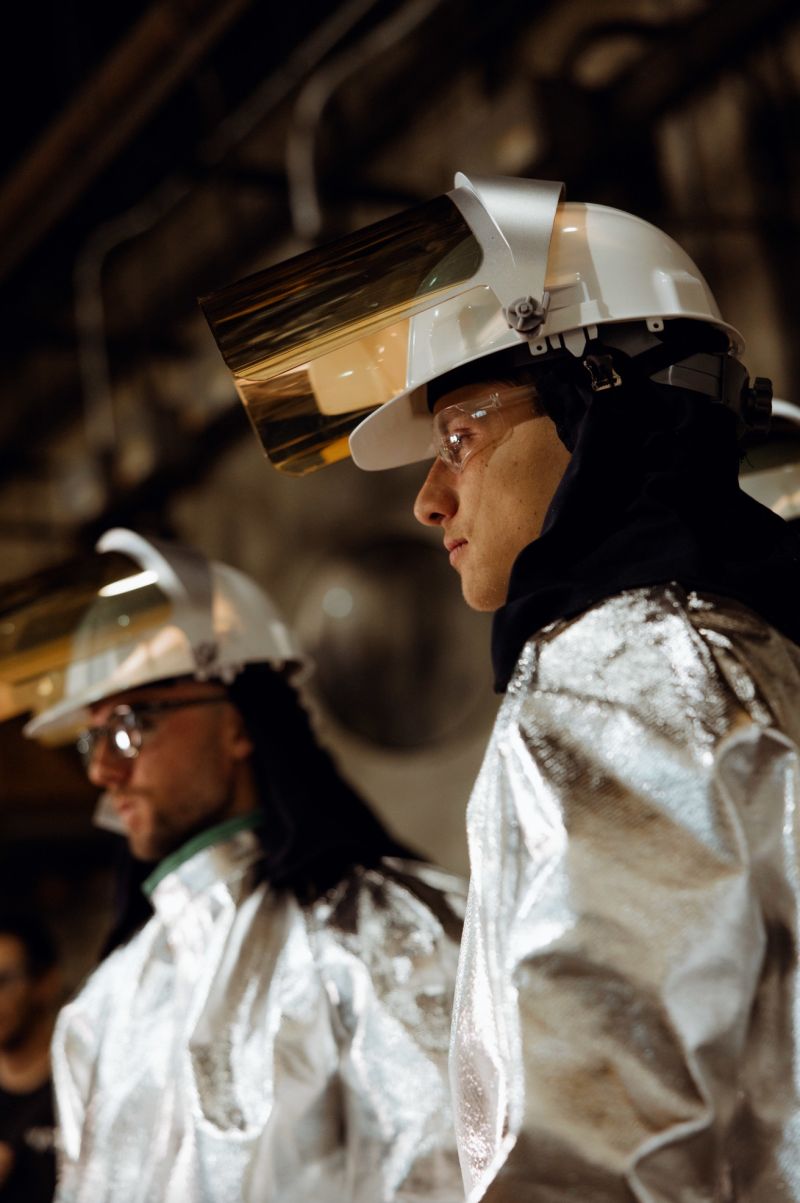
Jack Watson, left, fourth-generation U.S. manufacturer and thermal spray specialist learns how to pour a metalcasting for the first time during METAL’s Penn State, Behrend bootcamp.
As a fourth-generation manufacturer, why did you attend METAL’s bootcamp?
Honestly, the biggest reason was the people. There are a lot of very like-minded people here that are facing similar problems, but who also see the massive opportunity in front of American manufacturing right now. Some of the best conversations happen outside the classroom — in the hallways, at dinner, during the tours — and a lot of times those conversations are just as impactful as the classroom sessions themselves.
For me, attending METAL’s bootcamp was a no-brainer. It’s not like you’re just going somewhere to play golf, although I like that too. There’s a real purpose to this. You’re learning, you’re building relationships, and you’re around people who are passionate about manufacturing and solving really tough problems.
The other big piece for me was the actual subject matter around castings and forgings. At HFW, we work with castings, forgings, turbine shafts, compressor equipment and rolls going into chemical plants. Those are often the starting point for the work we do. Metallurgy is a huge part of our business, and while I knew a lot of the general background, I wanted to better understand what comes before our part of the process. The bootcamp honestly opened my eyes quite a bit, and I left with a lot of things I want to study further.
I also think one of the biggest things METAL and programs like this provide is exposure. Most people just don’t know much about these industries or their opportunities. A lot of people still picture manufacturing as dirty steel mills and coal mines from the early 20th century, and that’s just not what manufacturing is today. There are a lot of really advanced, highly technical careers in this industry, and for somebody who enjoys niche manufacturing solutions and tough manufacturing problems, it’s a really exciting space to be in.
What are the challenges U.S. manufacturers face right now?
The easy answer is talent, and I don’t think there’s an easy solution. A big part of the challenge is changing the perception around the trades and helping people understand the opportunities that exist in manufacturing today, which is why programs like METAL’s bootcamp are so important. At the same time, these industries require extremely skilled people, and that level of expertise doesn’t happen overnight. In our world, it can take five to 10 years to really master the craft, especially in a specialized field like thermal spray. There just aren’t a lot of thermal spray technicians walking around on the street looking for jobs.
That’s why the focus has to be on training, patience, and long-term investment in people. Most of our thermal spray technicians are trained on the job because a lot of the work we do is so specialized that very few other companies are doing it. We invest heavily in teaching, building career paths, and creating an environment where people want to stay and grow long-term. There’s definitely a learning curve, and people are going to make mistakes along the way, but if you find great people who are willing to work hard, there’s a huge opportunity in manufacturing right now. I really believe it’s a generational opportunity for someone to build a strong career, do very well for themselves, and provide for their family.
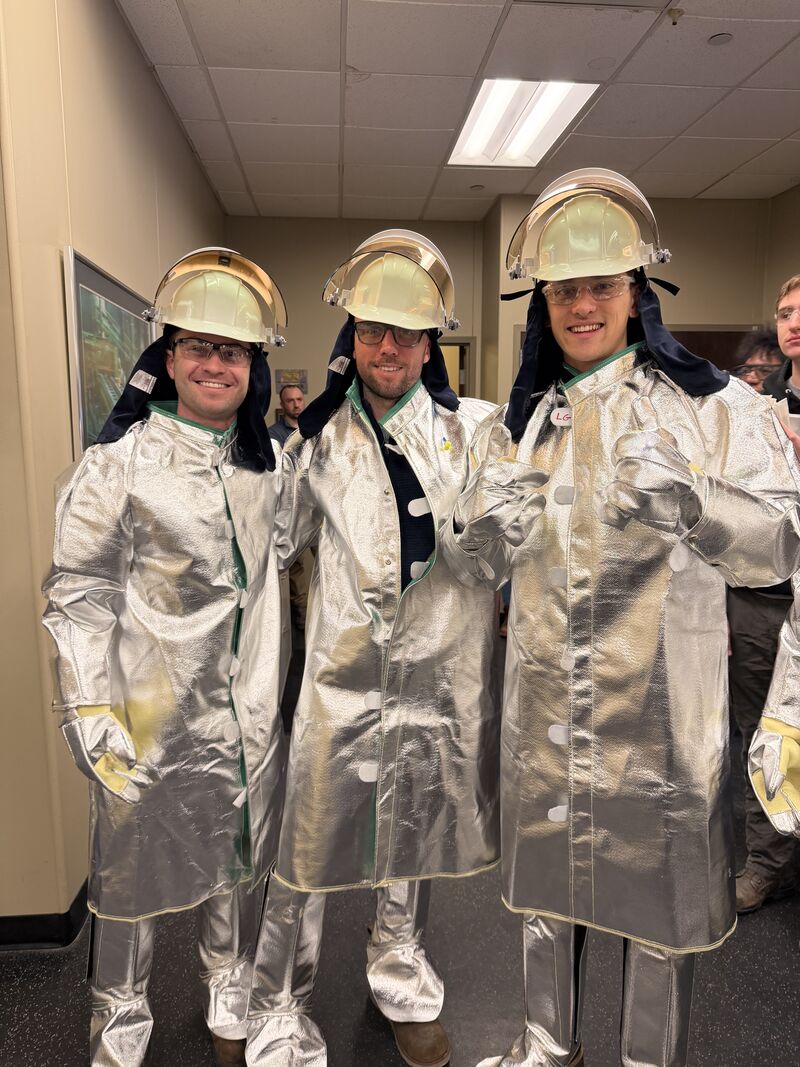
Manufacturing entrepreneurs Zach Glabman, Jack Watson, and Daniel Scott Mitchell suit up for their first metal pour at Erie Bronze & Aluminum Co. during METAL’s Penn State, Behrend bootcamp.
What happens when U.S. manufacturers can’t find skilled workers?
When manufacturers can’t find skilled workers, you start seeing projects get delayed because there are only so many companies and people that can do highly specialized work. In some cases, there are very few vendors, if any, that can handle certain projects, and the ones that can, end up with backlogs that are months or even years out. That creates a tough dynamic for everybody. The manufacturers want to meet customer demand and expand capacity, and the customers buying that equipment obviously aren’t thrilled when lead times stretch out that far.
We’ve seen outsourcing over time, but the bigger point is the opportunity is already here in the United States. We just need a lot more skilled tradespeople to actually meet that demand.
The reality is that the true skill in manufacturing comes through time and experience on the job. Right now our average tenure is around 10 years, and a lot of the real value comes from the people with decades of experience who have mastered their craft over time. We had some great veterans here with 30 and 40 years of experience who retired recently, and that’s hard knowledge to replace overnight. METAL is doing great work to expose people to manufacturing careers, but companies also need to step up and invest in training and retention.
For students or people considering manufacturing careers, I’d just say give it a chance and be persistent. A lot of these careers are challenging, but the learning compounds over time, and when you move around jobs every year, it’s hard to build that depth of experience.
Start your career in metal today with METAL’s free online training.]
How can modern metal manufacturers build on America’s legacy of manufacturing excellence and innovation?
There’s a lot of momentum around manufacturing right now, and I’m very enthusiastic about that. The only thing I’d push back on a little bit is when people use the term “reindustrialization,” because there are a lot of great manufacturers that have been here all along. Companies like ours have survived four generations because we’ve always been willing to innovate, try new things, and take on applications that other people were scared to attempt. That willingness to constantly improve and push ourselves is why we’re still here today. It’s easy for companies to rest on their laurels, especially after being around for a long time, but I think the real opportunity is in continuing to try difficult things, even knowing not all of them are going to work. The ones that do are the ones that build customers for life.
At the same time, there are so many small and midsize manufacturers across the country that desperately need people, are willing to pay well, and are great places to work. A lot of them have great people, a lot of flexibility, and huge opportunities for somebody who’s young and driven to come in, learn from men and women who have been doing this for decades, and build a career for themselves.
I hear people say sometimes that there’s not as much upward mobility anymore or that the American dream is harder to achieve today. I disagree. I get to see every day the people who are still living proof that it exists. Manufacturing is still a great way to build a life for yourself and your family. There’s a huge opportunity for the next generation to step into these industries, learn the business, maybe eventually take over a company or start one of their own, and do very well while supporting their communities. That’s really my personal mission and why I’m so passionate about getting more people exposed to manufacturing.
What is thermal spray and why is it important to modern manufacturing?
Thermal spray started as a pretty straightforward repair process. The easiest way to think about it is like brake pads on a car — the more you use them, the more they wear down. Industrial equipment works the same way. Over time, surfaces wear down, equipment gets damaged, and processes stop working the way they should. Thermal spray was first developed as a way to restore worn parts to like-new condition by spraying metal back onto them instead of replacing them entirely.
Over the last 80 years, thermal spray has evolved into something bigger. Today, it’s used not just to repair equipment, but to improve how equipment performs in really harsh environments. A lot of thermal spray coatings are designed to prevent extreme wear and corrosion or help equipment handle intense heat and thermal cycling. Think about an airplane engine or a gas turbine that goes from room temperature to more than 2,000 degrees and back again, over and over. Thermal spray coatings help protect those components and extend their lifespan.
What’s really interesting is how versatile the technology has become. Early thermal spray processes mostly used metal, but now manufacturers use all kinds of materials depending on the application — metal alloys, ceramics, and specialized coatings designed for very specific properties. Some coatings act as thermal barriers to protect equipment from heat, while others are used in electronics and semiconductor manufacturing because they can either conduct electricity or prevent conductivity. At the end of the day, the goal is usually the same: help equipment last longer, reduce downtime, and improve manufacturing performance.
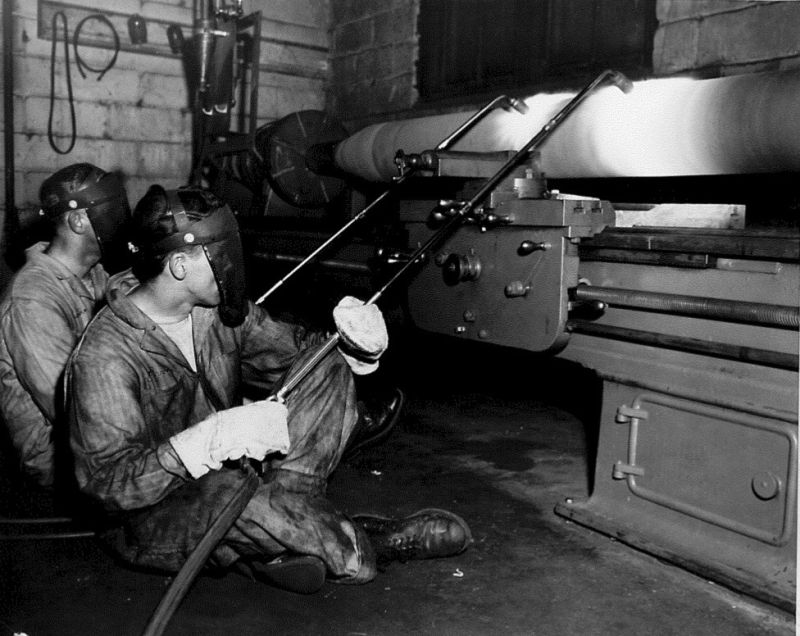
Harold Watson, back, founder of HFW Industries Inc., fuses a thermal spray coating to a large metal shaft. HFW Industries still uses the same spray and fuse process today.
How does thermal spray support critical U.S. industries?
At HFW, we’ve become specialists in not only thermal spray coatings, but in end-to-end industrial equipment restoration and wear prevention. Our team provides thermal spraying (HVOF, plasma and electric arc spraying), hardfacing, machining, precision finishing, and equipment assembly to national defense and critical industries, including:
U.S. Naval and Maritime
Over the course of HFW’s history, we’ve done quite a bit of work that’s tied to naval and maritime applications. Some of it has been directly for the Navy, and some of it supports the manufacturers making materials and systems that ultimately end up in defense and commercial shipbuilding. One of the stories that always gets talked about around here — and this was long before my time — was a project where the company actually sprayed Navy test equipment nose cones with gold. It’s one of those examples that really shows how specialized thermal spray can be.
A lot of the work we do today is focused on helping equipment survive harsh environments, especially around saltwater. If you’ve ever lived somewhere where roads get salted in the winter, you know how quickly salt creates corrosion. Ships and maritime equipment deal with that constantly. Thermal spray coatings help improve corrosion resistance and extend the life of things like steam turbines, pumps, and other critical systems operating near or in the water. We’ve also done work connected to power generation for ships, including steam turbine applications and some work tied to nuclear-related industries.
Energy and Power Generation
Power generation is a really big industry for us right now, especially with everything happening around AI, data centers, and the growing demand for power capacity. It all starts with the power side of things. You’re seeing it everywhere in the news. Companies are building more infrastructure, adding more generation capacity, and trying to support all these advanced technologies that require massive amounts of energy. A lot of the work we do supports the companies making gas and steam turbines, generators, gas engines, and other critical power generation equipment. Nuclear is also becoming a bigger piece of that conversation, and I think we’ll continue to see that grow.
Beyond power generation, we’ve also always had a large presence in chemical manufacturing and general industrial applications. Really, any industry that deals with wear and corrosion — which is pretty much every industry — is somewhere we can help design a manufacturing solution around extending equipment life and improving performance. Similar to metalcasting and forging, thermal spray is one of those niche manufacturing processes that people rely on every day without realizing it.
Just like METAL works to educate people about the importance of castings and forgings in modern society, there’s also a need for more awareness around thermal spray and the role it plays across industries like aerospace, energy, electronics, and advanced manufacturing. A lot of engineers and buyers may only know the basics, but in the right application, thermal spray can dramatically improve the life and performance of critical equipment.
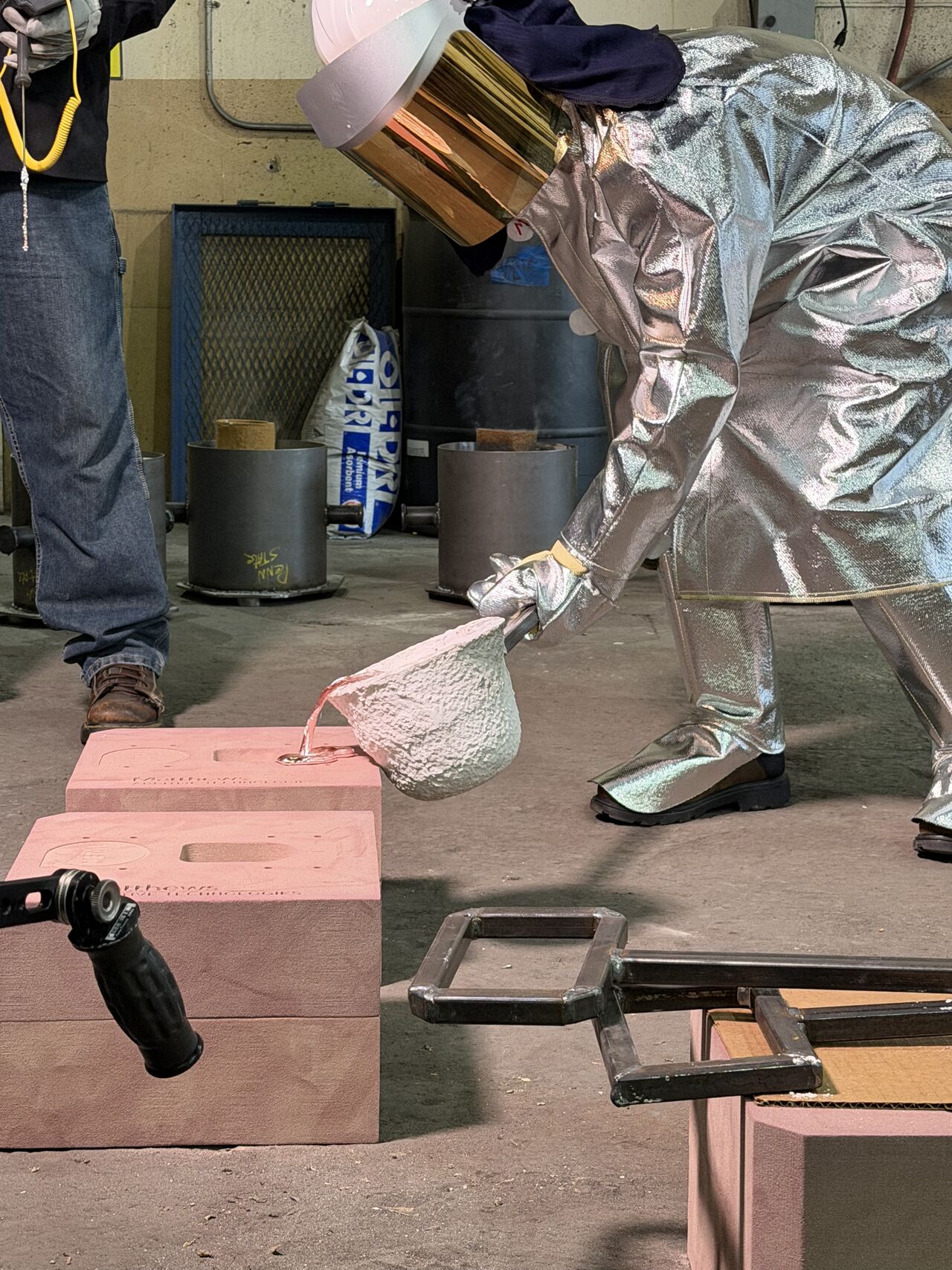
Jack Watson, business development manager and fourth-generation manufacturer at HFW Industries Inc., learns foundational metalcasting and forging skills from metallurgists at METAL’s hands-on bootcamp at Penn State, Behrend.
What does being an American manufacturer mean to you?
I explored different things growing up. I always loved construction and working with tangible things. Being around the family business my whole life, I knew I wanted to do something physical and connected to the real world. I’ve often said that even if the family business didn’t exist, I’d still be somewhere in this space because I just really enjoy manufacturing and industrial work. What excites me about metal manufacturing is that it has a direct impact on the world around us. If you like turning your lights on, flying on planes, or even flushing your toilet, manufacturing and metal are part of all of that. I enjoy being part of the infrastructure that helps build and keep the world running.
Then you look at all the different manufacturing processes, metallurgy, material science, castings, coatings, forgings — all these niche technologies that go into the products and infrastructure we use every single day. You can look around any room and see all the different metals and engineered materials that went into creating that space. And that’s every moment of our lives, from the time you wake up until the time you go to sleep. That’s what gets me excited about manufacturing. I love being part of that, and I can’t wait to be a part of several generations of great American industrialists.
Ready to cast your career in metal? Explore METAL’s free online training and hands-on bootcamps to discover careers in metalcasting and forging. Visit our events page to find a bootcamp near you.
Reach Jack Watson and the HFW Industries Inc. team at hfwindustries.com.
FAQs
What is thermal spray coating?
Thermal spray is a manufacturing process used to restore or protect industrial equipment by spraying heated materials onto a surface. Manufacturers use thermal spray coatings to reduce wear, prevent corrosion and extend equipment lifespan.
What industries use thermal spray?
Thermal spray is used across aerospace, defense, maritime, energy, semiconductor, and heavy manufacturing industries where equipment must withstand extreme heat, wear, or corrosion.
What is additive manufacturing?
Additive manufacturing refers to processes that build or restore material rather than removing it. While many people associate additive manufacturing with 3D printing, processes like welding and thermal spray have used additive techniques for decades. At HFW Industries, additive manufacturing includes thermal spray coatings and welding, while subtractive manufacturing includes machining, grinding, and polishing. Modern manufacturing relies on a combination of additive, subtractive, casting, and forging processes to create and restore critical industrial equipment.
What is METAL’s bootcamp?
METAL’s bootcamp is a hands-on metallurgy training program designed to introduce participants to metalcasting, forging, and modern manufacturing processes through immersive, college-campus experiences. Led by industry experts, the week-long bootcamps combine technical learning, lab work, foundry tours, and networking opportunities to help strengthen the next generation of America’s manufacturing workforce.
Why are manufacturers interested in metalcasting and forging?
Manufacturers attend METAL’s bootcamp to better understand foundational manufacturing processes, strengthen industry connections, and prepare for workforce challenges.
Why is workforce development important in manufacturing?
Many manufacturers face ongoing skilled labor shortages as experienced workers retire and demand for advanced manufacturing continues to grow. Workforce development programs help expose more people to careers in manufacturing and skilled trades.