
When Sydney Parks first stepped onto Tennessee Tech University’s campus, she planned to be a nurse—and she had no idea about the school’s foundry. This summer, almost a decade later, Parks returned as an Army technical engineer to become field-ready in a new essential skill: metalcasting.
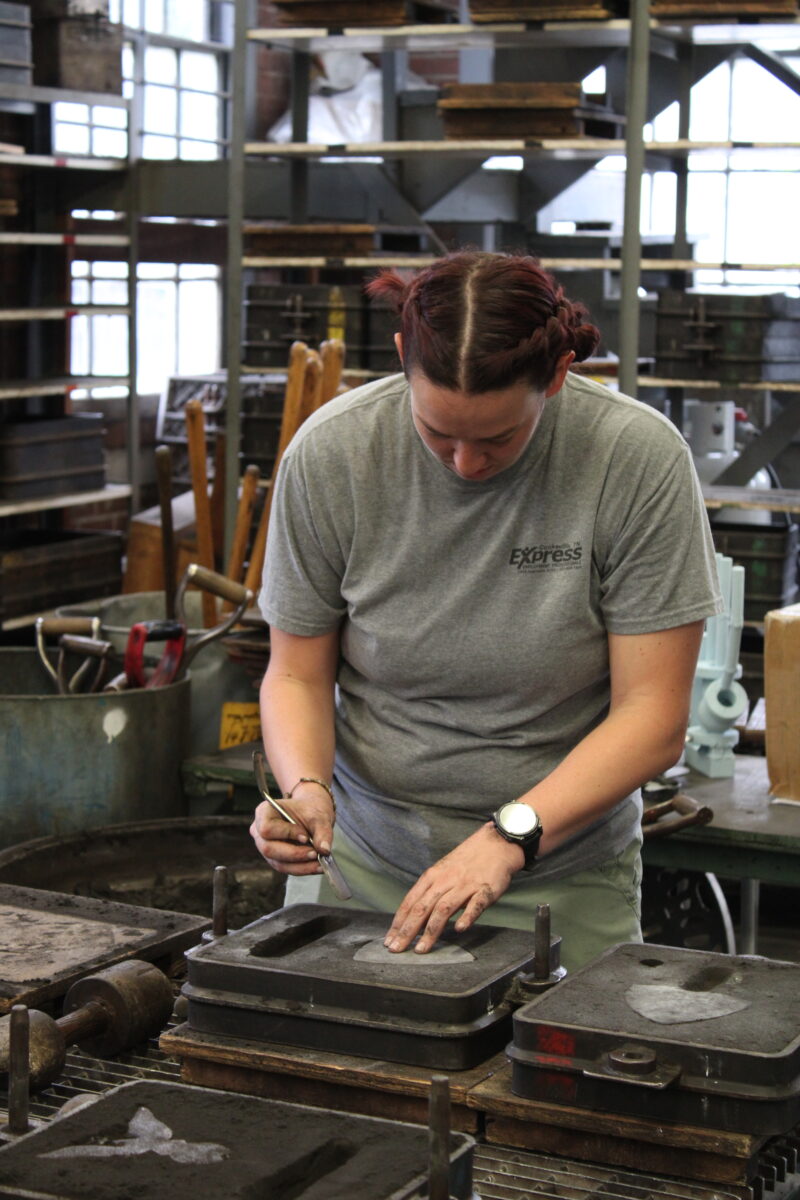
Parks, 29, never quite knew where her career would take her. After high school, she tried everything from the food service industry to manufacturing management to email marketing and website building. But Parks was always certain of one thing: she wanted to have as many new experiences as possible. The Army felt like her perfect opportunity.
She decided to pause her nursing degree and soon pursued training in places like Cuba and Kuwait. “I thought it would be a good time to absorb as many of those experiences as I could,” she said.
The Army also led Parks to her passion for engineering. She first became curious about how rotors, gears and other parts work together as a teen repairing her first car. But joining the military reignited her “find a fix” attitude.
“The military teaches you a lot of resiliency,” Parks said. “Even though I’m a technical engineer, if the vehicle I’m associated with needs maintenance, I have to learn how to do that. I believe that carries into my life and how I solve problems.”
In her career, Parks has led engineering teams for critical products and buildings, draining assessments and survey work across the Middle East. After returning home from her first deployment this year, Parks was eager to learn more skills that could be an asset in the field.
That’s when she discovered METAL’s metalcasting bootcamp at Tennessee Tech University. Led by IACMI – The Composites Institute®, with funding from the Department of Defense’s Industrial Base Analysis and Sustainment (IBAS) Program, METAL strengthens the U.S. metal manufacturing workforce. Before diving into the on-campus experience, she completed METAL’s free, self-paced online training. The course is designed to support bootcamp readiness, but it’s also available on its own for anyone eager to explore metalcasting. When she realized the bootcamp was hands-on and so close to home, she jumped in—boots first.
“I wanted to go into it full force,” Parks mused, adding that she was especially interested in the lessons on CAD software. “Being from a military engineering background, I find it very exciting to learn as much about it as I can.”
“I felt like a sponge”
Through METAL’s free week-long bootcamps, participants from diverse education and career backgrounds have a unique, hands-on opportunity to learn metalcasting from professional metallurgists. The bootcamps are not just for college students, but for anyone who’s interested in metal manufacturing, said Dr. Ismail Fidan, a professor of manufacturing and engineering technology at Tennessee Tech University.
“As an instructor, it makes me excited because most schools teach metalcasting, but they teach it through the book and hands-on is limited,” Dr. Fidan explained. “These opportunities through the top universities give people their first training.”
Through METAL’s bootcamps, Dr. Fidan has taught engineering students, professors, job seekers, retirees and service members like Parks skills that advance the entire metal industry.
“The nation is in a transformation to smart manufacturing. You get a product with a high volume, high quality, and you get a product that you want,” Dr. Fidan said. Smart manufacturing allows metal manufacturers to have more control of the production process using automation, robotics, AI and machine learning and other smart technologies. But the U.S. workforce needs more metal workers and engineers who can bring metalcasting to the 21st century, he said.
Parks was up to the casting and forging challenge. From welding and fabrication equipment to furnaces that liquify metal, she couldn’t believe what was possible in Tennessee Tech’s foundry.
“I felt like a sponge,” Parks said. “There was so much to learn and it’s a lot to take in, but the more I listened, the more it all made sense. The instructors and the assistants were really good at breaking it down to where I could understand everything at my level.”
After the first day, Parks invited her boyfriend Nicholas Bartik to attend the rest of the bootcamp with her. Bartik, who’s been an automotive technician for eight years, recently made the decision to start his own auto parts business. Parks thought the bootcamp could help Bartik better understand processes for designing and casting car parts, and he agreed.
“There is a lot of cool tech in the automotive industry,” Bartik said. “I’ve met engineers in the field who are using casting, 3D modeling and printing and different forging processes to produce components that improve engine performance. I want to integrate this type of engineering into my new company.”
Together, Parks, Bartik and the bootcamp’s participants each had the rare opportunity to sand-cast a creation of their own.
“We have hundreds of patterns to choose from,” Dr. Fidan said, adding that participants get to execute every step of the sand casting process—from picking a mold to pouring molten aluminum to learning about high quality testing. “They make it and grind it, polish it and they take it home for themselves. They have all this experience from the first day of the bootcamp to the last.”
Besides forging her own piece of art – a starfish – Parks was most fired up about visiting a professional foundry.
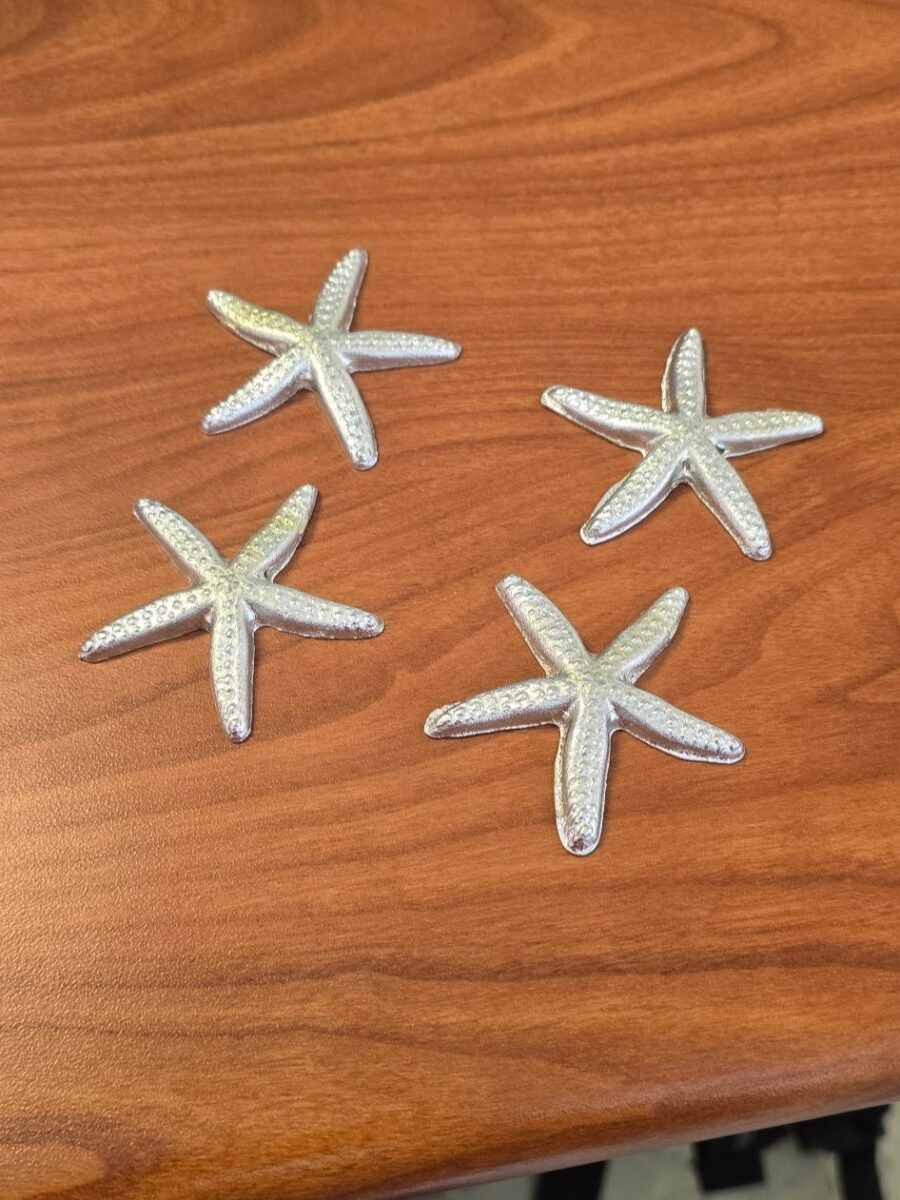
Casting in Action
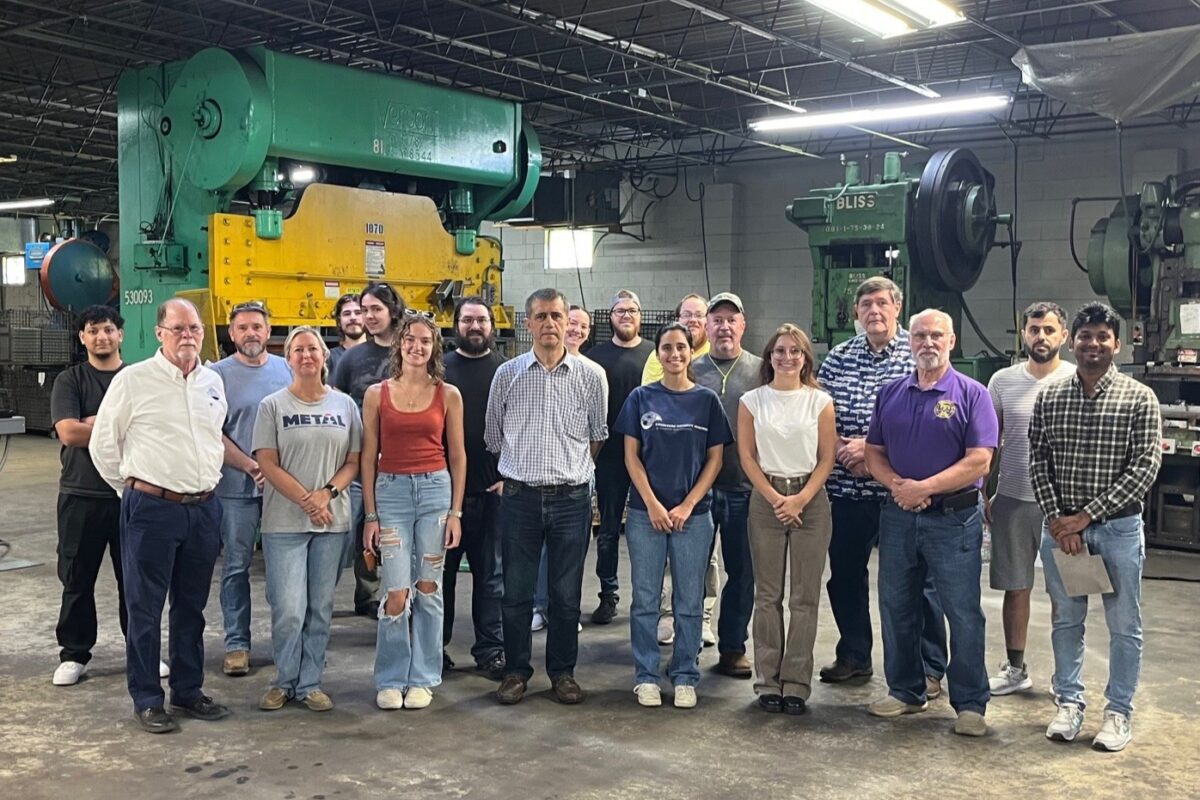
On the last day, the casters-in-training spent the morning at Triple C Machine in Livingston, Tennessee. Triple C Machine specializes in cold forging operations and other tools used for precise metal cutting and pressing, as well as production machining, metal stamping and MIG and TIG welding. Parks said the demonstrations gave her the basic understanding and inspiration to make her own custom creations.
“It’s really cool knowing how to go from zero to a completed part,” she said.
As Parks looks for her next civilian opportunity, she’s excited to try more workshops where she can make connections and learn skills that help her at home and while protecting the nation. Thanks to METAL, Parks feels more prepared to face challenges in her next deployment—from casting critical parts to supporting mobile welding services for the Department of Defense.
“Now I can apply what I learned to help myself or my peers in certain situations,” Parks said.
She would love to bring more Army technical engineers to future bootcamps. But she recommends the experience to anyone, even for the pure joy of learning something new.
“Forging and casting have become forgotten. People don’t realize what it takes to create the items we use everyday,” she said. “I’m very appreciative of this opportunity. It’s available to anyone who’s willing to take the time to sit and learn.”
Ready to cast a new future—together? Register for our free online training then visit our events page to attend the next METAL bootcamp near you.