
Paul Lynch grew up in a town that hummed with manufacturing. In a small community hugging the Appalachian mountains of eastern Pennsylvania, he learned first-hand the impact foundries can have on the local economy. Today, Lynch is honoring the past by driving the future of metal manufacturing forward.
Dr. Lynch, who’s an associate professor of industrial engineering at Penn State Behrend, has dedicated his career to supporting the growth and innovation of Pennsylvania’s metal industry. Like many towns in the region, Lynch’s hometown, Gordon, was developed in the 19th century from the booming anthracite coal industry. For more than 150 years, coal mining powered homes, jobs and the economy—and fueled U.S. steel production.
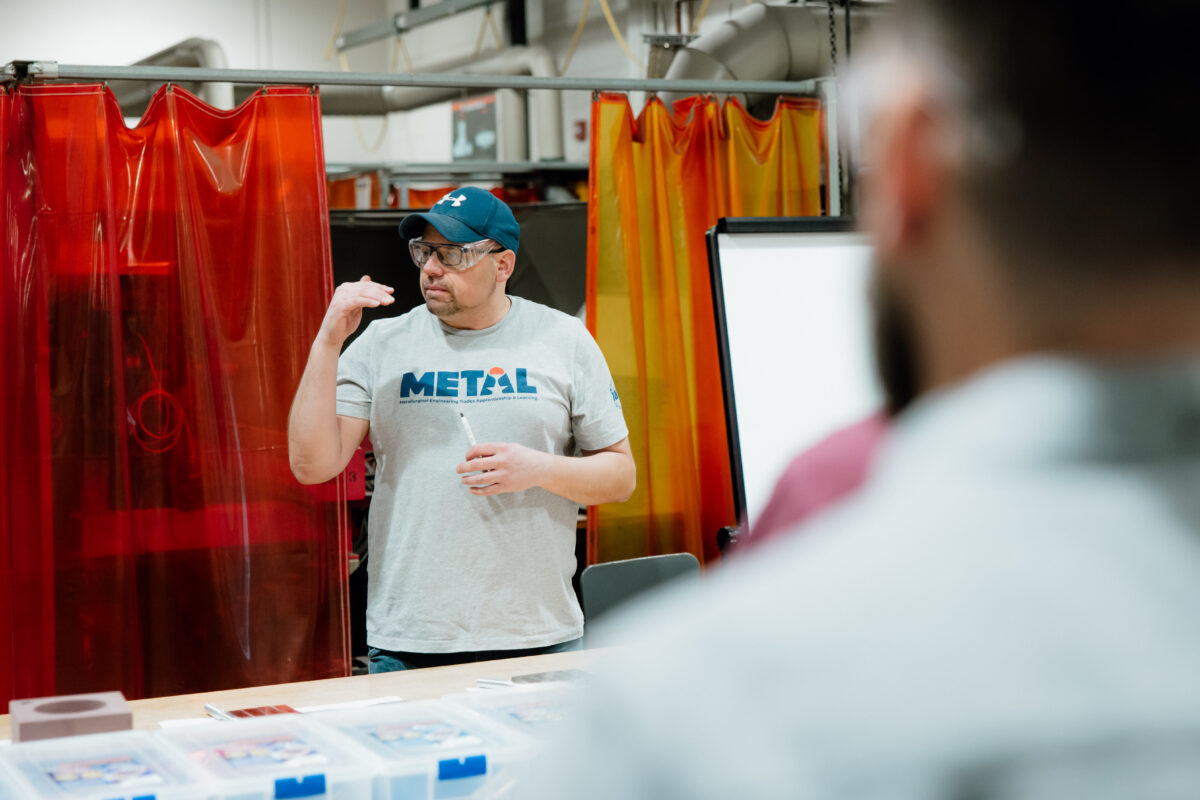
“My dad owned a mechanic shop and he could tell you, without talking to the folks from the local foundry, if business was up or down,” Lynch explained. “If people are doing really well, they’ll buy new tires, or if they’re not, they’ll put off maintenance on their car. That’s how important manufacturing was to our area.”
The state’s deep history of enterprise manufacturing continues today. Pennsylvania is in the top five states for the most foundries in the nation. Its top manufacturing exports are computer and electronic products, machinery, primary metal manufacturing and transportation equipment—multi-billion dollar industries that require metalcasting, forging and rolling.
But the future of manufacturing in Pennsylvania – and our nation – depends on metal workers.
In partnership with METAL, Lynch and his colleagues at Penn State University are rebuilding the manufacturing workforce and bringing metalcasting back to American communities.
Advancing U.S. Manufacturing
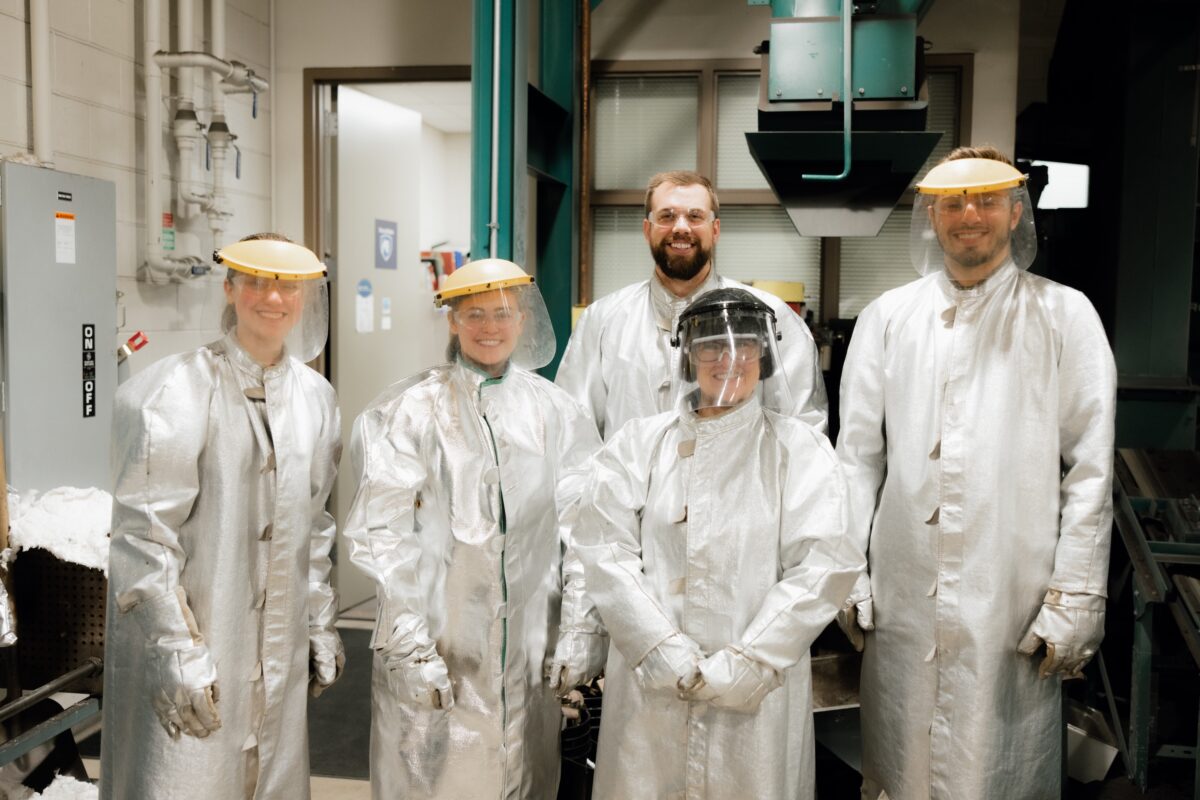
Led by IACMI – The Composites Institute®, with funding from the Department of Defense’s IBAS Program, METAL is closing critical labor gaps in U.S. metal manufacturing. By 2030, almost 4 million manufacturing jobs will need to be filled, from entry level positions to trained production workers and specialized engineers. However, half of those positions might be left empty—putting the supply chain and our national defense at risk.
With universities across the country, METAL is rekindling metallurgy for job seekers and students of all ages with unique, hands-on casting and forging experiences. Lynch couldn’t wait to get started at Penn State.
“I can tell you our leadership, from our chancellor to myself and the faculty, everyone here is so excited about this program,” he said. “If you talk to somebody that works in the industry, they’ll tell you this has been needed for 30 years.”
Since 2024, METAL team members at Penn State Behrend and Penn State University Park
have taught 12 K-12 workshops with 150 students and eight bootcamps, where 115 participants graduated with foundational and specialized metallurgical skills.
Through bootcamps that cover cutting-edge topics like the science behind sand casts and virtual reality applications, Penn State aims to upskill metal industry professionals. Advanced bootcamps are also open to beginner bootcamp graduates who want to expand their expertise.
In the new Sand Science Bootcamp, which launched in October, participants explored the chemical properties of green sand, or sand that’s bonded by clay, and chemically-bonded sand. Both materials are used in manufacturing to create molds that liquid metal can be poured into for casting metals. These molds can be used to create engine blocks, pipe fittings, agricultural and construction tools, and core components for the aerospace and defense industries.
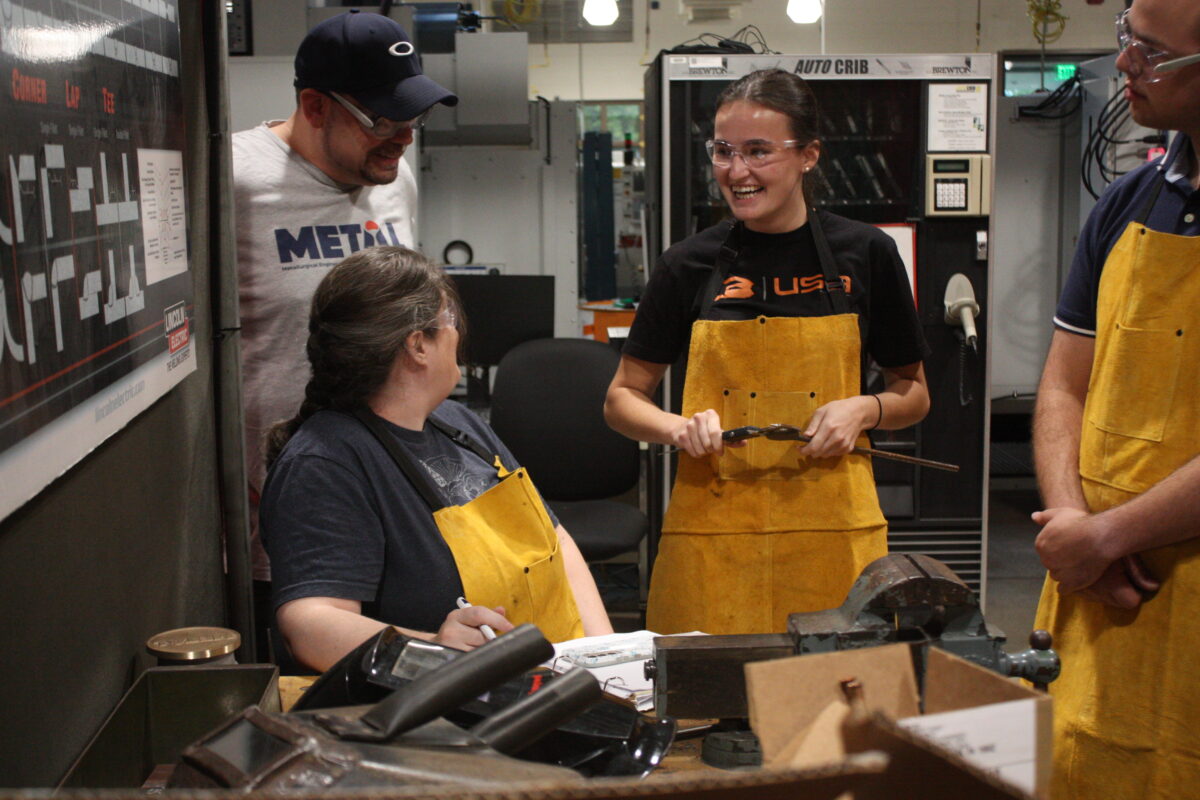
Lynch hopes the advanced bootcamps will equip metal workers to optimize operations—and push innovative technology forward. “How can people take these ideas back to improve their systems?” he asked. “What are the challenges? What are the opportunities?”
In November, the university plans to host a level three advanced bootcamp for digital technologies in casting. The online lessons, which include data analytics, are already available. In the foundry, participants will learn how to incorporate immersive technologies like virtual
reality, along with sensors, data analytics and additive manufacturing, into the casting process.
In addition to strengthening today’s manufacturing workforce, Penn State inspires students and career changers to become the metal workers of tomorrow.
Learning Casting—From the Ground Up
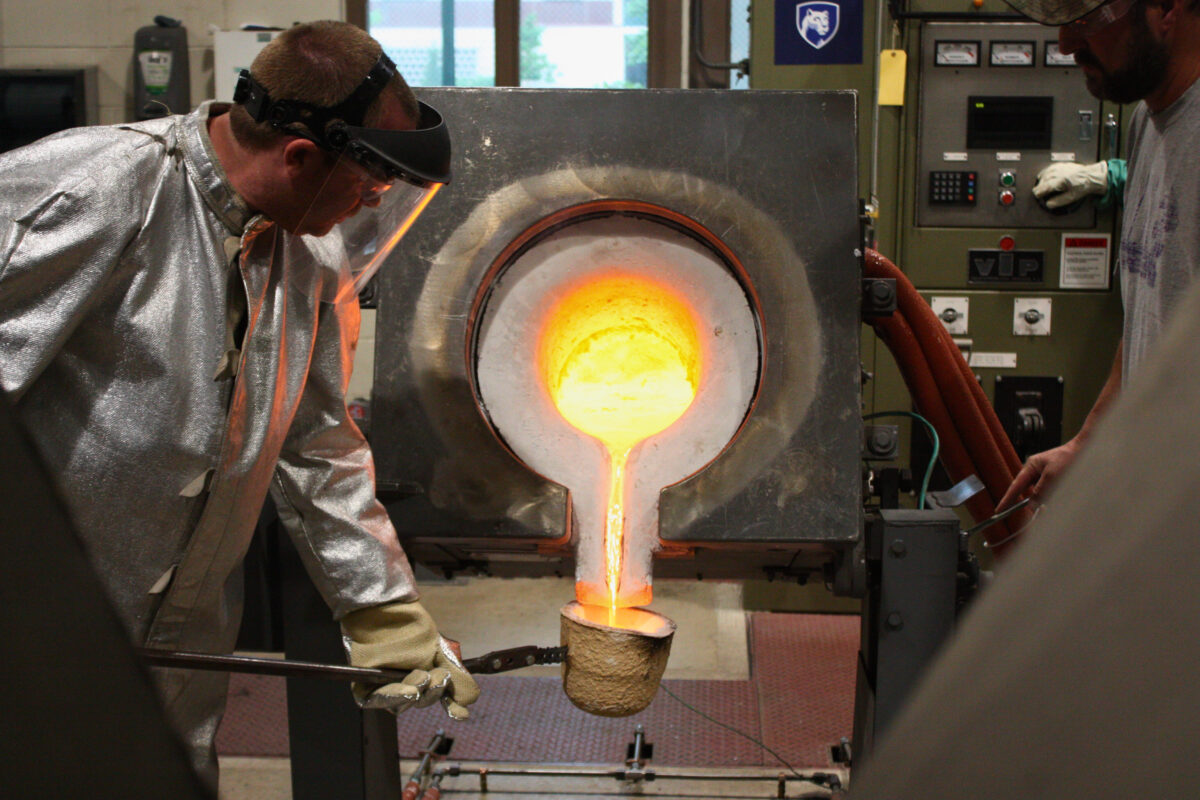
Lynch said the goal for elementary, middle and high school workshops is to capture students’ interest—and their imagination. Every week this summer, students from ages six to 14 brought metallurgy to life. They assembled parts, crafted their own sand molds, and poured liquid aluminum into starfish, softballs and smiley faces. Students also had opportunities to practice their new skills, casting chocolate.
“Research shows that as early as five and six years old, children are connecting the dots, thinking about what they like and putting that toward a career,” Lynch said. “You want to get them thinking about metals and metallurgy, and you want the parents to understand the career opportunities that exist for the students now and in the future.”
Penn State’s beginner bootcamps, on the other hand, are designed to teach adults the metalcasting skills needed to explore and start a new career. Participants start their learning at home with METAL’s free, self-paced online training. Then, with a glimpse of metallurgy, college students, professionals and job seekers are ready for the hands-on METAL bootcamp experience.
For four days, the casters-in-training meet at Penn State to learn about life and work in a foundry. Participants who attend the beginner bootcamp learn industry terminology, design and print 3D molds, and finally pour molten metal into new, solid creations. They also cover the basics of heat treatments, forging and machining—all skills required to deliver a finished part.
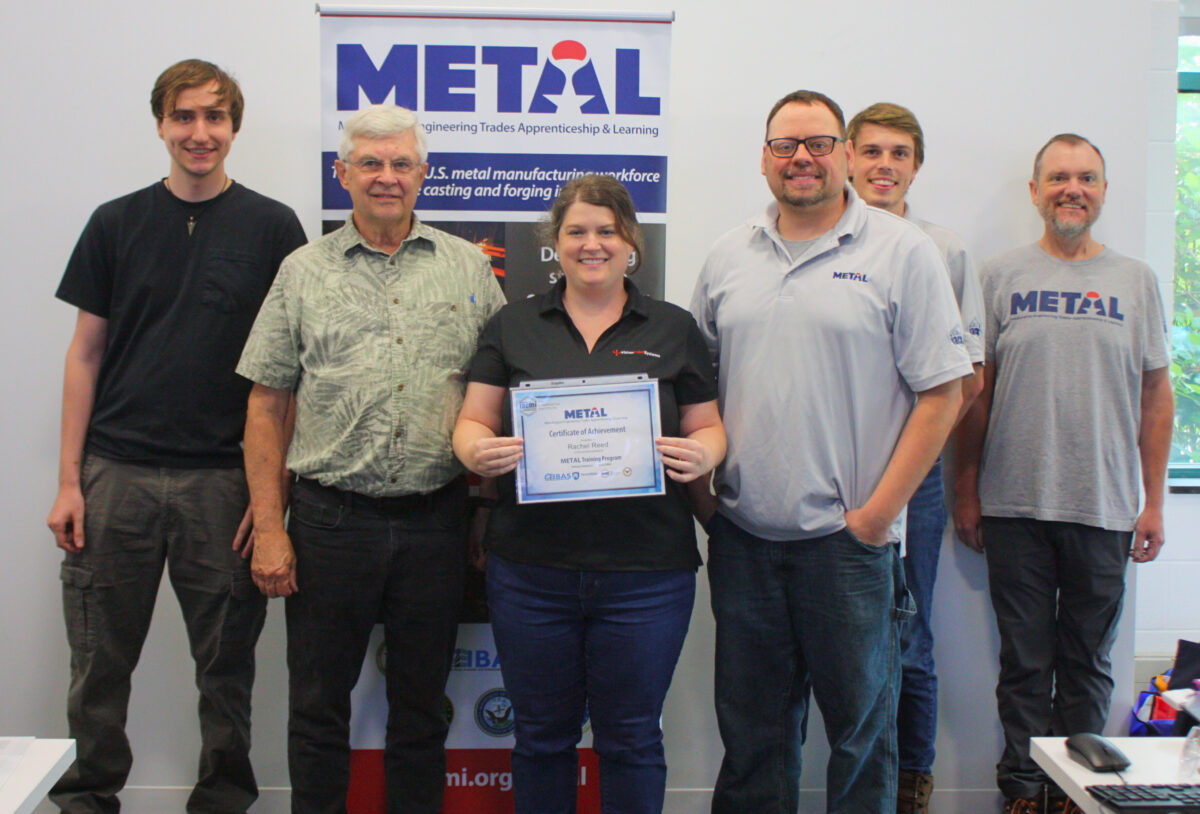
“I was surprised by how many pieces we created from beginning to end,” said Rachel Reed, a program analyst at Vision Point Systems who attended the August bootcamp. “You actually walk away with a lost foam casting that you made yourself and a cast medallion. I left with a big goodie bag of things I made, and that’s just an awesome feeling.”
At the end of the day, Lynch believes the real driver of manufacturing’s future won’t be machines or automation—it will be people.
“I don’t care if it’s getting K-12 students involved, if it’s an introductory bootcamp or if it’s upskilling with advanced technologies—we need all of it and we need it fast,” he urged. “We gave our knowhow and our facilities away. We need to train people and get the knowhow back.”Ready to spark your future in metal? Register for our free online training then visit our events page to attend the next METAL bootcamp near you.