Pouring Metal and Powering National Defense: DoD Contractors Join METAL Bootcamp

Melissa Walston and Rachel Reed have spent their careers traveling the world, learning languages and guiding U.S. diplomats across foreign nations and cultures. But when it came to navigating a foundry for the first time, they felt lost. 

In their new roles as Department of Defense contractors with Vision Point Systems, Walston and Reed support metal manufacturing projects for the Navy’s Carderock Naval Surface Warfare Center. Carderock is the Navy’s premier center for engineering, modeling and testing ships and ship systems. Its mission spans ship design, naval architecture and the strength of the structures that keep sailors safe at sea. At its core, both Carderock’s success and the future of U.S. defense rely on one critical capability: consistent, high-quality metal production.

“Metal is in everything,” said Reed, who’s a program analyst. “The Naval Service Warfare Center and other government agencies require a strong base of manufacturers who can provide the materials we need at the scale and to the specification we need—and that’s not easy.” 

Reed joined Vision Point Systems in February after 15 years managing international exchange programs and delegation visits. Her superpower? Connecting the right people and organizations, no matter where they’re from. Now Reed coordinates contracts between metal manufacturers and the Navy. But to lead this collaboration, she needed to understand the world of metallurgy.  

“When I first did an audit visit at a foundry, it was awesome, but it was also confusing,” said Reed. “The terminology was so unfamiliar to me, it was like a different language.”

Reed, who is fluent in Japanese, knew she had to approach her new job like she was preparing for a trip—immersing herself in casting, forging and manufacturing culture. Her colleague, Walston, recommended METAL’s week-long metallurgy bootcamp at Penn State University to Reed.

“I immediately started telling my coworkers, ‘you guys have to take this course.’ It will help so much because none of us came from this world,” Walston said, referring to manufacturing.  

Walston, who’s a program coordinator at Vision Point Systems, has led American ambassadors around the world, tracked missions in the U.S. Air Force, and served as an executive assistant at the White House. Her career, nothing short of a Disney World ride (she worked there, too), is now focused on reigniting the nation’s defense manufacturing capabilities.  

“I’ve spent most of my life, in one way or another, supporting my country,” Walston said. “It means a lot to me to be doing something that is directly helping our military. I know what it feels like to be one of them, waiting for a part to be fixed or made.”

Off to Bootcamp

Walston decided to try Penn State’s METAL bootcamp after her Vision Point Systems orientation, when she realized she had no idea what a Charpy was. 

“I sat in this meeting and almost every briefer brought up the term ‘Charpy.’ I kept laughing to myself saying, ‘I know they’re not talking about the pen in my purse,’” she said—they weren’t. In metalcasting, a Charpy, pronounced like “Sharpie,” is a type of test used to measure the material’s toughness when struck with sudden impact. 

Walston quickly learned “Charpy” wasn’t the only term she’d need under her belt to support the defense industry’s metal pipeline. “I thought my head was going to explode. I didn’t understand most of what I heard,” she admitted. 

An introduction to metallurgy terminology and science—from casting and heat treatment to nonferrous metals and alloys—is exactly where METAL’s online training starts. Led by IACMI – The Composites Institute®, with funding from the Department of Defense’s IBAS Program, METAL is building a highly-skilled, adaptable manufacturing workforce with K-12 workshops and hands-on bootcamps for career seekers.

As more metal workers retire, the U.S. faces a critical knowledge gap. By 2033, manufacturers could need more than 2 million additional workers to keep up with supply chain and national security needs. 

“Right this moment, we cannot entirely build a U.S. naval ship in the United States,” Walston said. “You don’t know what the future’s going to hold, and we need to be self-sufficient. If there’s a surge, we need to be able to meet that demand.” 

Through partnerships with Penn State and universities across the country, METAL bootcamps are forging the next generation of industry leaders and innovators. Walston signed up without hesitation when she learned she could support her country by melting, casting and forging metal.

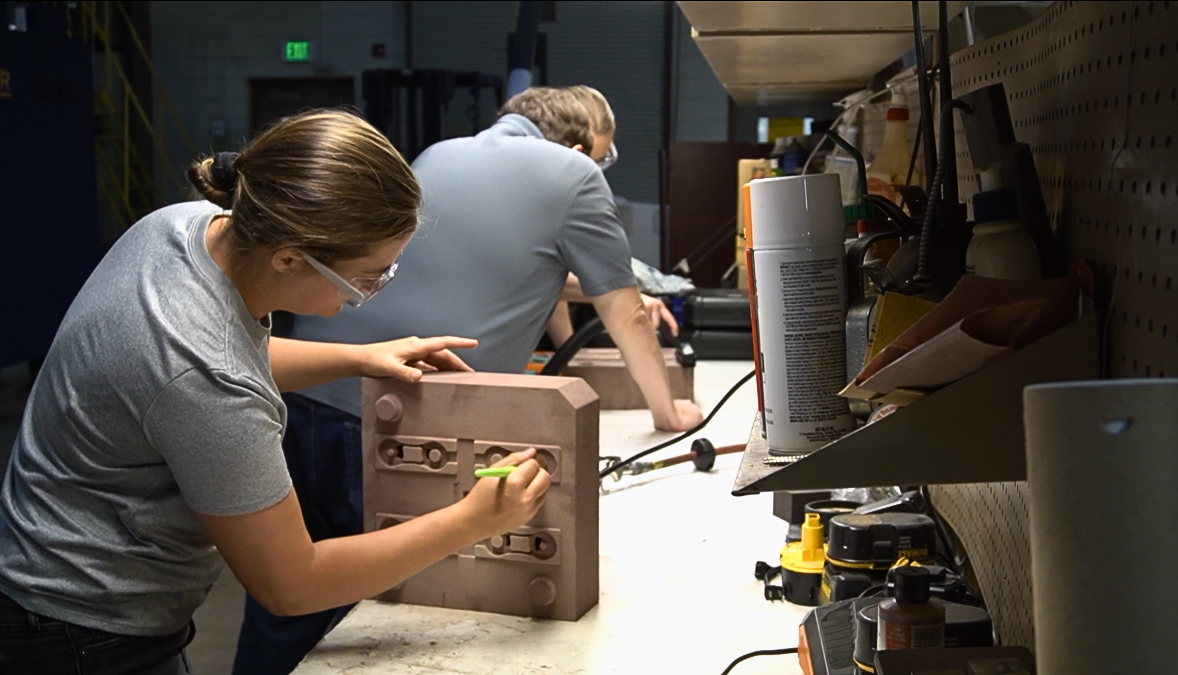
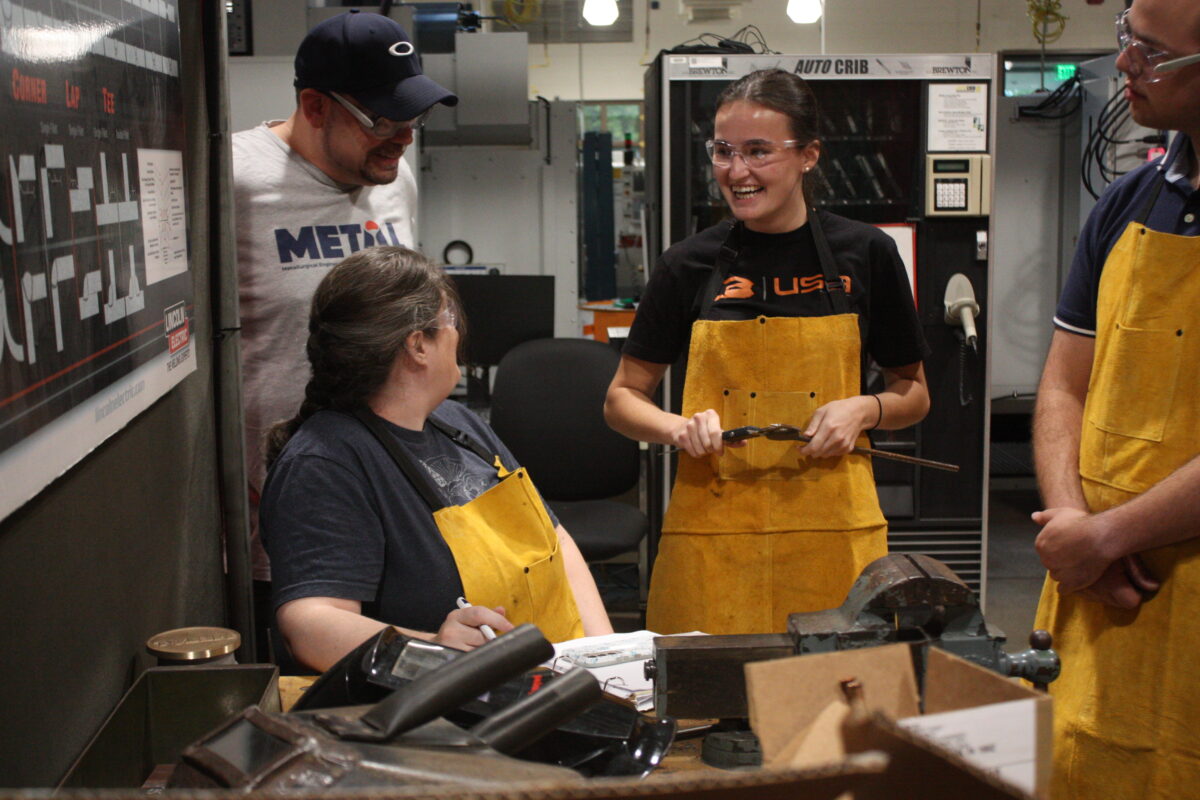
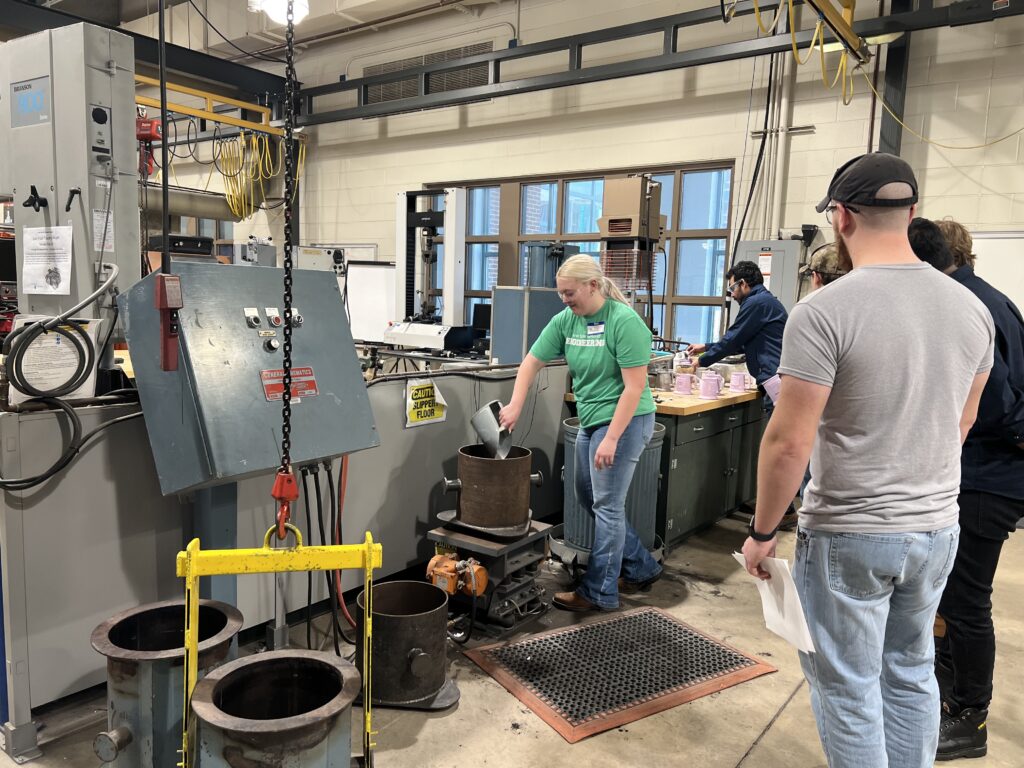
For one week, Walston and Reed suited up in safety glasses and fire-resistant gear to bring the science of metalcasting to life. From designing 3D molds to melting aluminum and bronze to machining a finished part, they experienced exactly what it takes to create a casting with their own hands.

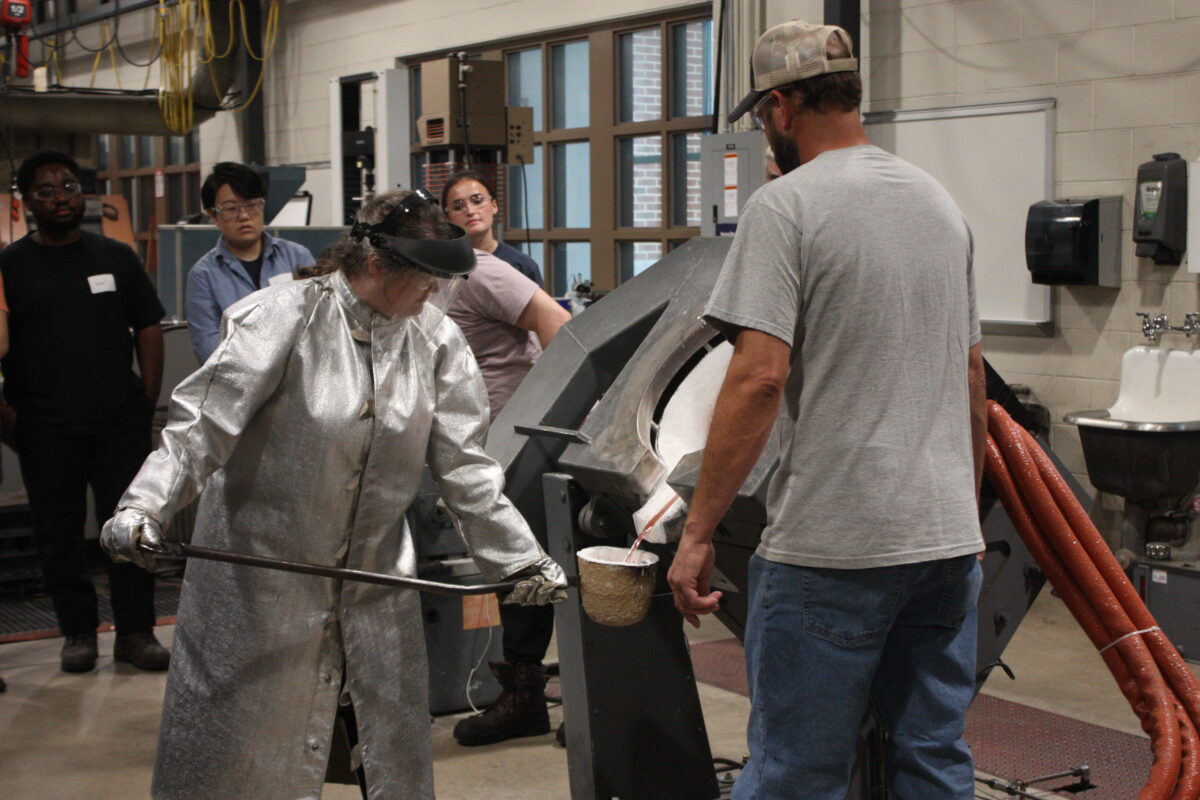
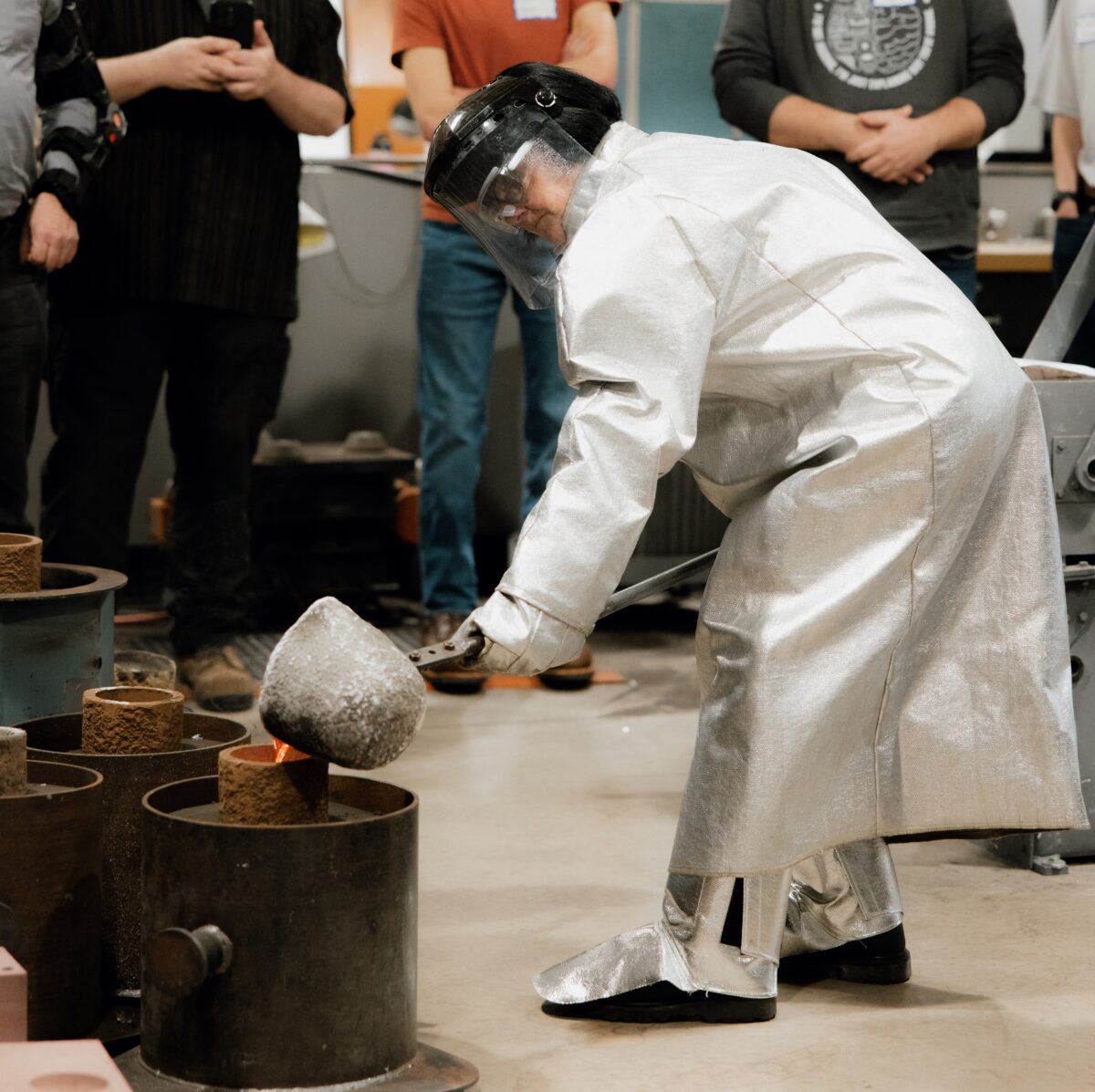
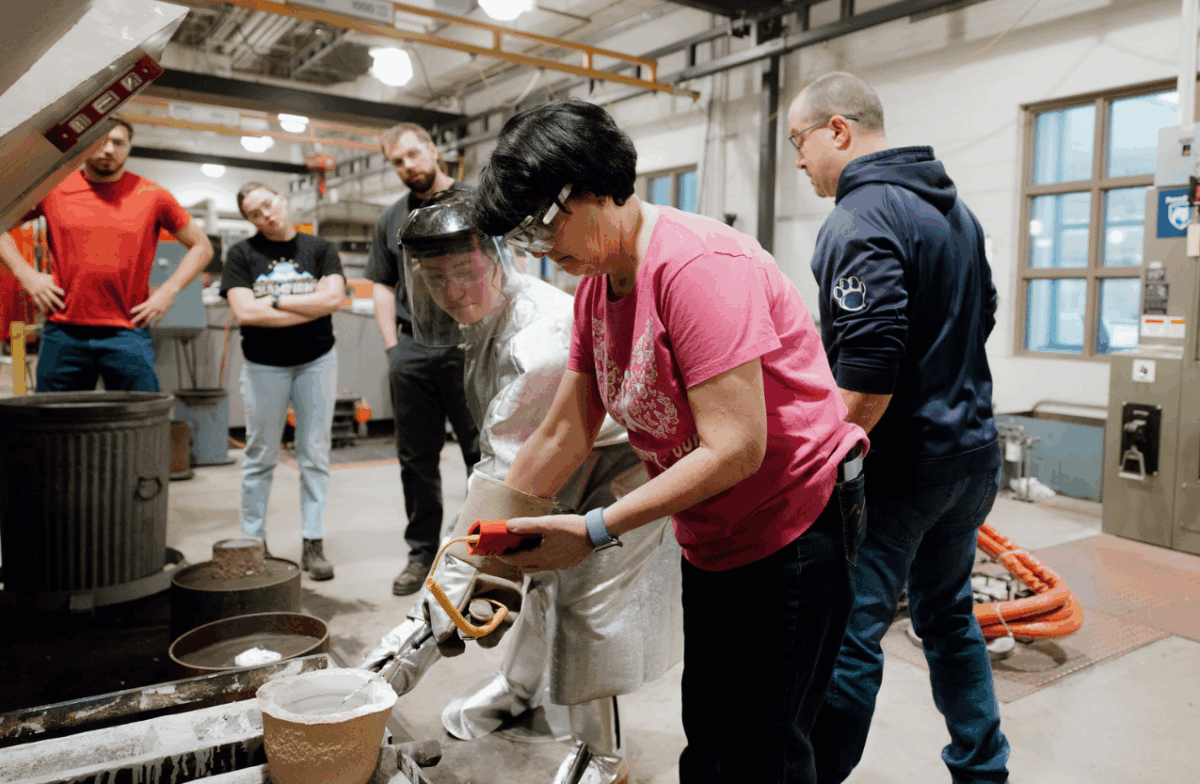
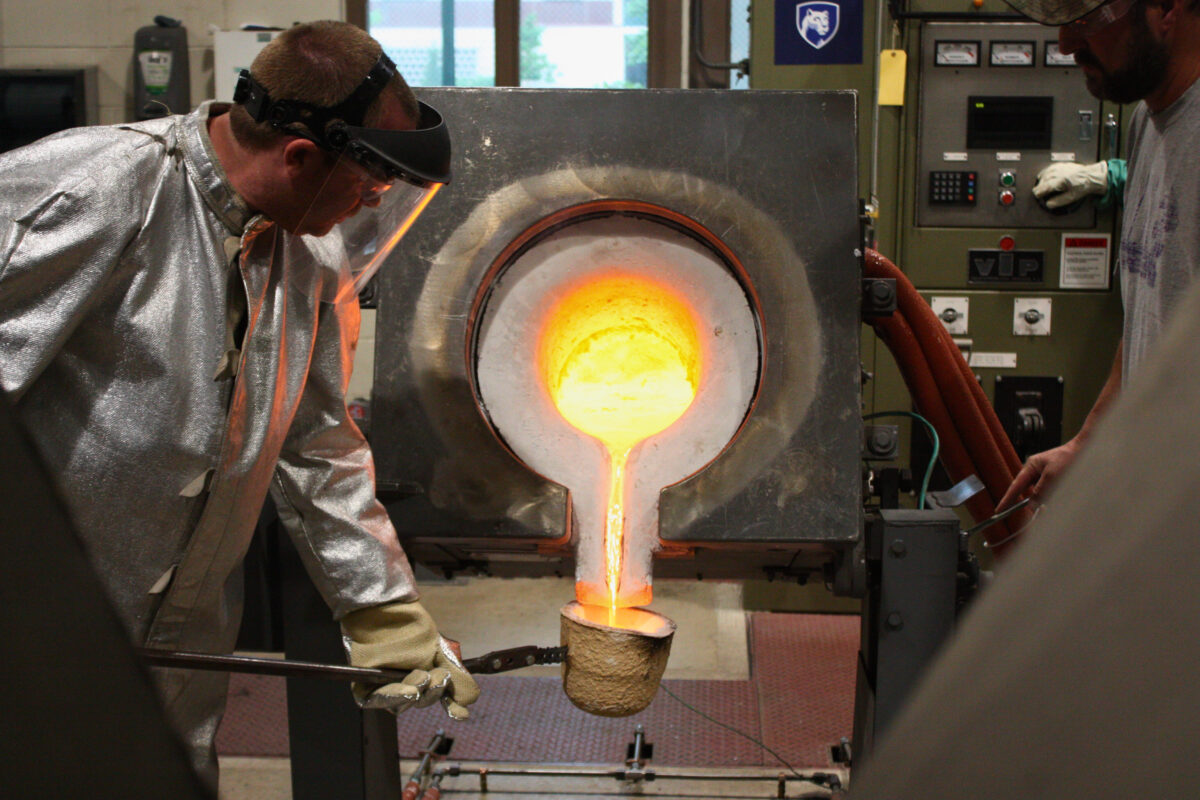
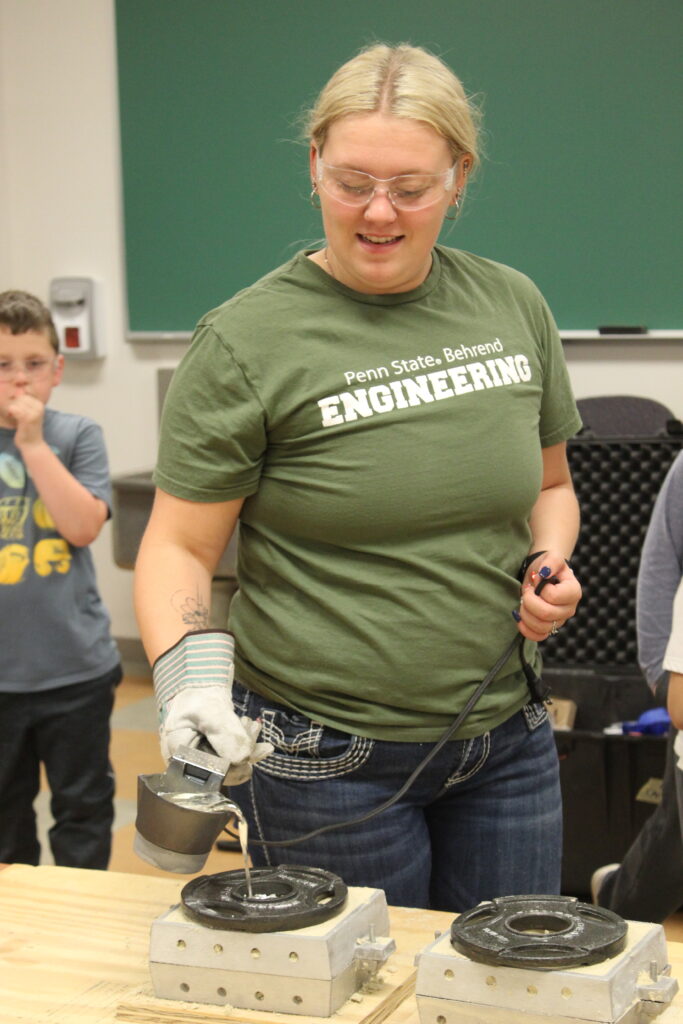
Reed said the highlight of the bootcamp was firing up the foundry furnace for her first pour. After aluminum is heated to about 1,300 degrees Fahrenheit and liquifies, participants get the rare chance to carry the ladle and pour metal into the mold themselves.

“It was so cool. I’m never going to have that opportunity again,” Reed said. “It gave me a real respect for the work that our manufacturing partners do and how complicated it can be.” 

Walston said she might have had a different career if she’d known what was possible in metal manufacturing sooner. 

“If I had been introduced to the foundry when I was in high school, that would’ve been where I wanted to be—working with my hands, getting dirty, playing with fire, and getting paid for it,” Walston said. “I was on cloud nine.” 

Both Walston and Reed returned home with their own creations—a bronze medallion and an aluminum stein—and a deeper understanding of what the Navy needs from metal manufacturers.   

The Secret Weapon to Career Success

Since graduating from METAL’s bootcamp, the contractors feel like they’re finally speaking the same language as their metallurgy and manufacturing partners. Reed said she’s not only better equipped to have technical conversations, but she knows what a foundry needs to be successful. 

“Every place is a culture, and METAL was my cultural introduction to working with manufacturers,” Reed said. “There’s a lot of time dedicated to keep a foundry running. I learned more about how they operate and the costs associated with producing a part.”

She strongly encourages anyone who supports the metal industry—or is curious about a fulfilling, well-paid career—to experience the bootcamp for themselves. 

“We need more people interested in manufacturing,” Reed said. “Programs like METAL are essential because a lot of people are afraid of what they don’t understand. If you can get hands-on experience and realize the opportunities that exist, that is the real strength of this program.”

What Walston found in the foundry was confidence. Now she asks the right questions, keeps pace in meetings, and uses her growing expertise to help safeguard America’s metal production—and its future.

“I owe so much of my progress to this course,” she said.  

Ready to cast a stronger career and a stronger America? Register for our free online training then visit our events page to attend the next METAL bootcamp near you.

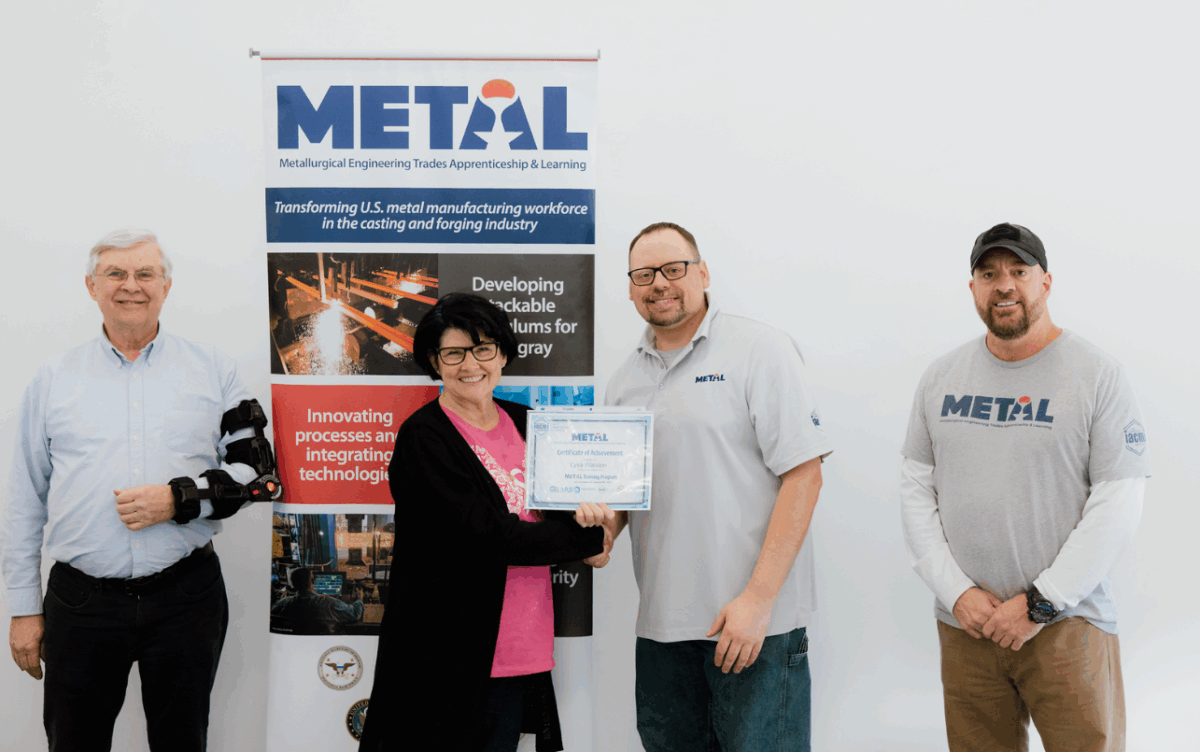
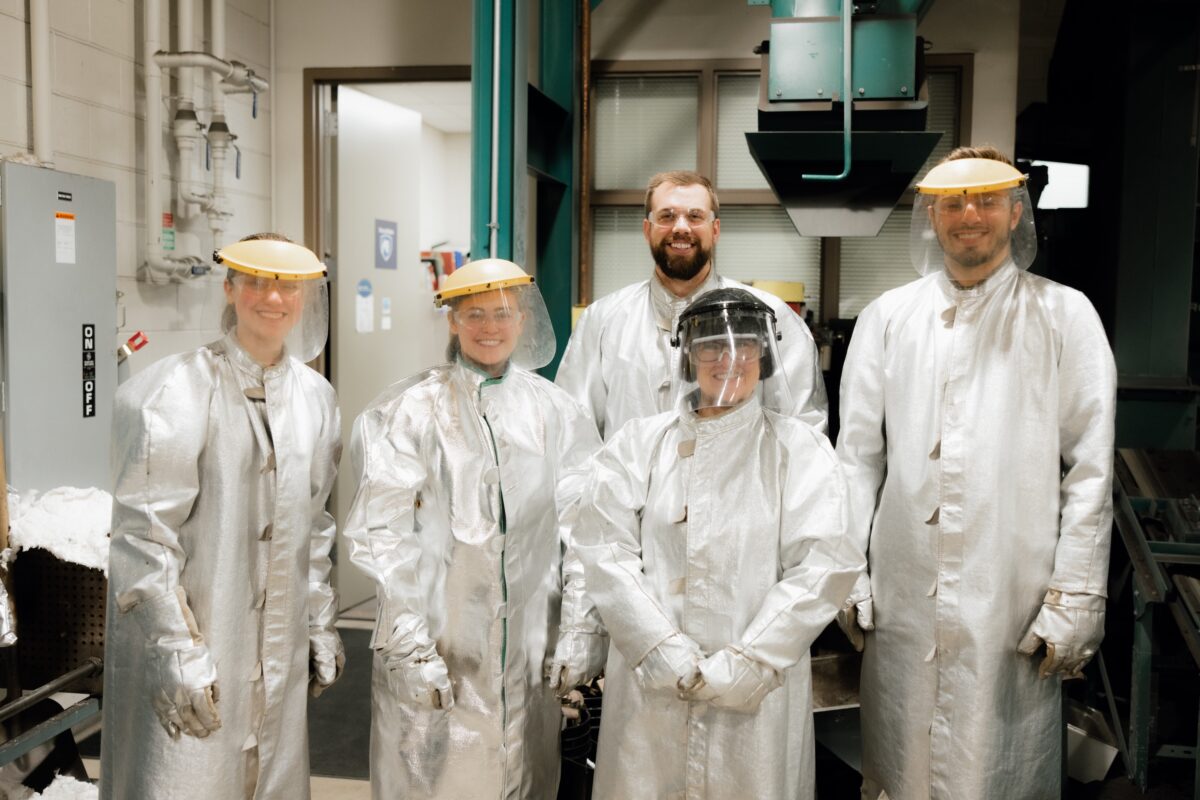
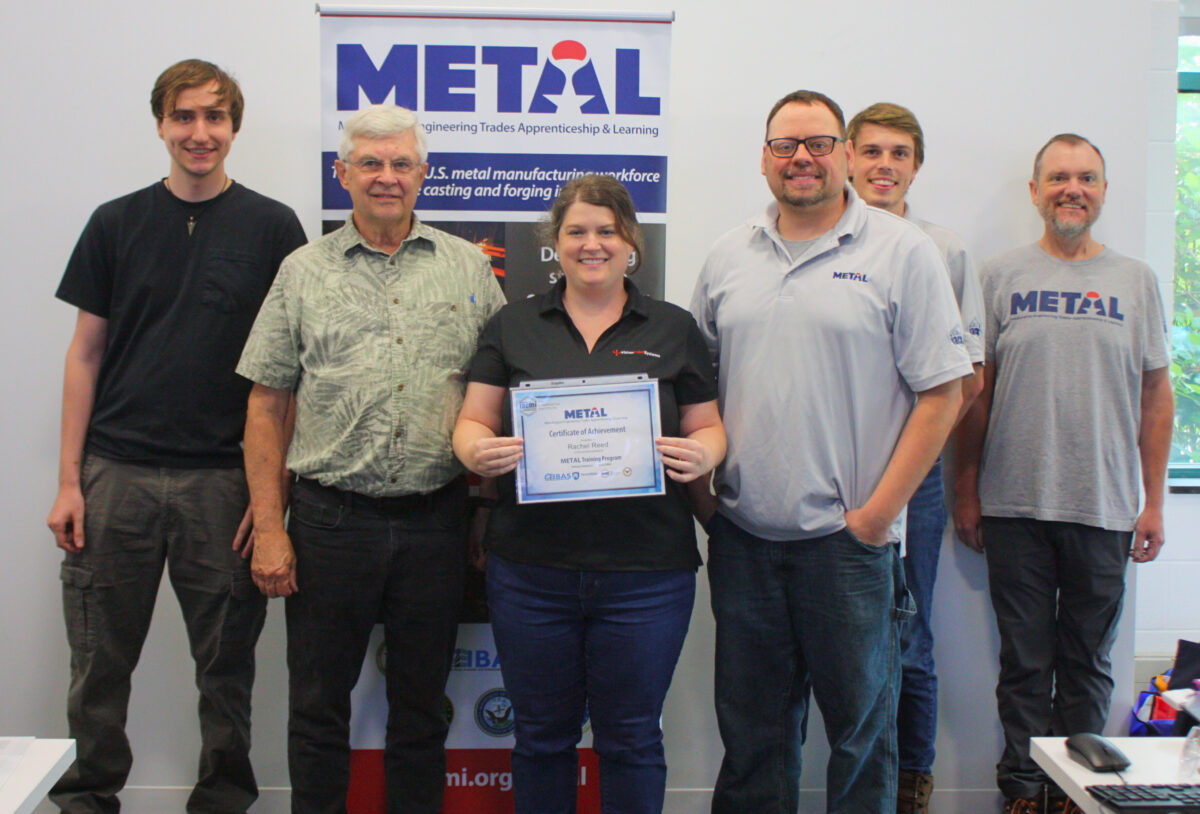
Penn State Industrial and Manufacturing Engineering Professor Robert Voigt, Melissa Walston, Professor Paul Lynch and Ralph Workman celebrate Walston’s graduation from Penn State’s METAL bootcamp.

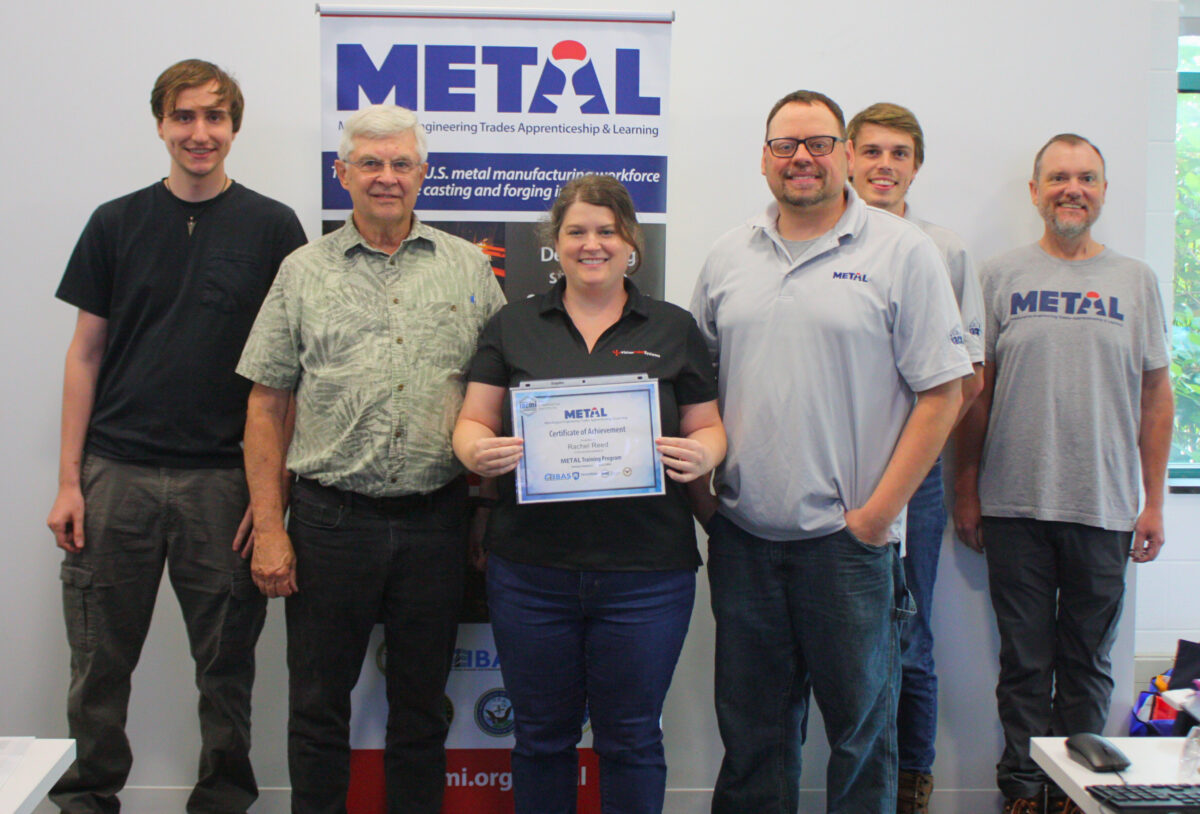
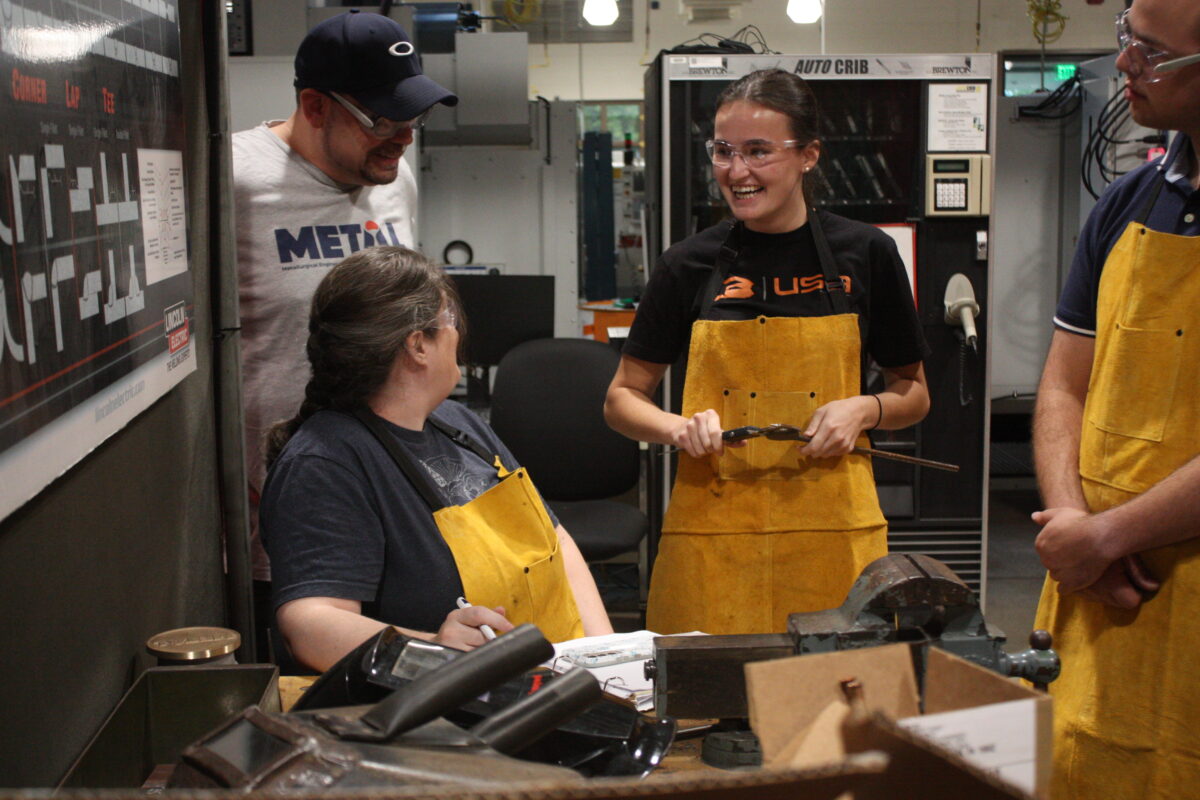
Rachel Reed graduates from METAL’s week-long, hands-on bootcamp experience with students and fellow industry professionals who expanded their skills in metallurgy.

Penn State’s Sand Science Bootcamp Sparks New Thinking Across the Foundry Industry

In October, Penn State hosted its first METAL Sand Science Bootcamp, a hands-on course exploring the chemical and physical principles behind green sand and chemically bonded sand. These are two essential materials used to create molds for casting metal parts. From engine blocks and pipe fittings to aerospace and defense components, these molds form the foundation of American manufacturing.

Led by IACMI – The Composites Institute®, with funding from the Department of Defense’s IBAS Program, METAL is closing critical labor gaps in U.S. metal manufacturing. By 2030, almost 4 million manufacturing jobs will need to be filled, from entry level positions to trained production workers and specialized engineers. However, half of those positions might be left empty—putting the supply chain and our national defense at risk.

The free course encouraged participants to connect theory with practice and return home ready to improve their operations. A large contingent of industry professionals attended this bootcamp and came away with many new insights. 

“I appreciated the collaborative conversation about broad topics and how it relates to what we’re doing in the real world,” said Olin Covington from Benton Foundry.. “Hearing from foundries, coremakers, sand guys—brainstorming and sharing. Mold energy was the best topic. The industry does drag its feet on certain things, but metalcasting has been around for thousands of years and there’s a reason it’s still here.”

For Justin Kinslow of Victaulic, the session on advanced oxidation stood out. “I hadn’t been exposed to that before. It ties into other projects we’re working on. I liked the setup—enough guidelines for it to be effective but informal enough for good conversations. I learned about other foundries and people.”

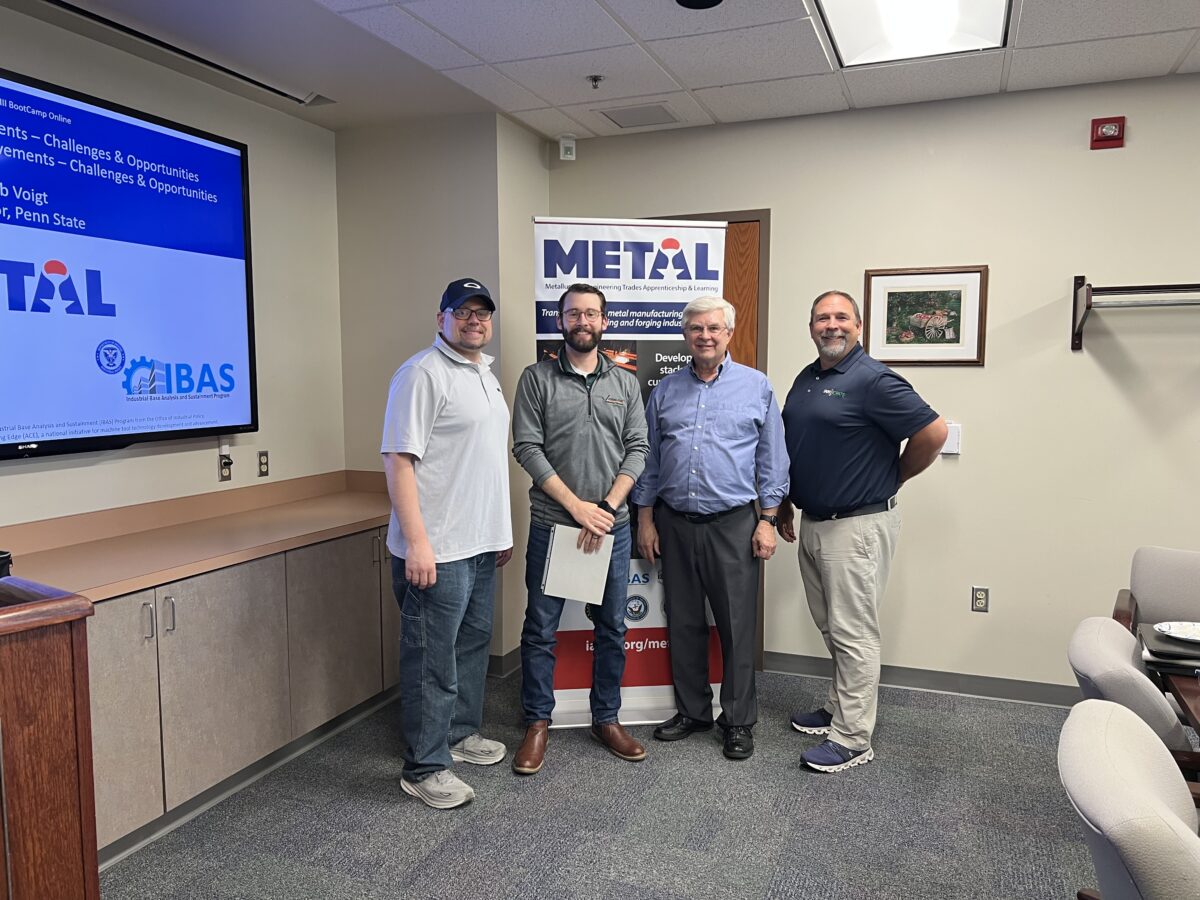
Penn State Professor Dr. Paul Lynch, Justin Kinslow with Victaulic, Penn State Professor Bob Voight, and METAL Workforce Manager Greg Harrell.

His colleague Ian Erb, a plant manager at Victaulic, agreed that the course offered clarity: “I had some misconceptions about the theory behind mulling to energy. Glad I was here to crystallize exactly what we need to do. Pretty clear actions we’ll take when I get back.”

Joe Kramer from CWC Textron, where his team produces about 40,000 crankshafts a year, found the content directly applicable to ongoing projects. “We got some info on specific stuff we’re looking at: bond reclamation, a subset of advanced oxidant. CWC is the odd one out in scope and process, but it was nice to get a glimpse at what different shops look like. We also discussed 3D printing core molds, which is a new technology for us.”

For Bryan Rash of Spring City Electrical, the best part was realizing how much others share the same challenges. “Spring City is insular with our production, so it was nice to hear and see what other people have. Even though we’re low volume, we deal with some of the same struggles—not just technical, but hiring too. 3D sand printing on the design end, the basics of science—I’m not necessarily exposed to the difficulty of sand, and this helped me be aware of that on the front end.”

On the supplier side, Jim Kundratic of Badger Mining Corporation saw a broader opportunity for the industry. “I like where the program is going. I see a lot of foundries that need this program. We need more people to come in and learn the basics. The next piece is to promote it internally to my customers. Leadership is strained because they’re the only ones who know these things, and mid- to high-level management gets burned out.”

The Sand Science Bootcamp is part of a growing effort to equip metalworkers with the knowledge to optimize their systems and push new technology forward. As course leader Paul Lynch summarized, “The goal is for people to take these ideas back to improve their systems. What are the challenges? What are the opportunities?”

Want to get involved? Register for our free online training then visit our events page to attend the next METAL bootcamp near you.

Bringing Back the “Knowhow”: How Penn State Rebuilds America’s Manufacturing Workforce

Paul Lynch grew up in a town that hummed with manufacturing. In a small community hugging the Appalachian mountains of eastern Pennsylvania, he learned first-hand the impact foundries can have on the local economy. Today, Lynch is honoring the past by driving the future of metal manufacturing forward.

Dr. Lynch, who’s an associate professor of industrial engineering at Penn State Behrend, has dedicated his career to supporting the growth and innovation of Pennsylvania’s metal industry. Like many towns in the region, Lynch’s hometown, Gordon, was developed in the 19th century from the booming anthracite coal industry. For more than 150 years, coal mining powered homes, jobs and the economy—and fueled U.S. steel production. 

“My dad owned a mechanic shop and he could tell you, without talking to the folks from the local foundry, if business was up or down,” Lynch explained. “If people are doing really well, they’ll buy new tires, or if they’re not, they’ll put off maintenance on their car. That’s how important manufacturing was to our area.”

The state’s deep history of enterprise manufacturing continues today. Pennsylvania is in the top five states for the most foundries in the nation. Its top manufacturing exports are computer and electronic products, machinery, primary metal manufacturing and transportation equipment—multi-billion dollar industries that require metalcasting, forging and rolling.

But the future of manufacturing in Pennsylvania – and our nation – depends on metal workers. 

In partnership with METAL, Lynch and his colleagues at Penn State University are rebuilding the manufacturing workforce and bringing metalcasting back to American communities.


Advancing U.S. Manufacturing

Led by IACMI – The Composites Institute®, with funding from the Department of Defense’s IBAS Program, METAL is closing critical labor gaps in U.S. metal manufacturing. By 2030, almost 4 million manufacturing jobs will need to be filled, from entry level positions to trained production workers and specialized engineers. However, half of those positions might be left empty—putting the supply chain and our national defense at risk.

With universities across the country, METAL is rekindling metallurgy for job seekers and students of all ages with unique, hands-on casting and forging experiences. Lynch couldn’t wait to get started at Penn State. 

I can tell you our leadership, from our chancellor to myself and the faculty, everyone here is so excited about this program,” he said. “If you talk to somebody that works in the industry, they’ll tell you this has been needed for 30 years.”

Since 2024, METAL team members at Penn State Behrend and Penn State University Park

have taught 12 K-12 workshops with 150 students and eight bootcamps, where 115 participants graduated with foundational and specialized metallurgical skills.

Through bootcamps that cover cutting-edge topics like the science behind sand casts and virtual reality applications, Penn State aims to upskill metal industry professionals. Advanced bootcamps are also open to beginner bootcamp graduates who want to expand their expertise. 

In the new Sand Science Bootcamp, which launched in October, participants explored the chemical properties of green sand, or sand that’s bonded by clay, and chemically-bonded sand. Both materials are used in manufacturing to create molds that liquid metal can be poured into for casting metals. These molds can be used to create engine blocks, pipe fittings, agricultural and construction tools, and core components for the aerospace and defense industries.

Lynch hopes the advanced bootcamps will equip metal workers to optimize operations—and push innovative technology forward. “How can people take these ideas back to improve their systems?” he asked. “What are the challenges? What are the opportunities?”

In November, the university plans to host a level three advanced bootcamp for digital technologies in casting. The online lessons, which include data analytics, are already available. In the foundry, participants will learn how to incorporate immersive technologies like virtual

reality, along with sensors, data analytics and additive manufacturing, into the casting process.

In addition to strengthening today’s manufacturing workforce, Penn State inspires students and career changers to become the metal workers of tomorrow.

Learning Casting—From the Ground Up

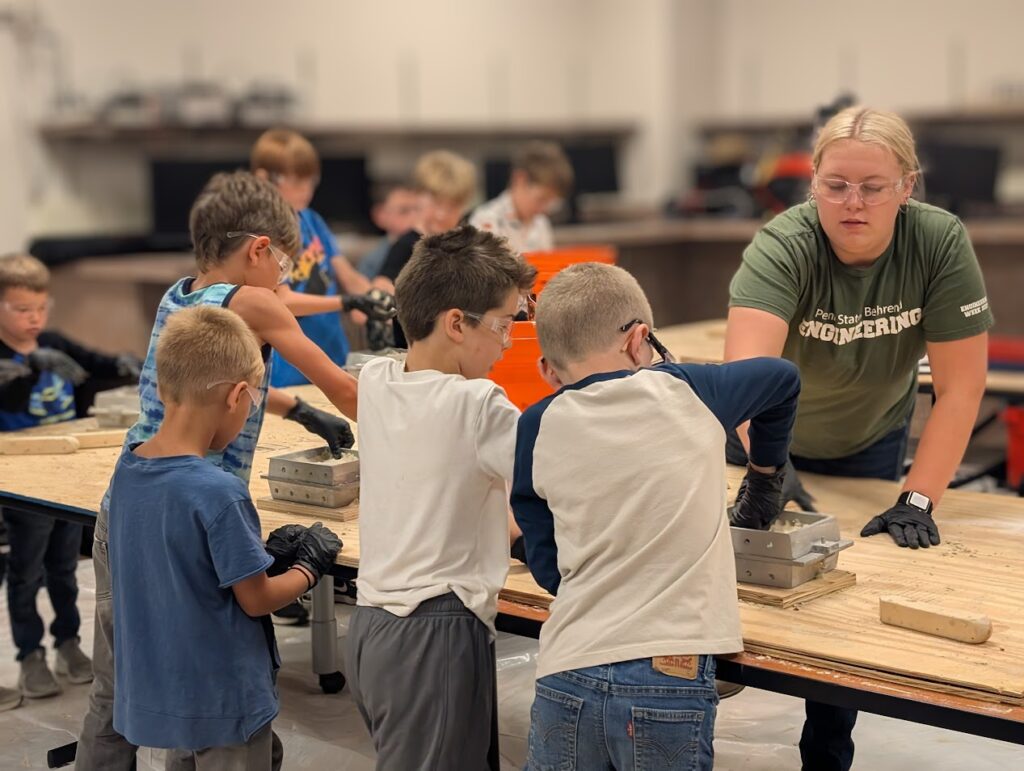
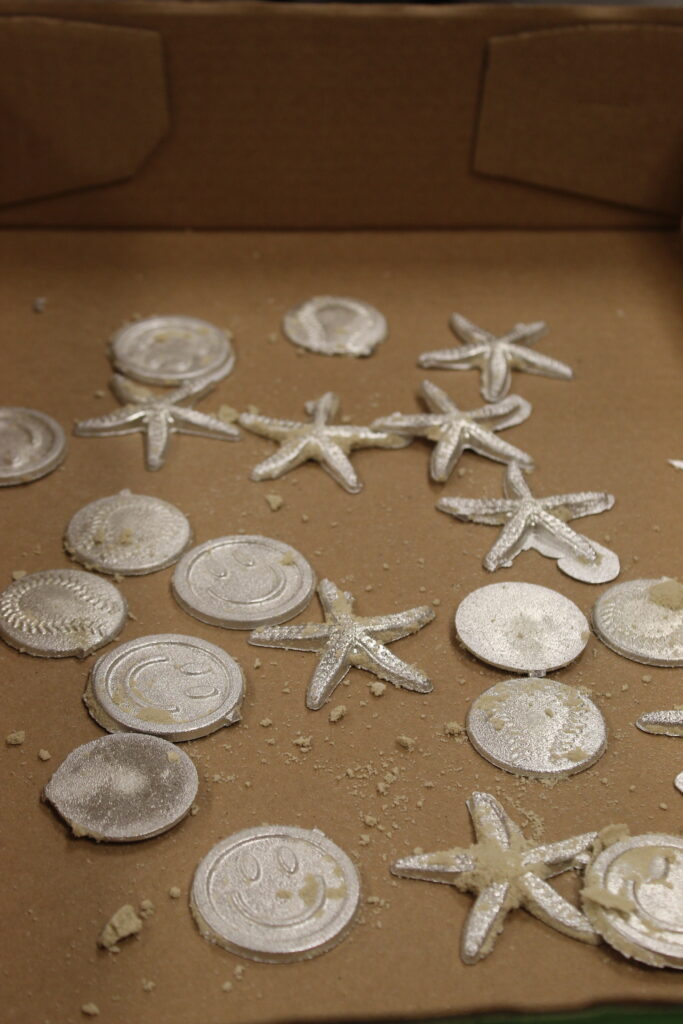
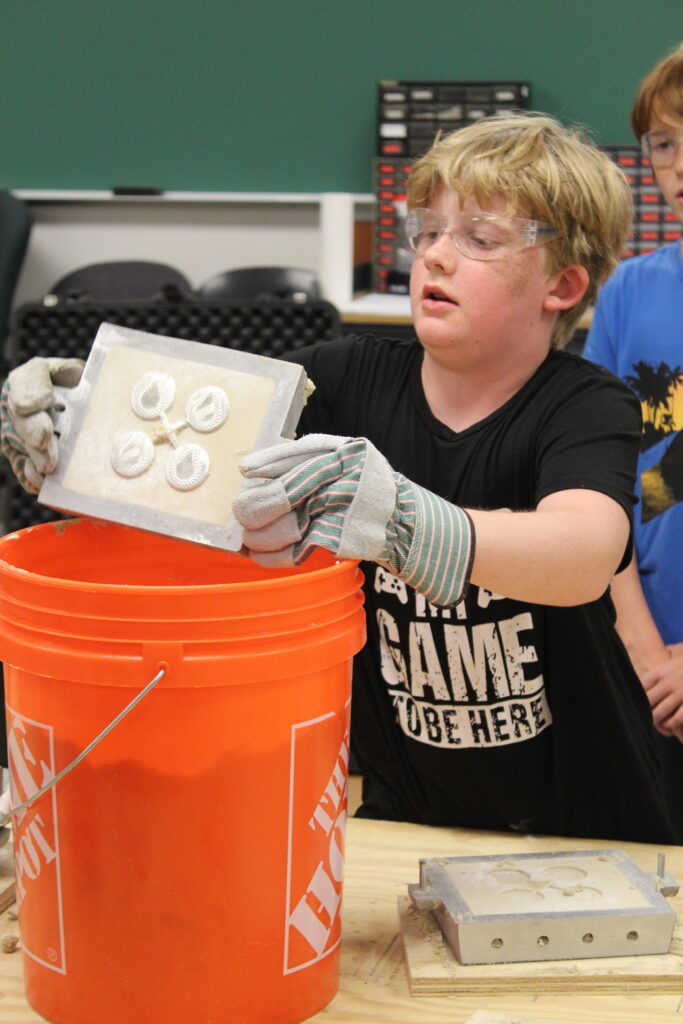
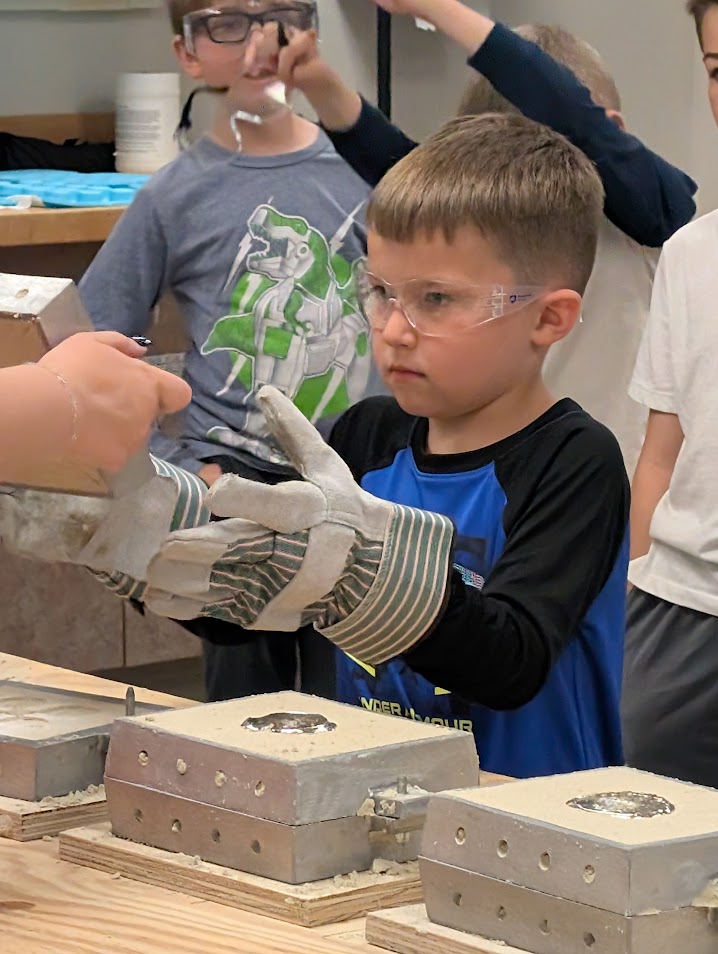
Lynch said the goal for elementary, middle and high school workshops is to capture students’ interest—and their imagination. Every week this summer, students from ages six to 14 brought metallurgy to life. They assembled parts, crafted their own sand molds, and poured liquid aluminum into starfish, softballs and smiley faces. Students also had opportunities to practice their new skills, casting chocolate.  

“Research shows that as early as five and six years old, children are connecting the dots, thinking about what they like and putting that toward a career,” Lynch said. “You want to get them thinking about metals and metallurgy, and you want the parents to understand the career opportunities that exist for the students now and in the future.”

Penn State’s beginner bootcamps, on the other hand, are designed to teach adults the metalcasting skills needed to explore and start a new career. Participants start their learning at home with METAL’s free, self-paced online training. Then, with a glimpse of metallurgy, college students, professionals and job seekers are ready for the hands-on METAL bootcamp experience.  

For four days, the casters-in-training meet at Penn State to learn about life and work in a foundry. Participants who attend the beginner bootcamp learn industry terminology, design and print 3D molds, and finally pour molten metal into new, solid creations. They also cover the basics of heat treatments, forging and machining—all skills required to deliver a finished part.  

“I was surprised by how many pieces we created from beginning to end,” said Rachel Reed, a program analyst at Vision Point Systems who attended the August bootcamp. “You actually walk away with a lost foam casting that you made yourself and a cast medallion. I left with a big goodie bag of things I made, and that’s just an awesome feeling.”

At the end of the day, Lynch believes the real driver of manufacturing’s future won’t be machines or automation—it will be people.

“I don’t care if it’s getting K-12 students involved, if it’s an introductory bootcamp or if it’s upskilling with advanced technologies—we need all of it and we need it fast,” he urged. “We gave our knowhow and our facilities away. We need to train people and get the knowhow back.”Ready to spark your future in metal? Register for our free online training then visit our events page to attend the next METAL bootcamp near you.

From Student to Teacher: Hannah Kemmet’s Journey Through the METAL Program

When Hannah Kemmet first walked into a summer camp at age 10, she had no idea she was taking the first step on a path that would one day bring her full circle—from eager student to inspiring instructor.

Now a rising senior at Penn State Behrend and an IACMI intern, Hannah has been instrumental in shaping the Made in America program, an interactive summer course that teaches kids the fundamentals of casting, forging, and modern manufacturing—with just enough chocolate to keep things sweet.

A Trailblazer in METAL

As a college sophomore, Hannah was the very first student to sign up for the pilot bootcamp with the new program at Penn State, METAL (Metallurgical Engineering Trades Apprenticeship & Learning). Her advisor Paul Lynch was helping stand up the national initiative for casting and forging, supported by the Department of Defense IBAS program and led by IACMI—The Composites Institute®. Hannah was getting her degree in Industrial Engineering and was looking for creative opportunities.

“I’m definitely a hands-on learner. I have to see it to do it,” Hannah told us in January 2024. By February she was helping with a STEAM fair where hundreds of young kids were seeing poured metal for the first time, and by March, she was spending her spring break casting aluminum and bronze.

“My favorite part was making the steins with the lost foam process,” she says. “It’s how engine blocks used to be made. I’m currently putting a new engine in my truck, and when I look at it, I think, ‘Wow! I know how that was made! I’ve done that!’”

Hannah’s curiosity and enthusiasm made her the ideal candidate to join IACMI as an intern, primarily to support Dr. Lynch as he developed the METAL curriculum for multiple audiences. How were they going to inspire young people and educate their parents to consider pursuing advanced manufacturing—to even get it on their radar? For 33 years, Penn State Behrend had been offering College for Kids, a summer camp with 190 classes for ages 6-14. This was the perfect avenue.

Bring on the Fun!

Hannah shares, “When I was young, I took College for Kids classes like Dissection, Sculpting, and even one called Girls Just Want to Have Fun. It was a wide range from dissecting owl pellets to making lip gloss. And I remember thinking ‘this is summer camp, not school; we’re here to have fun!’”

She kept that top of mind last summer, as she helped plan and run 3-hour additions to Engineering Challenges and Chemistry. Kids as young as kindergarteners were pounding sand molds, to take home metal keepsakes like smiley faces, starfish, and baseballs.

“The kids were super into it,” Hannah remembers. “It was something totally different, something they’d never done before or even heard of. Then after, a lot of them were like oh, I want to be an engineer or work in metallurgy.”

The experiment was such a hit that College for Kids asked Dr. Lynch’s team to run week-long camps with a focus on manufacturing. Their challenge: how do we plan age-appropriate activities for a wide range of techniques that will keep them engaged for five days? Once again, Dr. Lynch turned to Hannah.

“With her wide technical background and outreach experience, I knew Hannah was the perfect fit for this,” he says. “I told her preparation is paramount.”

So, as lead instructor, Hannah prepared a curriculum for kids who love to build, explore, and create. They start with 3D printing, where they print custom name plaques and wind-up cars which they assemble. The next two days they move onto sandcasting, where they mold and pour tin objects like the Nittany lion, Lake Erie fish, and METAL keychains. Thursday, they melt chocolate into food-grade molds; getting to eat their creations is a definite bonus. They wrap up the week with a showcase for their parents to see how all these methods are connected.

“I didn’t just want to send home the items they made,” says Hannah. “I wanted the kids to show and explain to their parents what they did and how they did it. They were proud to display their work. And for the kids whose parents already work in manufacturing, they realized, ‘Oh my gosh, I get to see what my parents do all day!’”

Looking Back, Looking Ahead

Looking back on six weeks of camps and working with 154 students, Hannah shares, “Their favorite parts were melting the metal, eating the chocolate, and smashing the molds. It was messy, a little chaotic, and they absolutely loved it.”

But the kids weren’t the only ones learning. This has helped Hannah reflect on her skills and interests as she plans to make her next career move after graduation.

“On parent day, I got to talk with one dad who works at Electric Materials. As he described what he did, I thought it sounded way different from what I’ve seen in other factories. I haven’t found the thing I want to do every day,” she admits, “but this class helped me see something about myself: I like understanding why problems occur and how to fix them–the whole process from start to finish.”

Dr. Lynch adds, “I’ve seen tremendous growth in Hannah these past two years—from her technical education to work ethic to leadership. She was recently elected president of our student chapter of the American Foundry Society, and this will be her fourth year with Cast in Steel. I don’t know where she’ll end up, but I’m very happy to see that growth.”

Whatever is next for Hannah, you can bet it will be something hands-on. From dissecting frogs at age 10 to teaching kids how to cast metal a decade later, she’s living proof of what these programs can spark—and sustain.

Photo Credits: Heather Cass, Penn State Behrend

Original story from IACMI.