Anderson County Students Experience Forging Firsthand at UT Knoxville

Original source: WBIR

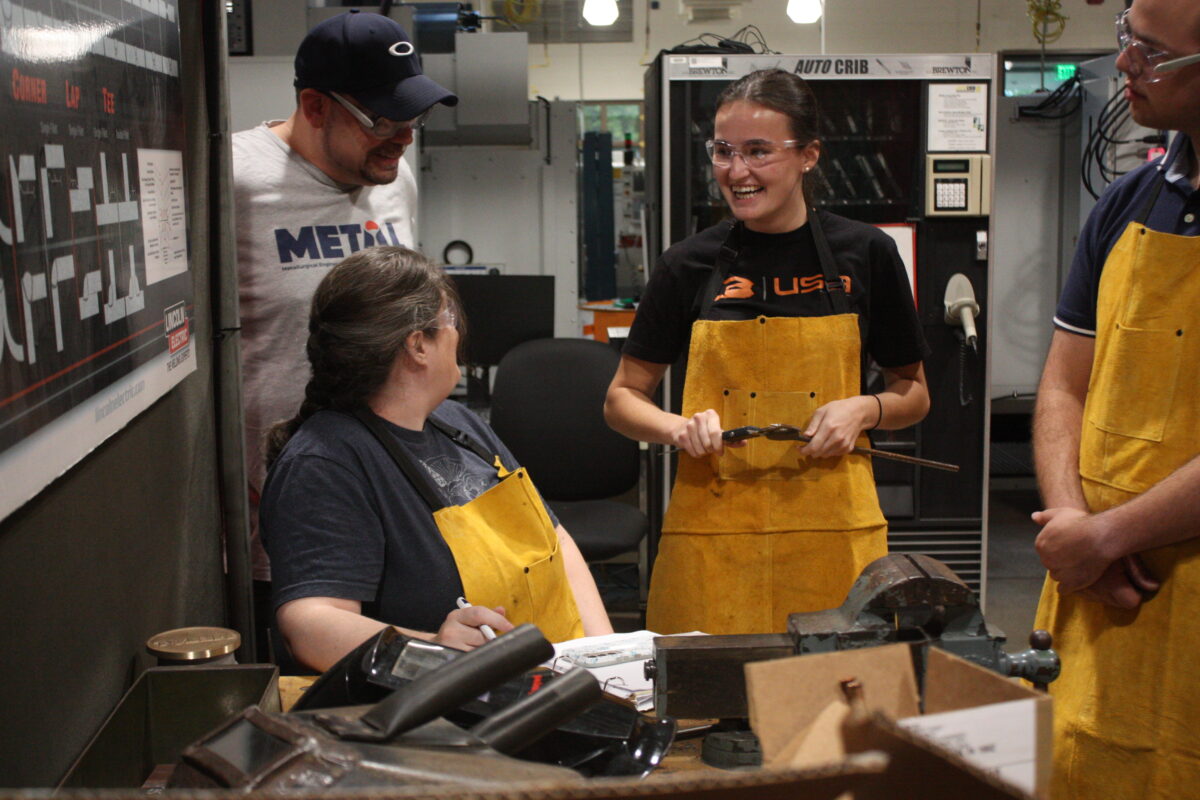
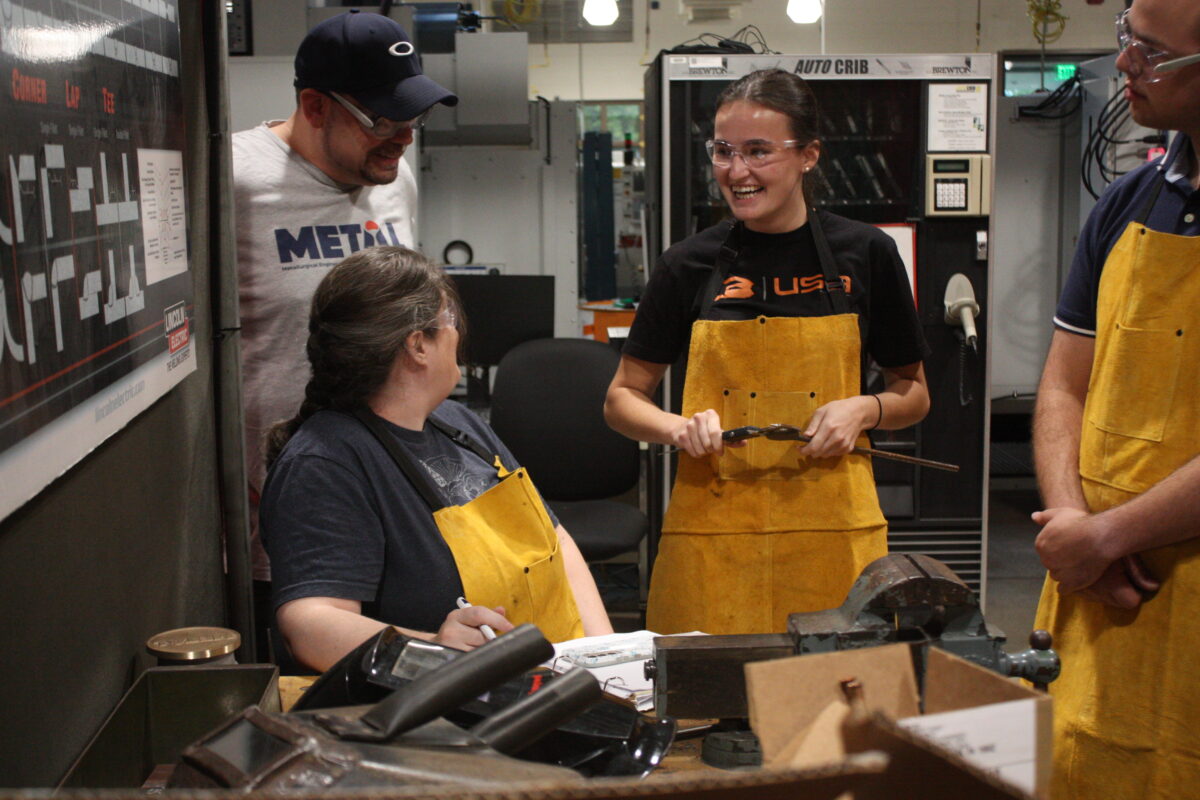
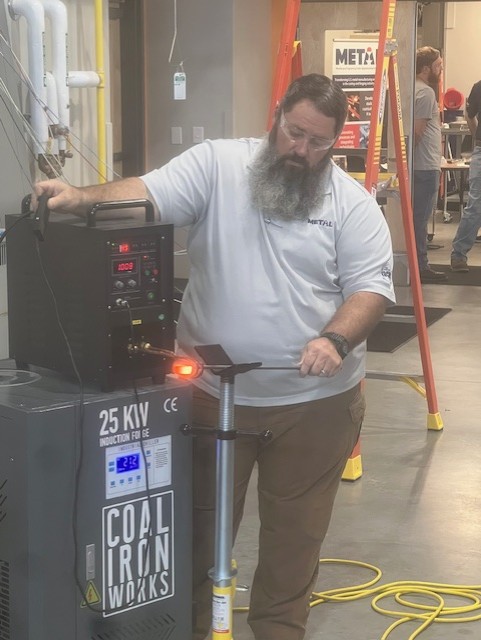
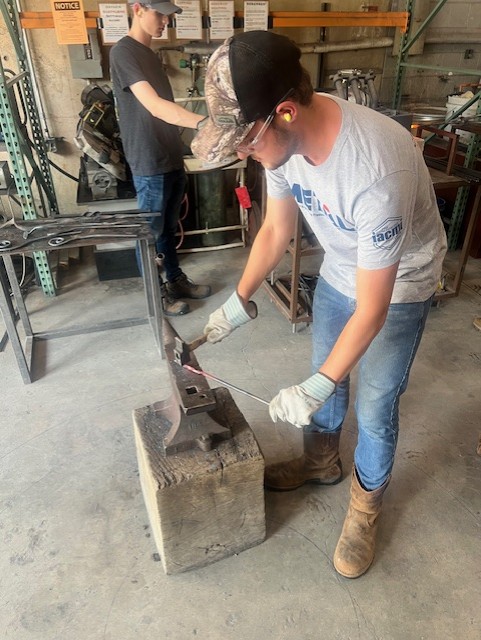
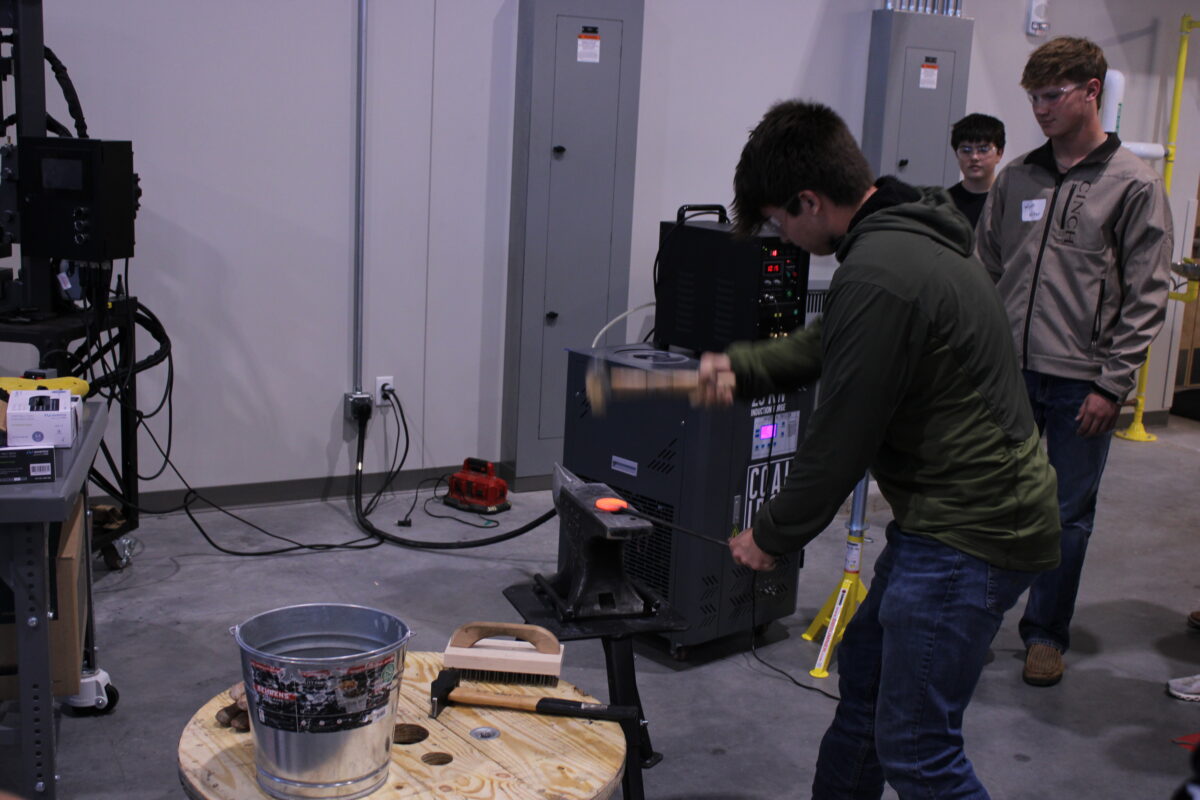
Students from Anderson County, Tennessee, recently visited our partners at the University of Tennessee, Knoxville (UTK) for an immersive, hands-on forging workshop. During the session, students explored the properties of metal through a series of interactive activities that connected classroom concepts with real-world applications in metallurgy and materials science.

Their first activity was clay forging, which introduced them to the behavior of metal under heat by using modeling clay to simulate how metal behaves during the forging process. Students practiced drawing out and upsetting the clay, then pressed images into their finished pieces before setting them to cure.

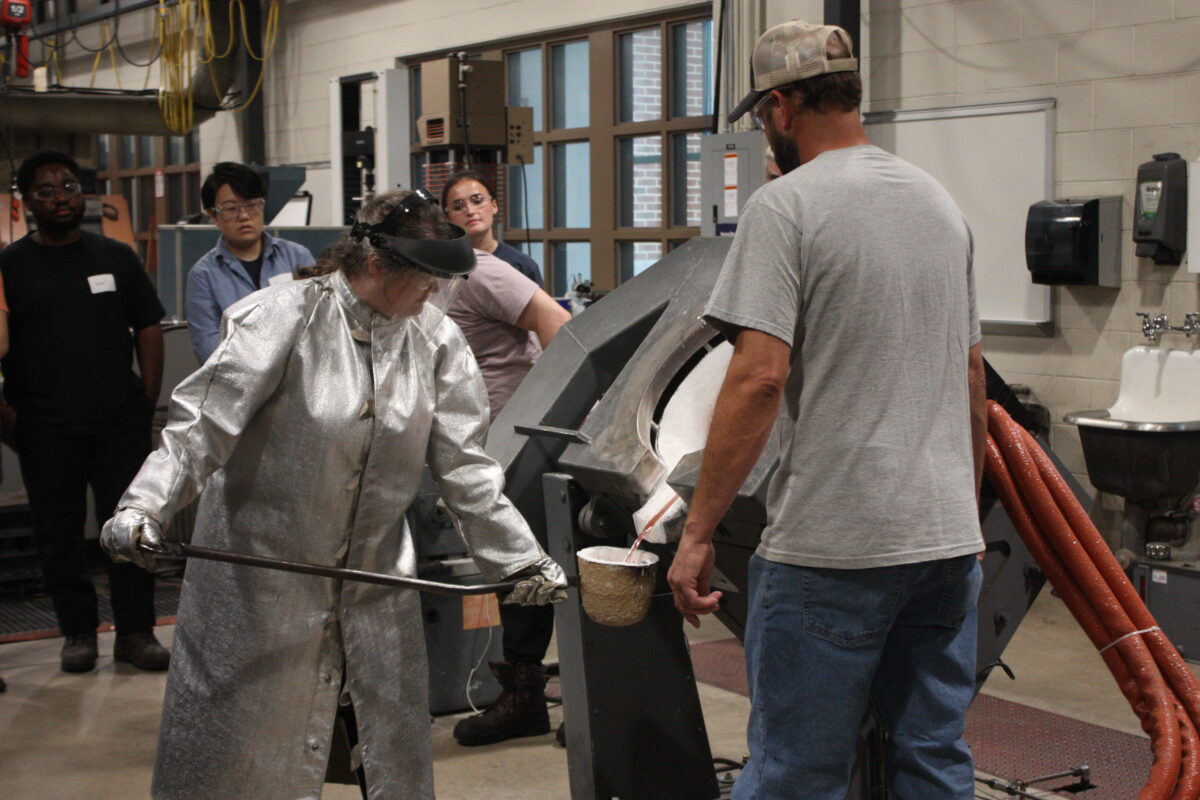
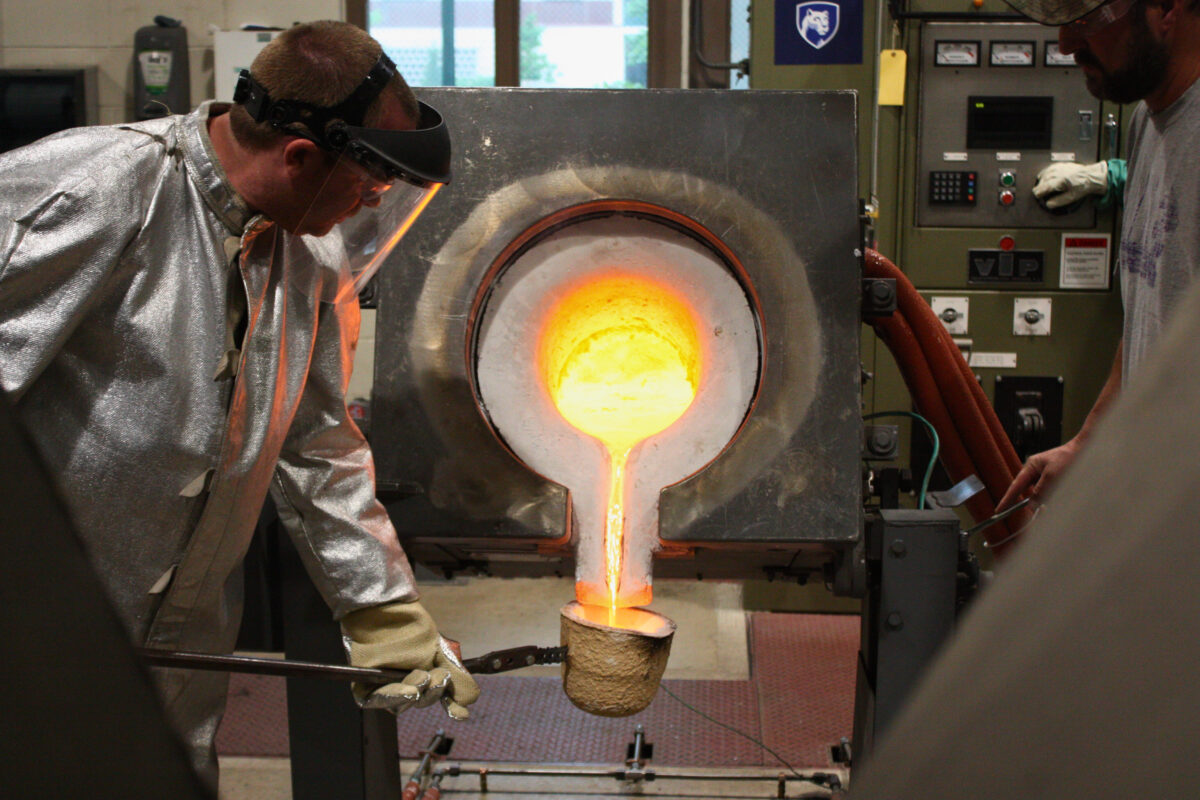
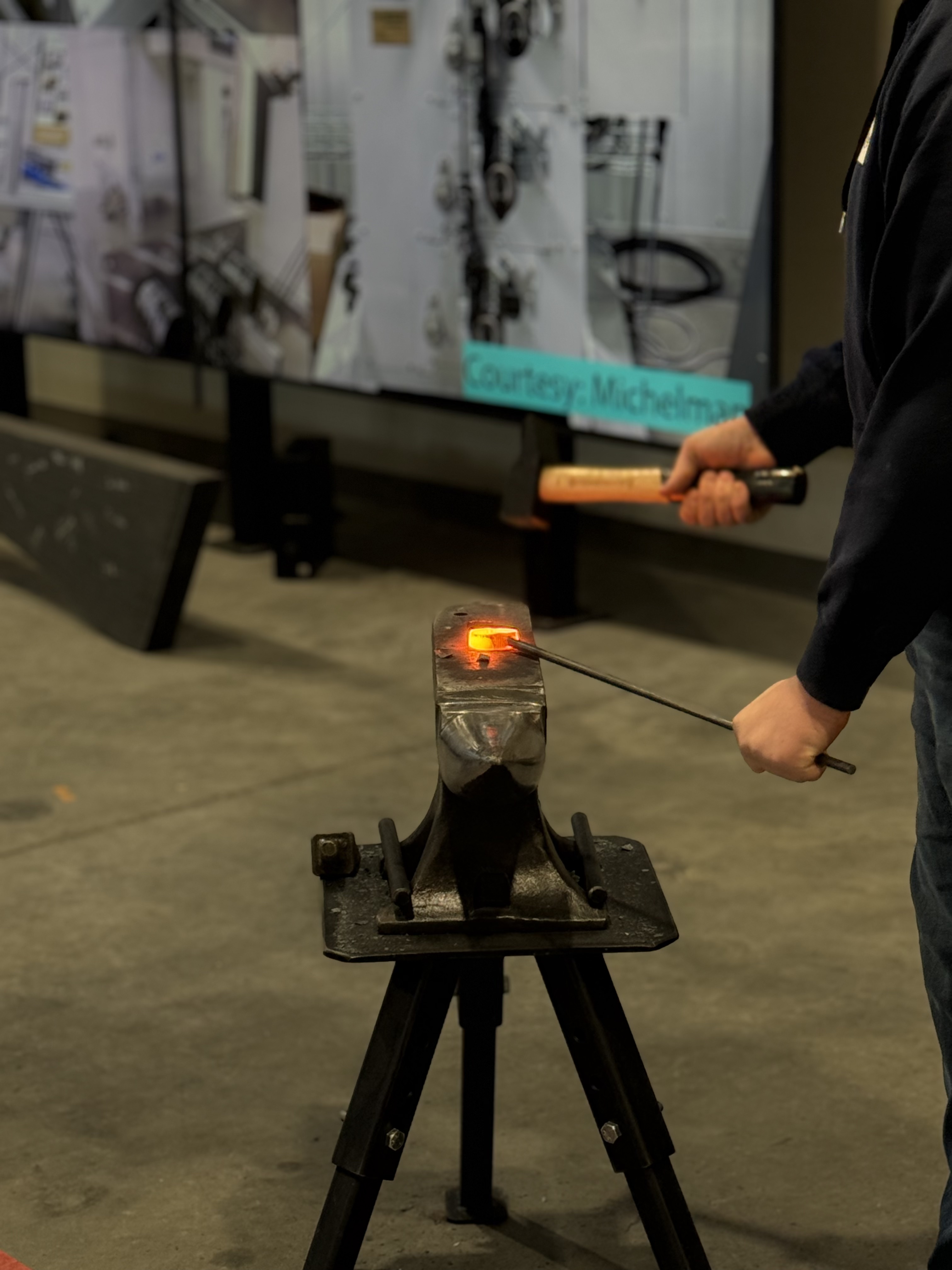
Next came sand casting, where students used their 3D-printed designs from school to create molds and pour molten tin, transforming their digital models into tangible cast shapes. Meanwhile, small groups took turns participating in induction forging, heating metal “lollipops” until they were red hot, then hammering their initials into them. 
Watch the full coverage here

Pouring Metal and Powering National Defense: DoD Contractors Join METAL Bootcamp

Melissa Walston and Rachel Reed have spent their careers traveling the world, learning languages and guiding U.S. diplomats across foreign nations and cultures. But when it came to navigating a foundry for the first time, they felt lost. 

In their new roles as Department of Defense contractors with Vision Point Systems, Walston and Reed support metal manufacturing projects for the Navy’s Carderock Naval Surface Warfare Center. Carderock is the Navy’s premier center for engineering, modeling and testing ships and ship systems. Its mission spans ship design, naval architecture and the strength of the structures that keep sailors safe at sea. At its core, both Carderock’s success and the future of U.S. defense rely on one critical capability: consistent, high-quality metal production.

“Metal is in everything,” said Reed, who’s a program analyst. “The Naval Service Warfare Center and other government agencies require a strong base of manufacturers who can provide the materials we need at the scale and to the specification we need—and that’s not easy.” 

Reed joined Vision Point Systems in February after 15 years managing international exchange programs and delegation visits. Her superpower? Connecting the right people and organizations, no matter where they’re from. Now Reed coordinates contracts between metal manufacturers and the Navy. But to lead this collaboration, she needed to understand the world of metallurgy.  

“When I first did an audit visit at a foundry, it was awesome, but it was also confusing,” said Reed. “The terminology was so unfamiliar to me, it was like a different language.”

Reed, who is fluent in Japanese, knew she had to approach her new job like she was preparing for a trip—immersing herself in casting, forging and manufacturing culture. Her colleague, Walston, recommended METAL’s week-long metallurgy bootcamp at Penn State University to Reed.

“I immediately started telling my coworkers, ‘you guys have to take this course.’ It will help so much because none of us came from this world,” Walston said, referring to manufacturing.  

Walston, who’s a program coordinator at Vision Point Systems, has led American ambassadors around the world, tracked missions in the U.S. Air Force, and served as an executive assistant at the White House. Her career, nothing short of a Disney World ride (she worked there, too), is now focused on reigniting the nation’s defense manufacturing capabilities.  

“I’ve spent most of my life, in one way or another, supporting my country,” Walston said. “It means a lot to me to be doing something that is directly helping our military. I know what it feels like to be one of them, waiting for a part to be fixed or made.”

Off to Bootcamp

Walston decided to try Penn State’s METAL bootcamp after her Vision Point Systems orientation, when she realized she had no idea what a Charpy was. 

“I sat in this meeting and almost every briefer brought up the term ‘Charpy.’ I kept laughing to myself saying, ‘I know they’re not talking about the pen in my purse,’” she said—they weren’t. In metalcasting, a Charpy, pronounced like “Sharpie,” is a type of test used to measure the material’s toughness when struck with sudden impact. 

Walston quickly learned “Charpy” wasn’t the only term she’d need under her belt to support the defense industry’s metal pipeline. “I thought my head was going to explode. I didn’t understand most of what I heard,” she admitted. 

An introduction to metallurgy terminology and science—from casting and heat treatment to nonferrous metals and alloys—is exactly where METAL’s online training starts. Led by IACMI – The Composites Institute®, with funding from the Department of Defense’s IBAS Program, METAL is building a highly-skilled, adaptable manufacturing workforce with K-12 workshops and hands-on bootcamps for career seekers.

As more metal workers retire, the U.S. faces a critical knowledge gap. By 2033, manufacturers could need more than 2 million additional workers to keep up with supply chain and national security needs. 

“Right this moment, we cannot entirely build a U.S. naval ship in the United States,” Walston said. “You don’t know what the future’s going to hold, and we need to be self-sufficient. If there’s a surge, we need to be able to meet that demand.” 

Through partnerships with Penn State and universities across the country, METAL bootcamps are forging the next generation of industry leaders and innovators. Walston signed up without hesitation when she learned she could support her country by melting, casting and forging metal.

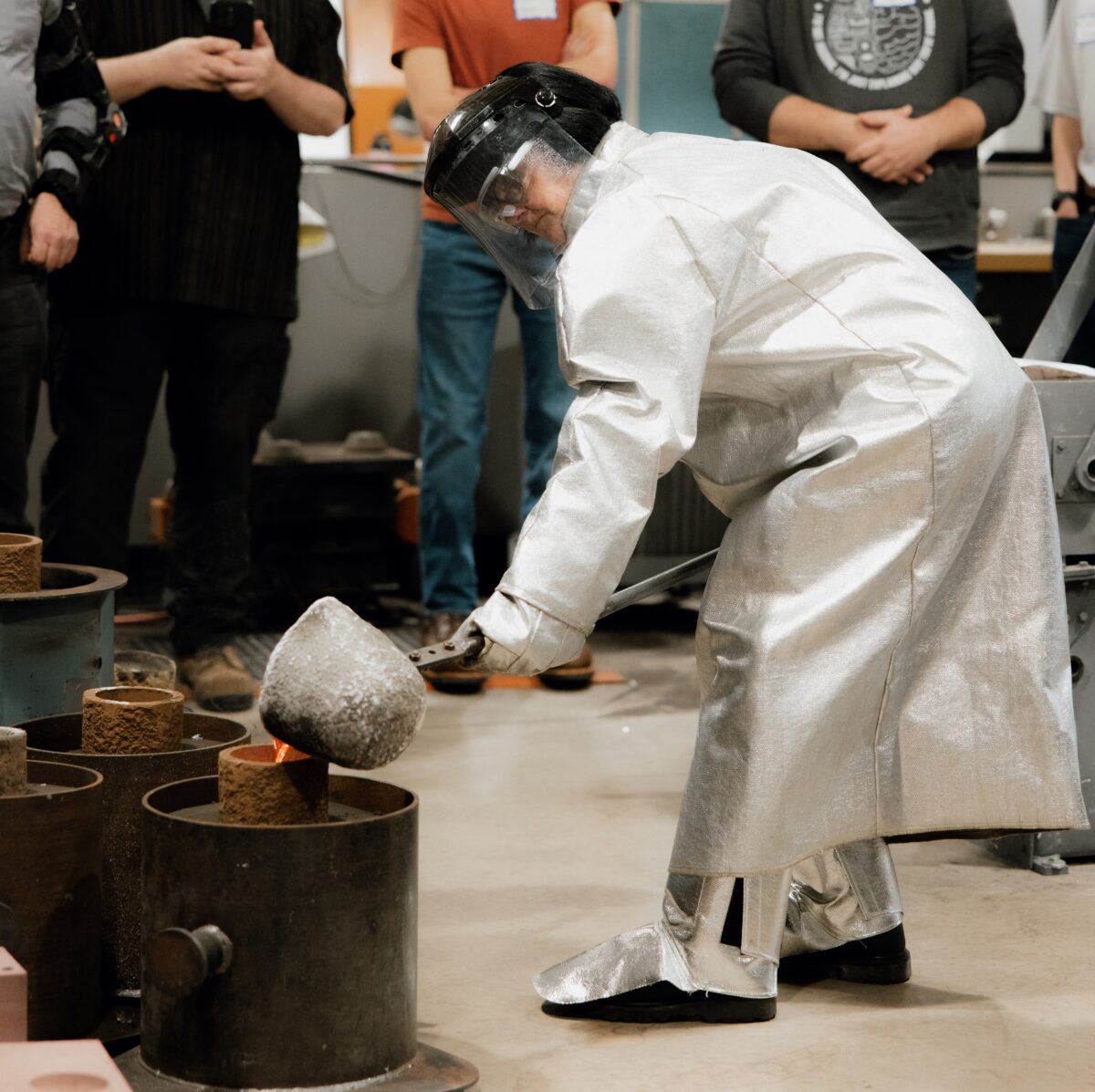
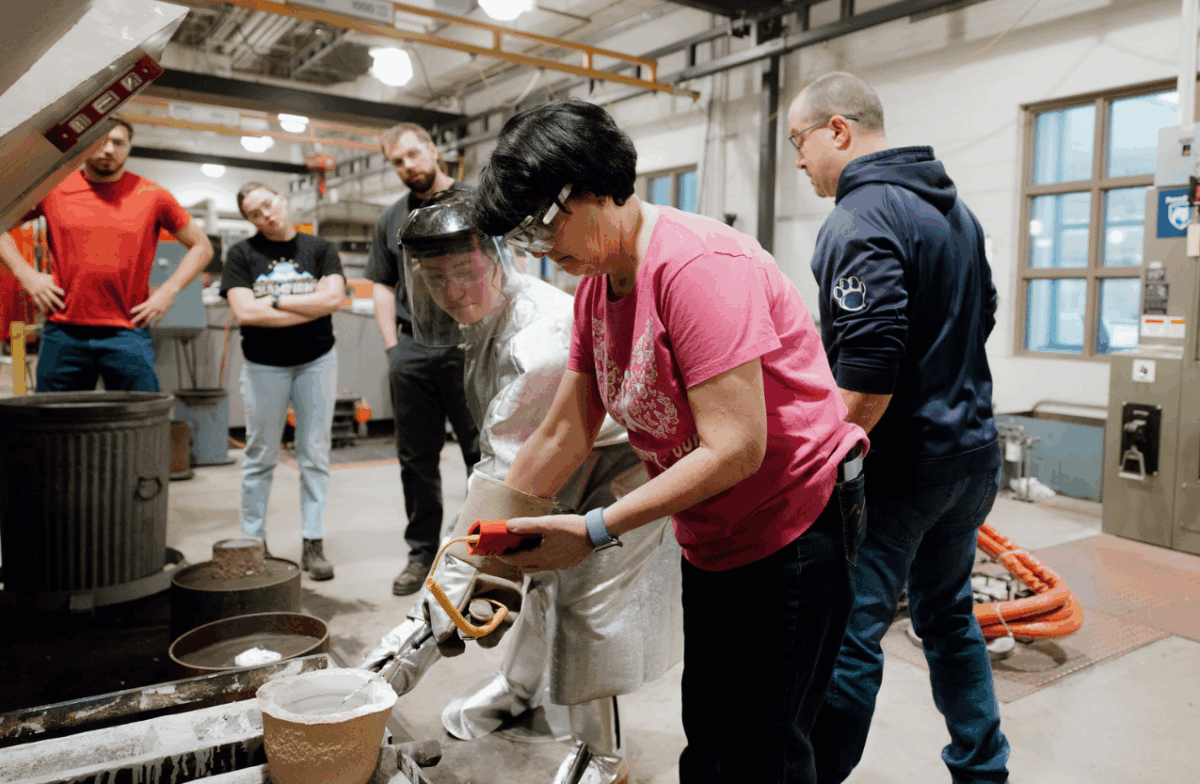
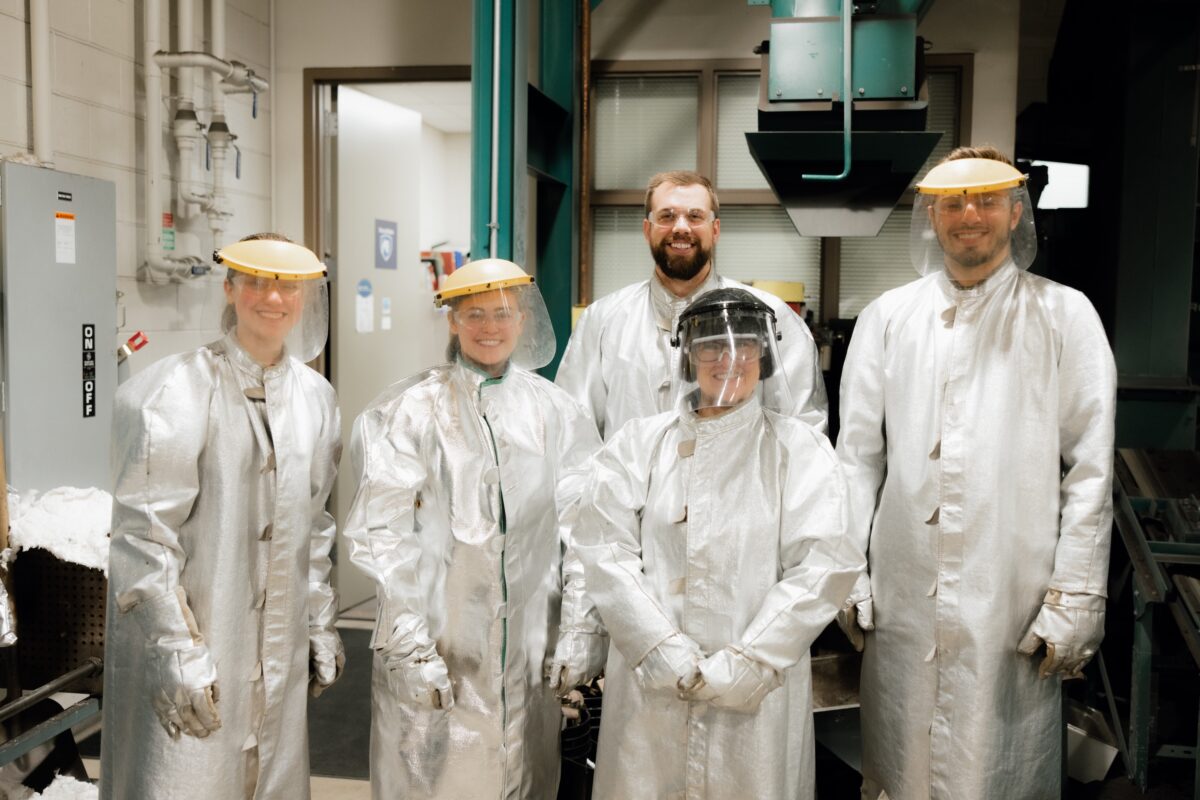
For one week, Walston and Reed suited up in safety glasses and fire-resistant gear to bring the science of metalcasting to life. From designing 3D molds to melting aluminum and bronze to machining a finished part, they experienced exactly what it takes to create a casting with their own hands.

Reed said the highlight of the bootcamp was firing up the foundry furnace for her first pour. After aluminum is heated to about 1,300 degrees Fahrenheit and liquifies, participants get the rare chance to carry the ladle and pour metal into the mold themselves.

“It was so cool. I’m never going to have that opportunity again,” Reed said. “It gave me a real respect for the work that our manufacturing partners do and how complicated it can be.” 

Walston said she might have had a different career if she’d known what was possible in metal manufacturing sooner. 

“If I had been introduced to the foundry when I was in high school, that would’ve been where I wanted to be—working with my hands, getting dirty, playing with fire, and getting paid for it,” Walston said. “I was on cloud nine.” 

Both Walston and Reed returned home with their own creations—a bronze medallion and an aluminum stein—and a deeper understanding of what the Navy needs from metal manufacturers.   

The Secret Weapon to Career Success

Since graduating from METAL’s bootcamp, the contractors feel like they’re finally speaking the same language as their metallurgy and manufacturing partners. Reed said she’s not only better equipped to have technical conversations, but she knows what a foundry needs to be successful. 

“Every place is a culture, and METAL was my cultural introduction to working with manufacturers,” Reed said. “There’s a lot of time dedicated to keep a foundry running. I learned more about how they operate and the costs associated with producing a part.”

She strongly encourages anyone who supports the metal industry—or is curious about a fulfilling, well-paid career—to experience the bootcamp for themselves. 

“We need more people interested in manufacturing,” Reed said. “Programs like METAL are essential because a lot of people are afraid of what they don’t understand. If you can get hands-on experience and realize the opportunities that exist, that is the real strength of this program.”

What Walston found in the foundry was confidence. Now she asks the right questions, keeps pace in meetings, and uses her growing expertise to help safeguard America’s metal production—and its future.

“I owe so much of my progress to this course,” she said.  

Ready to cast a stronger career and a stronger America? Register for our free online training then visit our events page to attend the next METAL bootcamp near you.

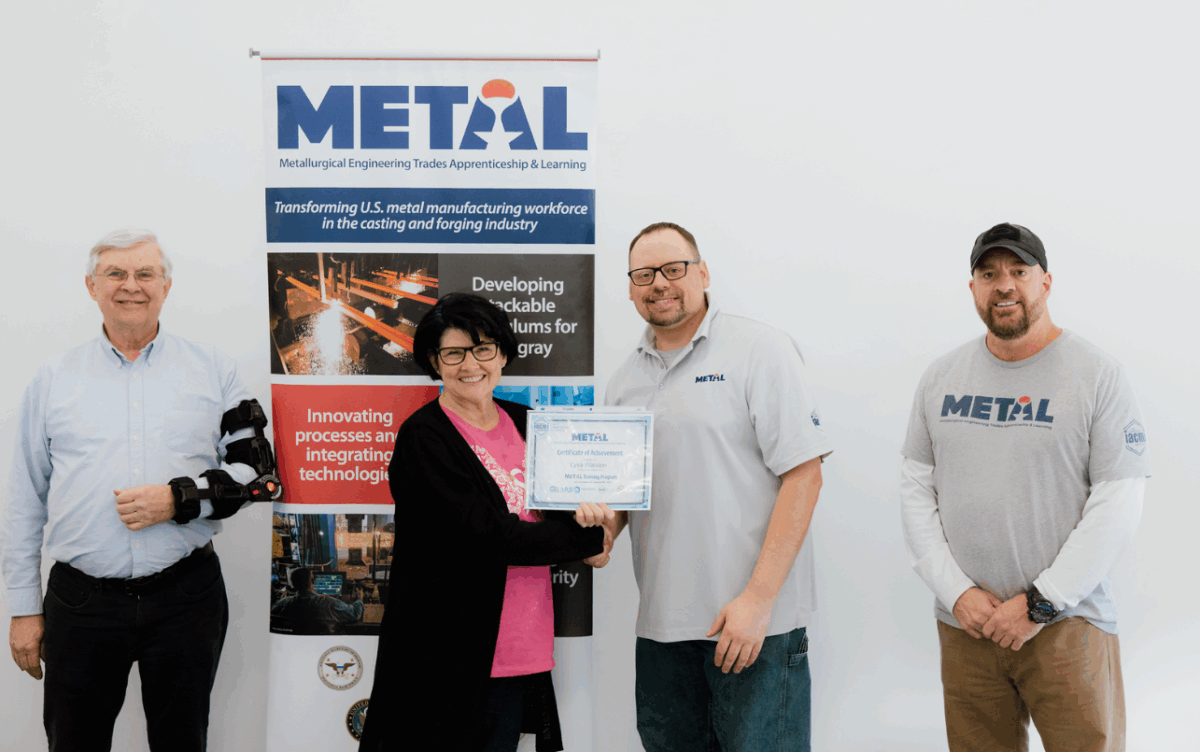
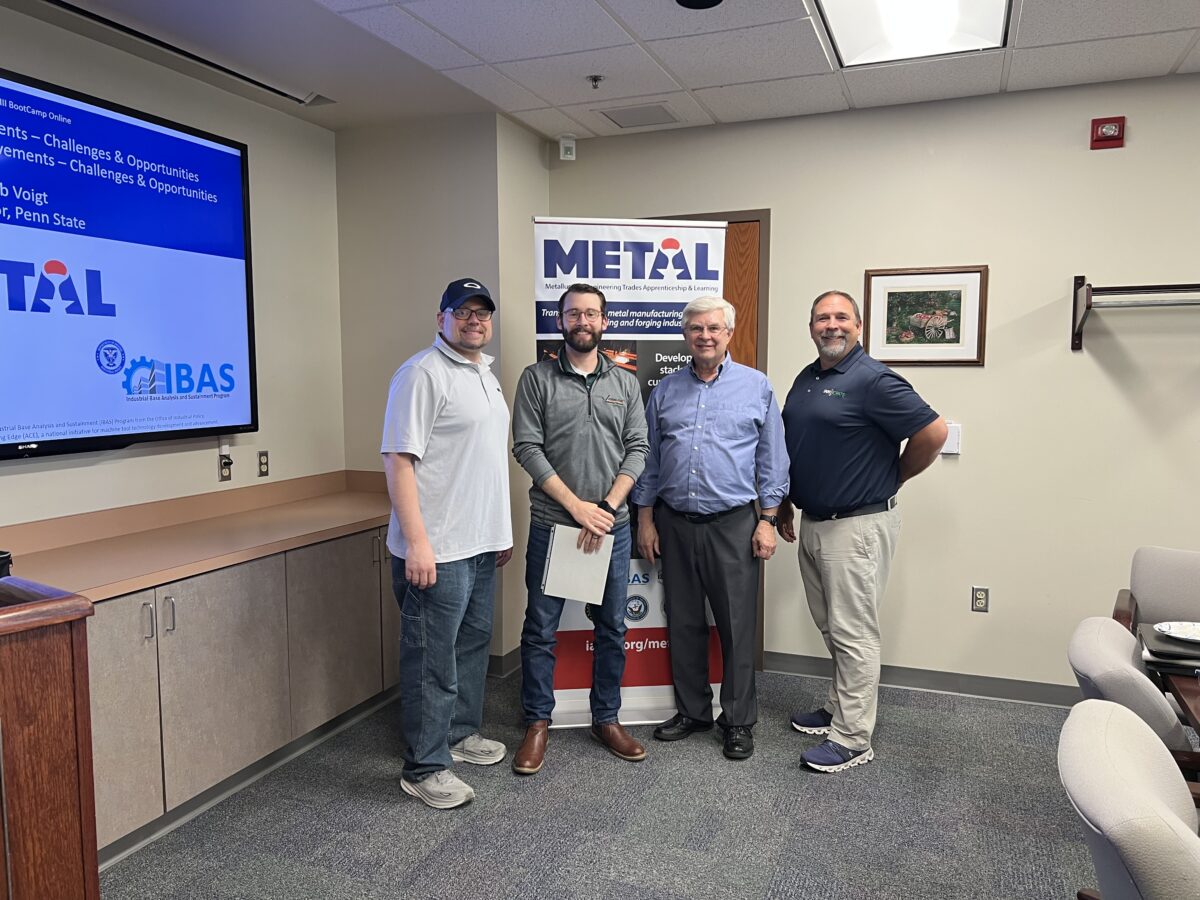
Penn State Industrial and Manufacturing Engineering Professor Robert Voigt, Melissa Walston, Professor Paul Lynch and Ralph Workman celebrate Walston’s graduation from Penn State’s METAL bootcamp.

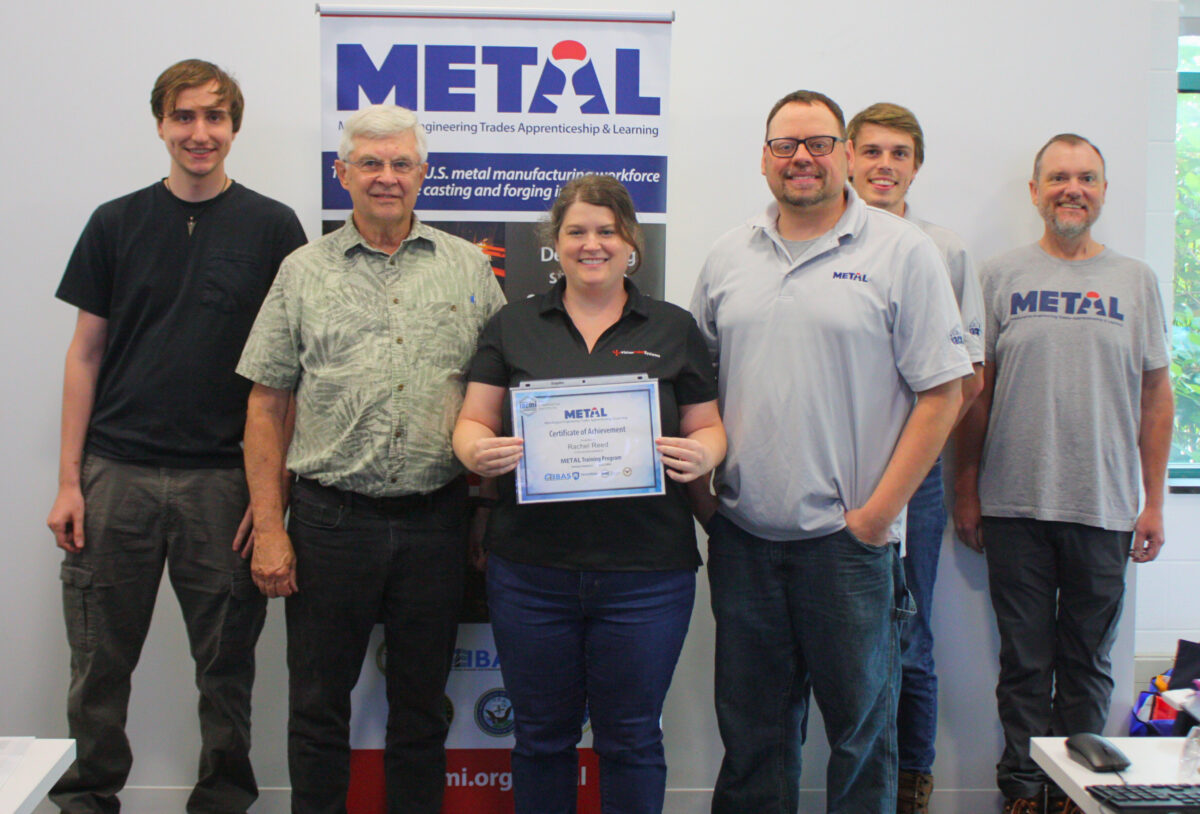
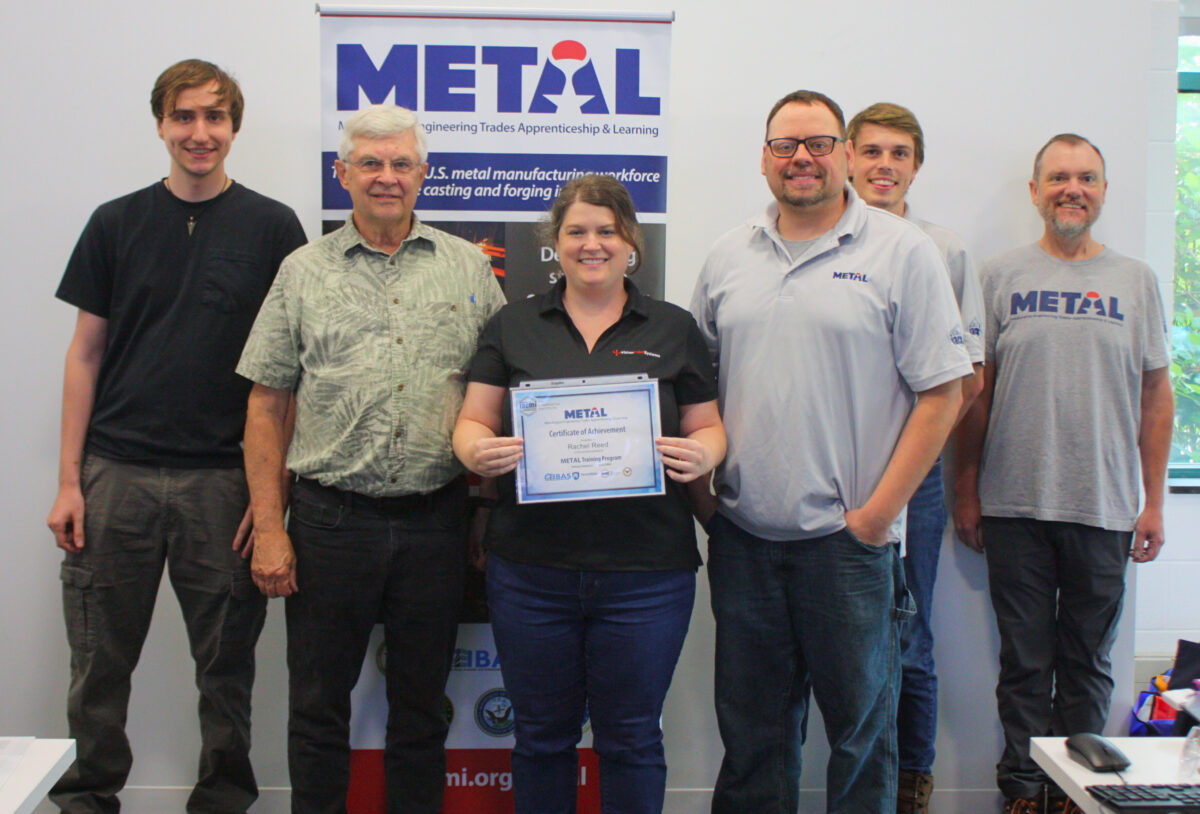
Rachel Reed graduates from METAL’s week-long, hands-on bootcamp experience with students and fellow industry professionals who expanded their skills in metallurgy.

Changing Lives: Manufacturing Works Fuels Ohio’s Metal Industry with Registered Apprenticeships

Manufacturing Works has been the right hand of Northeast Ohio’s manufacturing community for nearly 40 years. Through life-changing apprenticeships and strategic funding, the organization helps manufacturers grow their talent and produce high-quality parts faster. Now, at a pivotal time for our nation, Manufacturing Works is forging a skilled workforce for the metal industry.

Foundries today need one thing: people. More than 65% of manufacturers said attracting and retaining talent is their top business challenge, according to a 2024 National Association of Manufacturers survey. By 2033, almost 4 million manufacturing jobs will be available in the U.S., but half could go unfilled due to an unprecedented skills gap in the workforce. 

Beth Dawson, director of apprenticeship programs at Manufacturing Works, explained that the COVID-19 pandemic catalyzed the nation’s labor shortage. Before the end of 2020, almost 29 million Baby Boomers in the U.S. retired—200% more than in 2019.

“When you look at the skilled workforce in manufacturing, most of them are planning to retire,” Dawson said. “The need for new talent and knowledge transfer is critical.”

Casting Solutions to the Talent Crisis

When metal workers are in short supply, America’s strength is, too. Metalcasting, forging and rolling are vital for producing fighter jets, naval ships, weapons, and components in transportation, medical and agricultural industries.

In April, the White House issued an executive order to ensure national security and economic resilience related to critical minerals like metal and its manufactured products. 

“A strong national defense depends on a robust economy and price stability, a resilient manufacturing and defense industrial base, and secure domestic supply chains,” President Trump wrote.

Together with METAL and Jobs for the Future (JFF), group sponsors like Manufacturing Works are part of the solution. Manufacturers, who are often short on time and budget, can partner with group sponsors to manage apprenticeships and workforce development programs for them, JFF’s Director of Solutions Design and Delivery Mark Genua explained.    

“It’s an easy lift for small to mid-sized employers. They could have an apprentice the next day,” Genua said. “Instead of taking the time to develop a program, employers can do what they do best—train.”

METAL, led by IACMI – the Composites Institute and supported by the Department of Defense’s IBAS program, and JFF work with community colleges and nonprofit organizations across the country to administer apprenticeship programs for metal manufacturers. Through this partnership, casting, forging, and plate rolling companies can access up to $24,000 per year for in-person or online learning programs. The funding can cover training equipment and trainer costs, curriculum development, program design and implementation, and support services for apprentices. Manufacturing Works was awarded incentive funding from JFF through METAL earlier this year.

So far, JFF and Manufacturing Works have sponsored and supported seven forging apprentices. But this is only the beginning. Since Dawson joined Manufacturing Works in 2020, the organization’s apprenticeship programs have grown 400%—making it clear, manufacturers need help.

“I met a company with machines that can produce 30,000 parts a day,” Dawson said. “But because they don’t have the talent to run the machines, they’re only producing 14,000 parts. Think about what that does to their production.” 

Dawson works closely with her teammates Angilique Cole, workforce program and data coordinator, and Tiffany Rashada, director of strategic marketing, to connect manufacturers with apprentices—and transform metal workers’ lives.

Training Metal Workers—And Changing Lives

In Northeast Ohio, the road to a manufacturing career can feel out of reach. Many residents face hurdles that extend far beyond the foundry—from reading and transportation to the high cost of childcare. In East Cleveland, where household incomes are around $37,500—less than half the national average—families must overcome steep economic challenges.

Most apprenticeship programs take about four years to complete. But when metal workers graduate, they have the skills to support a fulfilling, in-demand career, with salaries starting at $57,500 a year, according to Manufacturing Works’ data.

That’s exactly what Manufacturing Works’ apprentice Alexandra Wagoner was looking for.

“I wanted to go into a career path that wouldn’t require a long academic education,” Wagoner said. “This is the only option for me that provides a stable career without needing a bunch of college.”


When Manufacturing Works visits high schools, Dawson said their goal is to help students and parents see the potential and career opportunities the metal industry offers.

“Their earning potential coming out of college is likely going to be lower than a journey-level person completing their apprenticeship, and with an apprenticeship, they won’t have college debt,” Dawson said. 

Cleveland is also one of the most diverse cities in Ohio. To help apprentices and metal workers find success, manufacturers need to build welcoming environments with a strong learning culture, Rashada said. 

“Most manufacturers care about employee engagement and retention,” Rashada explained. “But to even engage people that are non-traditional in manufacturing, your culture matters.”

With a deep passion for their communities, the Manufacturing Works team is dedicated to helping Ohio’s manufacturers overcome workforce challenges. Through mentorship, supervisor training, high school outreach and math- and literacy-focused pre-apprenticeships, Manufacturing Works is forging an industry where metal workers thrive.

Thanks to Cole, manufacturers can trust that their apprentices are on the track to success.

“I have to fuss at them sometimes, but it is all for the good,” she joked. “I just want them to let me know if they encounter and stumble across anything, professionally and personally. We can get over this hump together.”

Cole said the most rewarding part of her job is seeing people’s humble beginnings before finding a career in manufacturing. 

“When they get to the finish line, I’m probably more emotional than they are,” she said. “They don’t realize the difference they’ve made in their lives.”  

Ready to forge a stronger workforce? Apply for JFF’s apprenticeship incentive program here. 

Cast a new career: Register for our free online training, then visit our events page to attend the next METAL bootcamp near you. 

Penn State’s Sand Science Bootcamp Sparks New Thinking Across the Foundry Industry

In October, Penn State hosted its first METAL Sand Science Bootcamp, a hands-on course exploring the chemical and physical principles behind green sand and chemically bonded sand. These are two essential materials used to create molds for casting metal parts. From engine blocks and pipe fittings to aerospace and defense components, these molds form the foundation of American manufacturing.

Led by IACMI – The Composites Institute®, with funding from the Department of Defense’s IBAS Program, METAL is closing critical labor gaps in U.S. metal manufacturing. By 2030, almost 4 million manufacturing jobs will need to be filled, from entry level positions to trained production workers and specialized engineers. However, half of those positions might be left empty—putting the supply chain and our national defense at risk.

The free course encouraged participants to connect theory with practice and return home ready to improve their operations. A large contingent of industry professionals attended this bootcamp and came away with many new insights. 

“I appreciated the collaborative conversation about broad topics and how it relates to what we’re doing in the real world,” said Olin Covington from Benton Foundry.. “Hearing from foundries, coremakers, sand guys—brainstorming and sharing. Mold energy was the best topic. The industry does drag its feet on certain things, but metalcasting has been around for thousands of years and there’s a reason it’s still here.”

For Justin Kinslow of Victaulic, the session on advanced oxidation stood out. “I hadn’t been exposed to that before. It ties into other projects we’re working on. I liked the setup—enough guidelines for it to be effective but informal enough for good conversations. I learned about other foundries and people.”

Penn State Professor Dr. Paul Lynch, Justin Kinslow with Victaulic, Penn State Professor Bob Voight, and METAL Workforce Manager Greg Harrell.

His colleague Ian Erb, a plant manager at Victaulic, agreed that the course offered clarity: “I had some misconceptions about the theory behind mulling to energy. Glad I was here to crystallize exactly what we need to do. Pretty clear actions we’ll take when I get back.”

Joe Kramer from CWC Textron, where his team produces about 40,000 crankshafts a year, found the content directly applicable to ongoing projects. “We got some info on specific stuff we’re looking at: bond reclamation, a subset of advanced oxidant. CWC is the odd one out in scope and process, but it was nice to get a glimpse at what different shops look like. We also discussed 3D printing core molds, which is a new technology for us.”

For Bryan Rash of Spring City Electrical, the best part was realizing how much others share the same challenges. “Spring City is insular with our production, so it was nice to hear and see what other people have. Even though we’re low volume, we deal with some of the same struggles—not just technical, but hiring too. 3D sand printing on the design end, the basics of science—I’m not necessarily exposed to the difficulty of sand, and this helped me be aware of that on the front end.”

On the supplier side, Jim Kundratic of Badger Mining Corporation saw a broader opportunity for the industry. “I like where the program is going. I see a lot of foundries that need this program. We need more people to come in and learn the basics. The next piece is to promote it internally to my customers. Leadership is strained because they’re the only ones who know these things, and mid- to high-level management gets burned out.”

The Sand Science Bootcamp is part of a growing effort to equip metalworkers with the knowledge to optimize their systems and push new technology forward. As course leader Paul Lynch summarized, “The goal is for people to take these ideas back to improve their systems. What are the challenges? What are the opportunities?”

Want to get involved? Register for our free online training then visit our events page to attend the next METAL bootcamp near you.

Bringing Back the “Knowhow”: How Penn State Rebuilds America’s Manufacturing Workforce

Paul Lynch grew up in a town that hummed with manufacturing. In a small community hugging the Appalachian mountains of eastern Pennsylvania, he learned first-hand the impact foundries can have on the local economy. Today, Lynch is honoring the past by driving the future of metal manufacturing forward.

Dr. Lynch, who’s an associate professor of industrial engineering at Penn State Behrend, has dedicated his career to supporting the growth and innovation of Pennsylvania’s metal industry. Like many towns in the region, Lynch’s hometown, Gordon, was developed in the 19th century from the booming anthracite coal industry. For more than 150 years, coal mining powered homes, jobs and the economy—and fueled U.S. steel production. 

“My dad owned a mechanic shop and he could tell you, without talking to the folks from the local foundry, if business was up or down,” Lynch explained. “If people are doing really well, they’ll buy new tires, or if they’re not, they’ll put off maintenance on their car. That’s how important manufacturing was to our area.”

The state’s deep history of enterprise manufacturing continues today. Pennsylvania is in the top five states for the most foundries in the nation. Its top manufacturing exports are computer and electronic products, machinery, primary metal manufacturing and transportation equipment—multi-billion dollar industries that require metalcasting, forging and rolling.

But the future of manufacturing in Pennsylvania – and our nation – depends on metal workers. 

In partnership with METAL, Lynch and his colleagues at Penn State University are rebuilding the manufacturing workforce and bringing metalcasting back to American communities.


Advancing U.S. Manufacturing

Led by IACMI – The Composites Institute®, with funding from the Department of Defense’s IBAS Program, METAL is closing critical labor gaps in U.S. metal manufacturing. By 2030, almost 4 million manufacturing jobs will need to be filled, from entry level positions to trained production workers and specialized engineers. However, half of those positions might be left empty—putting the supply chain and our national defense at risk.

With universities across the country, METAL is rekindling metallurgy for job seekers and students of all ages with unique, hands-on casting and forging experiences. Lynch couldn’t wait to get started at Penn State. 

I can tell you our leadership, from our chancellor to myself and the faculty, everyone here is so excited about this program,” he said. “If you talk to somebody that works in the industry, they’ll tell you this has been needed for 30 years.”

Since 2024, METAL team members at Penn State Behrend and Penn State University Park

have taught 12 K-12 workshops with 150 students and eight bootcamps, where 115 participants graduated with foundational and specialized metallurgical skills.

Through bootcamps that cover cutting-edge topics like the science behind sand casts and virtual reality applications, Penn State aims to upskill metal industry professionals. Advanced bootcamps are also open to beginner bootcamp graduates who want to expand their expertise. 

In the new Sand Science Bootcamp, which launched in October, participants explored the chemical properties of green sand, or sand that’s bonded by clay, and chemically-bonded sand. Both materials are used in manufacturing to create molds that liquid metal can be poured into for casting metals. These molds can be used to create engine blocks, pipe fittings, agricultural and construction tools, and core components for the aerospace and defense industries.

Lynch hopes the advanced bootcamps will equip metal workers to optimize operations—and push innovative technology forward. “How can people take these ideas back to improve their systems?” he asked. “What are the challenges? What are the opportunities?”

In November, the university plans to host a level three advanced bootcamp for digital technologies in casting. The online lessons, which include data analytics, are already available. In the foundry, participants will learn how to incorporate immersive technologies like virtual

reality, along with sensors, data analytics and additive manufacturing, into the casting process.

In addition to strengthening today’s manufacturing workforce, Penn State inspires students and career changers to become the metal workers of tomorrow.

Learning Casting—From the Ground Up

Lynch said the goal for elementary, middle and high school workshops is to capture students’ interest—and their imagination. Every week this summer, students from ages six to 14 brought metallurgy to life. They assembled parts, crafted their own sand molds, and poured liquid aluminum into starfish, softballs and smiley faces. Students also had opportunities to practice their new skills, casting chocolate.  

“Research shows that as early as five and six years old, children are connecting the dots, thinking about what they like and putting that toward a career,” Lynch said. “You want to get them thinking about metals and metallurgy, and you want the parents to understand the career opportunities that exist for the students now and in the future.”

Penn State’s beginner bootcamps, on the other hand, are designed to teach adults the metalcasting skills needed to explore and start a new career. Participants start their learning at home with METAL’s free, self-paced online training. Then, with a glimpse of metallurgy, college students, professionals and job seekers are ready for the hands-on METAL bootcamp experience.  

For four days, the casters-in-training meet at Penn State to learn about life and work in a foundry. Participants who attend the beginner bootcamp learn industry terminology, design and print 3D molds, and finally pour molten metal into new, solid creations. They also cover the basics of heat treatments, forging and machining—all skills required to deliver a finished part.  

“I was surprised by how many pieces we created from beginning to end,” said Rachel Reed, a program analyst at Vision Point Systems who attended the August bootcamp. “You actually walk away with a lost foam casting that you made yourself and a cast medallion. I left with a big goodie bag of things I made, and that’s just an awesome feeling.”

At the end of the day, Lynch believes the real driver of manufacturing’s future won’t be machines or automation—it will be people.

“I don’t care if it’s getting K-12 students involved, if it’s an introductory bootcamp or if it’s upskilling with advanced technologies—we need all of it and we need it fast,” he urged. “We gave our knowhow and our facilities away. We need to train people and get the knowhow back.”Ready to spark your future in metal? Register for our free online training then visit our events page to attend the next METAL bootcamp near you.

From Workshops to Workforce: UT Knoxville Forges the Future of Manufacturing in Tennessee

The first time Stephen Sheriff cast metal – a replica of the Wizard of Oz’s Tin Man – in front of an auditorium of elementary school students, he was hooked. Now, alongside his colleagues at the University of Tennessee, Knoxville (UTK), he’s determined to give students and job seekers exciting, in-person forging experiences. 

Sheriff, who’s an engineer and research associate with the Fiber Composites Manufacturing Facility at Innovation South, is part of a team of almost 30 UTK staff and students who are bringing metalcasting to communities in East Tennessee. 

In partnership with METAL, a program led by IACMI – The Composites Institute®, with funding from the Department of Defense’s Industrial Base Analysis and Sustainment (IBAS) Program, UTK has hosted four bootcamps for adults interested in metalcasting and 20 K-12 workshops. Both bootcamps and workshops cover metalcasting basics, including techniques for sand and investment casting. But now forging is becoming just as important to UTK’s education programs. 

Forging, the art of blacksmiths and swordmakers, is the process of re-shaping metal using extreme pressure to form a high-strength tool. Unlike casting, where metal is melted down, poured and cooled to become a new creation, a forger hammers, presses, or rolls solid metal into shape. Most of the time, forgers heat the metal to make it more pliable, but not always. A metal part can be both cast and then forged to completion—and both processes are critical to modern manufacturing. 

Today, there are about 3,000 stamping and forging companies in the U.S., but this number is declining. More than 240 forging plants closed and 21,000 jobs were eliminated as manufacturing left the U.S. However, the importance of forging is only growing for industry innovation and national security. Forging is necessary to produce critical parts in automotive, transportation, aerospace, energy and defense industries—from hand tools, hooks and chains to navy ships and fighter jets.     

“When people think of forging, they think of Forged in Fire or making anvils, knives and horseshoes—that sort of thing,” Sheriff explained. “We’re exposing students to the differences between cast and forged parts and how you’re affected by them every day.”  

New Irons In the Fire 

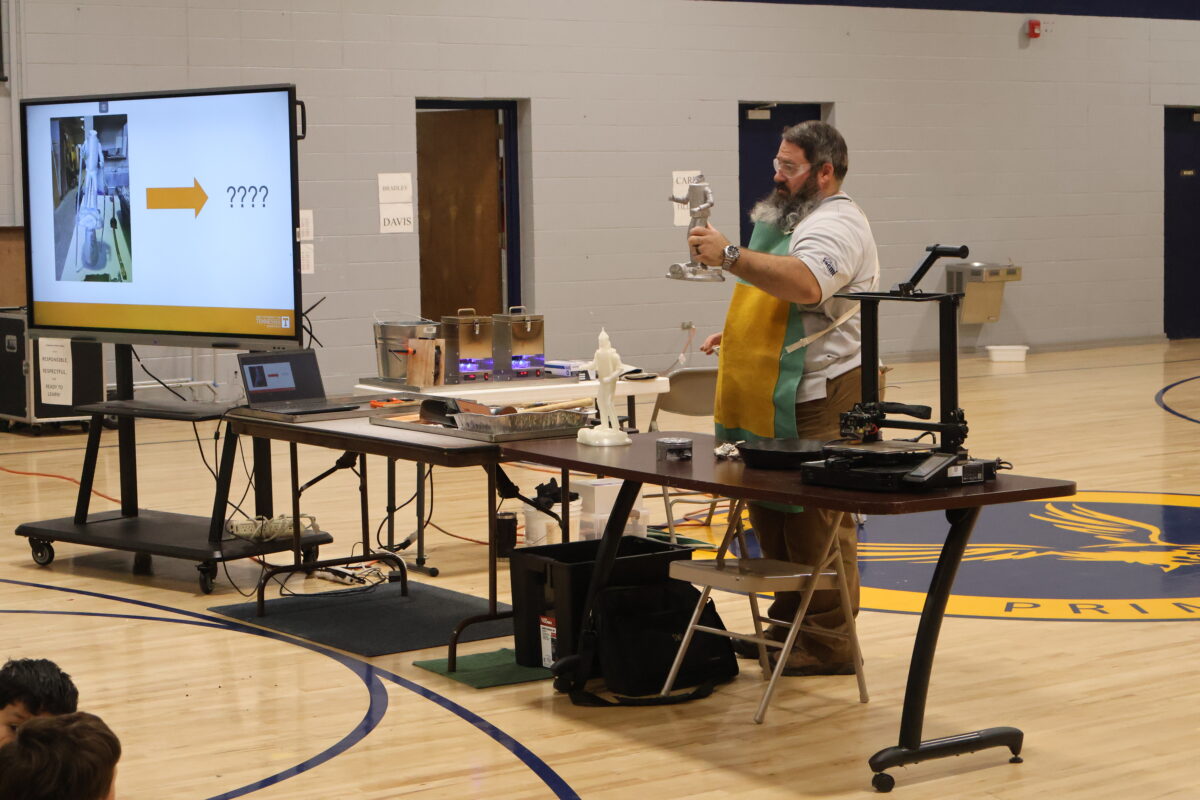
Sheriff loves the spark he sees in students when they learn how metal can be transformed. This spring, he awed students at Seymour Primary School with a live sand casting demonstration, bringing one of their favorite characters to life at the school’s annual Book Bash.

Now, as UTK plans to roll out a new K-12 blacksmithing workshop, Sheriff is ready to create more moments that spark curiosity for forging. 

“Seeing kids light up about what we’re doing is great,” he said. “When students get that metal part from whatever pattern they picked in their hands, and say, ‘This is really cool, I want to learn how to do this,’ it turns into a career or a hobby.”

Sheriff’s team recently tested the blacksmithing workshop’s new curriculum, which will include lessons on how to shape metal and use a forging press. Middle and high school students will have the opportunity to practice heating and flattening steel with an anvil before stamping the puck with a design.

One of the most important goals for Sheriff is helping students overcome their fear of working with red-hot metal.  

“A lot of people are very intimidated when you hand them a piece of metal that’s glowing orange,” he said. “Some students might have experience with shop safety, but when you get students that aren’t involved with those types of activities, you need more time with them.”

Sheriff said clay forging will be one activity offered to help students practice without feeling the heat. Polymer modeling clay moves similarly to hot metal, Sheriff explained. With a palm-sized clay cube, students will use a plastic ballpoint hammer to draw the shape out and then stamp it with UTK’s “Power T” before baking it into a finished forging.    

“I’m looking forward to getting students involved,” Sheriff said. “I think it’s going to be a lot of fun.”

Soon, UTK’s blacksmithing workshop will be available to schools across East Tennessee.  

The university is also adding an introduction to forging to their free week-long bootcamps. UTK’s bootcamps, hosted in partnership with METAL, offer college students, professionals and career seekers a rare, hands-on opportunity to learn about metallurgy—from designing 3D molds, to melting, pouring and casting metal, to now forging a finished product.   

Dustin Gilmer, an assistant professor in materials science and engineering at UTK who helps lead the bootcamps, believes forging skills will better prepare tomorrow’s workforce.     

“We were up and running really quickly with casting, but forging is a little bit more specialized,” Gilmer said. Through partnerships with METAL, Pennsylvania State University, and The Ohio State University, UTK is developing a forging curriculum for bootcamp participants who see a future for themselves in manufacturing. 

“We’re looking for people who think they have a career in this industry, and we’re trying to get them ready to enter the workforce,” Gilmer said. “That’s the goal of the bootcamps.”

Gilmer and his team plan to incorporate forging lessons and hands-on learning into UTK’s December bootcamp

Forging Community

Beyond skills training, Gilmer and Sheriff are focused on connecting students and bootcamp participants to the forging community. 

“We’ve lost a lot of this type of manufacturing in the U.S.,” Sheriff said. “We haven’t refreshed our workforce, and as foundry employees retire, there’s not many people coming up behind them learning the craft.”

The good news is, more than 3.8 million U.S. jobs will be there for metalworkers, engineers and manufacturing professionals who are ready to make an impact in the next decade. Gilmer said he’s been surprised by the number of metallurgical opportunities and support he’s found in Tennessee.

“When we first started our programs, I would’ve said we do not have a good metalcasting ecosystem. Since then, I have been proven wrong,” Gilmer said. “Having people champion us at the local level is why we’re so successful.”

For UTK’s team, the future of manufacturing starts with auditoriums of wide-eyed students and foundries where eager learners can discover the magic of metallurgy. 

“The first time you see somebody pouring molten metal, it’s an experience,” Gilmer said. “It’s something you don’t usually forget.”

Ready to forge your future? Register for our free online training then visit our events page to attend the next METAL bootcamp or workshop near you.