
Directives from Secretary of War Pete Hegseth and the Secretary of the Army have emphasized the importance of expanding the defense industrial base and integrating advanced manufacturing. Failing to produce necessary components at home poses a severe risk to national defense. The Joint Advanced Manufacturing Symposium (JAMS) was held at Fort Campbell, Kentucky in early August to address these concerns. The event brought together military and civilian leaders, experts, and industry partners to address critical needs around advanced manufacturing and defense.
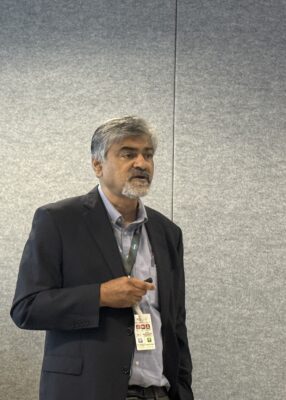
IACMI CTO Dr. Uday Vaidya provided an overview of IACMI’s work with composites in the defense sphere.
JAMS aimed to bridge the gap between component developers and the warfighters who use them. The symposium covered topics including accelerating innovation, enabling on-demand part production, improving operational readiness, and decreasing reliance on vulnerable, traditional supply chains.
The event featured a robust schedule of panel discussions, strategic briefings, and intensive, hands-on training workshops. Leaders from the Institute for Advanced Composites Manufacturing Innovation (IACMI) spoke about the organization and its workforce programs, including the Metallurgical Engineering Trades Apprenticeships and Learning (METAL) program.
METAL, led by IACMI – The Composites Institute®, and funded by the Department War’s Office of Industrial Base Policy, was created to revitalize American manufacturing through hands-on training in metalcasting and forging. Members of the 101st Airborne Battalion were able to participate in a METAL Bootcamp as part of the symposium.
Through K-12 workshops and university-led bootcamps METAL introduces students and career seekers to modern metalcasting and forging careers. Participants complete a free online training course before attending immersive, in-person bootcamps led by professional metallurgists and manufacturing experts.
How IACMI is Supporting the American Warfighter
On Wednesday, August 5th, the symposium focused on advanced manufacturing training in the age of Industry 4.0. Dr. Uday Vaidya, Chief Technical Officer at IACMI, and Andrew Pokelwaldt, Director of Education and Workforce Programs, spoke about the institute and its programs.
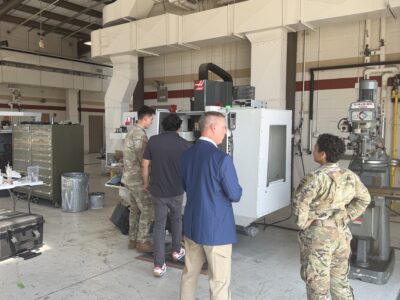
Andrew Pokelwaldt speaks with a soldier while observing the JAMS training session.
Vaidya provided an overview of the organization, originally funded by the Department of Energy, and its work on both civilian and defense projects. He spotlighted technology used to craft braided beams for construction, composite battlefield tourniquets, training rounds used for tanks, and new helmet tech. In his role at the University of Tennessee Knoxville, Vaidya also oversaw the METAL Bootcamp being offered to service members as part of JAMS.
During his presentation, Pokelwaldt, a Marine Corps veteran, underscored a stark reality facing the domestic manufacturing base and the military alike: “Ninety percent of durable manufacturing goods and critical manufacturing equipment is supported by these roles, and most of the time if anything is critical or involves precision, it’s going to take skilled engineers, skilled technicians, and skilled workers that can operate the equipment.”
He went on to note that even the most advanced equipment is rendered useless without a properly trained workforce. “A lot of the time it’s not the equipment, it’s the users. So if those people aren’t trained to deal with the advanced manufacturing equipment, that’s going to be a challenge, he said.”
Forging the New Workforce
Pokelwaldt detailed the success of the IACMI’s workforce programs:
America’s Cutting Edge (ACE) has impacted thousands over its five-year history. Combining free online courses with week-long, in-person bootcamps, ACE focuses on machining, composites, metrology, and advanced manufacturing. The goal is to get “people’s hands on that equipment,” said Pokelwaldt.
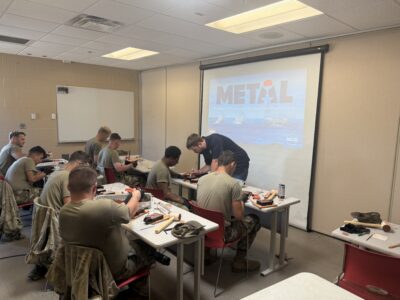 Pokelwaldt also highlighted the importance of the METAL program. “Casting and forging has been identified as an area that the United States does not have much capability compared to what it used to,” he explained. METAL is designed to bring domestic manufacturing back and increase existing capabilities in these vital areas. METAL is rapidly expanding nationwide to meet critical demand.
The presentation also addressed the long-term strategy for sustaining the manufacturing workforce. Pokelwaldt emphasized IACMI’s outreach efforts, recognizing that the “manufaturers of the future need early exposure to STEM concepts and basic manufacturing principles. “We start at a young age to give people basic manufacturing principles… and build all the way through,” he stated.
A surprising trend Pokelwaldt noted was that many intelligent and capable young adults entering these programs have never used basic hand tools. This lack of foundational experience makes hands-on training even more vital. “If they can’t even do that, they’ll struggle,” he said, referring to the basic mechanical adjustments often required on machinery.
By partnering with educational institutions and industry, IACMI is working to fill this pipeline, providing internships and apprenticeships that offer real-world experience. METAL’s upcoming K-12 mobile units are designed to generate interest in manufacturing early and give young people the hands-on experience many are missing.
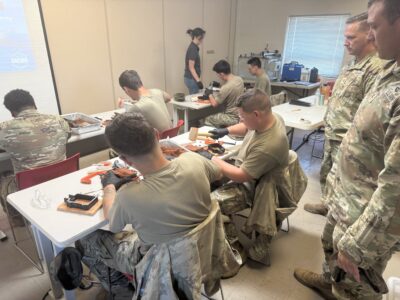
Active duty service members participated in a METAL Bootcamp from the University of Tennessee Knoxville.
The METAL Investment Casting Bootcamp
The strategic discussions at JAMS were paired with practical application. During the symposium, service members from the 101st Airborne and visiting Marines participated in intensive workshops at the HAMMER (Hub for Advanced Manufacturing, Metalworking, Engineering, and Repair) Training Site.
Among the offerings was a METAL Bootcamp led by Amy Wheelock and Thomas Drye from the University of Tennessee, Knoxville. The course provided trainees with a comprehensive understanding of how to move a custom design from concept to a finished metal piece.
The workshop curriculum was rigorous and highly practical:
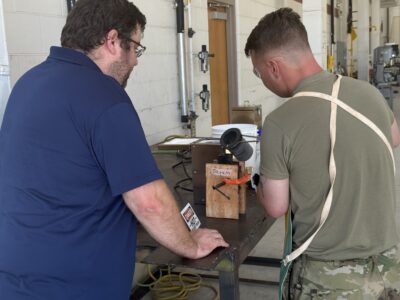
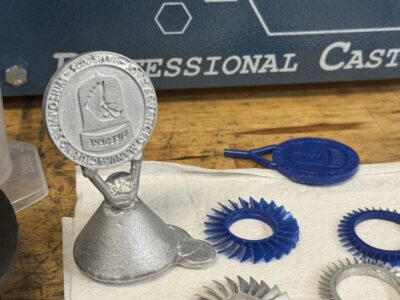
Bootcamp participants made designs using CAD, made sand molds, and poured molten metal.
- Day 1: An introduction to the METAL program and investment casting, followed by CAD instruction and pattern modeling.
- Day 2: A deep dive into 3D printing and injection molding. Trainees learned slicing techniques, observed injection molding demonstrations, and prepared their 3D printed patterns.
- Day 3: Focus shifted to sand casting and simulation, including spruce patterns, the burnout process, and a demonstration of Skuld Additive Manufacturing Evaporative Casting (AMEC).
- Day 4: The core activity, melting metal and performing the investment casting process, followed by retrieving and finishing the cast components.
- Day 5: An essential introduction to Non-Destructive Testing (NDT), where trainees performed ultrasound and dye penetrant testing on their finished parts to ensure quality and structural integrity.
The Future of Manufacturing at the Tactical Edge
JAMS highlighted the urgent need for agile, advanced manufacturing capabilities within the defense industrial base and on the battlefield. Programs like METAL are vital to ensuring that the nation’s warfighters and thenation’sindustrial base are prepared for the challenges of the future.
If you are interested in attending a METAL Bootcamp or want to learn more about a career in the foundry and forging industry, visit the METAL website today.