METAL on Base: Event Brings Hands-on Training to Service Members 

Directives from Secretary of War Pete Hegseth and the Secretary of the Army have emphasized the importance of expanding the defense industrial base and integrating advanced manufacturing. Failing to produce necessary components at home poses a severe risk to national defense.  The Joint Advanced Manufacturing Symposium (JAMS) was held at Fort Campbell, Kentucky in early August to address these concerns. The event brought together military and civilian leaders, experts, and industry partners to address critical needs around advanced manufacturing and defense. 

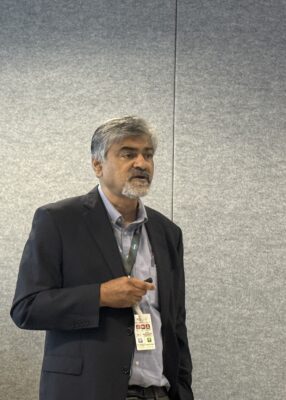
Dr. Uday Vaidya speaks to a crowd.

IACMI CTO Dr. Uday Vaidya provided an overview of IACMI’s work with composites in the defense sphere.

JAMS aimed to bridge the gap between component developers and the warfighters who use them. The symposium covered topics including accelerating innovation, enabling on-demand part production, improving operational readiness, and decreasing reliance on vulnerable, traditional supply chains.

The event featured a robust schedule of panel discussions, strategic briefings, and intensive, hands-on training workshops. Leaders from the Institute for Advanced Composites Manufacturing Innovation (IACMI) spoke about the organization and its workforce programs, including the Metallurgical Engineering Trades Apprenticeships and Learning (METAL) program. 

METAL, led byIACMI – The Composites Institute®, and funded by theDepartment War’s Office of Industrial Base Policy,was created to revitalize American manufacturing through hands-on trainingin metalcasting and forging. Members of the 101st Airborne Battalion were able to participate in a METAL Bootcamp as part of the symposium. 

Through K-12 workshops and university-led bootcamps METAL introduces students and career seekers to modern metalcasting and forging careers. Participants complete a free online training course before attending immersive, in-person bootcamps led by professional metallurgists and manufacturing experts.
 

How IACMI is Supporting the American Warfighter 

On Wednesday, August 5th, the symposium focused on advanced manufacturing training in the age of Industry 4.0. Dr. Uday Vaidya, Chief Technical Officer at IACMI, and Andrew Pokelwaldt, Director of Education and Workforce Programs, spoke about the institute and its programs. 

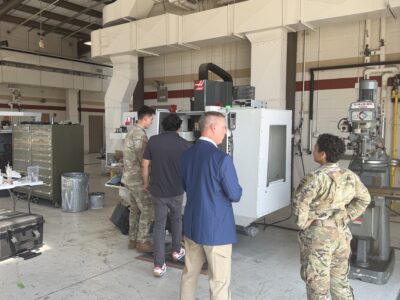
Andrew Pokelwaldt speaks with a soldier while observing the JAMS training session.

Andrew Pokelwaldt speaks with a soldier while observing the JAMS training session.

Vaidya provided an overview of the organization, originally funded by the Department of Energy, and its work on both civilian and defense projects. He spotlighted technology used to craft braided beams for construction, composite battlefield tourniquets, training rounds used for tanks, and new helmet tech. In his role at the University of Tennessee Knoxville, Vaidya also oversaw the METAL Bootcamp being offered to service members as part of JAMS. 

During his presentation, Pokelwaldt, a Marine Corps veteran, underscored a stark reality facing the domestic manufacturing base and the military alike: “Ninety percent of durable manufacturing goods and critical manufacturing equipment is supported by these roles, and most of the time if anything is critical or involves precision, it’s going to take skilled engineers, skilled technicians, and skilled workers that can operate the equipment.” 

He went on to note that even the most advanced equipment is rendered useless without a properly trained workforce. “A lot of the time it’s not the equipment, it’s the users. So if those people aren’t trained to deal with the advanced manufacturing equipment, that’s going to be a challenge, he said.”

Forging the New Workforce 

Pokelwaldt detailed the success of the IACMI’s workforce programs: 

America’s Cutting Edge (ACE) has impacted thousands over its five-year history. Combining free online courses with week-long, in-person bootcamps, ACE focuses on machining, composites, metrology, and advanced manufacturing. The goal is to get “people’s hands on that equipment,” said Pokelwaldt. 

Pokelwaldt also highlighted the importance of the METAL program. “Casting and forging has been identified as an area that the United States does not have much capability compared to what it used to,” he explained. METAL is designed to bring domestic manufacturing back and increase existing capabilities in these vital areas. METAL is rapidly expanding nationwide to meet critical demand. 
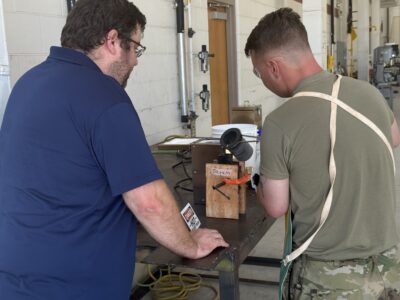
The presentation also addressed the long-term strategy for sustaining the manufacturing workforce. Pokelwaldt emphasized IACMI’s outreach efforts, recognizing that the “manufaturers of the future need early exposure to STEM concepts and basic manufacturing principles. “We start at a young age to give people basic manufacturing principles… and build all the way through,” he stated.

A surprising trend Pokelwaldt noted was that many intelligent and capable young adults entering these programs have never used basic hand tools. This lack of foundational experience makes hands-on training even more vital. “If they can’t even do that, they’ll struggle,” he said, referring to the basic mechanical adjustments often required on machinery.  

By partnering with educational institutions and industry, IACMI is working to fill this pipeline, providing internships and apprenticeships that offer real-world experience. METAL’s upcoming K-12 mobile units are designed to generate interest in manufacturing early and give young people the hands-on experience many are missing.

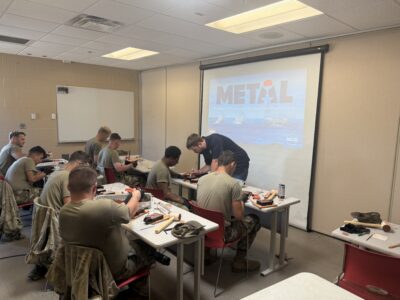
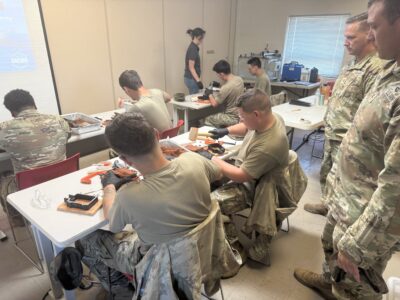
A group of soldiers prepares sand molds during a training source.

Active duty service members participated in a METAL Bootcamp from the University of Tennessee Knoxville.

The METAL Investment Casting Bootcamp 

The strategic discussions at JAMS were paired with practical application. During the symposium, service members from the 101st Airborne and visiting Marines participated in intensive workshops at the HAMMER (Hub for Advanced Manufacturing, Metalworking, Engineering, and Repair) Training Site. 

Among the offerings was a METAL Bootcamp led by Amy Wheelock and Thomas Drye from the University of Tennessee, Knoxville. The course provided trainees with a comprehensive understanding of how to move a custom design from concept to a finished metal piece. 

The workshop curriculum was rigorous and highly practical: 

A service member pours molten tin into a sand mold.

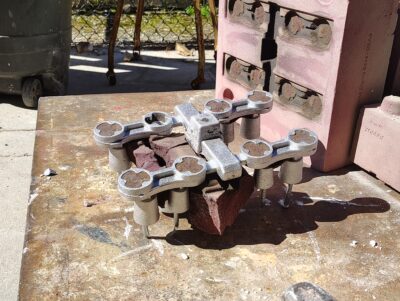
Bootcamp participants made designs using CAD, made sand molds, and poured molten metal.

  • Day 1: An introduction to the METAL program and investment casting, followed by CAD instruction and pattern modeling.
  • Day 2: A deep dive into 3D printing and injection molding. Trainees learned slicing techniques, observed injection molding demonstrations, and prepared their 3D printed patterns.  
  • Day 3: Focus shifted to sand casting and simulation, including spruce patterns, the burnout process, and a demonstration of Skuld Additive Manufacturing Evaporative Casting (AMEC). 
  • Day 4: The core activity, melting metal and performing the investment casting process, followed by retrieving and finishing the cast components. 
  • Day 5: An essential introduction to Non-Destructive Testing (NDT), where trainees performed ultrasound and dye penetrant testing on their finished parts to ensure quality and structural integrity.

The Future of Manufacturing at the Tactical Edge 

JAMS highlighted the urgent need for agile, advanced manufacturing capabilities within the defense industrial base and on the battlefield. Programs like METAL are vital to ensuring that the nation’s warfighters and thenation’sindustrial base are prepared for the challenges of the future. 

If you are interested in attending a METAL Bootcamp or want to learn more about a career in the foundry and forging industry, visit the METAL website today.

From Workshops to Workforce: UT Knoxville Forges the Future of Manufacturing in Tennessee

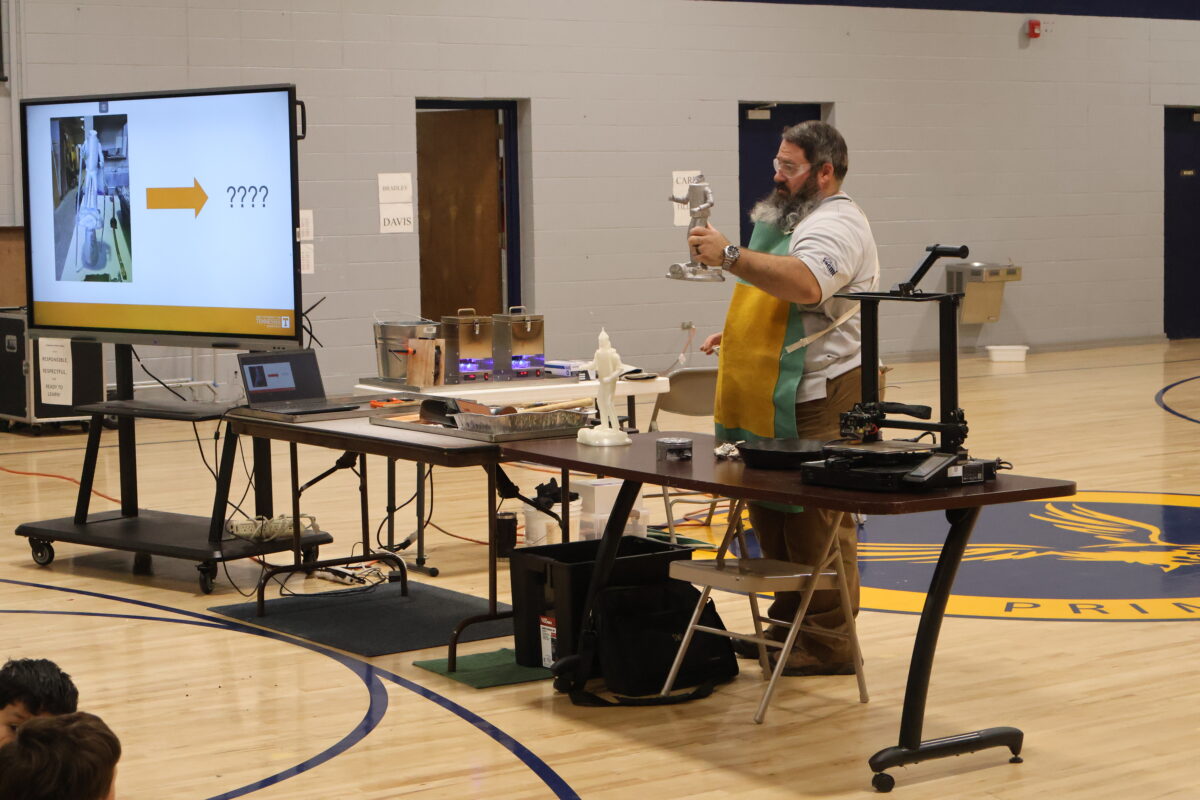
The first time Stephen Sheriff cast metal – a replica of the Wizard of Oz’s Tin Man – in front of an auditorium of elementary school students, he was hooked. Now, alongside his colleagues at the University of Tennessee, Knoxville (UTK), he’s determined to give students and job seekers exciting, in-person forging experiences. 

Sheriff, who’s an engineer and research associate with the Fiber Composites Manufacturing Facility at Innovation South, is part of a team of almost 30 UTK staff and students who are bringing metalcasting to communities in East Tennessee. 

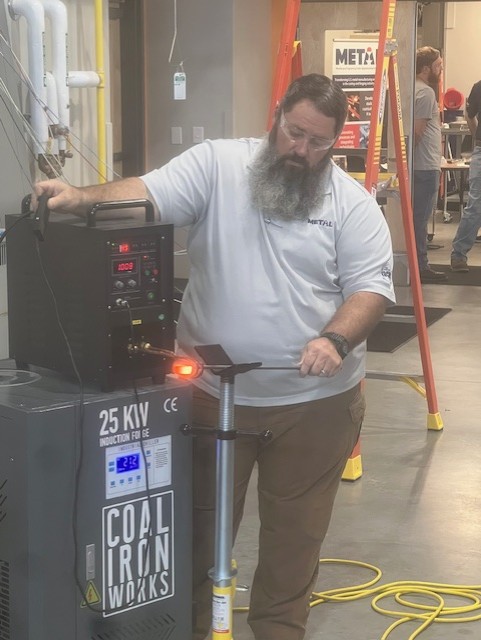
In partnership with METAL, a program led by IACMI – The Composites Institute®, with funding from the Department of Defense’s Industrial Base Analysis and Sustainment (IBAS) Program, UTK has hosted four bootcamps for adults interested in metalcasting and 20 K-12 workshops. Both bootcamps and workshops cover metalcasting basics, including techniques for sand and investment casting. But now forging is becoming just as important to UTK’s education programs. 

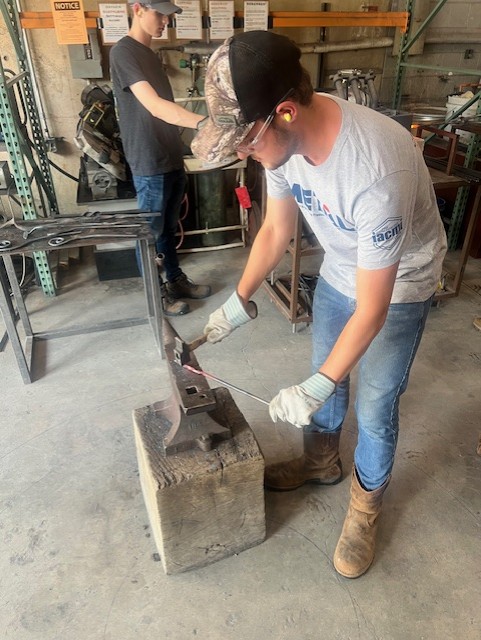
Forging, the art of blacksmiths and swordmakers, is the process of re-shaping metal using extreme pressure to form a high-strength tool. Unlike casting, where metal is melted down, poured and cooled to become a new creation, a forger hammers, presses, or rolls solid metal into shape. Most of the time, forgers heat the metal to make it more pliable, but not always. A metal part can be both cast and then forged to completion—and both processes are critical to modern manufacturing. 

Today, there are about 3,000 stamping and forging companies in the U.S., but this number is declining. More than 240 forging plants closed and 21,000 jobs were eliminated as manufacturing left the U.S. However, the importance of forging is only growing for industry innovation and national security. Forging is necessary to produce critical parts in automotive, transportation, aerospace, energy and defense industries—from hand tools, hooks and chains to navy ships and fighter jets.     

“When people think of forging, they think of Forged in Fire or making anvils, knives and horseshoes—that sort of thing,” Sheriff explained. “We’re exposing students to the differences between cast and forged parts and how you’re affected by them every day.”  

New Irons In the Fire 

Sheriff loves the spark he sees in students when they learn how metal can be transformed. This spring, he awed students at Seymour Primary School with a live sand casting demonstration, bringing one of their favorite characters to life at the school’s annual Book Bash.

Now, as UTK plans to roll out a new K-12 blacksmithing workshop, Sheriff is ready to create more moments that spark curiosity for forging. 

“Seeing kids light up about what we’re doing is great,” he said. “When students get that metal part from whatever pattern they picked in their hands, and say, ‘This is really cool, I want to learn how to do this,’ it turns into a career or a hobby.”

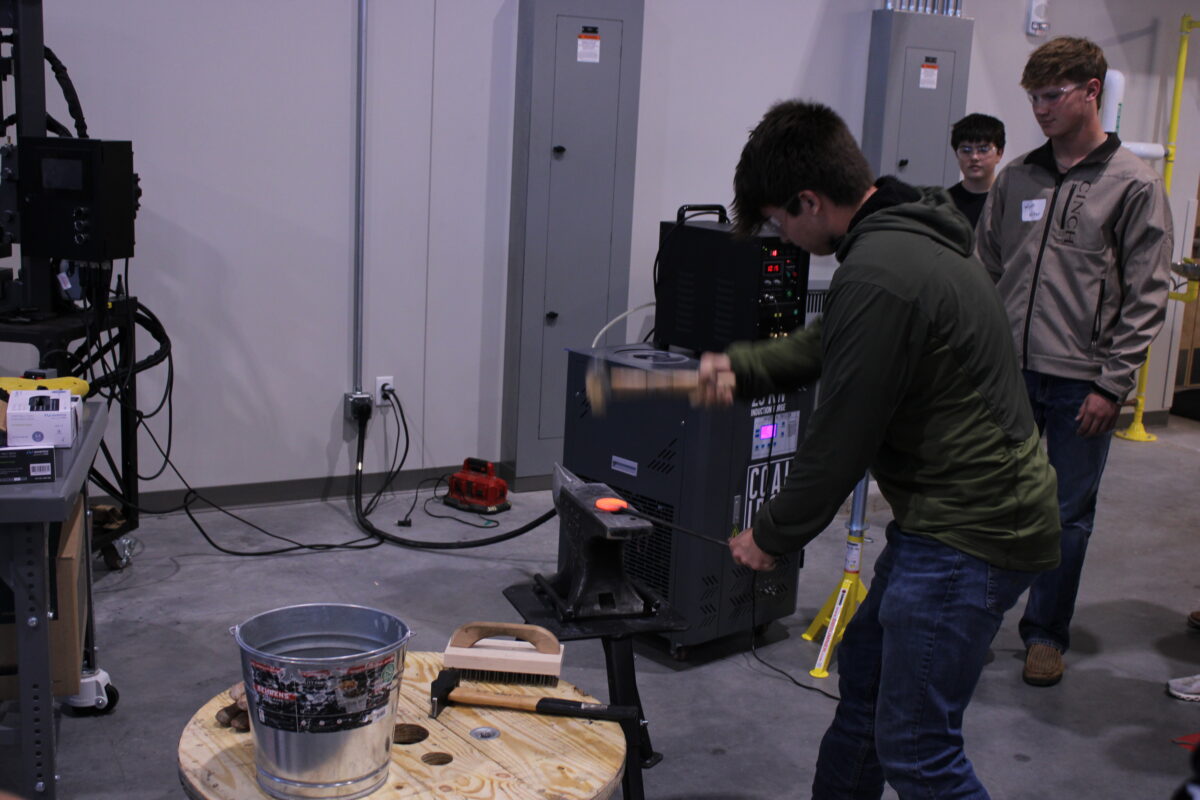
Sheriff’s team recently tested the blacksmithing workshop’s new curriculum, which will include lessons on how to shape metal and use a forging press. Middle and high school students will have the opportunity to practice heating and flattening steel with an anvil before stamping the puck with a design.

One of the most important goals for Sheriff is helping students overcome their fear of working with red-hot metal.  

“A lot of people are very intimidated when you hand them a piece of metal that’s glowing orange,” he said. “Some students might have experience with shop safety, but when you get students that aren’t involved with those types of activities, you need more time with them.”

Sheriff said clay forging will be one activity offered to help students practice without feeling the heat. Polymer modeling clay moves similarly to hot metal, Sheriff explained. With a palm-sized clay cube, students will use a plastic ballpoint hammer to draw the shape out and then stamp it with UTK’s “Power T” before baking it into a finished forging.    

“I’m looking forward to getting students involved,” Sheriff said. “I think it’s going to be a lot of fun.”

Soon, UTK’s blacksmithing workshop will be available to schools across East Tennessee.  

The university is also adding an introduction to forging to their free week-long bootcamps. UTK’s bootcamps, hosted in partnership with METAL, offer college students, professionals and career seekers a rare, hands-on opportunity to learn about metallurgy—from designing 3D molds, to melting, pouring and casting metal, to now forging a finished product.   

Dustin Gilmer, an assistant professor in materials science and engineering at UTK who helps lead the bootcamps, believes forging skills will better prepare tomorrow’s workforce.     

“We were up and running really quickly with casting, but forging is a little bit more specialized,” Gilmer said. Through partnerships with METAL, Pennsylvania State University, and The Ohio State University, UTK is developing a forging curriculum for bootcamp participants who see a future for themselves in manufacturing. 

“We’re looking for people who think they have a career in this industry, and we’re trying to get them ready to enter the workforce,” Gilmer said. “That’s the goal of the bootcamps.”

Gilmer and his team plan to incorporate forging lessons and hands-on learning into UTK’s December bootcamp

Forging Community

Beyond skills training, Gilmer and Sheriff are focused on connecting students and bootcamp participants to the forging community. 

“We’ve lost a lot of this type of manufacturing in the U.S.,” Sheriff said. “We haven’t refreshed our workforce, and as foundry employees retire, there’s not many people coming up behind them learning the craft.”

The good news is, more than 3.8 million U.S. jobs will be there for metalworkers, engineers and manufacturing professionals who are ready to make an impact in the next decade. Gilmer said he’s been surprised by the number of metallurgical opportunities and support he’s found in Tennessee.

“When we first started our programs, I would’ve said we do not have a good metalcasting ecosystem. Since then, I have been proven wrong,” Gilmer said. “Having people champion us at the local level is why we’re so successful.”

For UTK’s team, the future of manufacturing starts with auditoriums of wide-eyed students and foundries where eager learners can discover the magic of metallurgy. 

“The first time you see somebody pouring molten metal, it’s an experience,” Gilmer said. “It’s something you don’t usually forget.”

Ready to forge your future? Register for our free online training then visit our events page to attend the next METAL bootcamp or workshop near you. 


Firing Up Success: William Goehl Launches His Manufacturing Career with METAL


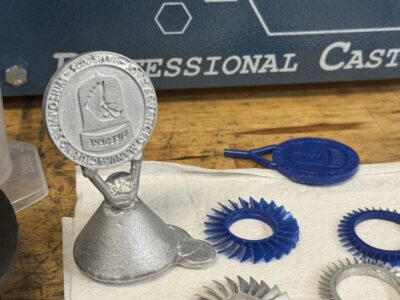
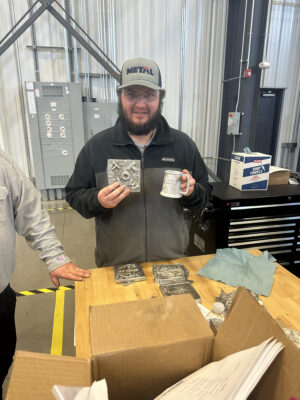
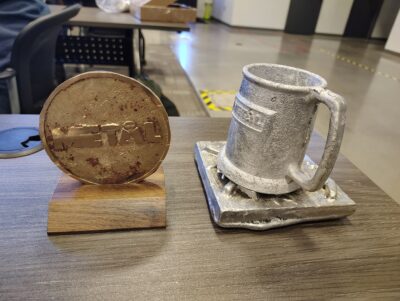
During a week-long METAL bootcamp at the University of Tennessee, mechanical engineering student William Goehl gained the experience to design and forge a scratch mold, medallion and a mug through the investment casting process.

William Goehl always considered himself a jack of all trades. Growing up fixing old cars with his dad and driving go-karts inspired him to pursue a career in the high-performance automotive industry – and thanks to METAL, Goehl received the hands-on experience he needed to propel his career.

As the U.S. faces a surging demand for skilled metalcasting and manufacturing professionals, METAL, led by IACMI – The Composites Institute® with funding from the Department of Defense’s Industrial Base Analysis and Sustainment Program, is strengthening and diversifying the metal manufacturing workforce. With a focus on casting, forging and plate rolling, METAL’s workforce development programs deliver hands-on experience to people of all ages.

Goehl, a mechanical engineering graduate from the University of Tennessee, Knoxville, learned about METAL his senior year. Striving toward his dream of supporting the racing industry, Goehl focused his studies on material science and aerospace. He wanted a career where he could combine his engineering knowledge and creativity with the sport he loved, but he also knew the jobs he sought were extremely competitive.

He’d need a way to boost his chances – and his career.

“F1 race cars are like airplanes on the ground because their parts are made to airplane specs,” Goehl said. “With my educational background, I can do aerospace or automotive, which at the highest level are becoming one industry.”

Goehl specifically wanted to focus on engineering tight tolerances, or extremely precise measurements for maximizing performance, reliability and safety in manufacturing, especially at high speeds. A deeper understanding of metalcasting felt like the best way to get ahead and earn his spot in automotive and aerospace innovation.

Supercharged with Metalcasting

While most UT college students enjoyed downtime during spring break, Goehl was on campus gaining metalcasting experience in a week-long METAL bootcamp. Greg Harrell, a METAL workforce coordinator with more than 20 years of metalcasting experience, said Goehl’s curiosity and work ethic immediately stood out to him.

“Will always came in early and stayed late. He had valuable hands-on learning already instilled in him and that’s exactly what engineers need,” Harrell said. “You need to take what you learn in the classroom and be mechanically inclined to apply it. That’s such an advantage in the casting and forging industries.”

Through METAL’s online and in-person learning opportunities, Goehl got a first-hand look at the investment casting process – from mixing slurry for a mold, to firing up the furnace to strengthen the shell and Goehl’s favorite part, pouring molten metal to form the final product. He also observed sand casting for the first time which is often used to cast heavy machinery such as engine blocks, machine bases and wind turbine hubs.

Goehl previously attended an ACE bootcamp, another IACMI workforce development program that focuses on CNC machining. In the ACE program, Goehl designed and built an air piston engine for the first time. By applying dynamic techniques for drilling, roughing and finishing the engine, Goehl learned critical skills to manufacture an essential part used in pneumatic tools, lifting systems and assembly robotics in the automotive industry.

Goehl said these experiences were eye-opening and he wouldn’t have received this training anywhere else.

“The hands-on experience helps you learn what’s possible,” Goehl said. “You can design parts and think about how they’ll be made so we can make it easier for metalcasters who are doing the work every day.”

Thanks to his training in metalcasting, Goehl’s career has taken off in one of his dream fields – the aerospace industry.

Forging a New Path

After attending METAL’s bootcamp, Goehl applied at Howmet Aerospace, based in Morristown, TN, with his new credentials and was quickly met with a job offer within weeks of graduating. There, he’ll have the opportunity to apply his metalcasting experience to build molds for high-performance industry solutions, such as more fuel-efficient engines for airplanes and gas turbines and longer-lasting aluminum truck wheels.

Without METAL, Goehl said he wouldn’t be the mechanical engineer he is today.

“I probably still wouldn’t fully understand what I understand now. Learning about manufacturing and metalcasting in class and actually using casting methods are two different things,” Goehl said. “I will be an accomplished engineer quicker because of this program.”

Since 2023, METAL has trained 336 workshop participants, placed 16 interns and reached more than 2,000 prospective metal workers. Through university bootcamps across the country, METAL is planting the seeds of a brighter, more resilient future – showing students what’s possible in the vital, often overlooked, metallurgy industry.

William Goehl, a mechanical engineering student at the University of Tennessee, participated in printing 3D sand molds that were used to cast the base of an air piston engine during his METAL bootcamp, similar to the base machined during his hands-on ACE training experience.

During a week-long METAL bootcamp at the University of Tennessee, mechanical engineering student William Goehl gained the experience to design and forge a scratch mold, medallion and a mug through the investment casting process.

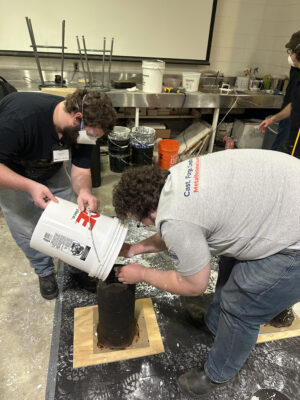
William Goehl, left, pours slurry into a mold that will later be used in the investment casting process during a week-long METAL bootcamp at the University of Tennessee.