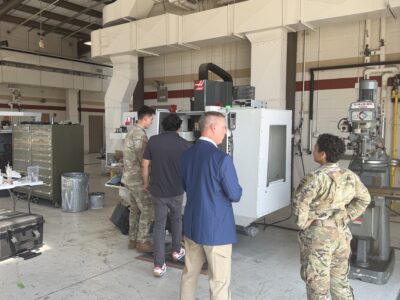
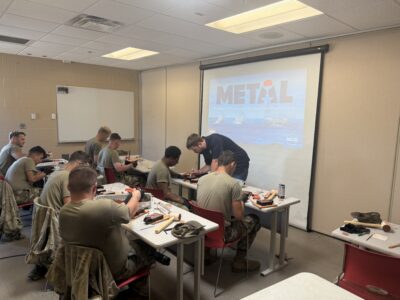
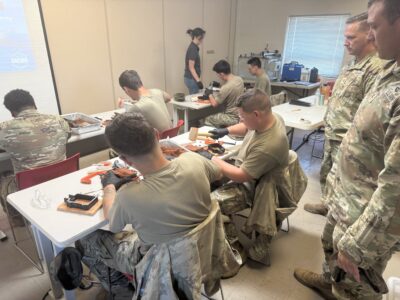
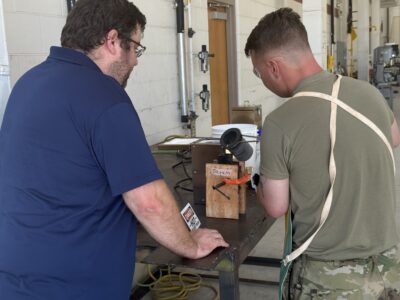
Small But Mighty: TOSOH SMD Powers Semiconductor Innovation with METAL Bootcamp

Cyler McClure has spent his career studying the ins and outs of semiconductors—microscopic metal switches that power today’s world. Now, as product engineering manager at TOSOH SMD, McClure empowers the engineers and technicians driving America’s semiconductor industry forward.

When he learned about METAL’s metallurgy bootcamp at Ohio State University from his director, Eduardo del Rio, McClure knew this was a training opportunity the team couldn’t miss.

“We thought the bootcamp would help grow the knowledge of our workforce,” said del Rio, who serves as the director of research and development at TOSOH SMD, a leading supplier of semiconductor materials in Ohio.

Built from billions of transistors, minuscule stacks of silicon and metal, semiconductors operate everything from smartphones and laptops to robotics, medical devices and GPS systems. You’d never know semiconductors exist—except for their massive impact. Semiconductors underpin more than 300 industries, including automotive, manufacturing, healthcare and U.S. defense. The technology is so far-reaching that one semiconductor job generates more than five new jobs across America’s economy.  

“Semiconductors are used in everything,” del Rio explained. “You see it in your everyday life—smart factories, smart cities, facial recognition, voice recognition, artificial intelligence. As we get into a more electronically-automated life, semiconductors need to continue progressing.” 

But semiconductor production, much like other metal products, is at risk in the U.S. 

By 2033, almost 4 million manufacturing jobs could be available nationwide, without the skilled labor to fill them. The semiconductor industry alone faces a shortage of 67,000 technicians, computer scientists and engineers—a gap that threatens America’s supply chain resilience and security.

TOSOH SMD is working to meet this demand, relying on strong materials, an innovative team and industry-wide collaboration. “We truly believe in partnering with universities and other industries to foster collaboration and growth of materials science in the U.S., especially for the semiconductor industry where TOSOH SMD is a critical supplier,” del Rio said. 

Del Rio shared METAL’s bootcamp with TOSOH SMD’s casting technicians, PhD materials engineers and managers. For McClure, it felt like the perfect opportunity to refresh his team on metal manufacturing basics and learn cutting-edge techniques for incredibly fine metalcasting. 

“I’ve always had a strong interest in materials, especially metals, so I was excited for the opportunity to revisit core concepts,” McClure said. “My goal was to gain practical insights I could bring back to support smarter design choices.”

Plus, McClure admitted, he was eager for a week spent transforming metal in the foundry. 

Back to the Basics

Led by IACMI – The Composites Institute®, with funding from the Department of Defense’s IBAS Program, METAL introduces students, career seekers and industry professionals to the possibilities of metalcasting. Through free online training and hands-on casting and forging experiences at universities nationwide, participants explore the metal industry—and pour molten metal into creations of their own. 

METAL also upskills America’s manufacturing workforce through advanced bootcamps for metallurgists and metal workers. Industry professionals start with self-paced, online modules, building their foundation in materials science. Then, with the basics covered, they’re ready to spark their curiosity in the foundry with topics like the science of sand and digital technologies for casting.

Ohio State University researcher and bootcamp lead Dr. Jason Walker said he wants people to understand how complex and diverse the world of metal manufacturing is. 

“Metalcasting is not just pouring liquid metal in a foundry,” Walker explained. “Behind every pour is an entire industry: people engineering binders and coatings, developing next-gen refractories, building high-temperature furnaces and controls, running multiphysics simulations, integrating automation and robotics, advancing additive manufacturing, inspecting parts, handling post-processing—the list goes on. The foundry floor is just one node in a much larger ecosystem that has many different needs.”

When it comes to tech manufacturing, McClure knows exactly what it takes to build a powerful semiconductor. The Ohio State alum has developed new casting techniques for metals used in transistors and refined the chemistry of aluminum for enhanced semiconductor performance. Today, his team designs metal alloys to fuel tomorrow’s groundbreaking technology.

“I love working with people. I was really excited to get into a management position so I could better support others and help train everyone to be the best version of themselves,” McClure said. 

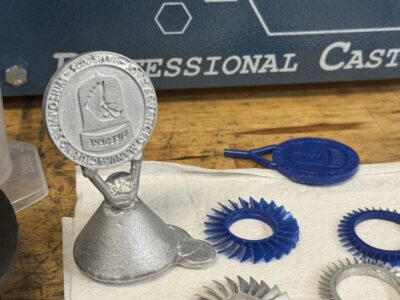
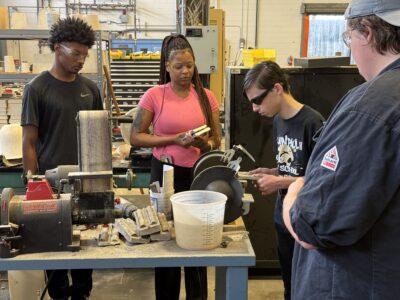
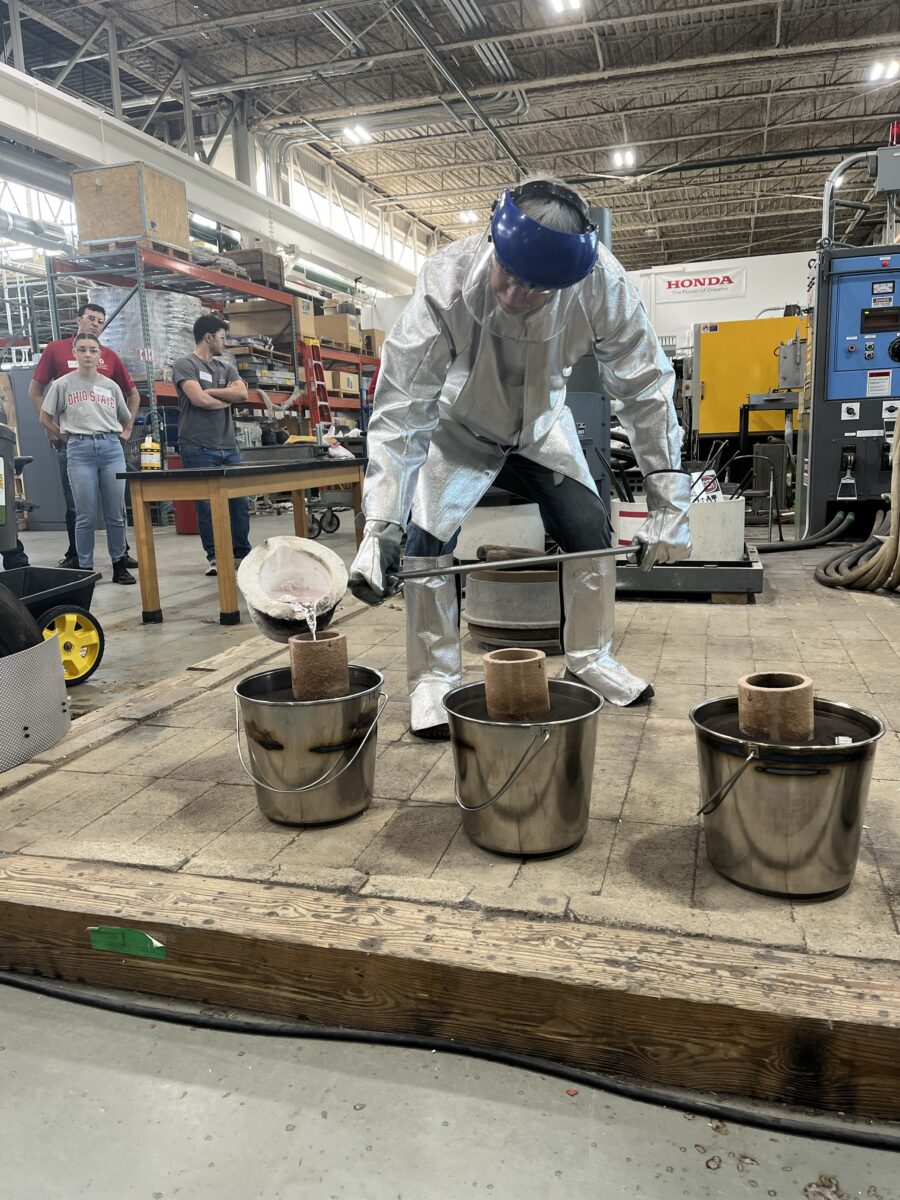
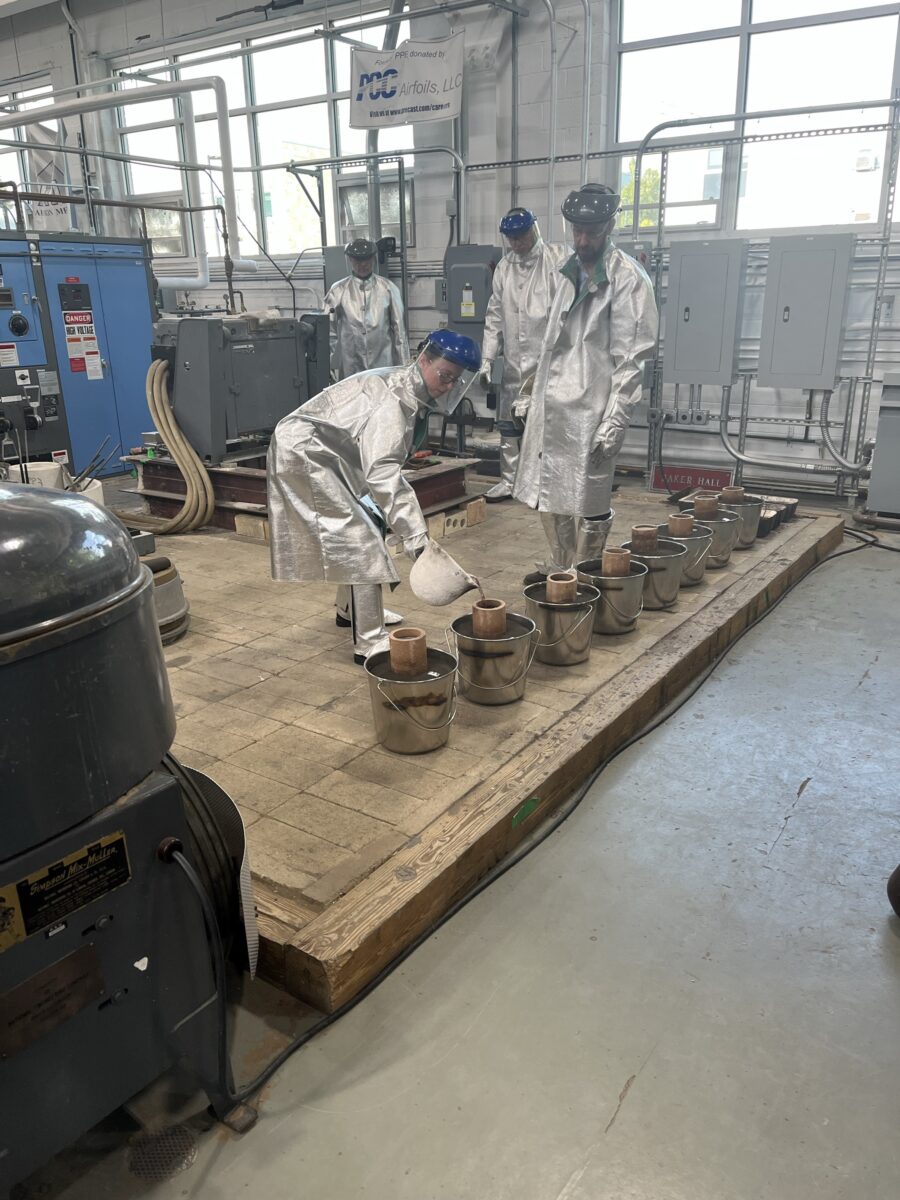
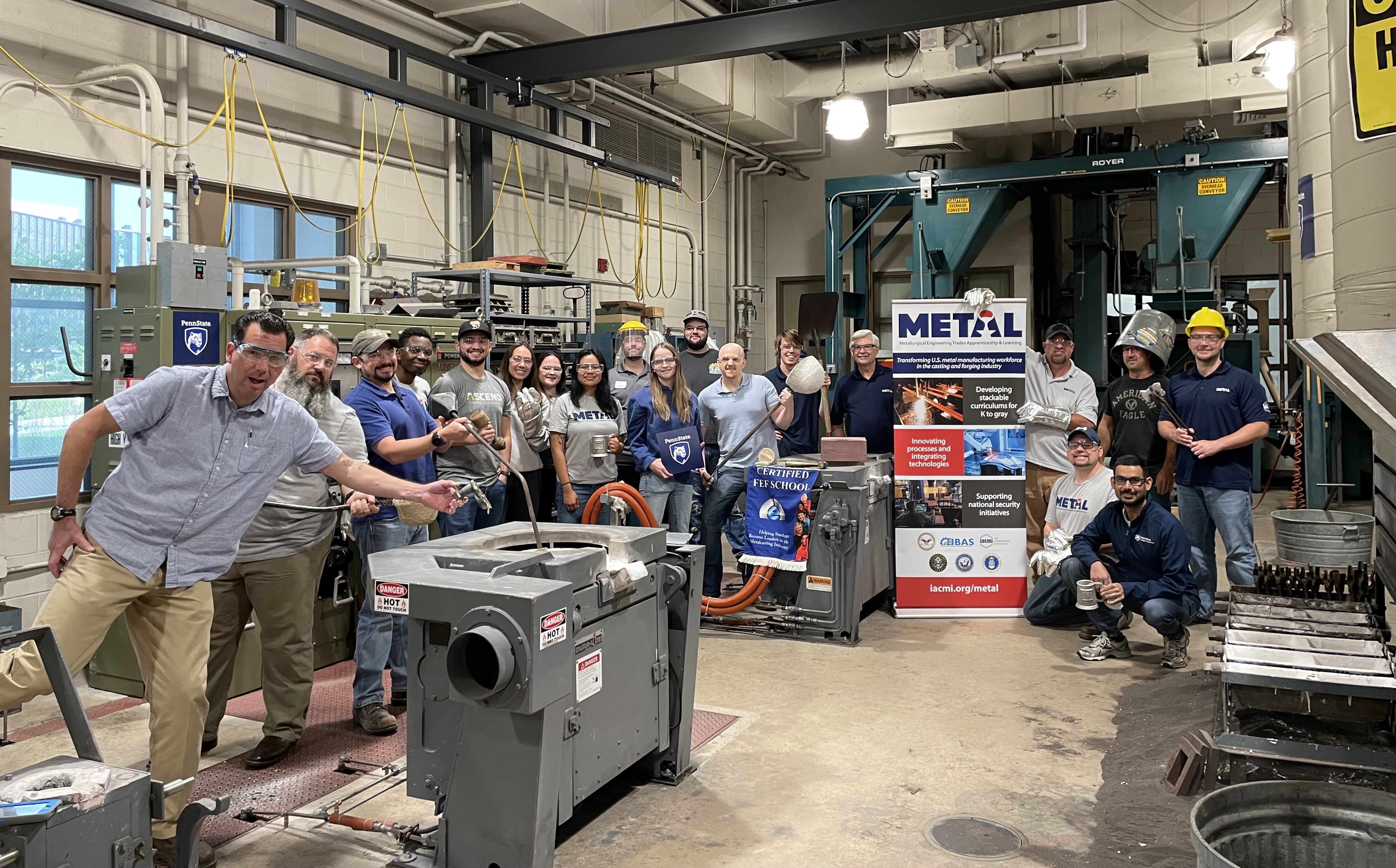
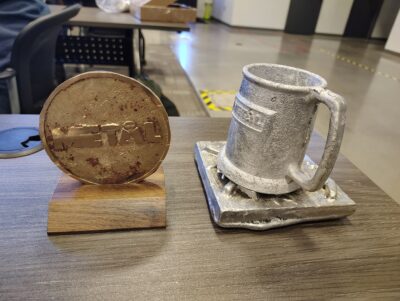
Together McClure’s team returned to the foundations of metallurgy at The Ohio State University. Technicians and engineers each cast an aluminum stein, a brass medallion and their own lost foam casting—McClure made a candle holder for his wife. But their work wasn’t over when the metal cooled. Then the team learned the art of finishing a casting with heat treatment, CNC machining, grinding and polishing. 

“I was surprised by how much hands-on experience was offered. My favorite activity was the opportunity to pour, by hand, molten aluminum and brass, not just once, but several times each day,” McClure said. “We got to take home some really cool trinkets, which was exciting and added a sense of ownership to the experience.”

The team also learned simulation software to prevent defects in semiconductors before production even begins. Using MAGMASOFT®, bootcamp participants studied the theoretical temperature of metal as it solidifies. If the metal doesn’t solidify correctly, the casting can end up with defects like air bubble holes, resembling the inside of baked bread.     

Avoiding defects in semiconductor production is essential, McClure said. Even the smallest imperfection can lead to excessive production delays, device failure and millions in lost revenue. High-quality is a fingerprint of TOSOH SMD’s semiconductor materials, imprinted in the team’s DNA.

McClure and his colleagues took quality testing beyond simulations, too. They performed fluidity spiral tests to determine how well molten metal flows through a mold, indicating its ideal pouring temperature, and tensile tests helped measure how much stress a casting can take before it breaks. In-person testing showed the team how to bring new quality control processes back to the lab—fine-tuning metal structures to meet the demands of advanced semiconductor development.     

“This experience helped all of us step back from our daily routines and see manufacturing challenges from a broader perspective,” McClure said. “It bridged gaps between roles and encouraged a shared understanding that will strengthen our teamwork and problem-solving going forward.” 

Powering a Smarter Tomorrow 

Thanks to METAL’s bootcamp, everyone from TOSOH SMD returned home with new and refreshed skills to sharpen the company’s competitive edge. Technicians gained engineering insight to strengthen product quality; material engineers bridged theory with hands-on practice; and managers deepened collaboration—molding a manufacturing team built for the future.

Would McClure recommend the bootcamp to other managers? Absolutely. 

“Investing in this kind of training benefits not just the company, but the industry as a whole—promoting smarter manufacturing, better process control and a more unified approach to solving casting and manufacturing challenges,” he said.

As McClure motivates his team in the lab, his director, del Rio, keeps his eyes on the future of semiconductor innovation—looking for opportunities to grow TOSOH SMD’s research and people. 

“The semiconductor industry has a great future,” Del Rio said. “We just need to continue building the workforce and ecosystem to push it to its full potential.”

Ready to power the future of American manufacturing? Register for our free online training, then visit our events page to attend the next METAL bootcamp near you.

A Family Trade: David Muzzy Joins Buck Company’s Next Generation of Metal Innovators

David Muzzy still remembers his first time visiting a foundry. While his dad, Glenn Muzzy Sr., gave him a tour of Walker Machine and Foundry Corp. where he worked, Muzzy felt the heat radiating from massive induction furnaces and watched as fire-hot metal lost its form—turning into liquid, ready to become something new. 

That was the moment Muzzy imagined his future in metal. 

Muzzy, 22, followed his father’s footsteps into college, attending Glenn’s alma mater Penn State and majoring in industrial engineering. But it wasn’t until Muzzy held a ladle and poured ductile iron during his first internship that he felt his passion for metalcasting ignite.  

“I remember being able to see it all up close—looking at the molten metal flowing, the way you move it around, pouring it. It looks like you are looking into the sun,” Muzzy explained. “You get that really bright light, the flare that comes out of the ladle, and the whole reaction is really cool.” 

Every summer after his freshman year, Muzzy interned at Buck Company, a leading manufacturer of ferrous and non-ferrous castings in Lancaster, Pennsylvania. From making sand cores for molds to melting and pouring iron and aluminum to processing finished parts, Muzzy touched every phase of the casting process—or so he thought.

“I went through the entire foundry,” Muzzy said. “I did all the hard manual labor, and that experience is really rewarding. You have long days, but you finish and you feel accomplished.”

College only sparked Muzzy’s curiosity about metallurgy more. He served as vice president and president of Penn State’s American Foundry Society student chapter and received scholarships from the Non-Ferrous Founders’ Society and the Foundry Educational Foundation

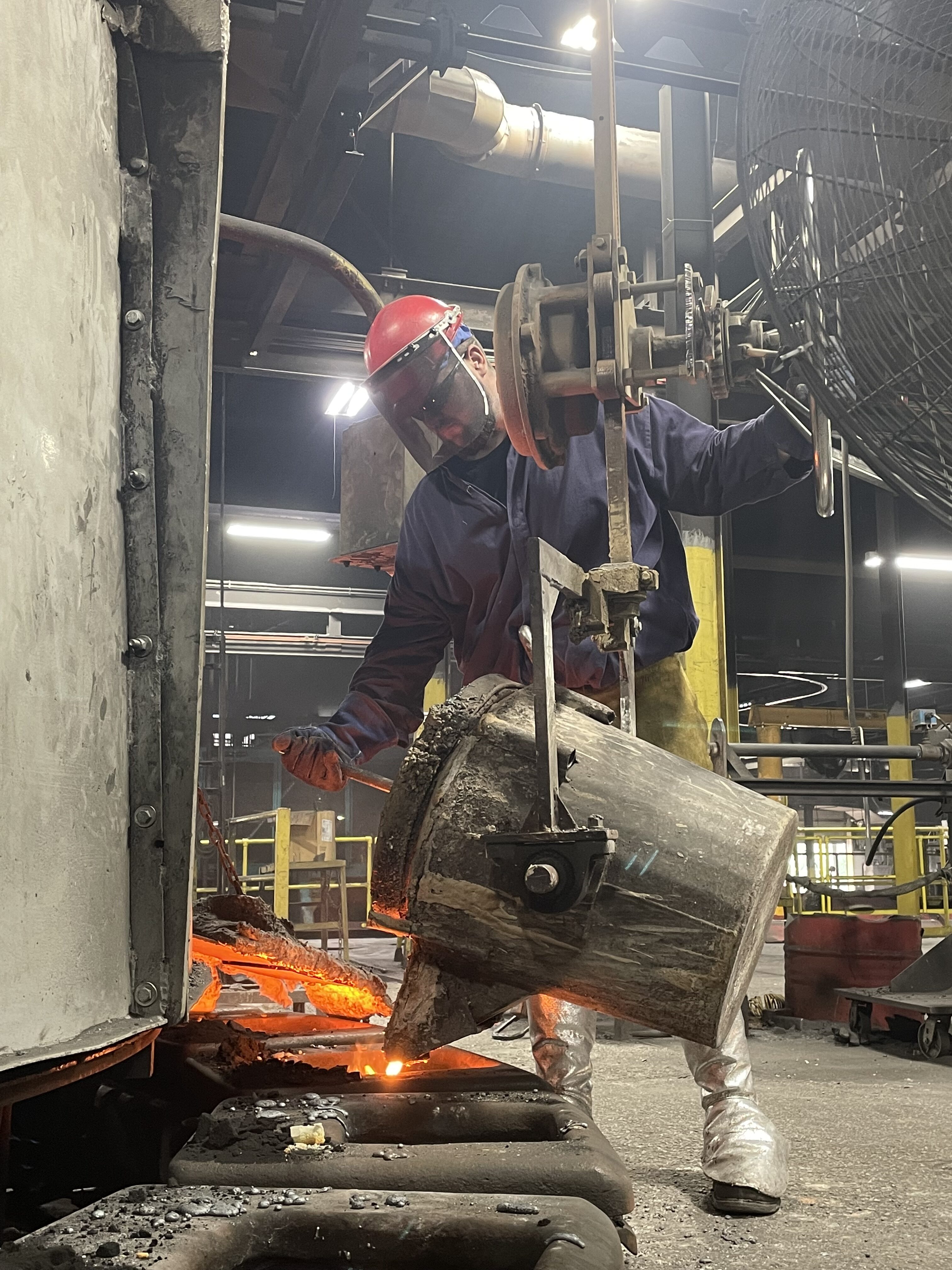
By his senior year, the undergrad went from learning in the foundry to leading innovation. Muzzy knew how demanding the job could be—especially the task of manually lifting and pouring 30 pounds of metal hundreds of times a day. He could see the strain on workers and the risks that came with it. So he set out to build a safer, smarter way.

The solution? Muzzy designed a six-foot robotic arm that reaches into the furnace, retrieves the exact amount of metal for each cast, and pours it in the same spot every time. It reads project-specific codes and automates a job that once required intense physical effort.

“It has increased our production, but the real benefit is we’ve seen a massive increase in employee retention in that department,” Muzzy said. “It’s a hot, brutal environment to work in for 10 hours.”

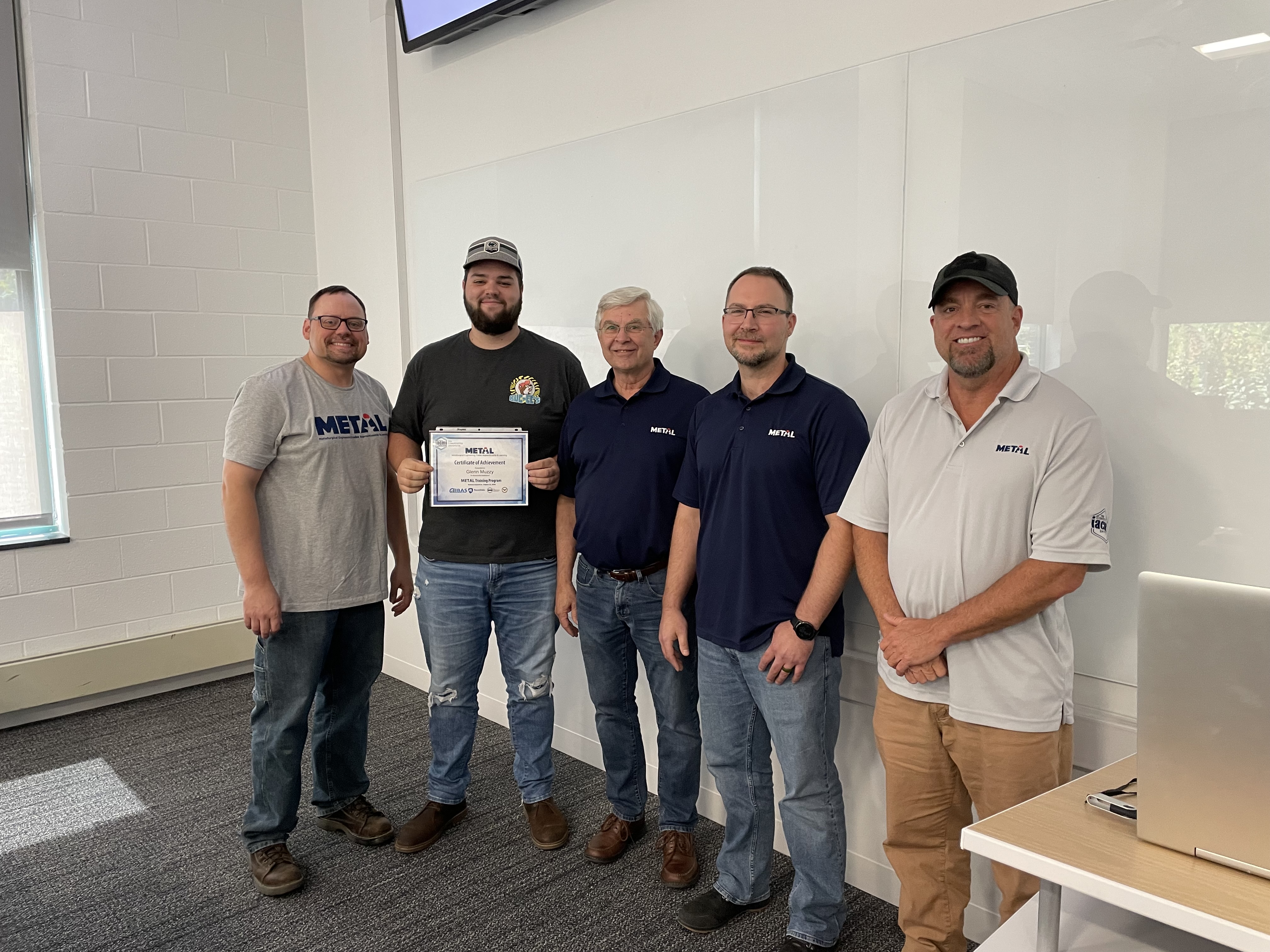
After seeing the impact he could make, Muzzy returned to Penn State his senior year ready for a new challenge—and he found it at METAL’s metallurgy bootcamp

Preparing Tomorrow’s Workforce

At universities across the country, students, industry professionals and career seekers get a rare chance to fully immerse themselves in metalcasting. Through METAL—led by IACMI – The Composites Institute®, with funding from the Department of War’s IBAS Program—industry professionals deliver a hands-on casting and forging experience for anyone eager to explore metal manufacturing.

The free bootcamps start with a self-paced online training that introduces participants to the metal industry and its career possibilities. Advanced bootcamps for industry professionals cover topics such as the science of green sand and virtual reality, helping manufacturers optimize production.

Dr. Robert Voigt, a professor of industrial and manufacturing engineering who leads Penn State’s bootcamps, has spent more than 35 years teaching metallurgy—and witnessing generations of innovation. Automation, he said, has changed everything.  

Robots are now doing manufacturing jobs—cutting molds, pouring metal and sanding casts—that at one time required teams of people in dangerous or harsh conditions. As the industry’s capabilities have evolved, so have customer expectations. Metal workers and engineers must sharpen their skills to keep up, Voigt said. 

“Behind all that automation is strong scientific and engineering knowledge. It’ll always be a process with people, but we have to improve our practices and refine our knowledge to be able to deliver the quality that the industry needs,” he added.

For Muzzy, METAL’s bootcamp was an opportunity to learn metallurgical skills that would mold his career. He’d poured metal, but now he had a chance to finish a cast to completion. Using a CNC machine, Muzzy shaved down and perfected a small medallion he made entirely on his own. 

Muzzy also learned how to run solidification simulations, which are critical for a foundry’s quality control. Software like MAGMASOFT® help manufacturers predict how molten metal will cool, solidify and form inside a mold. Foundries use it to prevent defects, optimize designs, reduce scrap and accelerate production before they ever pour real metal. 

Both machining and simulations were concepts Muzzy never encountered in his college courses or internships. Thanks to METAL’s bootcamp, Muzzy discovered new skills and pathways in metallurgical engineering he’d never considered—or knew existed.

“Before the bootcamp, my head was just at, ‘I’m going to work in the foundry in production, molding and pouring and that’s it,’” Muzzy said. “But being able to see the other side of things and experience different aspects of the foundry made me want to go into a role where I help in different departments, offer input and have influence. It helped me see the bigger picture.”

The Next Generation of Metal

Today, Muzzy is a full-time manufacturing engineer in Buck Company’s iron foundry. He supports machine automation, ensures the right tools and heat codes are in place for production, trains colleagues across departments—and occasionally returns to the robotic pouring arm he built.

“I don’t have a boring day at work,” Muzzy said. “Every day is exciting, every day is interesting, and I really love what I do.”

His father, who’s now Buck Company’s executive vice president, couldn’t be prouder.

“David is part of a great young team we have at Buck, who all have an opportunity to be the next generation of leaders in metalcasting,” said Glenn Muzzy Sr. “I have spent my entire career in the foundry, and it’s rewarding to be a mentor for him and the team.” 

Voigt, who taught both father and son, called David Muzzy an industry success story.

“When David hit the ground after he graduated, he was ready to go—he understands the science, he understands the new technology and he understands the people,” Voigt said. 

METAL’s Penn State bootcamp reinforced Muzzy’s passion for the foundry, revealing career opportunities he never knew were there. He recommends the experience to anyone open to trying something new—and who wants to make a difference.

“Take the opportunity to hold the metal in your hands and pour it yourself,” and, he added, “don’t place yourself above anything. There are a lot of opportunities to grow if you’re willing to learn.”

Ready to shape the future of American manufacturing? Register for our free online training then visit our events page to attend the next METAL bootcamp near you.


From NFL to National Defense: Tim Johnson Tackles Helmet Safety in METAL Bootcamp

Retired NFL linebacker Tim Johnson knows how to deliver a hit—and he knows what it takes to stop the impact of one. 

Johnson, a professional football player for more than 20 years, launched his career as NCAA Division 1-AA Defensive Player of the Year in 2000. He went on to play for the Baltimore Ravens, Chicago Bears and the Oakland Raiders, where he blocked a punt that advanced the Raiders in Super Bowl XXXVII. Now retired, he’s an entrepreneur who’s supporting the National Football League – and the nation – with a new type of defense. 

Traumatic brain injuries (TBIs) have become a top concern for the NFL. In 2022, the NFL saw 18% more concussions than the year before, and 10% of TBIs in the U.S. are from sports and recreational activities. When the NFL kicked off the Helmet Challenge to enhance player safety, Johnson decided he had a new mission to tackle. He started the Head Impact Prevention youth football league in 2017 to create an inclusive, safer game for kids, but he was ready to find better ways to protect players. Professional athletes are not the only ones at higher risk for head injuries and their long-term effects. Between 2000 and 2019, almost 414,000 veterans sustained severe head trauma, making TBIs one of the most common wounds from the Iraq and Afghanistan wars. Even mild concussions can increase the chances of Alzheimer’s Disease, Parkinson’s Disease, dementia and seizures—and Johnson is determined to find a solution. 

With his business H.I.P. MD, Johnson is developing a first-of-its-kind helmet for military personnel, first responders and athletes. He’s always had a natural instinct to defend, but watching fighter jets fly over NFL stadiums and being part of the league’s patriotism inspired Johnson to protect Team USA.

“We’re fortunate to play the game, but our war fighters put their lives on the line for their families and their country,” he said. “I learned a lot from the league, and I want to build a business to help our defense, our infrastructure and our communities. That’s the team I want to be on.”

Gearing up for his next big play in manufacturing, Johnson headed to METAL’s Ohio State University bootcamp to see how metal can be used to protect service members from blast impacts and ballistic materials like shrapnel.   

“We want to put the war fighters first,” Johnson said. “The military is the most important entity in the world.”

Engineering a Winning Solution

Johnson’s H.I.P. helmet, the Brain Crown, is inspired by nature to be both strong and resilient. Its design, based on biomimicking, replicates animal traits that are essential to survival after a head-to-head collision or an enemy attack. By mimicking the horns on a ram, an armadillo’s armor and the protection of a woodpecker’s beak, the helmet distributes force from an impact around its structure, away from the skull and brain.

With a prototype in development, Johnson wondered if metal could be a critical missing piece. As a self-described “steel guy,” growing up in manufacturing towns like Fairfield, Alabama and  Youngstown, Ohio, he was ready to melt some metal and find out for himself.

For four days, Johnson got a hands-on look at the possibilities of metal manufacturing. He cast a mini anvil engraved with “H.I.P. MD,” an aluminum mug, a bronze coin, and finally a creation of his own—a football on a pedestal that ironically resembles a helmet. The best part for Johnson was practicing every part of a pour: guiding the ladle, filling it with liquid metal, and carefully turning it over onto a mold to create something new. 

“The hands-on participation was amazing,” Johnson said, adding that he also gained experience using CAD software to develop 3D mold designs. “It was a really thorough four days. If you’re looking for a metalcasting opportunity, this is the place to go.”

What stood out the most to METAL instructor Jason Walker was Johnson’s enthusiasm. Walker’s number one goal for METAL’s bootcamps is to introduce participants to manufacturing skills and experiences they won’t get in a classroom.

“Most engineering students graduate from universities having never seen a metalcasting or a rolling mill and they’ve never been in a machine shop,” said Walker, who serves as the Director of Materials and Process at The Ohio State University’s Center for Design and Manufacturing Excellence. “I believe it makes them much better at their job, whether it’s engineering or not, to understand the process better.”

But the bootcamp isn’t just for students—it’s for anyone who wants to learn more about metalcasting. Walker invites everyone from high school students to manufacturing professionals and business owners like Johnson, even if they’ve never stepped foot inside a foundry before. 

“All of this is helping to build a workforce and a country that is resilient and able to manufacture the products we need,” Walker said, which Johnson agrees will be critical to the future of H.I.P. helmets. 

Training MVPs in Manufacturing

Johnson’s helmet prototype has been in development for five years. As he thinks about how to build, test and deliver a product that can protect the nation’s Armed Forces, he’ll need foundry-ready engineers. 

“We need to figure out how to make something that’s tested and proven, and then we can go to market. We’re going to need people,” Johnson emphasized. “I’m really interested in learning about manufacturing, whether it’s additive or subtractive, and learning how to create jobs and opportunities for people.” 

Eventually, Johnson would like H.I.P. MD to expand beyond helmets to shoulder pads and other body armor options for all professions and ages, from aerospace to youth sports. But first, Johnson needs to understand the processes, materials and teamwork that will make the Brain Crown a reality—and METAL’s bootcamp helped him do just that. 

“The passion and the mission behind the business is driving it. It’s not a sale or a product—it’s saving the minds of our youth and protecting the future of sports and our war fighters,” Johnson said. “We want to make an impact in the world.”

Ready to explore what’s possible with metalcasting? Register for our free online training then visit our events page to attend the next METAL Bootcamp. 


Firing Up Success: William Goehl Launches His Manufacturing Career with METAL


During a week-long METAL bootcamp at the University of Tennessee, mechanical engineering student William Goehl gained the experience to design and forge a scratch mold, medallion and a mug through the investment casting process.

William Goehl always considered himself a jack of all trades. Growing up fixing old cars with his dad and driving go-karts inspired him to pursue a career in the high-performance automotive industry – and thanks to METAL, Goehl received the hands-on experience he needed to propel his career.

As the U.S. faces a surging demand for skilled metalcasting and manufacturing professionals, METAL, led by IACMI – The Composites Institute® with funding from the Department of Defense’s Industrial Base Analysis and Sustainment Program, is strengthening and diversifying the metal manufacturing workforce. With a focus on casting, forging and plate rolling, METAL’s workforce development programs deliver hands-on experience to people of all ages.

Goehl, a mechanical engineering graduate from the University of Tennessee, Knoxville, learned about METAL his senior year. Striving toward his dream of supporting the racing industry, Goehl focused his studies on material science and aerospace. He wanted a career where he could combine his engineering knowledge and creativity with the sport he loved, but he also knew the jobs he sought were extremely competitive.

He’d need a way to boost his chances – and his career.

“F1 race cars are like airplanes on the ground because their parts are made to airplane specs,” Goehl said. “With my educational background, I can do aerospace or automotive, which at the highest level are becoming one industry.”

Goehl specifically wanted to focus on engineering tight tolerances, or extremely precise measurements for maximizing performance, reliability and safety in manufacturing, especially at high speeds. A deeper understanding of metalcasting felt like the best way to get ahead and earn his spot in automotive and aerospace innovation.

Supercharged with Metalcasting

While most UT college students enjoyed downtime during spring break, Goehl was on campus gaining metalcasting experience in a week-long METAL bootcamp. Greg Harrell, a METAL workforce coordinator with more than 20 years of metalcasting experience, said Goehl’s curiosity and work ethic immediately stood out to him.

“Will always came in early and stayed late. He had valuable hands-on learning already instilled in him and that’s exactly what engineers need,” Harrell said. “You need to take what you learn in the classroom and be mechanically inclined to apply it. That’s such an advantage in the casting and forging industries.”

Through METAL’s online and in-person learning opportunities, Goehl got a first-hand look at the investment casting process – from mixing slurry for a mold, to firing up the furnace to strengthen the shell and Goehl’s favorite part, pouring molten metal to form the final product. He also observed sand casting for the first time which is often used to cast heavy machinery such as engine blocks, machine bases and wind turbine hubs.

Goehl previously attended an ACE bootcamp, another IACMI workforce development program that focuses on CNC machining. In the ACE program, Goehl designed and built an air piston engine for the first time. By applying dynamic techniques for drilling, roughing and finishing the engine, Goehl learned critical skills to manufacture an essential part used in pneumatic tools, lifting systems and assembly robotics in the automotive industry.

Goehl said these experiences were eye-opening and he wouldn’t have received this training anywhere else.

“The hands-on experience helps you learn what’s possible,” Goehl said. “You can design parts and think about how they’ll be made so we can make it easier for metalcasters who are doing the work every day.”

Thanks to his training in metalcasting, Goehl’s career has taken off in one of his dream fields – the aerospace industry.

Forging a New Path

After attending METAL’s bootcamp, Goehl applied at Howmet Aerospace, based in Morristown, TN, with his new credentials and was quickly met with a job offer within weeks of graduating. There, he’ll have the opportunity to apply his metalcasting experience to build molds for high-performance industry solutions, such as more fuel-efficient engines for airplanes and gas turbines and longer-lasting aluminum truck wheels.

Without METAL, Goehl said he wouldn’t be the mechanical engineer he is today.

“I probably still wouldn’t fully understand what I understand now. Learning about manufacturing and metalcasting in class and actually using casting methods are two different things,” Goehl said. “I will be an accomplished engineer quicker because of this program.”

Since 2023, METAL has trained 336 workshop participants, placed 16 interns and reached more than 2,000 prospective metal workers. Through university bootcamps across the country, METAL is planting the seeds of a brighter, more resilient future – showing students what’s possible in the vital, often overlooked, metallurgy industry.

William Goehl, a mechanical engineering student at the University of Tennessee, participated in printing 3D sand molds that were used to cast the base of an air piston engine during his METAL bootcamp, similar to the base machined during his hands-on ACE training experience.

During a week-long METAL bootcamp at the University of Tennessee, mechanical engineering student William Goehl gained the experience to design and forge a scratch mold, medallion and a mug through the investment casting process.

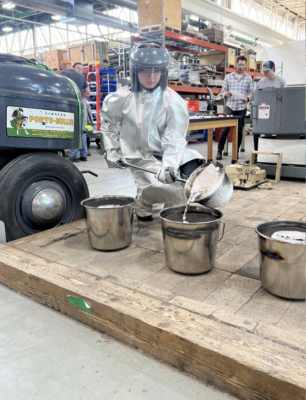
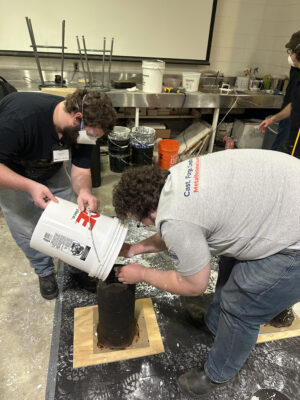
William Goehl, left, pours slurry into a mold that will later be used in the investment casting process during a week-long METAL bootcamp at the University of Tennessee.