Highlights from AFS Industry 4.0 2026

“Companies need to know their destination before choosing their tech. If you don’t know where you’re going, any road will get you there,” said Jim Wetzel, co-founder of NxGen, quoting Alice in Wonderland.  

Wetzel has been a leader in manufacturing for decades, and was a keynote speaker at the most recent AFS Industry 4.0 conference.  

This strategic communication principle is the bedrock of successful Industry 4.0 adoption. Companies can’t simply plug in a new system and expect optimization without a clear blueprint of their desired business outcomes. 

Wetzel cited a report from MIT that 95% of generative AI pilots at companies are failing.  

The leading reason for these failures?  

Lack of alignment to business outcomes.  

“Know the value first,” Wetzel said, reiterating that understanding the business’ needs before making big spends on technology was key to successful implementation. 

The 2026 American Foundry Society (AFS) Foundry Industry 4.0 Conference was held in Minneapolis on July 28-30. The METAL team was there to see firsthand the future of the foundry floor. 

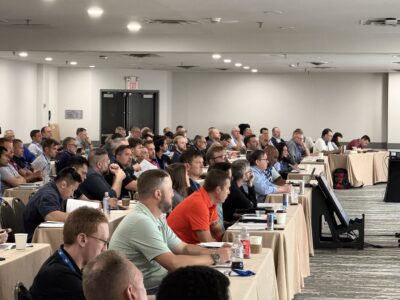
Conference attendees listen as a panel speaks on stage.

From AI integration to advanced robotics, the future of foundries is both high-tech and dependent on a skilled workforce.  

METAL, led byIACMI – The Composites Institute®, and funded by theDepartment of War’s Office of Industrial Base Policy,was created to revitalize American manufacturing through hands-on trainingin metalcasting and forging.Finding workers was a recurring point of discussion amongst attendees and during the tour of the 3M CAM facility in Saint Paul, MN. 

Through K-12 workshops and university bootcamps, METAL introduces students and career seekers to modern metalcasting and forging careers. Participants can complete METAL’s free online training course before attending immersive, in-person bootcamps led by professional metallurgists and manufacturing experts.   

1. The Stakes Are Higher Than Ever

Todd Hutcheson, Director of Advance Iowa and the Center for Business Growth and Innovation at the University of Northern Iowa, provided a sobering look at the industrial landscape.  

American metalcasting is at a crossroads.  

Ninety percent of all manufactured goods contain castings, yet the number of U.S. casting plants has declined by 72 percent since 1991.  

The path forward? Embracing technologies that bring smart manufacturing back to the U.S. while improving resiliency.  

“Value comes from change when it enables new or improved capability and from stability when it preserves or better controls existing capability,” Hutcheson said. “Industry 4.0 implementation accomplishes both.”  

Despite the decrease in facilities, Hutcherson noted the importance of casting and foundries to the economy. The industry supports nearly 800,000 jobs across the supply chain and is valued at over $50 billion. 

Hutcheson also touched on how University of Northern Iowa (UNI), a METAL partner university, is tackling industry challenges. The school’s Metal Casting Center, Foundry 4.0 Center, and Center for Business Growth and Innovation work together to “engage students and staff in research and education.” UNI will soon begin offering METAL Bootcamps as part of this mission. 

 2. The (AI) Elephant in the Room

Artificial intelligence was a hot topic among speakers and exhibitors. Mike Lakas, Senior VP for IT at the American Foundry Society touched on everything from Large Language Models (LLMs) and transformers to the influx of Chat GPT-generated content. The core takeaway was separating practical utility from marketing buzz. The highlight of Lakas’ presentation was a comparison of outputs asking generative AI to produce an image. The difference between the initial image generated years ago and the video made this year was staggering and demonstrated a point he had made earlier: “We tend to overestimate progress in the short-term and underestimate it in the long run.” 

Conor Keenan of Sinto America, who played a role in developing the new SMART Foundry at Purdue University, detailed how intelligent data tools are already making an impact. He explained that these tools are more than data collectors; they use advanced pattern recognition to drive real-time decision-making.  

“When you get your data is just as important as getting the data itself,” he stated. 

3. Who Let the Dogs Out?

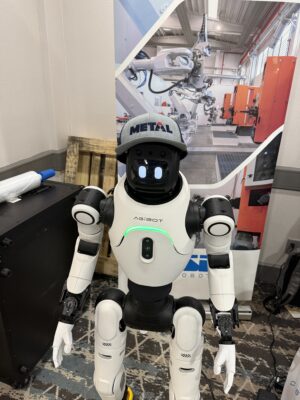
A Humanoid robot wears a METAL ball cap.

SIR Robotics, an Italian company with offices in California, showed off their robot Luciano.

Attendees were treated to case studies showing how digital tools are already yielding massive ROI on the floor:  

Spot the Robot Dog: Jacob Moreau showcased how a Boston Dynamics robot is performing over 120 autonomous inspections for a Toyota NA camshaft supplier.  

“The bot paid for itself in ROI within 10 months,” he said.  

Spot uses thermal imaging, LiDAR, and acoustic leak detection to monitor equipment across the 200,000 sq ft facility.  

Precision Pouring: Operations Data Analytics Engineer Ellyn Neubauer described how optimizing furnace controls using pyrometer data has impacted Mercury Marine, which manages an incredible 1.6 million pounds of poured steel per year. The use of the two-color pyrometer system has enabled continuous indirect temperature feedback, leading to more controlled furnace melts.  

4. At the Forefront of Cyber Security Compliance

The conversations around smart energy and cybersecurity are urgent. ECK Industries recently became the first foundry and one of the first 50 companies to achieve CMMC (Cybersecurity Maturity Model Certification) Level 2. This framework requires defense contractors to protect Controlled Unclassified Information (CUI) and applies to any company handling CUI in the DoW supply chain. This information can include drawings, specs and technical data, etc.  

Aaron Hayon, Director of Technology and Security at Eck Industries, and Jeremy Mares, who manages federal accounts at Redspin, provided an overview of the CMMC guidelines and Eck’s journey to certification.  

“Trying to be the first to do something within an industry is always challenging. It seems that every day we learn something new about how requirements should be interpreted, how the CMMC program continues to evolve, and how available tools can be leveraged more effectively,” noted Hayon of the process.  

The Takeaway 

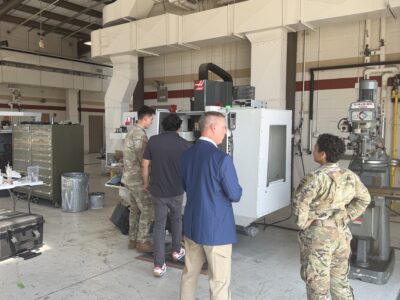
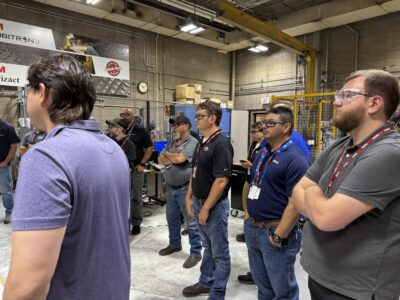
A tour group looks on as a tour guide speaks in a manufacturing lab

AFS Attendees were able to tour the 3M CAM Lab in Saint Paul, MN.

For us at METAL, the AFS Foundry Industry 4.0 Conference is a clear signal that our mission has never been more vital.  

The technological advancements showcased in Minneapolis, from autonomous robotic inspections to AI-driven process optimization, offer a definitive path forward for reversing the decline of U.S. casting and forging facilities.  

However, this digital transformation cannot succeed without a workforce capable of executing it. By continuing to offer expert-designed online and hands-on training, as well as stackable credentials, METAL is actively equipping the next generation of metalcasting pros with the digital know-how and problem-solving skills required to bring the Industry 4.0 vision to life on the foundry floor. 


Forging the Future: How UTK’s Amy Wheelock is helping guide future metalcasters

The revitalization of American manufacturing relies heavily on bridging the gap between traditional metal trades and cutting-edge engineering.  

At the forefront of this movement is a concerted effort to build a highly skilled, tech-savvy industrial workforce.  

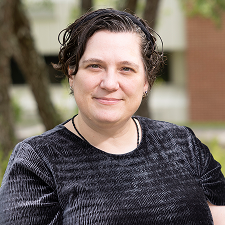
One of the chief guides of this effort at the University of Tennessee Knoxville is research coordinator and METAL workshop and bootcamp instructor Amy Wheelock. After pausing her engineering career to care for her family, she has become one of UTK METAL’s top trainers and a key part of the university’s efforts to train the next generation. 

METAL, led by IACMI – The Composites Institute®, and funded by the Department of War’s Office of Industrial Base Policy, was built to revitalize American manufacturing through hands-on training in casting and forging.  

Through K-12 workshops and university bootcamps, METAL introduces students and career seekers to modern metalcasting and forging careers. Participants can complete METAL’s  free online training before attending immersive, in-person bootcamps led by professional metallurgists and manufacturing experts like Amy across the country.  

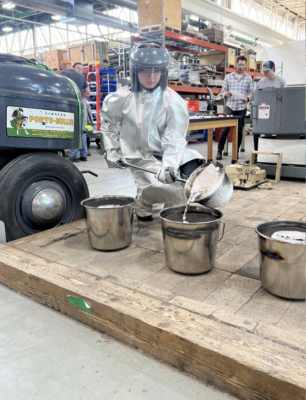
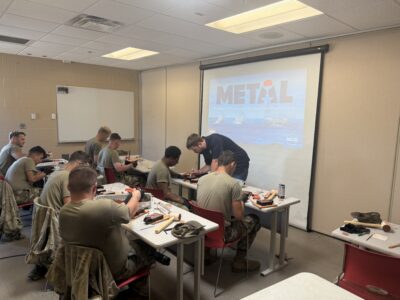
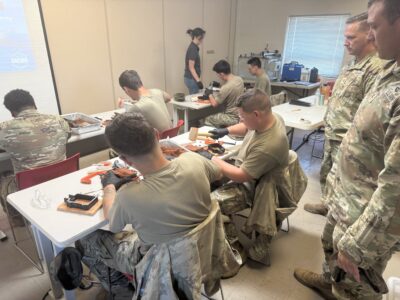
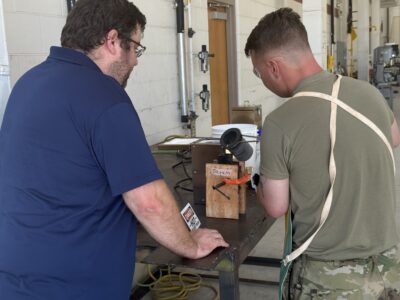
For nearly a week, bootcamp participants gain hands-on experience in casting design and pouring processes. The trainees pound sand into molds, learn CAD software, pour molten metal, and machine-finish parts. Participants leave with their own metal creations, foundational metalcasting and forging skills, and a clearer picture of promising careers in aerospace, automotive and defense manufacturing.   

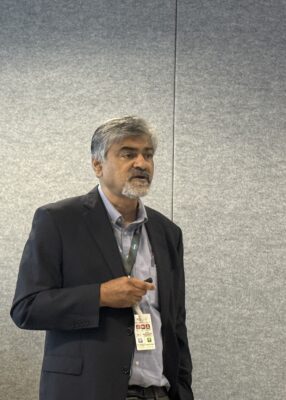
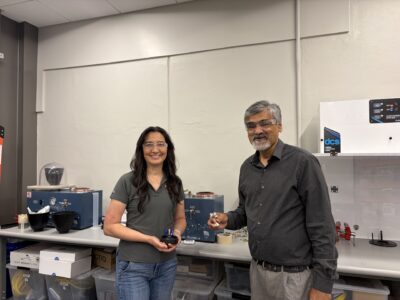
Amy Wheelock poses beside Dr. Uday Vaidya.

Wheelock works closely with IACMI Chief Technology Officer Dr. Uday Vaidya.


Building an Innovative Curriculum 

UTK’s investment casting program hasn’t been around long.  

“For us, this is the beginning of investment casting…we started this program about a year and a half ago,” said Wheelock.   

The program’s origins began when university faculty, specifically IACMI Chief Technology Officer Dr. Uday Vaidya, identified the need for a specialized casting program that previously did not exist. Wheelock, a mechanical engineer who was auditing a class, was invited to help get the project off the ground.  

“By the end of the semester, he’s [Vaidya] like, ‘You know, we’ve got some projects, I need to start up an investment casting program, would you like to come work for us?'” 

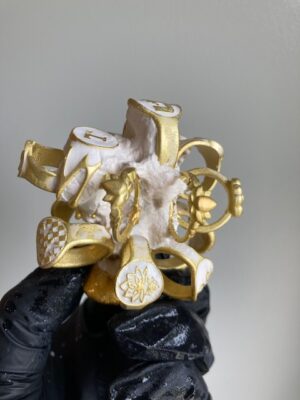
Stepping into the role of research coordinator, Wheelock became a key part of the team. The program strategically grew from its initial, small-scale concepts, like jewelry, to processing high-temperature industrial metals. Today, the curriculum involves working with Nordic Gold at 2,000°F and castable 356 aluminum alloys to produce precision-engineering components such as miniature turbine blades. 

“Investment casting is everywhere. It’s in aerospace. It’s in automotive. It’s in defense,” Wheelock said of the prominence of cast parts. 

METAL is a key aspect of the UTK investment casting program. 

“METAL [the program] is a fundamental part of the investment casting program. We teach both sand and investment casting and machining,” said Wheelock. Teaching the importance of casting is part of developing the next generation of people that can go into the workforce. We’re having diminishing numbers of people that have any knowledge of metalwork.”


The Technical Precision of Investment Casting 

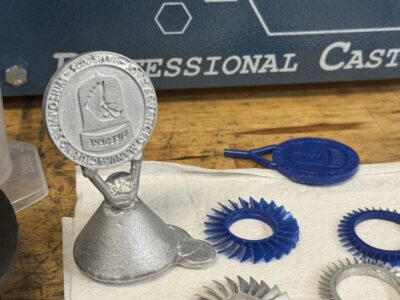
A major focal point of the curriculum is mastering the investment casting process itself. Historically referred to as “lost-wax casting,” this method has evolved significantly in modern foundries. Instead of carving beeswax by hand, students and technicians in the program frequently utilize 3D-printed PLA filaments or wax-based resins to create highly detailed patterns. 

These patterns are assembled onto a central sprue, encased in a ceramic slurry, and baked in a burnout oven at extreme temperatures, often for up to 14 hours, to vaporize the original pattern and harden the ceramic. Finally, molten metal is drawn into the mold using advanced vacuum-casting machines. This method eliminates parting lines and achieves exceptional geometric tolerances, producing precision components that require minimal post-process machining. By mastering this technique, students are directly prepared for high-level manufacturing roles in aerospace, automotive, and beyond. 

Mentoring the Next Generation 

The core mission of the investment casting program is educational outreach. The foundry serves as a dynamic classroom for immersive METAL Bootcamps and workshops. Participants as young as high school age gain hands-on experience with metalcasting and the science behind it.”It’s a great thing when young people are trying to figure out what they want to do, to expose them to a lot of different things,” Wheelock notes. “A lot of people don’t really get exposure to metal casting or metal working, and it may be something that they could find really interesting and make a career out of that they otherwise would have never known existed.”

By teaching the intricate, one-piece mold process of investment casting, the program demonstrates exactly how engineering and materials science intersect. Students learn firsthand how selecting a specific material dictates the manufacturing technique, and how that technique, in turn, alters material properties. 

Coming Soon: The Robotic Foundry 

The innovation at UT doesn’t stop with traditional casting. Drawing on advanced machine design principles, the university is bringing advanced automation directly into the foundry and its METAL Bootcamps and workshops. 

Some of these machines are already active in the foundry, with the full system expected to be online later this summer.

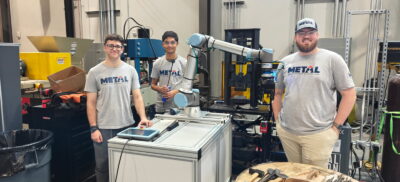
Students pose with a robotic arm in a university lab.

UTK is integrating new robotics tools into its METAL curriculum.

Stay tuned for an upcoming feature exploring how these robotic assistants are revolutionizing safety and precision on the foundry floor. 

From Bootcamp to Career: How METAL and Laborup are Rebuilding America’s Manufacturing Workforce

METAL, led by IACMI – The Composites Institute®, and funded by the Department of War’s IBAS Program, was built to revitalize American manufacturing through hands-on training. Now, in a new partnership with hiring platform Laborup, METAL is connecting aspiring metal workers with the jobs forging America’s future. 

For anyone eager to build a high-energy, high-impact career with real earning potential, there’s no shortage of opportunity in metal manufacturing. It’s exciting work that rewards precision, grit and problem-solving — and America needs more people ready to step into it.

As President Donald Trump’s National Security Strategy pushes to rebuild America’s industrial base, manufacturing demand is rising fast. At the same time, Baby Boomers are retiring at record rates, leaving critical workforce gaps across the metal industry. By 2033, nearly 4 million manufacturing jobs could be available nationwide.  

Manufacturers need to hire — fast. Yet workforce shortages and ineffective recruiting are slowing efforts to fill the jobs that the nation’s supply chain and armed forces directly depend on. 

Together, METAL and Laborup, creator of the artificial intelligence (AI) software empowering America’s most critical workforce needs, are closing the employment gap by training future metal workers and helping manufacturers connect with skilled talent faster. 

Step 1: Train the Next Generation of Metal Workers

Jonga, a tech entrepreneur and chemical engineer, said his first time in a foundry felt surreal. The blasts of heat, sparks and piles of newly formed metal reminded him of his time working on an oil rig. 

“You know the feeling you have when you’re standing in front of an ocean? You feel small. Being in a foundry almost feels the same,” Jonga said. “Once you’re in the industry, there’s no leaving. This thing happens to you when you experience and see that.” 

Jonga has also experienced the frustrations and pitfalls of working for manufacturers short on skilled trades people. Million dollar projects halt or fall behind, not because teams can’t hire engineers, but because they struggle to find qualified metalcasters, machinists, welders and fabricators. 

“Even now, as we work with companies doing critical work for our military, the government and in energy, they don’t have a shortage of work. It’s a shortage of people,” he explained. 

But how do you get skilled trades people in the foundry door? Welcome them in. 

Through K-12 workshops and university bootcamps, METAL introduces students and career seekers to modern metalcasting and forging careers. Participants can complete METAL’s free online training before attending immersive, in-person bootcamps led by professional metallurgists and manufacturing experts across the country. 

For nearly a week, bootcamp participants gain hands-on experience in sand casting design and pouring processes. The trainees pound sand into molds, learn CAD software, pour molten metal, and machine finished parts. Participants leave with their own metal creations, foundational metalcasting and forging skills, and a clearer picture of promising careers in aerospace, automotive and defense manufacturing.   

High school student Yash Babar said the bootcamp introduced him to careers in foundry operations, quality testing, and casting production that he didn’t know existed before.  

“It gave me a ton of exposure,” Babar said about the bootcamp. “It showed me that I don’t have to have a desk job when I grow up. I could be doing something with my hands, I could be creating something. It opened up a new perspective.”

As more than half of Millennials (63%) and Gen Z (65%) worry about AI eliminating jobs, apprenticeships and skills-based trades are becoming more attractive to younger workers. 

“The public is on high alert,” said Dr. Vasileios Maroulas, Director of AI Tennessee. “Technological innovation and workforce demands are now outpacing the size of our workforce and the average worker’s skill set.”

Jonga believes AI should help workers access opportunity — not replace them.  

“Frankly, there’s millions of job openings in manufacturing, so there’s a lot to be done,” Jonga said. “AI is how we can amplify people and get them in the best role for them.”

Now, thanks to Laborup, bootcamp participants won’t just leave METAL’s training with new skills and potential. They’ll also have direct access to a tool and resources designed to help them launch careers in manufacturing. 

Step 2: Turn Training Into Real Career Opportunities 

Billions of people use popular platforms like LinkedIn and Indeed to search for jobs every day. But Jonga said most networking platforms were built for office workers behind computers — not foundry workers operating 2,000°F furnaces or climbing 20-foot molds before a pour.  

Laborup is different. 

Through AI-powered technology, Laborup connects manufacturers with vetted, skilled workers five to ten times faster than traditional staffing agencies. Trades professionals can start by creating a free profile and speaking their job history and skills into the app. Laborup’s voice AI takes it from there, generating a resume and job profile recruiters can quickly evaluate. Once a profile is complete, the app begins matching workers with manufacturing opportunities aligned with their experience, skills and wage expectations.

“We wanted to build something a 65-year-old welder or metal worker can use just as easily as a 17-year-old machinist,” Jonga said. “With Laborup, someone can make a resume from a conversation. We want to make it that simple.” 

Since launching two years ago, Laborup has connected with more than 100,000 skilled workers while helping manufacturers cut hiring costs by more than 50%. According to company data, workers using the platform earn about 30% more in their next role on average. 

“I was a little skeptical at first, but wow was I wrong,” a senior CNC machinist from Oak Ridge, Tennessee said about Laborup. “The platform itself is easy to use, but also the people behind it are easy to reach and help you along the way. It’s awesome to see something built for us.”

A maintenance machinist from Knoxville, Tennessee added, “Finding high-paying manufacturing jobs is hard. Laborup is making it easy and putting us workers first.”

Laborup also offers in-app career coaching and interview preparation. Jonga said his team works with companies from small machine shops to Fortune 500s to better understand the technical and soft skills companies look for in manufacturing hires. Looking ahead, he hopes to use video and virtual reality to give workers a firsthand look inside modern foundries. 

“How can we bring the career resources that a person on Vanderbilt’s campus or University of Tennessee’s campus has to a worker in rural Pennsylvania?” Jonga asked. “AI really breaks down the barriers for this workforce to interact, but also for training and career prep.”

Step 3: Help Modern Manufacturers Hire Faster and Smarter 

Manufacturers are embracing Laborup, too, noticing the app’s top talent. 

When aerospace and defense manufacturer Oak Ridge Tool-Engineering (ORT-E) needed a better way to hire qualified machinists and engineers, President Steve Mullins decided to try Laborup. The app’s speed, convenience and rigorous applicant screening process helped ORT-E reduce staffing costs while identifying candidates more likely to stay long-term.  

“By the time Laborup sends me someone, I already know they’re a good fit,” Mullins said. “I’d be afraid to tell my competitors about Laborup. They’d get an edge on me.”  

With METAL, Jonga said Laborup is greasing America’s metal manufacturing pipeline — helping trained bootcamp participants move from the classroom into high-demand manufacturing careers. 

“At the end of the day, we want to create more skilled workers and revitalize metal working,” Jonga said. “But it will take everyone — training programs, the government, employers and platforms like ours — to make this work and achieve everything the U.S. wants to achieve.”

Ready to forge a new career? Start METAL’s free online training and visit our events page to attend the next METAL bootcamp or workshop near you. 

Create your Laborup profile today by downloading the app in the Apple Store or on Google Play