
In October, Penn State hosted its first METAL Sand Science Bootcamp, a hands-on course exploring the chemical and physical principles behind green sand and chemically bonded sand. These are two essential materials used to create molds for casting metal parts. From engine blocks and pipe fittings to aerospace and defense components, these molds form the foundation of American manufacturing.
Led by IACMI – The Composites Institute®, with funding from the Department of Defense’s IBAS Program, METAL is closing critical labor gaps in U.S. metal manufacturing. By 2030, almost 4 million manufacturing jobs will need to be filled, from entry level positions to trained production workers and specialized engineers. However, half of those positions might be left empty—putting the supply chain and our national defense at risk.
The free course encouraged participants to connect theory with practice and return home ready to improve their operations. A large contingent of industry professionals attended this bootcamp and came away with many new insights.
“I appreciated the collaborative conversation about broad topics and how it relates to what we’re doing in the real world,” said Olin Covington from Benton Foundry.. “Hearing from foundries, coremakers, sand guys—brainstorming and sharing. Mold energy was the best topic. The industry does drag its feet on certain things, but metalcasting has been around for thousands of years and there’s a reason it’s still here.”
For Justin Kinslow of Victaulic, the session on advanced oxidation stood out. “I hadn’t been exposed to that before. It ties into other projects we’re working on. I liked the setup—enough guidelines for it to be effective but informal enough for good conversations. I learned about other foundries and people.”
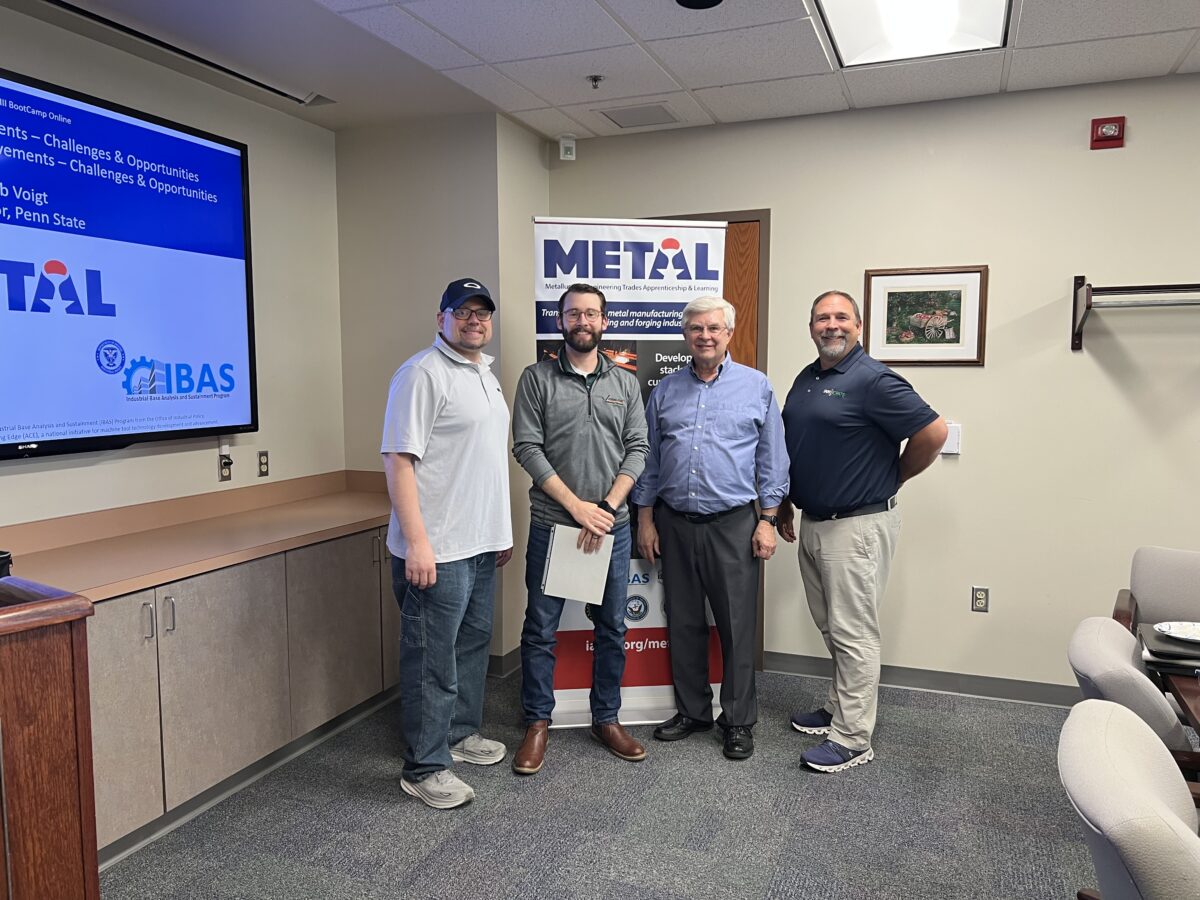
Penn State Professor Dr. Paul Lynch, Justin Kinslow with Victaulic, Penn State Professor Bob Voigt, and METAL Workforce Manager Greg Harrell.
His colleague Ian Erb, a plant manager at Victaulic, agreed that the course offered clarity: “I had some misconceptions about the theory behind mulling to energy. Glad I was here to crystallize exactly what we need to do. Pretty clear actions we’ll take when I get back.”
Joe Kramer from CWC Textron, where his team produces about 40,000 crankshafts a year, found the content directly applicable to ongoing projects. “We got some info on specific stuff we’re looking at: bond reclamation, a subset of advanced oxidant. CWC is the odd one out in scope and process, but it was nice to get a glimpse at what different shops look like. We also discussed 3D printing core molds, which is a new technology for us.”
For Bryan Rash of Spring City Electrical, the best part was realizing how much others share the same challenges. “Spring City is insular with our production, so it was nice to hear and see what other people have. Even though we’re low volume, we deal with some of the same struggles—not just technical, but hiring too. 3D sand printing on the design end, the basics of science—I’m not necessarily exposed to the difficulty of sand, and this helped me be aware of that on the front end.”
On the supplier side, Jim Kundratic of Badger Mining Corporation saw a broader opportunity for the industry. “I like where the program is going. I see a lot of foundries that need this program. We need more people to come in and learn the basics. The next piece is to promote it internally to my customers. Leadership is strained because they’re the only ones who know these things, and mid- to high-level management gets burned out.”
The Sand Science Bootcamp is part of a growing effort to equip metalworkers with the knowledge to optimize their systems and push new technology forward. As course leader Paul Lynch summarized, “The goal is for people to take these ideas back to improve their systems. What are the challenges? What are the opportunities?”
Want to get involved? Register for our free online training then visit our events page to attend the next METAL bootcamp near you.