
Dr. Alexandra (Allie) Glover remembers her grandfather, Douglas Glover, by his quirky inventions, from a mechanical cherry pitter to a peanut butter stirrer, and his passion for metallurgy. He was a specialist in powder metallurgy and ball bearing manufacturing, dedicating his career to improving movement in engines, industrial equipment and power tools.
He also illuminated the pathway for his granddaughter’s career.
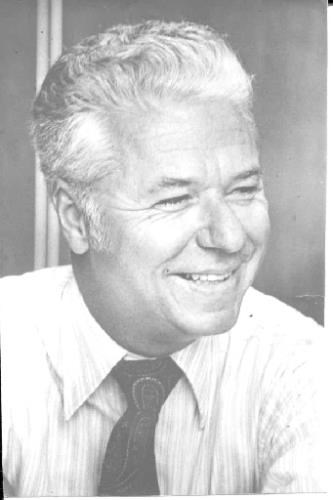
Douglas Glover
Today, Allie Glover is a professional metallurgist and assistant professor in materials science and engineering at her alma mater, Michigan Technological University, where her grandfather also earned his metallurgy degree.
“Metallurgy isn’t something you find out about by accident,” Glover said. “Normally, someone has a connection — a family member or friend, or they live in a community that has a forging house or metal casting foundry.”
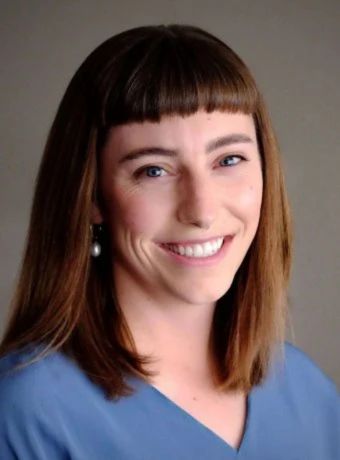
Dr. Allie Glover
However, the connection between metals manufacturing and American communities slowly faded. When Glover’s grandfather began his career in the 1950s, the U.S. had three times more foundries, and more than 16 million Americans made a living from manufacturing. Today, metal stamping and forging businesses are declining 2.3% per year on average. By 2033, almost 4 million manufacturing jobs could be available in the U.S. without the trained workers to fill them.
“We gave our know-how and our facilities away,” said Dr. Paul Lynch, an associate professor of industrial engineering at Penn State Behrend, referring to offshoring efforts. “We need to train people and get the know-how back.”
What was once seen as a dangerous job for manual laborers is now a high-tech, innovative field with competitive salaries for skilled engineers, technicians and foundry workers. In 2024, U.S. manufacturing workers earned more than $106,000 on average, while production workers and non-supervisors made about $61,000 and saw 4.2% annual wage growth.
“I think people still have misconceptions that the field is dirty or antiquated,” Glover said. “But it’s a very fun field to work in. I’ve found metallurgy to be incredibly welcoming and rewarding.”
Motivated to inspire the next generation of metalcasters and inventors, Glover joined METAL and professional metallurgists across the country in rebuilding America’s metal industry — one person at a time.
Metal Is for Everyone
METAL, led by IACMI – The Composites Institute®, with funding from the Department of War’s IBAS Program, is preparing a resilient, adaptable metal workforce that the nation can depend on. Through hands-on K-12 workshops, metallurgical bootcamps and apprenticeships, METAL ignites student curiosity about manufacturing while helping employers improve training practices.
“There isn’t a lot of structured training in the foundry,” explained Michelle Szymik, vice president of human resources at Wisconsin Aluminum Foundry. “You have to rely on your tenured employees to train new people who may have never even walked into a manufacturing environment before.”
From NFL pros to key players in national defense to tomorrow’s engineers, METAL makes metalcasting and forging accessible to everyone. Career seekers and industry professionals can get started with METAL’s free, self-paced online training. After learning the basics of casting design, additive manufacturing and melting processes, they’re ready for hands-on training with professional metallurgists — 3D-printing molds, pouring red-hot, molten metal and finishing their own castings. METAL also offers advanced bootcamps focused on digital casting technologies and sand science.
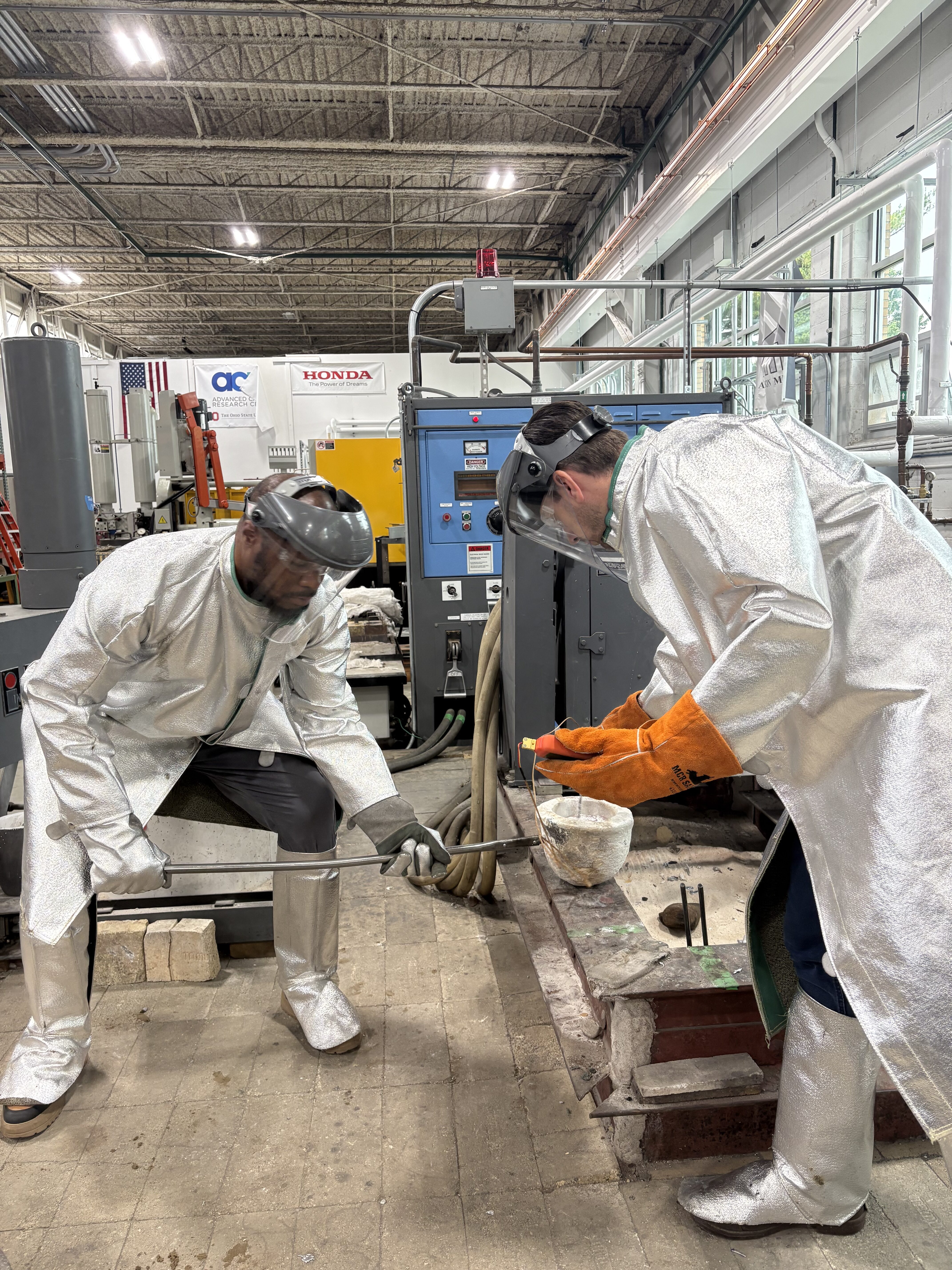
“The hands-on participation was amazing,” said retired NFL linebacker and entrepreneur Tim Johnson, who attended METAL’s Ohio State University bootcamp while developing his life-saving helmet technology, H.I.P. MD’s Brain Crown. “I used a ladle to pour aluminum into a mold, finished what I made, and earned a certificate in metal. If you’re looking for a metalcasting opportunity, this is the place to go.”
Bootcamp participants spend nearly a week in a foundry learning design and simulation software, discovering the chemistry of aluminum, brass and steel, and safely pouring liquid metal into molds — casting souvenirs like a stein, coins and a design of their choice.
“There really is something for everyone,” Glover said. “If you find something that you excelled at or enjoyed, pay attention to those moments. You don’t have to be good at everything to succeed.”
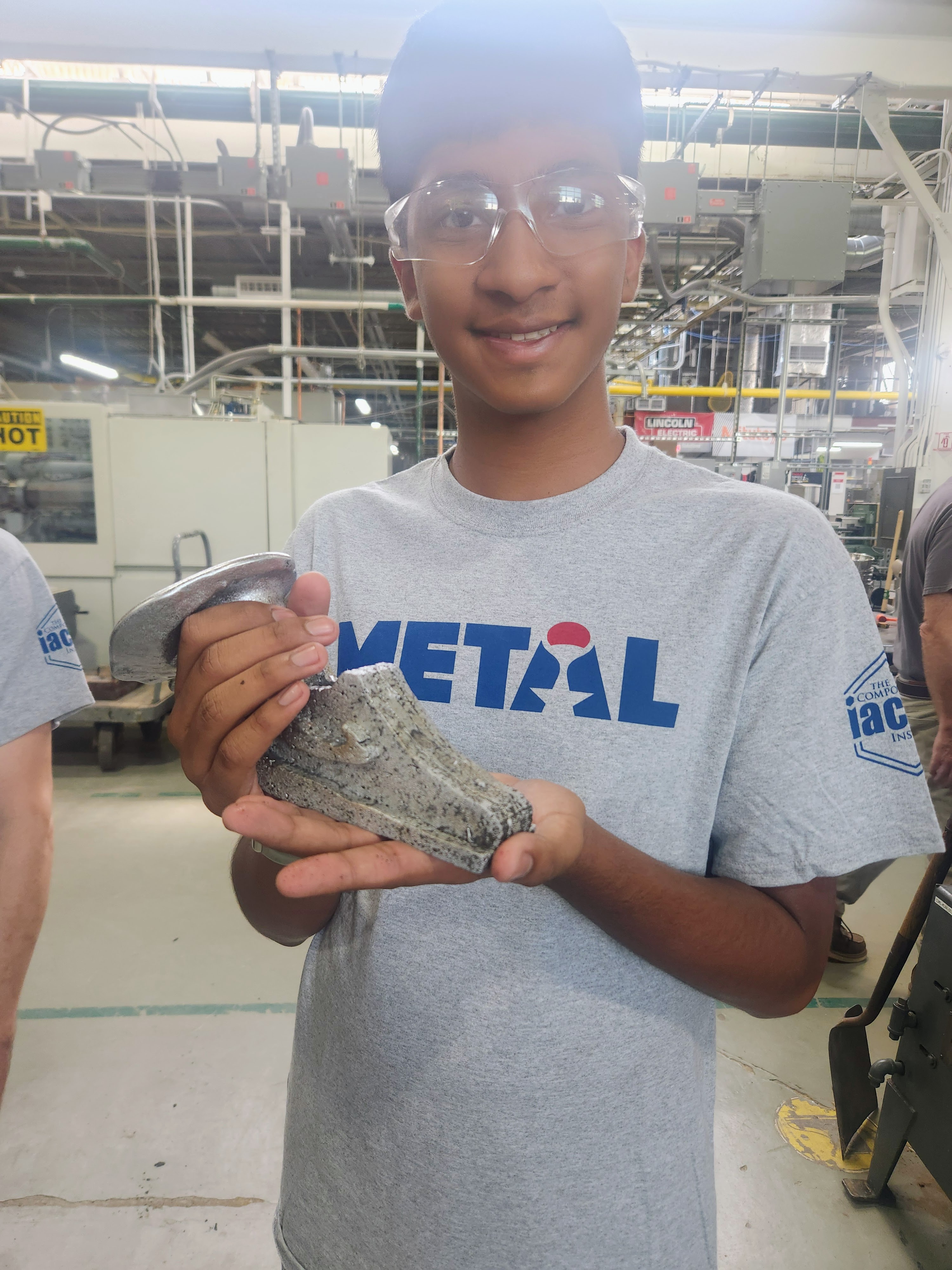
Yash Babar, the youngest person to ever attend a bootcamp, decided to try the experience at Ohio State University during his summer break. Not only did he leave with an aluminum Nike sneaker he designed and cast, but with the confidence to consider a career in engineering.
“I’m still trying to find out what I want to do in the future, and I ended up loving it,” Babar said about metalcasting. “The instructors were easy to approach and spent time explaining things. When you’re new to something, you might be shy. They make you feel like you belong here.”
Forging New Pathways Into Metal
After years of hearing her grandfather’s stories of sparks and fire, Glover tried metallurgy for the first time in a high school jewelry class. Torch in hand, she learned how to melt and bond metals, print custom designs with a rolling mill, and experimented with titanium anodizing, a process used in aerospace and defense to color-code parts.
“I think many women are more attracted to arts or crafting spaces,” Glover said. “A lot of casting and forging programs are focused on blacksmithing, and that works for some students. But we try to have avenues for someone who might be interested from a creative arts background, too.”
Hands-on experiences like these, Glover said, are what turn curiosity into career direction.
“That’s how you get to see the industry,” she said. “There are so many possibilities.”
Through a partnership with the Foundry Educational Foundation (FEF), METAL supports universities nationwide with hands-on curriculum and paid internships for students pursuing metallurgy. FEF scholar Victoria Rambo was a sophomore at Virginia Tech when she began to discover how many doors foundry experience could open. Her enthusiasm led her to create replica missile fins for the National Museum of the Marine Corps, present at the American Foundry Society national conference and be featured in the book Women in Steel Volume II.
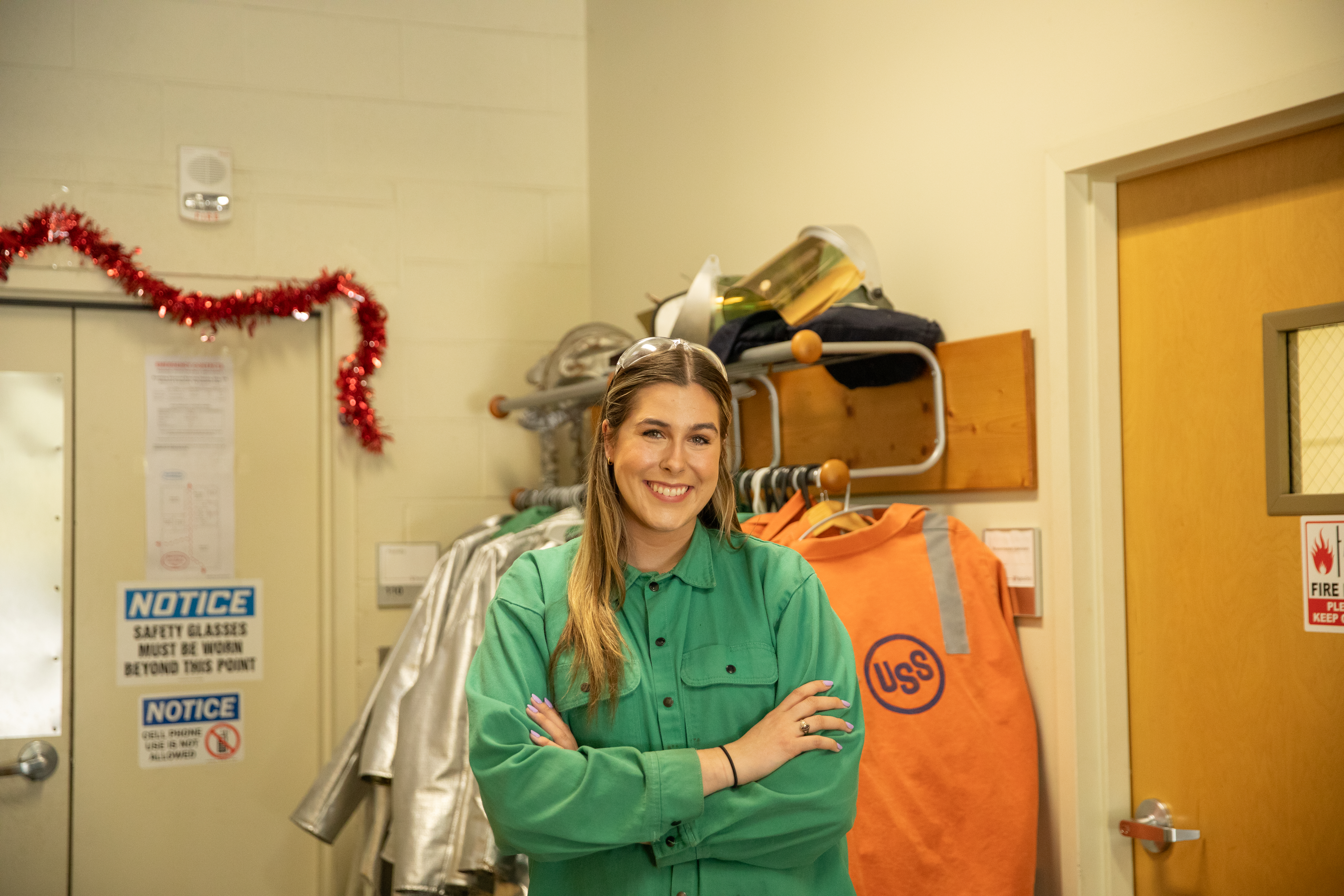
“The experience helped me with professional development and technical knowledge when I applied for the job I have now,” said Rambo, who’s an associate metallurgist at Carpenter Technology Corporation. “If you fall in love with metalcasting, give it your all because the opportunities will be there. The connections you make will be your biggest support along the way.”
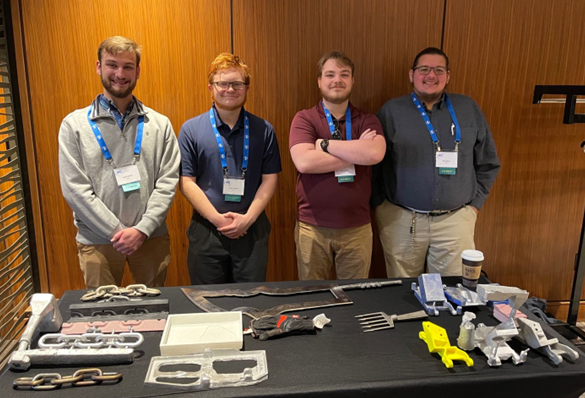
James Votava, a CNC operator engineer at C&H Precision Weapons, isn’t sure where his career would be without his hands-on internships and scholarships.
“I didn’t have the money for college,” Votava said. “I took out a couple of loans and I worked at McDonald’s, but FEF helped me get industry experience and financial support. Without these programs, metalcasting will be lost.”
The Future of Metal Is Built by Everyone
There’s never been a better time to consider a career in metals. In 2020, almost 29 million Baby Boomers retired, leaving unmanned machines and significant skills gaps across U.S. foundries. As Gen X, Millennials and Gen Z step into leadership roles, the American workforce is rapidly changing, and manufacturing is too.
Manufacturing Works, a partner of METAL and Jobs for the Future, connects manufacturers with talent and resources to keep pace with industry trends and high-quality production. Tiffany Rashada, director of strategic marketing, said creating welcoming spaces where younger people can thrive is critical to manufacturing’s future.
“There are a ton of students coming out of high school who are not interested in the college path,” Rashada said. In 2024, more than 17 million Americans between the ages of 16 and 24 were not enrolled in school. “They want jobs where they can do hands-on learning and have a career.”
From builders and problem solvers to artists, engineers, career changers and lifelong learners, METAL Program Manager Mike Kubacki said the metal industry is for anyone who wants to make a difference in their lives — and move the nation forward.
“Metals manufacturing needs more than one type of person, and that’s exactly its strength,” Kubacki said. “Whether someone is discovering metal for the first time, returning to the workforce, or bringing decades of experience, there is a place for them here. METAL is proving that the future of metals is built by and for everyone.”
For Glover, the metal industry has always been a place where she could be herself. With a visual mind and love for hands-on learning, metallurgy gives her a creative outlet to bring new ideas to life.
“I think it’s the same reason people craft or cook — both things I enjoy,” Glover said. “Metallurgy gives you ownership of a project and helps you build skills that apply to a lot of other careers.”
Her advice for anyone curious about metalcasting or forging is simple: try it.
“If you learn something about yourself, like what you enjoy or what you’re good at, you’ll broaden your horizons,” Glover said. “Just be open to those opportunities.”
Ready to find your place in manufacturing? Start METAL’s free online training and visit our events page to attend the next METAL bootcamp or workshop near you.