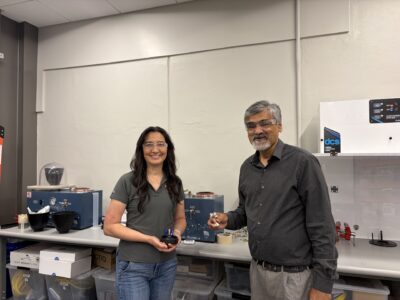
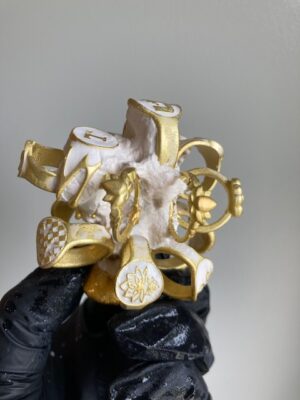
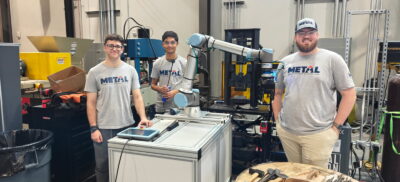
When Cal Poly Pomona graduate Eric Cramer began his career as a process and product development engineer in the metal industry, he had no professional foundry experience. He was hired at Miller Castings, an investment casting leader in his hometown of Whittier, California, and quickly realized he had a steep learning curve ahead of him.
Cramer had cast an aluminum model car in college. Now he was reviewing blueprints for fighter jets, military tanks and rocket systems.
“It was a big jump,” Cramer said. “You’re just trying to get through class and pass, but you don’t understand the industry goes way deeper than what you’re working on.”
Most of what Cramer knows about metalcasting today, he learned on the job. “You don’t think about that until someone tells you,” he added.
Eleven years later, Cramer has come full circle, partnering with Miller Castings and his alma mater to mentor the next generation of American metallurgists. Through programs like Cast in Steel and METAL’s bootcamp, with support from universities and industry partners, engineering students are stepping into the foundry — casting, forging and discovering careers in metal manufacturing before they graduate.
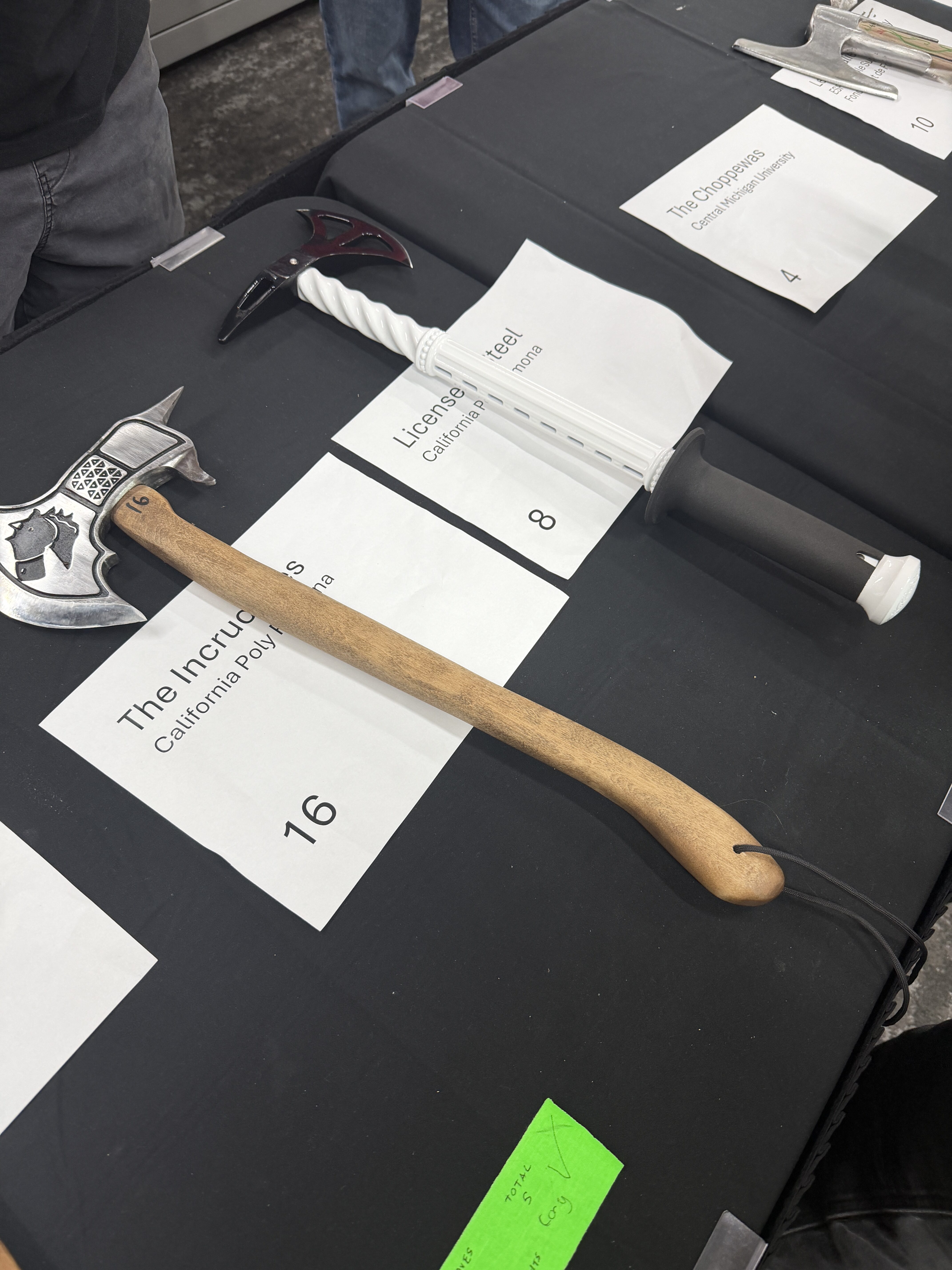
The black and white axe, created by Cal Poly Pomona’s License to Steel team for the 2026 Cast in Steel competition, was cast, assembled and funded by Miller Castings with mentorship from engineer Eric Cramer.
America’s Defense Depends on Skilled Metal Workers
Miller Castings is an established lost wax investment casting supplier for U.S. defense, aerospace and consumer industries. Its products, often complex castings made from super alloys, are critical systems in the Falcon 9 rocket, F22 and F35 fighter jets, Abrams tanks, and Boeing’s latest aviation breakthrough, the 787 Dreamliner.
“I remember walking in here,” said Sales Manager Bejan Khandehroo, who joined the team 16 years ago for a part-time job and never left. “You see the airplane engine and you really don’t understand how many thousands and thousands of pieces go into making it fly.”
Despite its essential work, Miller Castings battles the same challenge as most American manufacturers: They need more people. More importantly, they need trained metal workers.
By 2033, the United States could have 3.8 million manufacturing jobs available, with only enough workers to fill about half the roles. This year, President Donald J. Trump also signed an action plan to revitalize the nation’s shipbuilding capabilities and maritime power — catching up to China, which currently produces 74% of the world’s ships.
As the nation prioritizes defense manufacturing on American soil, the need for highly-skilled metal workers is urgent. Workforce shortages ripple through supply chains, forcing manufacturers to spend more time training new employees and less time producing critical parts.
“The company has no other choice but to take an entry-level person and train them because there’s nobody out there that already has experience,” Cramer said about Miller Castings. The manufacturer has also been impacted by metal worker shortages in other industries, such as toolmaking.
“We have to wait a year sometimes for the tool to be built because there’s nowhere to go,” he said. “There’s nobody available to build them, so we’re stuck waiting in line.”
METAL, led by IACMI – The Composites Institute®, was created to fill industry talent gaps by accelerating training in modern metal manufacturing. Through hands-on bootcamps, K-12 workshops and apprenticeship support in metalcasting and forging, METAL provides students and universities resources to advance career-ready skills and strengthen America’s defense and manufacturing resiliency.
Cramer believes metallurgical training for engineers must extend beyond the classroom. That’s why, for the past two years, he’s mentored Cal Poly Pomona’s students in the Cast in Steel competition.
See how a lifetime in metalcasting begins. Read Dr. Victor Okhuysen of Cal Poly Pomona’s story.
Axing Student Barriers to the Foundry
This year, more than 300 engineering students came together to create combat-ready horseman’s axes — or so they hoped. Cast in Steel is a national competition that introduces students to the world of metalcasting as they design, cast and test a fully functional tool or weapon, often for the very first time.
Both Cast in Steel and METAL are supported through funding by the Department of War’s (DoW) Office of Industrial Base Policy, which manages investments made pursuant to the Industrial Base Fund (10 U.S.C §4817), to better prepare upcoming metallurgists through real-world experiences. This year, student teams from 10 of METAL’s university partners participated in the competition, including Cal Poly Pomona.
The Horseman’s Axe challenge was Devyn Fidel’s second time competing in Cast in Steel. He participated in George Washington’s Sword Challenge the year before and was ready to lead, guiding a team of four students through the investment casting process.
“You’re solving real problems,” Fidel said. “We have around six months to do this project, so you need to manage your time to make sure you’re getting stuff done, just like in real life and real engineering.”
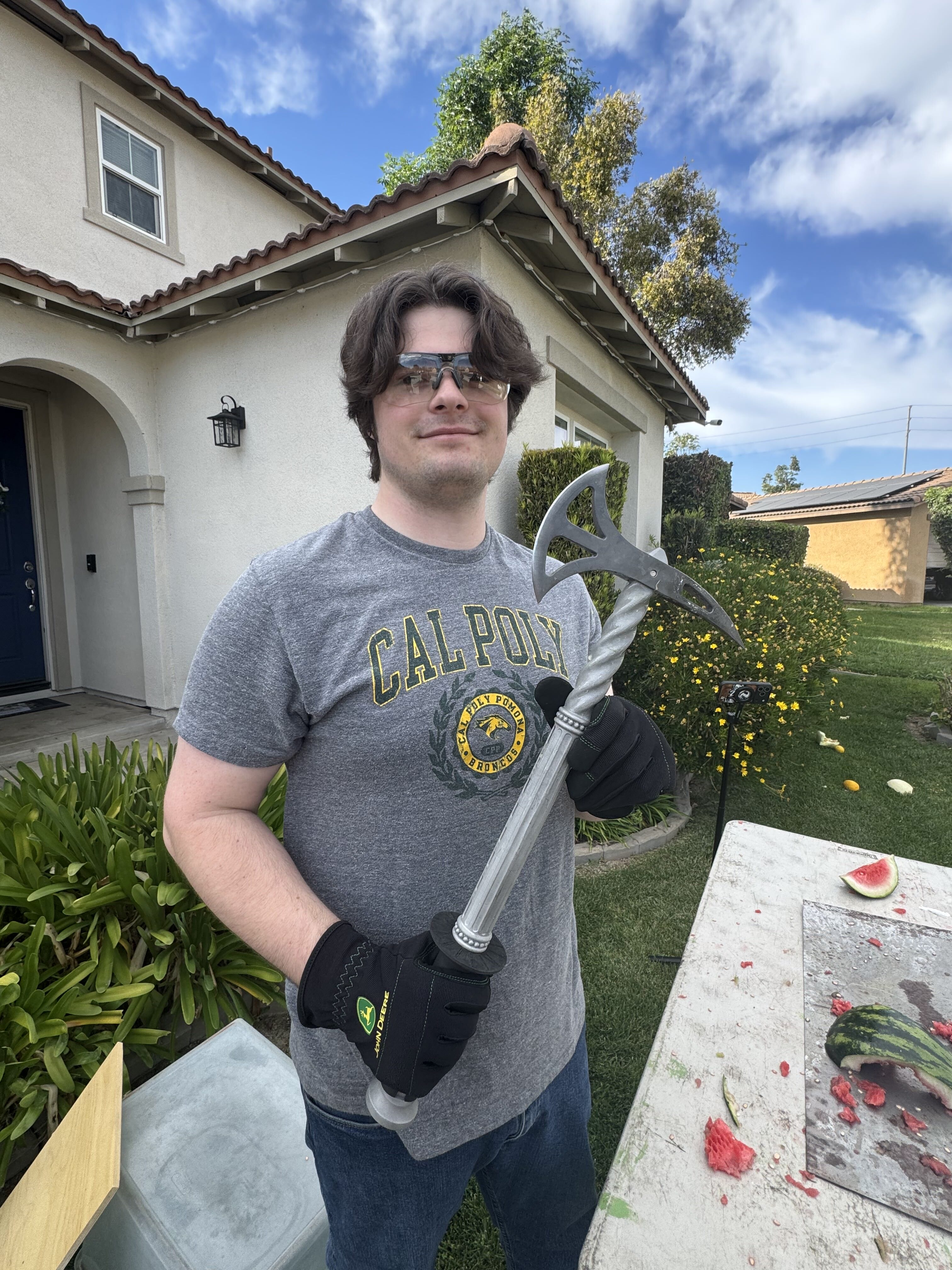
Devyn Fidel, a senior in manufacturing engineering at Cal Poly Pomona, tests out his team’s horseman’s axe before Cast in Steel, a competition where students design, cast, and test a fully functional metal tool from scratch.
Subscribe to Cast in Steel to watch sparks fly on Season 1 of “George Washington’s Sword,” every Thursday at 8 p.m. ET on YouTube.
But Fidel’s team wasn’t alone in building their axe — they had Cramer to help them overcome bumps along the way. Every team is required to work with an industry partner who can safely mentor them in designing and completing a finished steel casting. Miller Castings also provided employee time, materials and funds to support the students’ project.
For months, in between full course loads and part-time jobs, Cast in Steel competitors buckle down and learn the science and processes behind modern metalcasting. Students take on product research, alloy selection, mold design and casting simulations, heat treatment, post-processing finishing, and product testing.
At every step, Cramer reviewed the students’ work and provided feedback to yield better foundry results. He remembered their axe’s handle design was particularly complex, requiring extra CAD designs and SolidCast simulations to get the mold and material selections just right. Cramer also walked the team through the basics of manufacturing economics, including estimated production costs and project lead times.
“I don’t think they realized how much time and effort goes into every step of the process,” Cramer said, “especially when the deadline was approaching. There were some late nights spent machining.”
Fidel and his teammates also had the opportunity to tour Miller Castings’ facility, where the axe’s patterns were shell dipped to create ceramic molds, its metal poured, and the castings assembled by professional metal workers. The team chose to finish the axe with a powder coating, turning the head jet-black and the handle stark white for a “Darth Vader” look.
“We told them exactly how the axe was going to be cast and what processing needed to be done, and they worked their magic,” Fidel said. “The industry knowledge we got from them and their workers helped us a lot.”
Before the competition, Fidel’s team put its horseman’s axe to the test — from chopping wood to slicing watermelons and lemons out of the air like a real-life game of Fruit Ninja. It worked every time.
A Winning Experience
For Cramer, the best part of Cast in Steel is watching student engineers grow from submitting their first design idea through the steps of casting a final product. It’s not about winning, but he’d be lying if he said he didn’t want his team’s axe to be the best.
“The competition is pretty exciting,” he said. “They texted me that they were advancing through the different levels, and I really wanted them to win. They got close.”
Fidel’s team, “License to Steel,” took home second place for the Best Investment Casting in the 2026 Horseman’s Axe Challenge.
Beyond bragging rights and a medieval weapon, Cal Poly Pomona’s students left with the skills to start their careers in metal when they graduate. Entry-level engineers start in the process or quality assurance departments at Miller Castings, just like Cramer did. Across the company, there are positions open in sprue making, sandblasting, X-ray inspection, welding, inspection and more.
“The kids coming out of college are bringing innovation to us. They have expertise in new technologies and a new way to look at things that’s super important,” Khandehroo said. “They’re the cutting edge.”
Thanks to METAL, students at universities across the country are exploring casting processes, suiting up to pour and forge metal, and experimenting with industry-leading software and quality testing. Without hands-on programs like Cast in Steel and METAL, Cramer said students would only learn about foundries from a book.
“It’s a big help to do this kind of project,” Cramer said. “Without that exposure, in my opinion, most engineering students would veer towards Google or Apple or those types of companies rather than industry work.”
Why should students consider careers in metal? Cramer puts it simply: Because our country needs it.
“Without metal workers, our military is not going to have the products they need and commercial aircraft won’t be built,” Cramer explained. “The workforce is getting weaker without the new generation coming in.”
Fidel, who hopes to be a metallurgy professor one day, said he’s learned something new every year he’s participated in Cast in Steel.
“This was the first year I did investment casting, so I learned a whole new field of manufacturing and I made a lot of friends,” Fidel said. “There’s so much to get out of it. You’re doing yourself a disservice if you don’t try something like this.”
Ready to build the future of American manufacturing? Explore METAL’s free online training and hands-on bootcamps to discover careers in metalcasting and forging. Visit our events page to find a bootcamp near you.
Watch new episodes of Season 1 of Cast in Steel, “George Washington’s Sword,” every Thursday at 8 p.m. ET on YouTube.
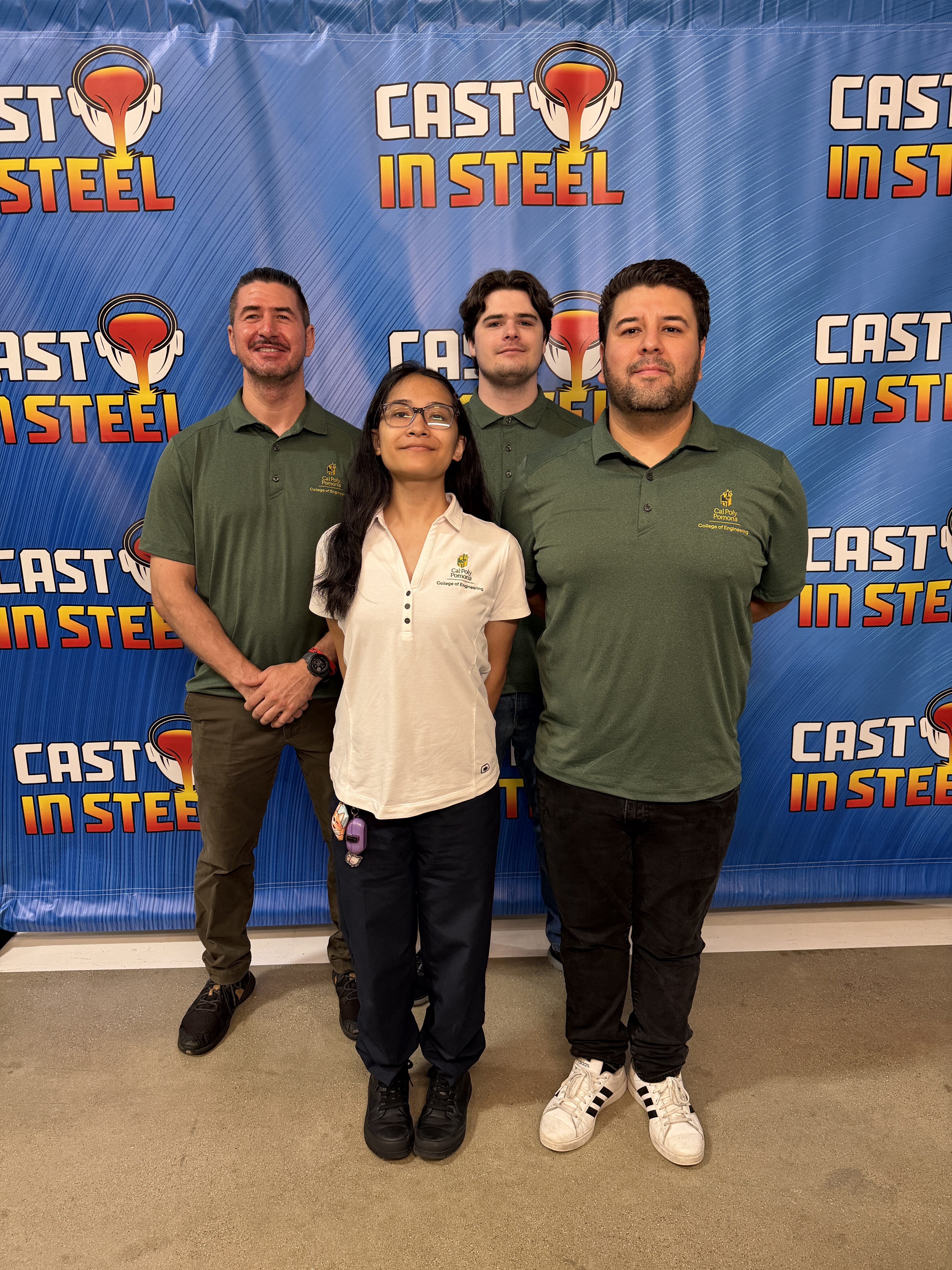
Cal Poly Pomona’s License to Steel team won second place for the Best Investment Casting in Cast in Steel’s 2026 Horseman’s Axe Challenge.