Forging the Future: How UTK’s Amy Wheelock is helping guide future metalcasters

The revitalization of American manufacturing relies heavily on bridging the gap between traditional metal trades and cutting-edge engineering.  

At the forefront of this movement is a concerted effort to build a highly skilled, tech-savvy industrial workforce.  

One of the chief guides of this effort at the University of Tennessee Knoxville is research coordinator and METAL workshop and bootcamp instructor Amy Wheelock. After pausing her engineering career to care for her family, she has become one of UTK METAL’s top trainers and a key part of the university’s efforts to train the next generation. 

METAL, led by IACMI – The Composites Institute®, and funded by the Department of War’s Office of Industrial Base Policy, was built to revitalize American manufacturing through hands-on training in casting and forging.  

Through K-12 workshops and university bootcamps, METAL introduces students and career seekers to modern metalcasting and forging careers. Participants can complete METAL’s  free online training before attending immersive, in-person bootcamps led by professional metallurgists and manufacturing experts like Amy across the country.  

For nearly a week, bootcamp participants gain hands-on experience in casting design and pouring processes. The trainees pound sand into molds, learn CAD software, pour molten metal, and machine-finish parts. Participants leave with their own metal creations, foundational metalcasting and forging skills, and a clearer picture of promising careers in aerospace, automotive and defense manufacturing.   
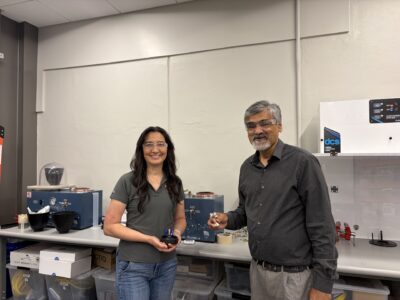
Amy Wheelock poses beside Dr. Uday Vaidya.

Wheelock works closely with IACMI Chief Technology Officer Dr. Uday Vaidya.


Building an Innovative Curriculum 

UTK’s investment casting program hasn’t been around long.  

“For us, this is the beginning of investment casting…we started this program about a year and a half ago,” said Wheelock.   

The program’s origins began when university faculty, specifically IACMI Chief Technology Officer Dr. Uday Vaidya, identified the need for a specialized casting program that previously did not exist. Wheelock, a mechanical engineer who was auditing a class, was invited to help get the project off the ground.  

“By the end of the semester, he’s [Vaidya] like, ‘You know, we’ve got some projects, I need to start up an investment casting program, would you like to come work for us?'” 

Stepping into the role of research coordinator, Wheelock became a key part of the team. The program strategically grew from its initial, small-scale concepts, like jewelry, to processing high-temperature industrial metals. Today, the curriculum involves working with Nordic Gold at 2,000°F and castable 356 aluminum alloys to produce precision-engineering components such as miniature turbine blades. 

“Investment casting is everywhere. It’s in aerospace. It’s in automotive. It’s in defense,” Wheelock said of the prominence of cast parts. 

METAL is a key aspect of the UTK investment casting program. 

“METAL [the program] is a fundamental part of the investment casting program. We teach both sand and investment casting and machining,” said Wheelock. Teaching the importance of casting is part of developing the next generation of people that can go into the workforce. We’re having diminishing numbers of people that have any knowledge of metalwork.”
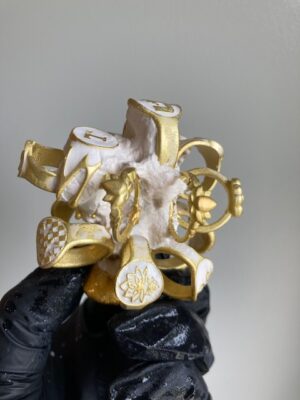
 

The Technical Precision of Investment Casting 

A major focal point of the curriculum is mastering the investment casting process itself. Historically referred to as “lost-wax casting,” this method has evolved significantly in modern foundries. Instead of carving beeswax by hand, students and technicians in the program frequently utilize 3D-printed PLA filaments or wax-based resins to create highly detailed patterns. 

These patterns are assembled onto a central sprue, encased in a ceramic slurry, and baked in a burnout oven at extreme temperatures, often for up to 14 hours, to vaporize the original pattern and harden the ceramic. Finally, molten metal is drawn into the mold using advanced vacuum-casting machines. This method eliminates parting lines and achieves exceptional geometric tolerances, producing precision components that require minimal post-process machining. By mastering this technique, students are directly prepared for high-level manufacturing roles in aerospace, automotive, and beyond. 

Mentoring the Next Generation 

The core mission of the investment casting program is educational outreach. The foundry serves as a dynamic classroom for immersive METAL Bootcamps and workshops. Participants as young as high school age gain hands-on experience with metalcasting and the science behind it.”It’s a great thing when young people are trying to figure out what they want to do, to expose them to a lot of different things,” Wheelock notes. “A lot of people don’t really get exposure to metal casting or metal working, and it may be something that they could find really interesting and make a career out of that they otherwise would have never known existed.”

By teaching the intricate, one-piece mold process of investment casting, the program demonstrates exactly how engineering and materials science intersect. Students learn firsthand how selecting a specific material dictates the manufacturing technique, and how that technique, in turn, alters material properties. 

Coming Soon: The Robotic Foundry 

The innovation at UT doesn’t stop with traditional casting. Drawing on advanced machine design principles, the university is bringing advanced automation directly into the foundry and its METAL Bootcamps and workshops. 

Some of these machines are already active in the foundry, with the full system expected to be online later this summer.
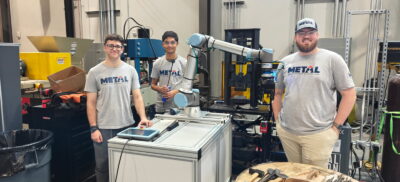
Students pose with a robotic arm in a university lab.

UTK is integrating new robotics tools into its METAL curriculum.

Stay tuned for an upcoming feature exploring how these robotic assistants are revolutionizing safety and precision on the foundry floor. 

Forging the Future: How Hands-On Experience is Shaping the Next Generation of Engineers

The manufacturing sector in the United States is at a critical inflection point, requiring brilliant young minds who are ready to tackle modern challenges with innovative, sustainable solutions.  

At just 21 years old, Mhakayla Johnson is already working to make the world a better place. Going into her senior year as a mechanical engineering student at Alabama A&M University, she is conducting research on composite materials that are more sustainable and easier to recycle. While interning this summer at the University of Alabama at Birmingham, Johnson was encouraged by her mentor, Dr. Haibin Ning, to attend a METAL bootcamp.  

Johnson poses with the skillet she made at the UAB Bootcamp

METAL, led by IACMI – The Composites Institute®, and funded by the Department of War’s Office of Industrial Base Policy, was built to revitalize American manufacturing through hands-on training in casting and forging. 

Through K-12 workshops and university bootcamps, METAL introduces students and career seekers to modern metalcasting and forging careers. Participants can complete METAL’s free online training before attending immersive, in-person bootcamps led by professional metallurgists and manufacturing experts across the country. 

For five days, UAB bootcamp participants gain hands-on experience in sand casting design and pouring processes. The trainees pound sand into molds, learn CAD software, pour molten metal, and machine-finish parts. Participants leave with their own metal creations, foundational metalcasting and forging skills, and a clearer picture of promising careers in aerospace, automotive and defense manufacturing.    

At bootcamp, Johnson gained critical, hands-on experience necessary to transition from classroom theory to real-world application.  

“I’m just a hands-on kind of person, you know. I like to work with my hands, I like to build and create stuff and improve things,” she says. Her journey highlights the vital importance of experiential learning in science, technology, engineering, and mathematics (STEM). 

Engineering a Sustainable Tomorrow 

Johnson’s current research, conducted under the mentorship of Dr. Ning through the REU research program, is deeply focused on manufacturing sustainability. She is actively exploring the creation of composites using cellulose and hemp fibers.  

“Dr. Ning told me I should step into the metal bootcamp so I can get my hands dirty and add more knowledge to what I already have,” she said of expanding her materials understanding.  

Currently, industries ranging from automotive to aerospace rely heavily on materials like carbon fiber. While highly effective, these materials are notoriously difficult to recycle. By researching viable, sustainable alternatives, Johnson is addressing a critical environmental challenge head-on. 

“Recyclability and just making our planet a better place [is important],” Johnson explains. “With carbon fibers… it’s very hard to recycle. And that’s why I’m glad I’m doing the research with Dr. Ning so that we can do research on composites and find different materials, better materials than the ones that are already being used.” 

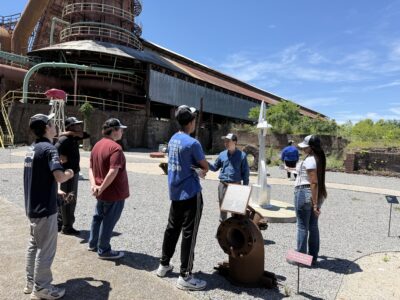
A group of student takes in the view of a retired historic foundry.

Johnson toured the historic Sloss Furnace site with her UAB Bootcamp classmates.

Nurturing a Lifelong Passion for STEM 

Johnson’s journey into science was no accident. Her mother, an Alabama A&M physical science professor, nurtured her passion for building and creating from an early age through robotics and STEM camps. “She didn’t just push me into it; she realized what my interests were as a kid and put me on that path,” Johnson stated.  

“I was a really hands-on creative type of kid,” she recalls. “I loved to draw, and I was very artistic… I want to be an engineer, I want to build stuff, I want to make stuff.”  

In high school, Johnson began welding and looking into different types of engineering, landing ultimately on mechanical. 

Despite identifying as a hands-on creator rather than a natural mathematician, her determination allowed her to excel.  

“This might sound crazy,” she said, but I was never the best at math…I understood it, but it took me more to get there. I had to study a little bit harder and just apply myself a little bit more.”  

Her story is a powerful testament to the fact that success in engineering requires immense creativity and perseverance just as much as raw calculation. 

Strengthening Foundations 

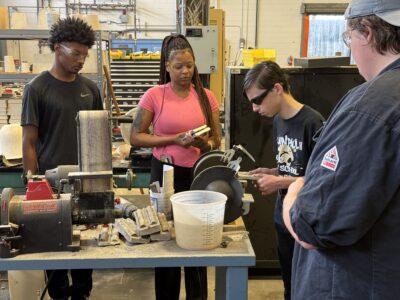
A student polishing a cast piece of metal on a grinder while others wait their turn.

Bootcamp participants take turns processing recently cast pieces.

While Johnson’s research focuses on sustainable composites and natural fibers, a foundational understanding of metallurgy is vital for innovations in material science. By participating in the METAL bootcamp, students like Johnson gain a comprehensive view of how traditional metalcasting interacts with modern materials.  

One example of this at UAB involved a project to produce composite screws that could be used on offshore oil rigs while maintaining strength similar to steel. Understanding the science behind both metal and non-metal materials proved vital in this pursuit.  

Johnson noted the lab at UAB was a great place to “actually see the real-world applications of what I’m learning.” 

METAL Bootcamps also dive into sustainability, teaching students about cleaner melting techniques and demonstrating them, as demonstrated by the use of the induction furnaces at the UAB lab.  

Inspiring the Next Generation 

As she looks toward her senior year and contemplates furthering her education, Johnson offers advice to aspiring young engineers. 

“Keep going and pushing towards your dreams,” she advises. “There’s nothing that you want to do that you can’t do… Take heed to your resources and believe in yourself. Stick to the course, your dreams can come true if you put in the work to achieve them.” 


New METAL Hub Launches at the University of Alabama, Birmingham

BIRMINGHAM, Alabama, May 21, 2025 – The Metallurgical Engineering Trades Apprenticeship & Learning (METAL) program is proud to announce a new partnership with the University of Alabama at Birmingham (UAB) to enhance and scale up industry-driven training opportunities for current and prospective metalworking and manufacturing professionals. Led by IACMI – The Composites Institute® with funding from the Department of Defense’s Industrial Base Analysis and Sustainment Program, METAL strengthens and diversifies the U.S. metal manufacturing workforce, focusing on casting, forging and plate rolling.

“METAL’s partnership with UAB will increase workforce skills in skilled trades from the technician through engineering levels, providing a pipeline of personnel excited about the casting and forging industries,” said Lucinda Curry, METAL National Workforce Manager at IACMI.   “By working together, we will increase capacity in the United States to meet both the needs of the commercial and national defense supply chains.”

The METAL program at UAB will offer both foundational and specialized training in metalworking and manufacturing, focusing on automation, casting, forging, and rolling techniques critical to the industry’s future. The UAB METAL hub will also teach principles in the metallurgical fields, such as heat treatment of ferrous and non-ferrous alloys. Participants will be doing a series of hands-on activities, including CAD design and 3D printing of patterns, casting, material testing, and machining.

Through a combination of online and hands-on training, including comprehensive in-person boot camps, UAB will provide hands-on experience and essential technical skills in metal melting, heat treatment and machining for individuals seeking to enter or advance in the manufacturing sector.

“We are excited to play a key role in shaping the future of manufacturing education and workforce development,” said Dr. Haibin Ning, UAB associate professor of materials engineering. “This partnership is an important step in addressing the challenges of modern manufacturing while providing students with the skills and credentials they need to succeed in the industry.”

UAB joins a growing network of METAL hubs, including Ohio State University, Pennsylvania State University, and University of Tennessee Knoxville, as part of a nationwide effort to expand access to high-quality, industry-relevant training. These university hubs expand the METAL network by fostering collaborations with local high schools, community colleges, and other educational institutions to create a pipeline of skilled workers for the U.S. manufacturing sector.

Through METAL’s multi-tiered curriculum, UAB aims to support workforce development by providing participants with academic credits, industry certifications, apprenticeships and degree tracks.

For more information about METAL, please contact:

Brittany Crocker
brittany@piper-communications.com
O: 865-329-0553 ext: 216

About METAL

Metallurgical Engineering Trades Apprenticeship & Learning (METAL), led by IACMI, is an industry-driven initiative aimed at providing high-quality, hands-on training in the metalworking and manufacturing sectors. The program is designed to address workforce development needs by offering comprehensive curricula in casting, forging and metallurgy, with an emphasis on automation and modern manufacturing technologies.

About IACMI

IACMI-The Composites Institute® is a 170-plus member community of industry, colleges and universities, national laboratories, and government agencies working together to benefit the nation’s energy, manufacturing, and economic security. IACMI is managed by the Collaborative Composite Solutions Corporation (CCS), a not-for-profit organization established by The University of Tennessee Research Foundation. A Manufacturing USA institute, IACMI is supported by the U.S. Department of Energy’s Advanced Materials Manufacturing Technologies Office, as well as key state and industry partners. It collaborates with the Department of Defense to scale up industry-driven job skills and revitalize American manufacturing.


New METAL Hub Launches at Michigan Technological University


HOUGHTON, Michigan, May 8, 2025 – The Metallurgical Engineering Trades Apprenticeship & Learning (METAL) program is proud to announce a new partnership with Michigan Technological University (MTU) to enhance and scale up industry-driven training opportunities for current and prospective metalworking and manufacturing professionals. Led by IACMI – The Composites Institute® with funding from the Department of Defense’s Industrial Base Analysis and Sustainment Program, METAL strengthens and diversifies the U.S. metal manufacturing workforce, focusing on casting, forging and plate rolling.

This partnership will provide hands-on and online workforce training designed to strengthen the casting, forging, and machining industries.

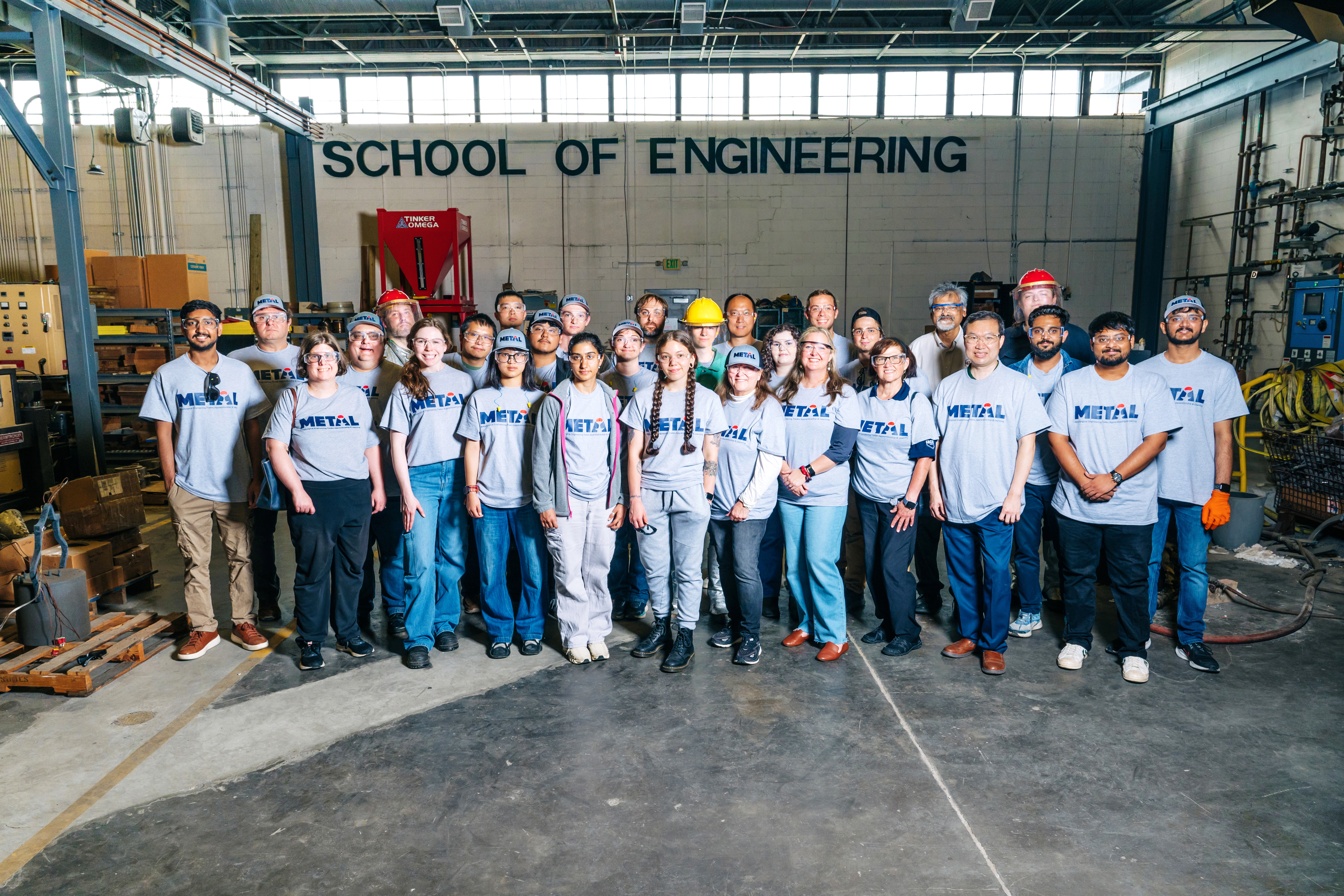
As METAL’s newest hub operator, MTU will deliver METAL’s nationally recognized curriculum, facilitate instructor certification, and launch boot camps and academic pathways tailored to current and future metalworking professionals. MTU will also integrate METAL training into its Summer Youth Programs to offer an immersive introduction to metalworking, metallurgy, and materials science to high school students from across the Upper Midwest.

“This partnership builds on Michigan Tech’s deep roots in materials science and engineering, as well as its strategic location in the Upper Midwest, a region vital to the U.S. manufacturing base,” said Lucinda Curry, METAL National Workforce Manager at IACMI. “Michigan Tech is an ideal partner for this mission, and we’re excited to work together to provide valuable metallurgical training in the manufacturing heartland.”

The MTU hub will implement a stacked curriculum model, which combines interactive online learning with immersive in-person casting and forging boot camps at MTU’s state-of-the-art labs. Future educational modules will incorporate training on automation in casting and forging, and will open pathways to employment in critical industry roles. 

“Michigan Tech is proud to be part of METAL’s mission to revitalize and future-proof the American manufacturing workforce,” said Alexandra Glover, Assistant Professor in the Materials Science and Engineering Department at Michigan Tech. “By leveraging our longstanding educational programs focused on metallurgical engineering and strong industry partnerships, we are preparing students with both the foundational and advanced skills needed to thrive in the evolving industrial landscape.”

MTU joins a growing consortium of METAL hubs, including University of Alabama in Birmingham, Ohio State University, Pennsylvania State University, and the University of Tennessee in Knoxville. Together, these institutions are driving a nationwide resurgence in metallurgical and manufacturing excellence by expanding access to high-quality, industry-relevant training.

For more information about METAL at Michigan Tech, please contact:

Brittany Crocker
Email: brittany@piper-communications.com
Phone: 865-329-0553 ext: 216

About METAL
Metallurgical Engineering Trades Apprenticeship & Learning (METAL), led by IACMI, is a national initiative that provides industry-aligned training in casting, forging, machining, and metallurgical processes. With a focus on automation and advanced manufacturing, METAL aims to create a skilled, adaptable workforce prepared to meet both commercial and defense manufacturing demands.

About IACMI
IACMI – The Composites Institute® is a national public-private partnership focused on advancing composite materials and process technologies. Supported by the U.S. Department of Energy and the Department of Defense, IACMI brings together over 170 members from industry, academia, and government to drive manufacturing innovation and workforce development.

About Michigan Technological University

Michigan Technological University is an R1 public research university founded in 1885 in Houghton, and is home to nearly 7,500 students from more than 60 countries around the world. Consistently ranked among the best universities in the country for return on investment, Michigan’s flagship technological university offers more than 120 undergraduate and graduate degree programs in science and technology, engineering, computing, forestry, business, health professions, humanities, mathematics, social sciences, and the arts. The rural campus is situated just miles from Lake Superior in Michigan’s Upper Peninsula, offering year-round opportunities for outdoor adventure.