
Melissa Walston and Rachel Reed have spent their careers traveling the world, learning languages and guiding U.S. diplomats across foreign nations and cultures. But when it came to navigating a foundry for the first time, they felt lost.
In their new roles as Department of Defense contractors with Vision Point Systems, Walston and Reed support metal manufacturing projects for the Navy’s Carderock Naval Surface Warfare Center. Carderock is the Navy’s premier center for engineering, modeling and testing ships and ship systems. Its mission spans ship design, naval architecture and the strength of the structures that keep sailors safe at sea. At its core, both Carderock’s success and the future of U.S. defense rely on one critical capability: consistent, high-quality metal production.
“Metal is in everything,” said Reed, who’s a program analyst. “The Naval Service Warfare Center and other government agencies require a strong base of manufacturers who can provide the materials we need at the scale and to the specification we need—and that’s not easy.”
Reed joined Vision Point Systems in February after 15 years managing international exchange programs and delegation visits. Her superpower? Connecting the right people and organizations, no matter where they’re from. Now Reed coordinates contracts between metal manufacturers and the Navy. But to lead this collaboration, she needed to understand the world of metallurgy.
“When I first did an audit visit at a foundry, it was awesome, but it was also confusing,” said Reed. “The terminology was so unfamiliar to me, it was like a different language.”
Reed, who is fluent in Japanese, knew she had to approach her new job like she was preparing for a trip—immersing herself in casting, forging and manufacturing culture. Her colleague, Walston, recommended METAL’s week-long metallurgy bootcamp at Penn State University to Reed.
“I immediately started telling my coworkers, ‘you guys have to take this course.’ It will help so much because none of us came from this world,” Walston said, referring to manufacturing.
Walston, who’s a program coordinator at Vision Point Systems, has led American ambassadors around the world, tracked missions in the U.S. Air Force, and served as an executive assistant at the White House. Her career, nothing short of a Disney World ride (she worked there, too), is now focused on reigniting the nation’s defense manufacturing capabilities.
“I’ve spent most of my life, in one way or another, supporting my country,” Walston said. “It means a lot to me to be doing something that is directly helping our military. I know what it feels like to be one of them, waiting for a part to be fixed or made.”
Off to Bootcamp
Walston decided to try Penn State’s METAL bootcamp after her Vision Point Systems orientation, when she realized she had no idea what a Charpy was.
“I sat in this meeting and almost every briefer brought up the term ‘Charpy.’ I kept laughing to myself saying, ‘I know they’re not talking about the pen in my purse,’” she said—they weren’t. In metalcasting, a Charpy, pronounced like “Sharpie,” is a type of test used to measure the material’s toughness when struck with sudden impact.
Walston quickly learned “Charpy” wasn’t the only term she’d need under her belt to support the defense industry’s metal pipeline. “I thought my head was going to explode. I didn’t understand most of what I heard,” she admitted.
An introduction to metallurgy terminology and science—from casting and heat treatment to nonferrous metals and alloys—is exactly where METAL’s online training starts. Led by IACMI – The Composites Institute®, with funding from the Department of Defense’s IBAS Program, METAL is building a highly-skilled, adaptable manufacturing workforce with K-12 workshops and hands-on bootcamps for career seekers.
As more metal workers retire, the U.S. faces a critical knowledge gap. By 2033, manufacturers could need more than 2 million additional workers to keep up with supply chain and national security needs.
“Right this moment, we cannot entirely build a U.S. naval ship in the United States,” Walston said. “You don’t know what the future’s going to hold, and we need to be self-sufficient. If there’s a surge, we need to be able to meet that demand.”
Through partnerships with Penn State and universities across the country, METAL bootcamps are forging the next generation of industry leaders and innovators. Walston signed up without hesitation when she learned she could support her country by melting, casting and forging metal.
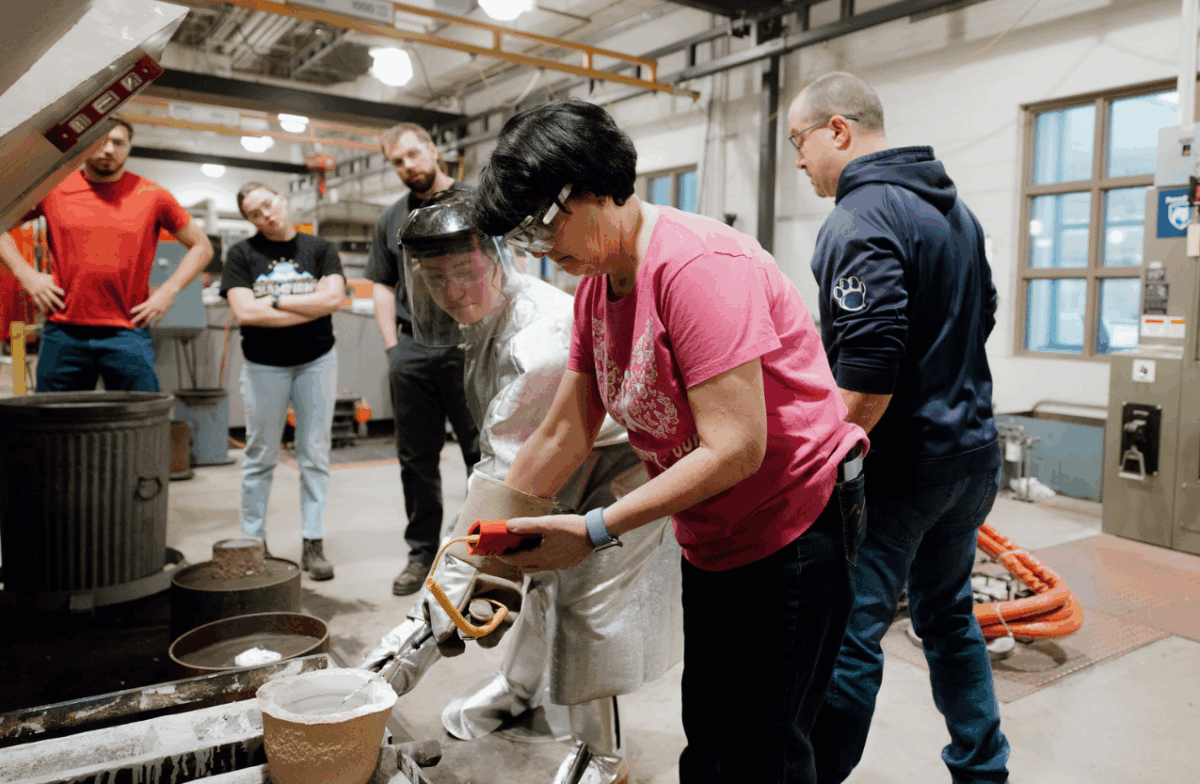
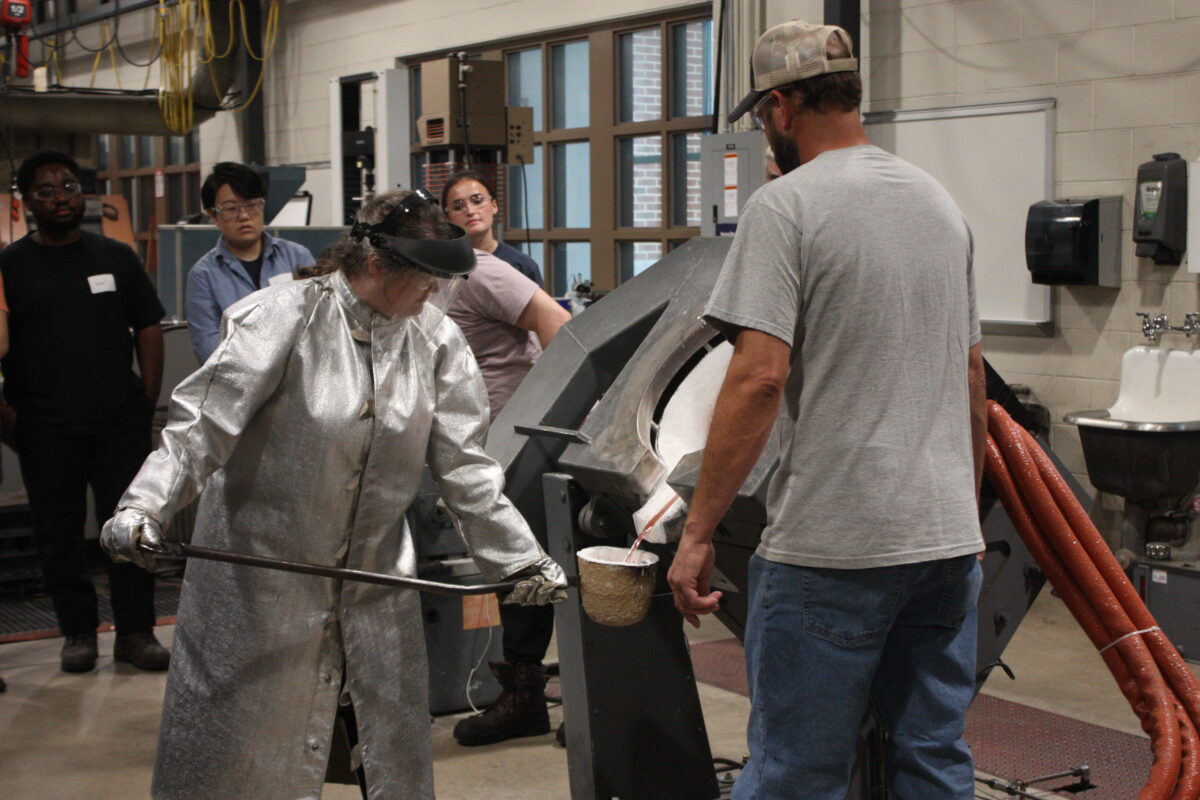
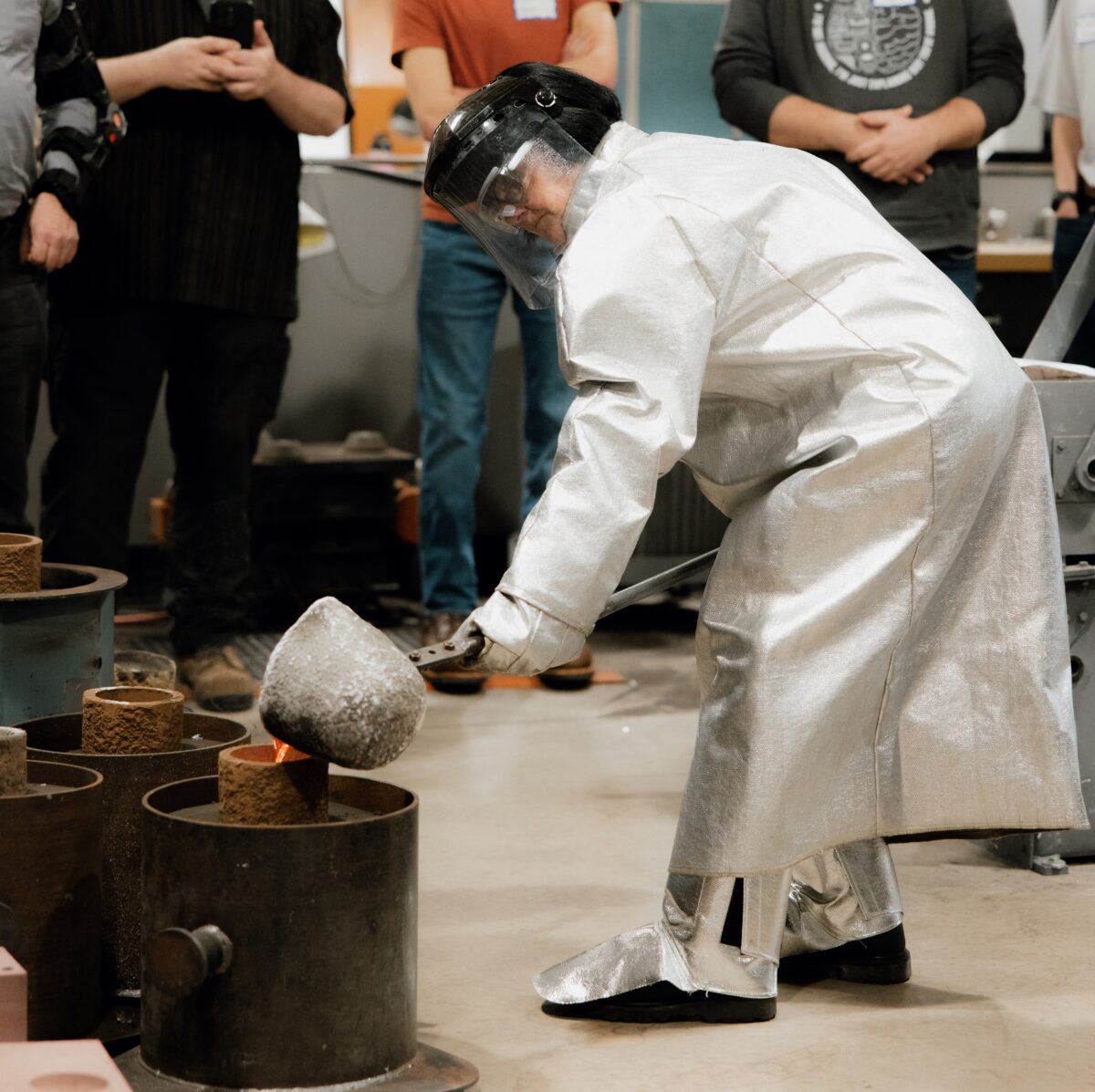
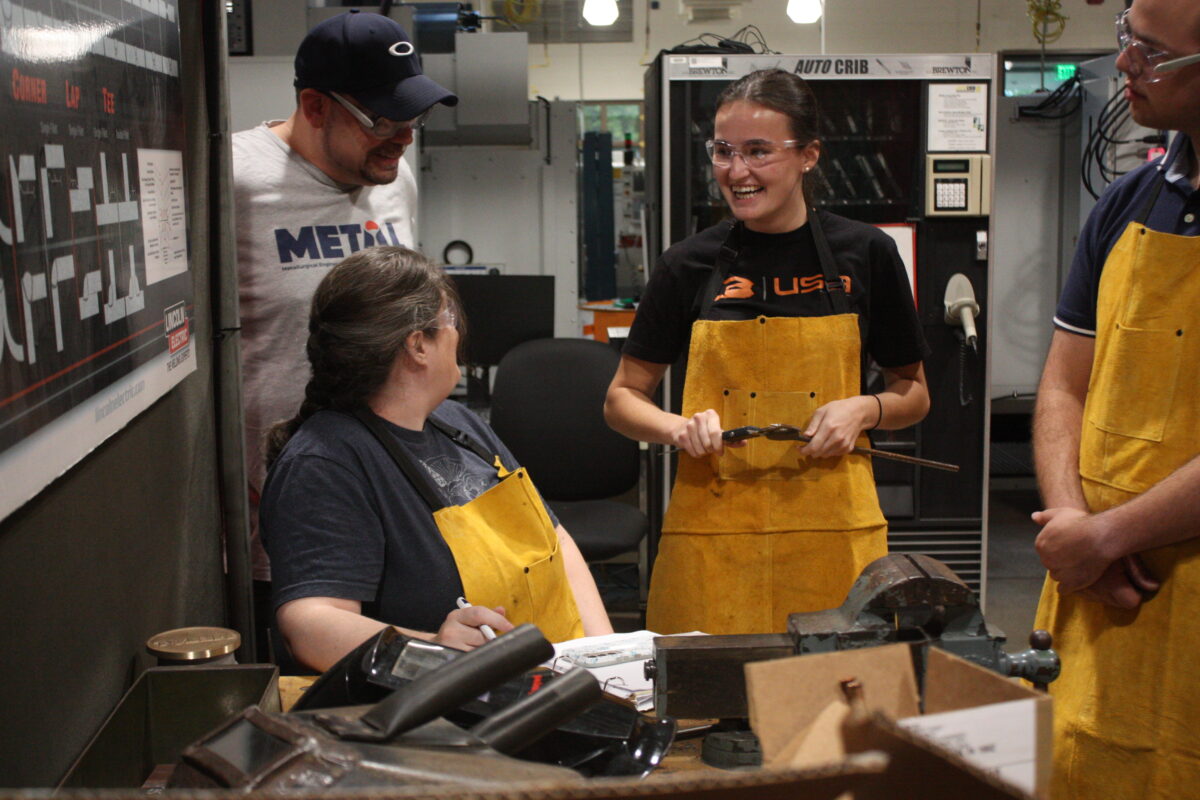
For one week, Walston and Reed suited up in safety glasses and fire-resistant gear to bring the science of metalcasting to life. From designing 3D molds to melting aluminum and bronze to machining a finished part, they experienced exactly what it takes to create a casting with their own hands.
Reed said the highlight of the bootcamp was firing up the foundry furnace for her first pour. After aluminum is heated to about 1,300 degrees Fahrenheit and liquifies, participants get the rare chance to carry the ladle and pour metal into the mold themselves.
“It was so cool. I’m never going to have that opportunity again,” Reed said. “It gave me a real respect for the work that our manufacturing partners do and how complicated it can be.”
Walston said she might have had a different career if she’d known what was possible in metal manufacturing sooner.
“If I had been introduced to the foundry when I was in high school, that would’ve been where I wanted to be—working with my hands, getting dirty, playing with fire, and getting paid for it,” Walston said. “I was on cloud nine.”
Both Walston and Reed returned home with their own creations—a bronze medallion and an aluminum stein—and a deeper understanding of what the Navy needs from metal manufacturers.
The Secret Weapon to Career Success
Since graduating from METAL’s bootcamp, the contractors feel like they’re finally speaking the same language as their metallurgy and manufacturing partners. Reed said she’s not only better equipped to have technical conversations, but she knows what a foundry needs to be successful.
“Every place is a culture, and METAL was my cultural introduction to working with manufacturers,” Reed said. “There’s a lot of time dedicated to keep a foundry running. I learned more about how they operate and the costs associated with producing a part.”
She strongly encourages anyone who supports the metal industry—or is curious about a fulfilling, well-paid career—to experience the bootcamp for themselves.
“We need more people interested in manufacturing,” Reed said. “Programs like METAL are essential because a lot of people are afraid of what they don’t understand. If you can get hands-on experience and realize the opportunities that exist, that is the real strength of this program.”
What Walston found in the foundry was confidence. Now she asks the right questions, keeps pace in meetings, and uses her growing expertise to help safeguard America’s metal production—and its future.
“I owe so much of my progress to this course,” she said.
Ready to cast a stronger career and a stronger America? Register for our free online training then visit our events page to attend the next METAL bootcamp near you.
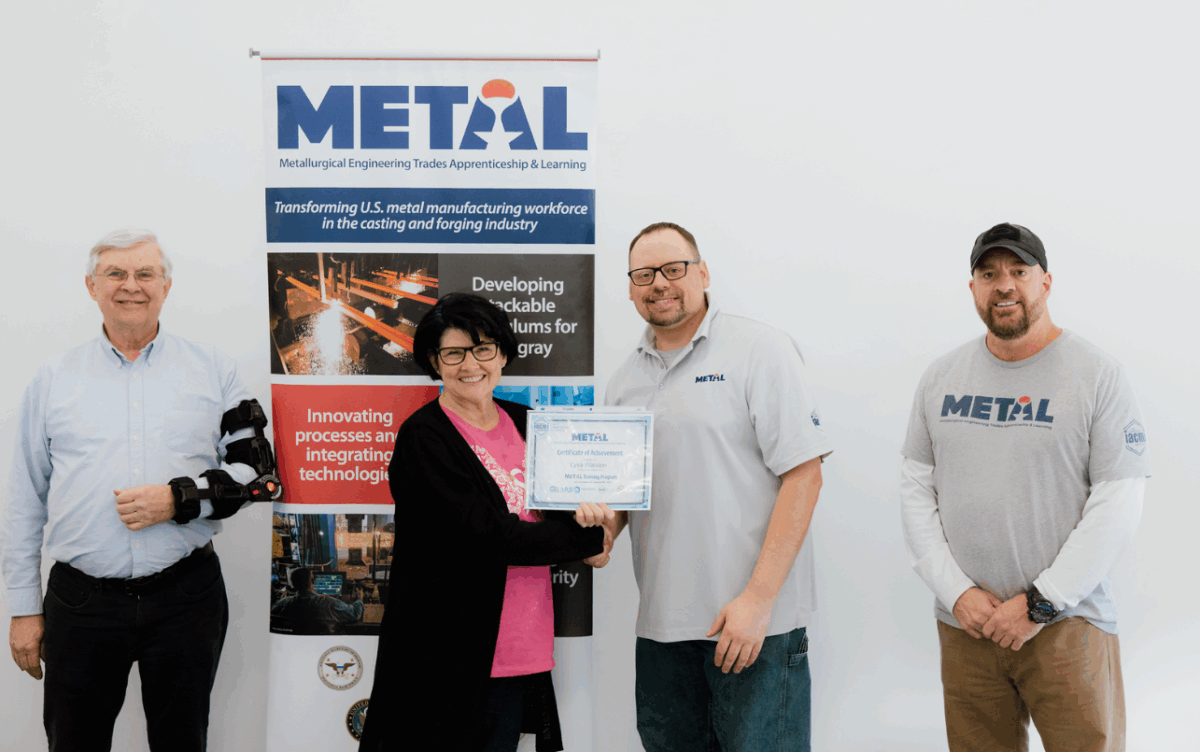
Penn State Industrial and Manufacturing Engineering Professor Robert Voigt, Melissa Walston, Professor Paul Lynch and Ralph Workman celebrate Walston’s graduation from Penn State’s METAL bootcamp.
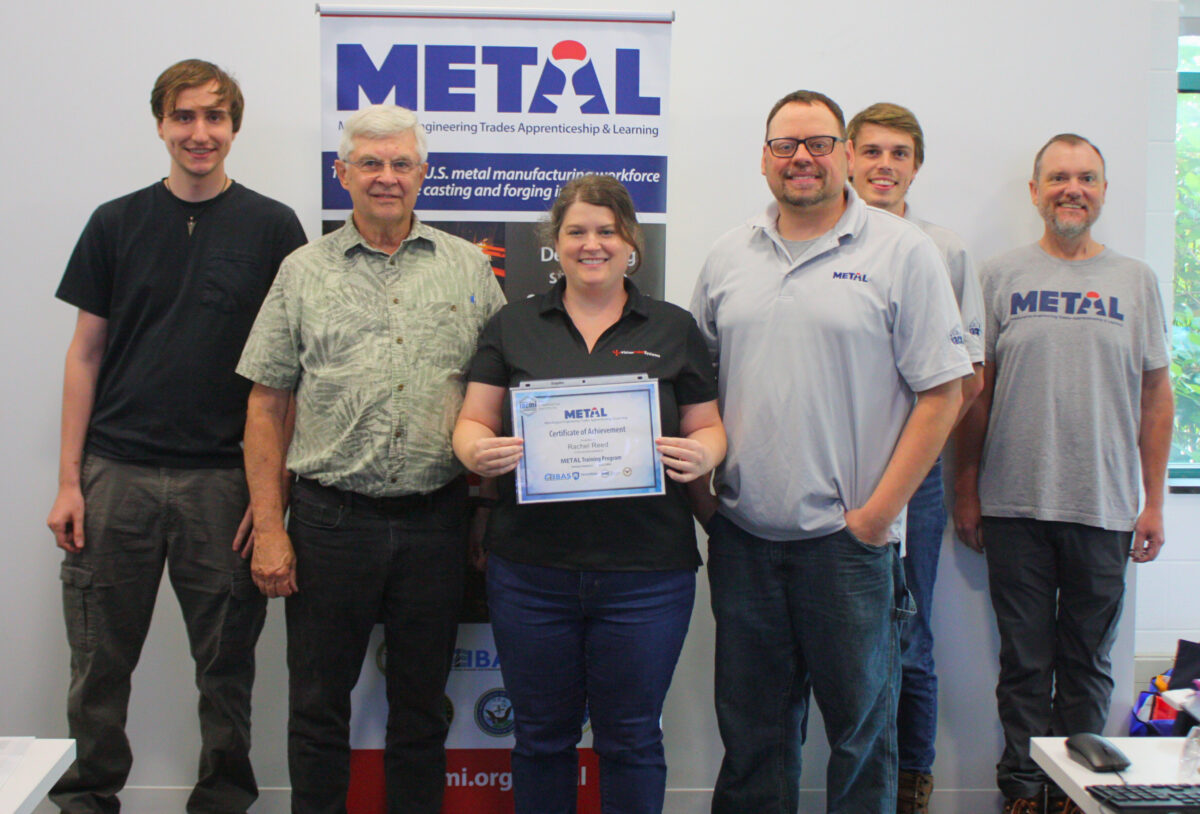
Rachel Reed graduates from METAL’s week-long, hands-on bootcamp experience with students and fellow industry professionals who expanded their skills in metallurgy.