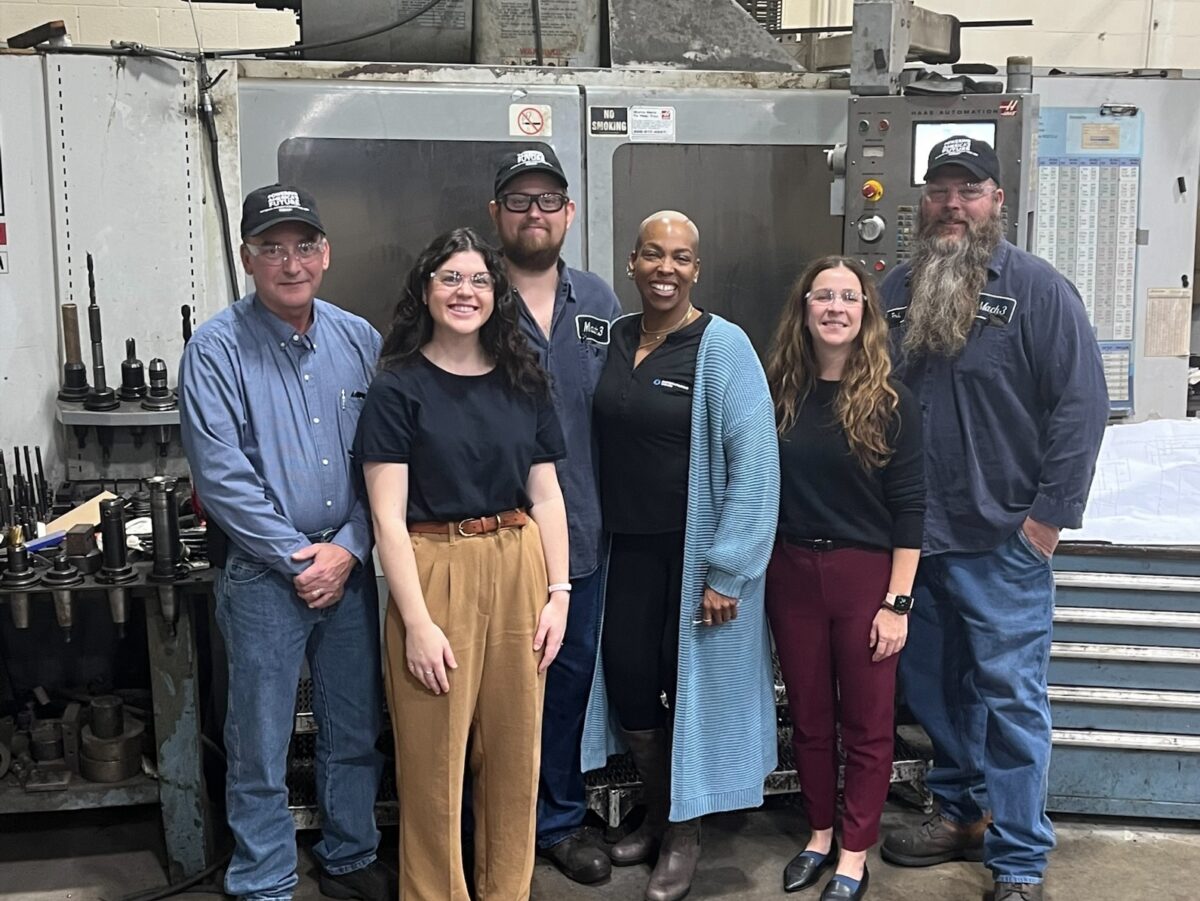
Anderson County Students Experience Forging Firsthand at UT Knoxville

Original source: WBIR

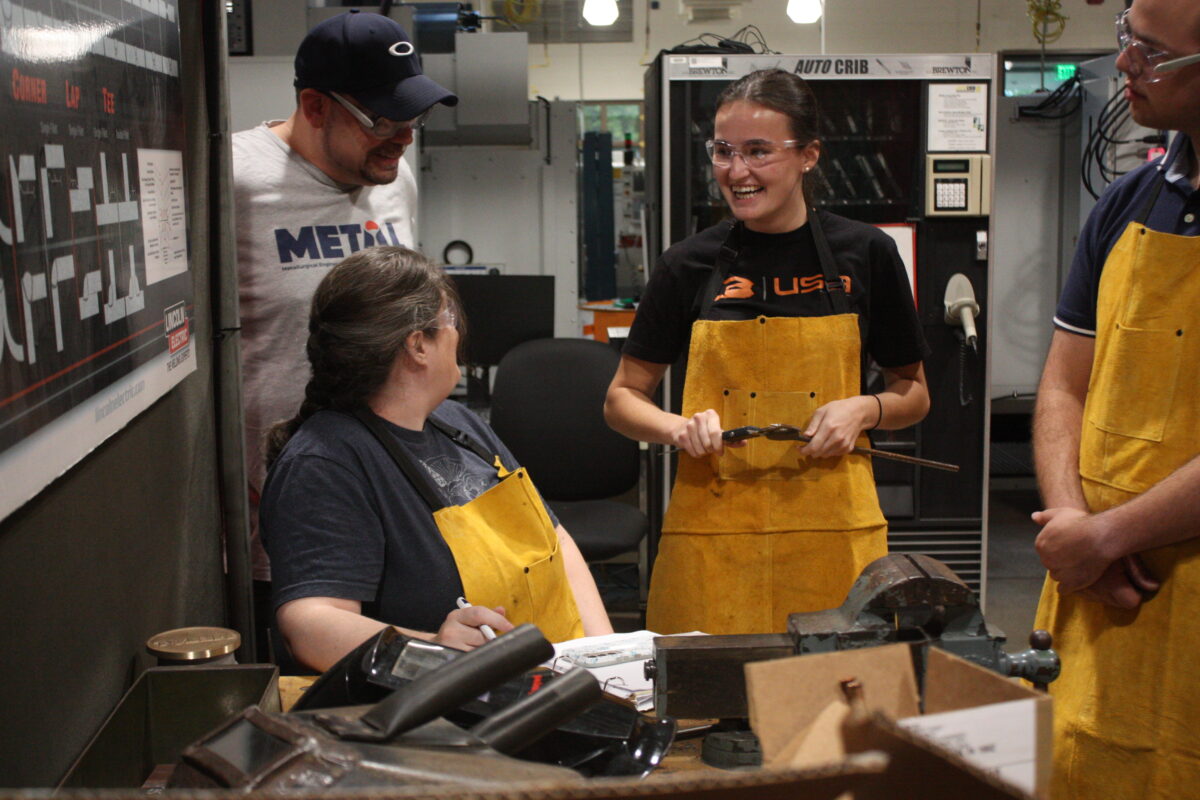
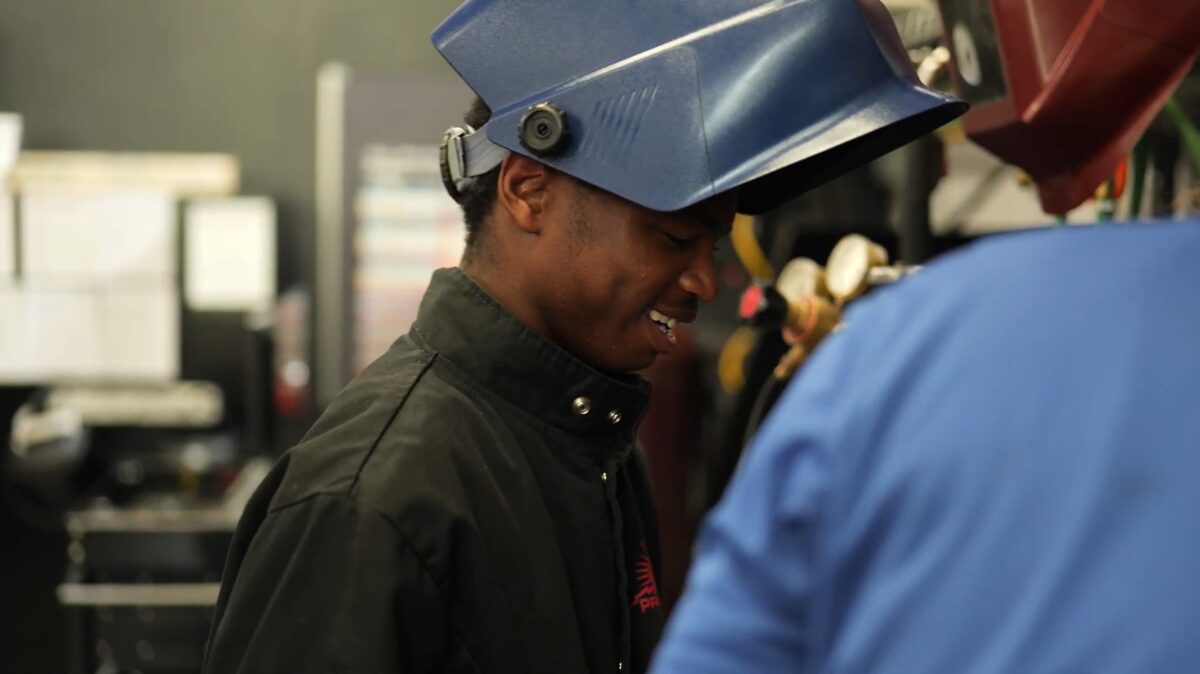
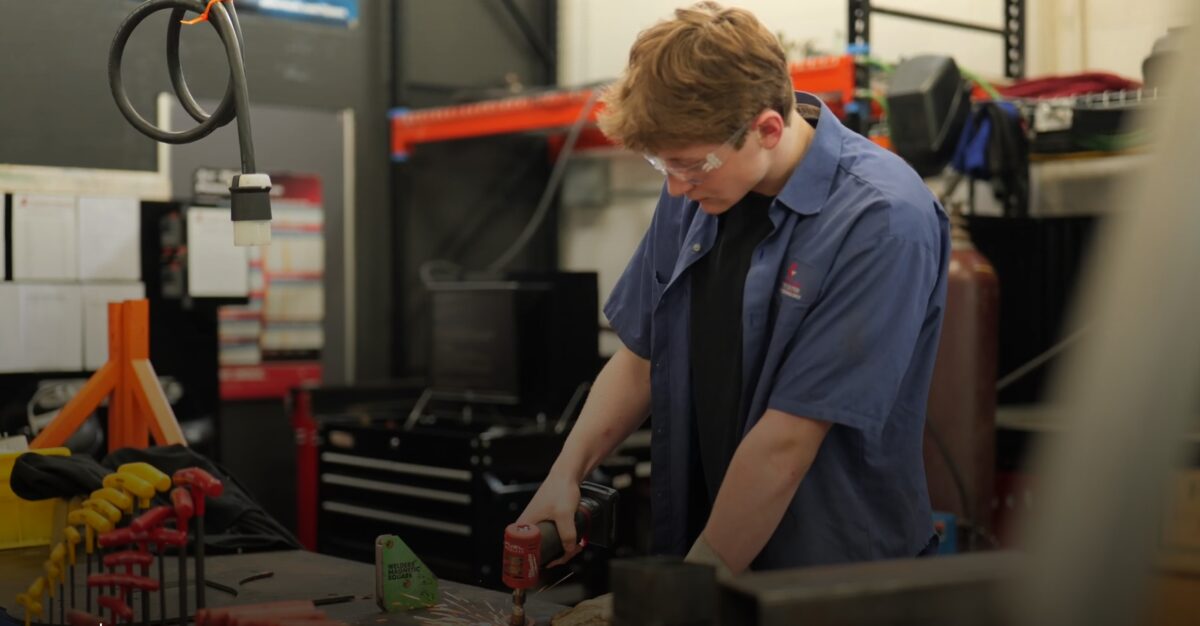
Students from Anderson County, Tennessee, recently visited our partners at the University of Tennessee, Knoxville (UTK) for an immersive, hands-on forging workshop. During the session, students explored the properties of metal through a series of interactive activities that connected classroom concepts with real-world applications in metallurgy and materials science.

Their first activity was clay forging, which introduced them to the behavior of metal under heat by using modeling clay to simulate how metal behaves during the forging process. Students practiced drawing out and upsetting the clay, then pressed images into their finished pieces before setting them to cure.

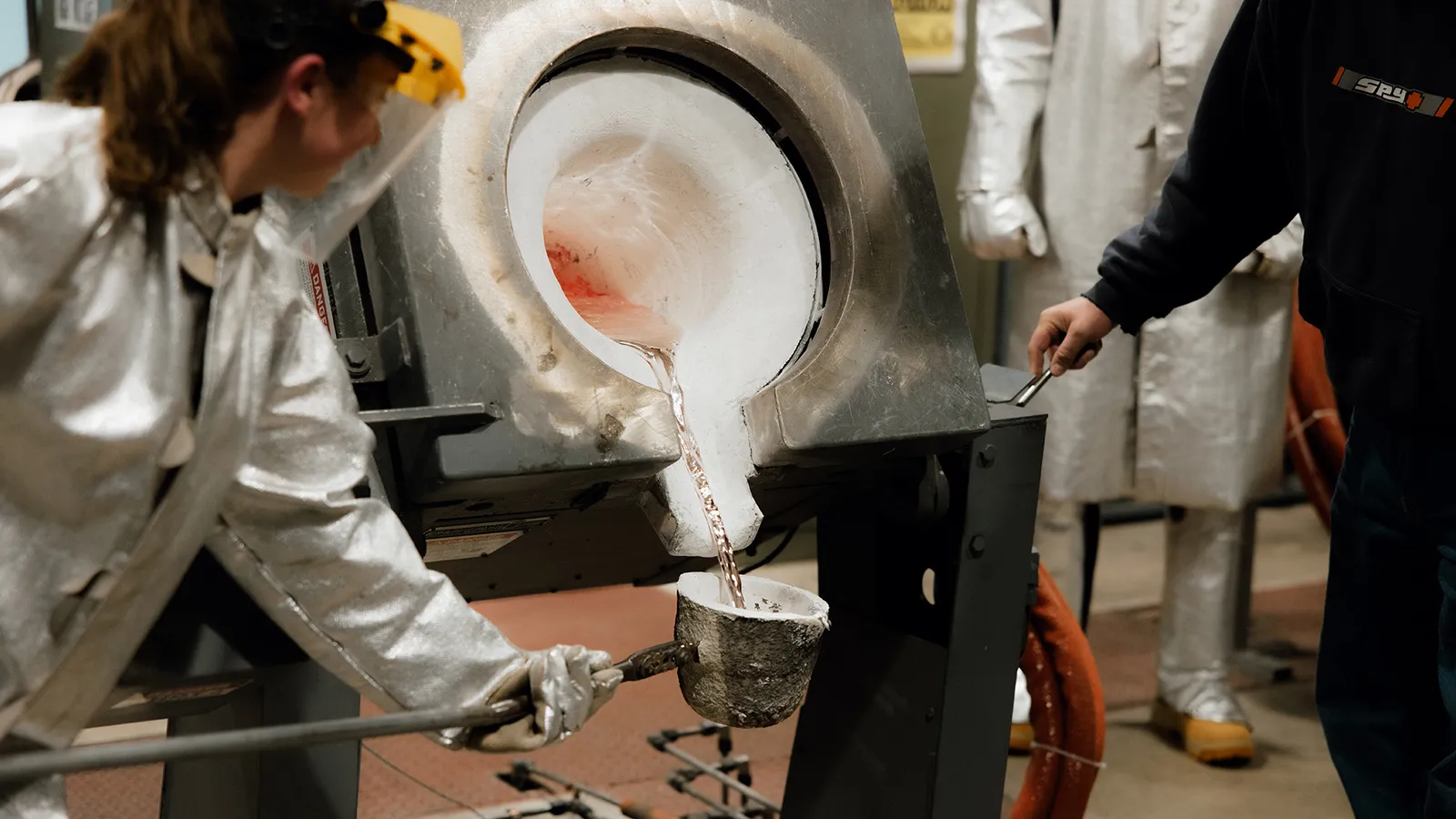
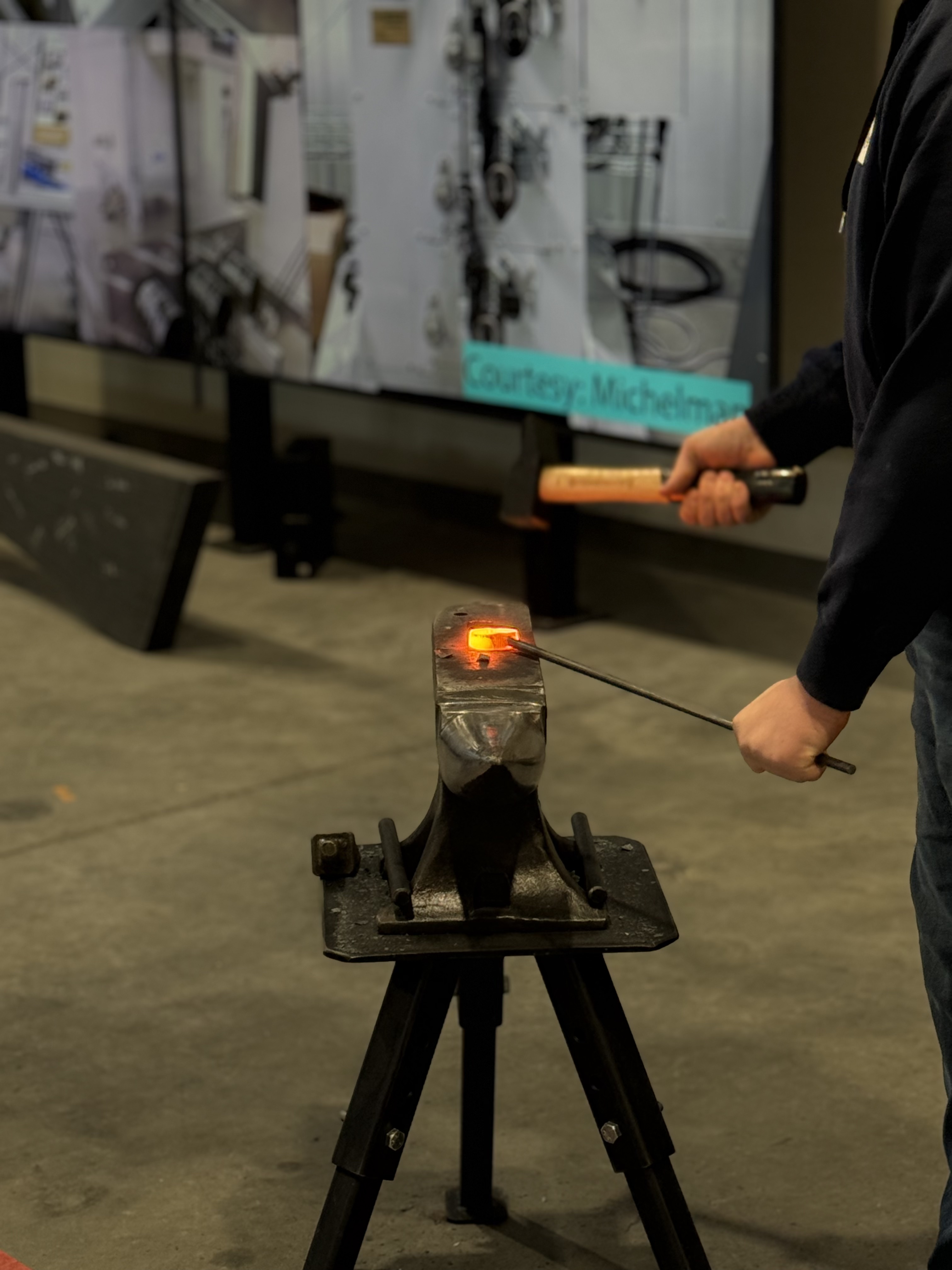
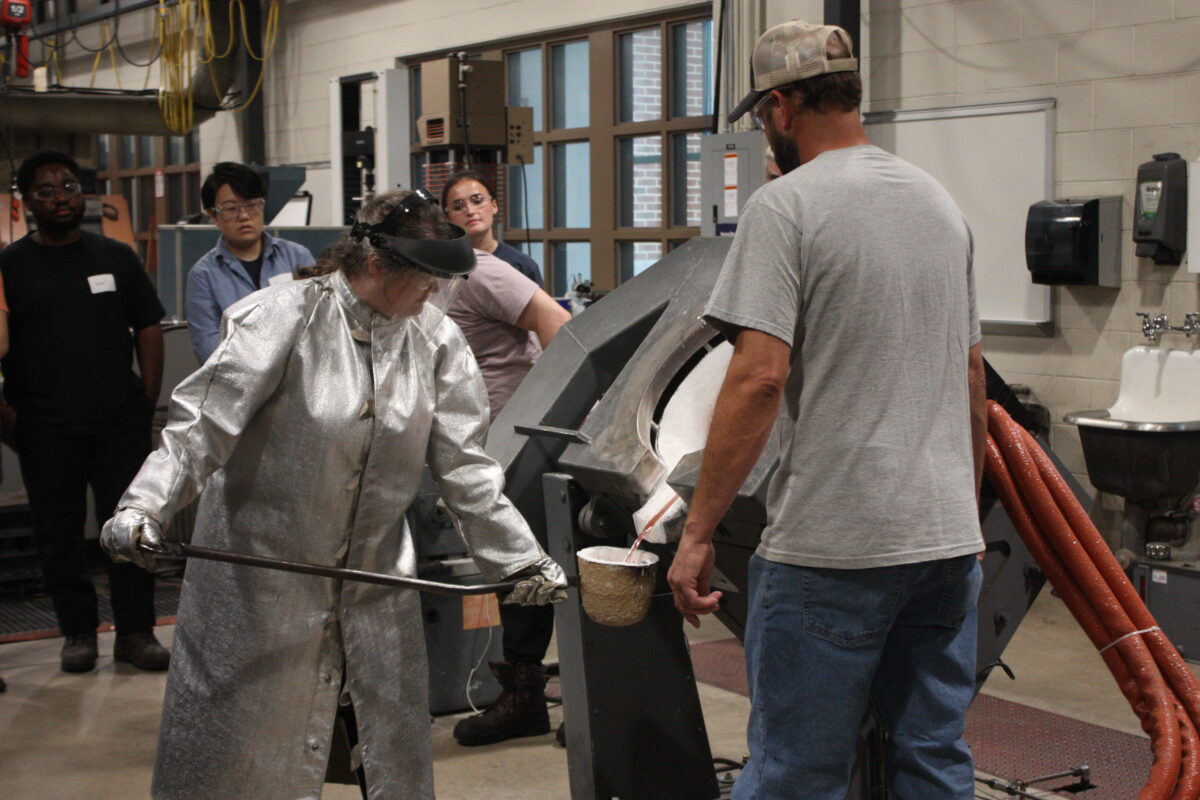
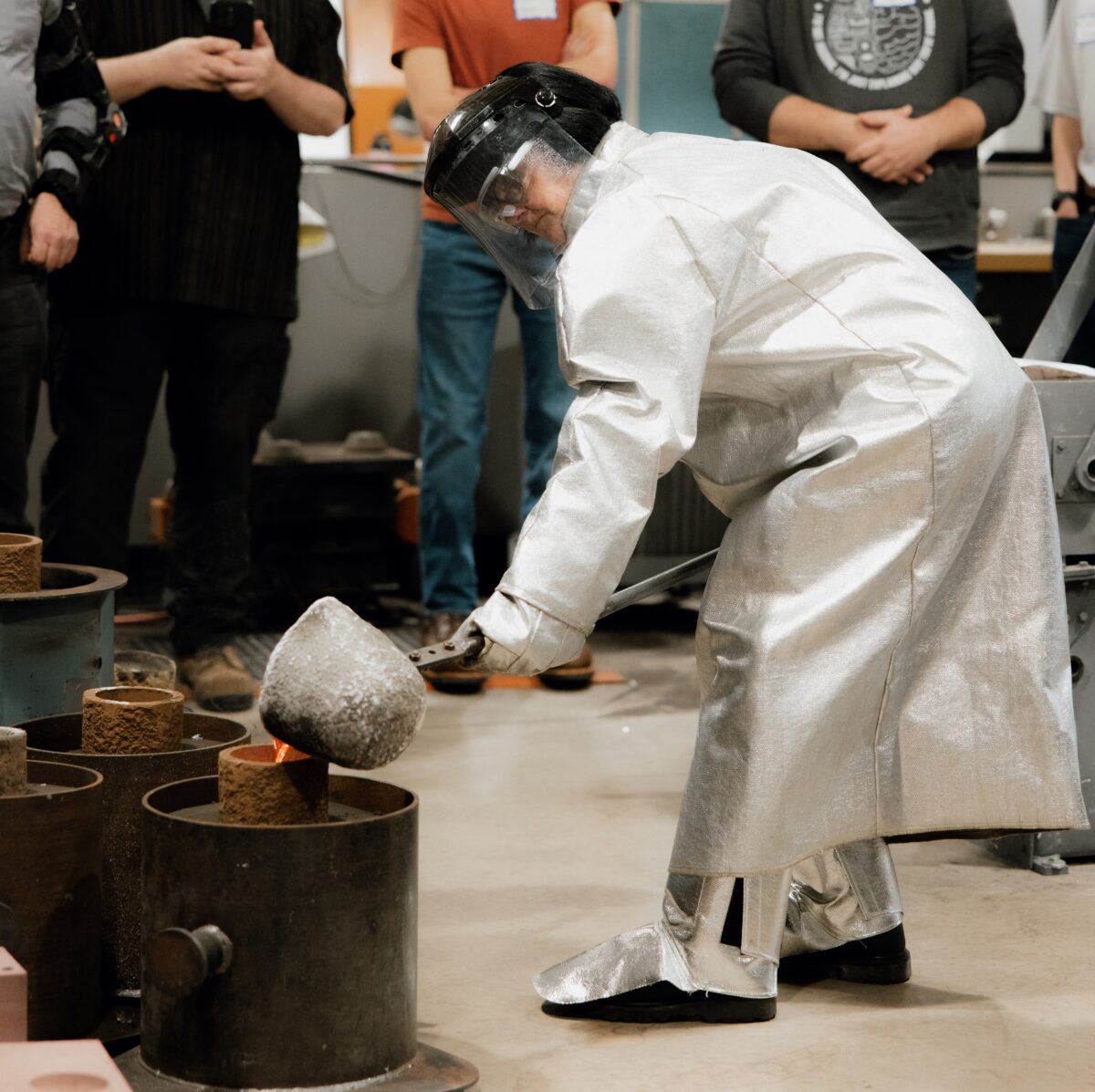
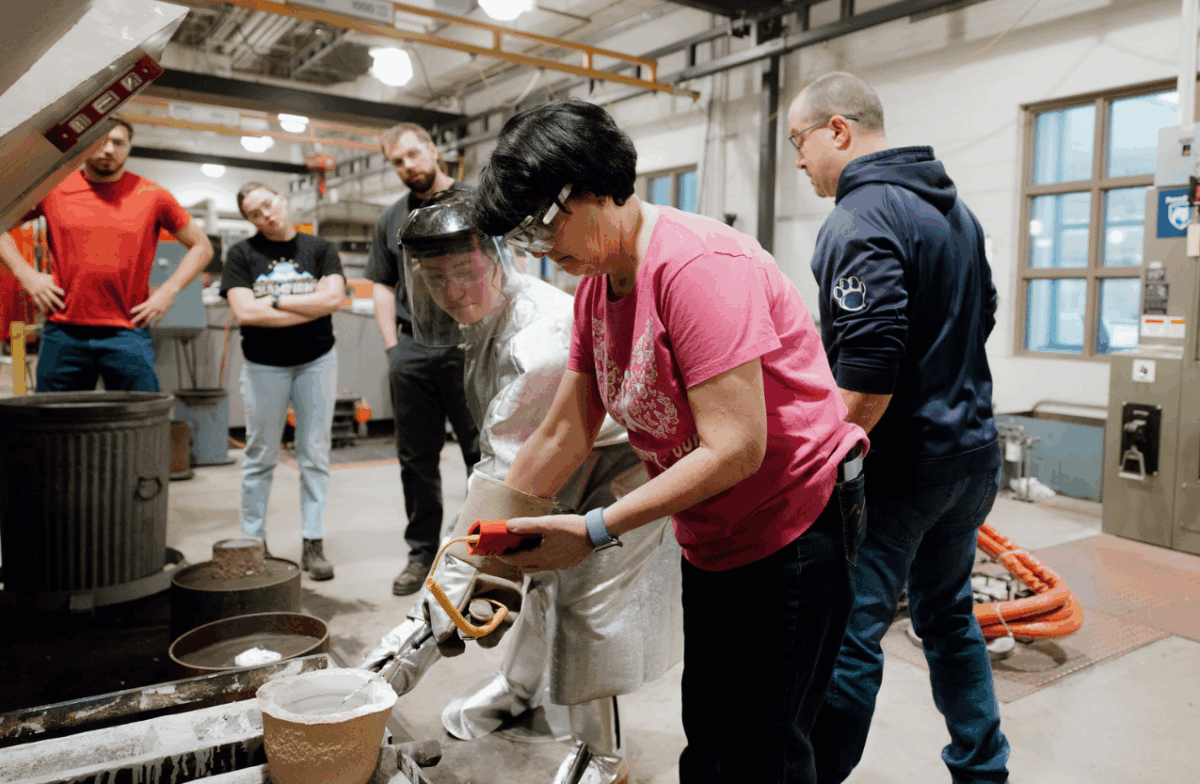
Next came sand casting, where students used their 3D-printed designs from school to create molds and pour molten tin, transforming their digital models into tangible cast shapes. Meanwhile, small groups took turns participating in induction forging, heating metal “lollipops” until they were red hot, then hammering their initials into them. 

Watch the full coverage here

Pouring Metal and Powering National Defense: DoD Contractors Join METAL Bootcamp

Melissa Walston and Rachel Reed have spent their careers traveling the world, learning languages and guiding U.S. diplomats across foreign nations and cultures. But when it came to navigating a foundry for the first time, they felt lost. 

In their new roles as Department of Defense contractors with Vision Point Systems, Walston and Reed support metal manufacturing projects for the Navy’s Carderock Naval Surface Warfare Center. Carderock is the Navy’s premier center for engineering, modeling and testing ships and ship systems. Its mission spans ship design, naval architecture and the strength of the structures that keep sailors safe at sea. At its core, both Carderock’s success and the future of U.S. defense rely on one critical capability: consistent, high-quality metal production.

“Metal is in everything,” said Reed, who’s a program analyst. “The Naval Service Warfare Center and other government agencies require a strong base of manufacturers who can provide the materials we need at the scale and to the specification we need—and that’s not easy.” 

Reed joined Vision Point Systems in February after 15 years managing international exchange programs and delegation visits. Her superpower? Connecting the right people and organizations, no matter where they’re from. Now Reed coordinates contracts between metal manufacturers and the Navy. But to lead this collaboration, she needed to understand the world of metallurgy.  

“When I first did an audit visit at a foundry, it was awesome, but it was also confusing,” said Reed. “The terminology was so unfamiliar to me, it was like a different language.”

Reed, who is fluent in Japanese, knew she had to approach her new job like she was preparing for a trip—immersing herself in casting, forging and manufacturing culture. Her colleague, Walston, recommended METAL’s week-long metallurgy bootcamp at Penn State University to Reed.

“I immediately started telling my coworkers, ‘you guys have to take this course.’ It will help so much because none of us came from this world,” Walston said, referring to manufacturing.  

Walston, who’s a program coordinator at Vision Point Systems, has led American ambassadors around the world, tracked missions in the U.S. Air Force, and served as an executive assistant at the White House. Her career, nothing short of a Disney World ride (she worked there, too), is now focused on reigniting the nation’s defense manufacturing capabilities.  

“I’ve spent most of my life, in one way or another, supporting my country,” Walston said. “It means a lot to me to be doing something that is directly helping our military. I know what it feels like to be one of them, waiting for a part to be fixed or made.”

Off to Bootcamp

Walston decided to try Penn State’s METAL bootcamp after her Vision Point Systems orientation, when she realized she had no idea what a Charpy was. 

“I sat in this meeting and almost every briefer brought up the term ‘Charpy.’ I kept laughing to myself saying, ‘I know they’re not talking about the pen in my purse,’” she said—they weren’t. In metalcasting, a Charpy, pronounced like “Sharpie,” is a type of test used to measure the material’s toughness when struck with sudden impact. 

Walston quickly learned “Charpy” wasn’t the only term she’d need under her belt to support the defense industry’s metal pipeline. “I thought my head was going to explode. I didn’t understand most of what I heard,” she admitted. 

An introduction to metallurgy terminology and science—from casting and heat treatment to nonferrous metals and alloys—is exactly where METAL’s online training starts. Led by IACMI – The Composites Institute®, with funding from the Department of Defense’s IBAS Program, METAL is building a highly-skilled, adaptable manufacturing workforce with K-12 workshops and hands-on bootcamps for career seekers.

As more metal workers retire, the U.S. faces a critical knowledge gap. By 2033, manufacturers could need more than 2 million additional workers to keep up with supply chain and national security needs. 

“Right this moment, we cannot entirely build a U.S. naval ship in the United States,” Walston said. “You don’t know what the future’s going to hold, and we need to be self-sufficient. If there’s a surge, we need to be able to meet that demand.” 

Through partnerships with Penn State and universities across the country, METAL bootcamps are forging the next generation of industry leaders and innovators. Walston signed up without hesitation when she learned she could support her country by melting, casting and forging metal.

For one week, Walston and Reed suited up in safety glasses and fire-resistant gear to bring the science of metalcasting to life. From designing 3D molds to melting aluminum and bronze to machining a finished part, they experienced exactly what it takes to create a casting with their own hands.

Reed said the highlight of the bootcamp was firing up the foundry furnace for her first pour. After aluminum is heated to about 1,300 degrees Fahrenheit and liquifies, participants get the rare chance to carry the ladle and pour metal into the mold themselves.

“It was so cool. I’m never going to have that opportunity again,” Reed said. “It gave me a real respect for the work that our manufacturing partners do and how complicated it can be.” 

Walston said she might have had a different career if she’d known what was possible in metal manufacturing sooner. 

“If I had been introduced to the foundry when I was in high school, that would’ve been where I wanted to be—working with my hands, getting dirty, playing with fire, and getting paid for it,” Walston said. “I was on cloud nine.” 

Both Walston and Reed returned home with their own creations—a bronze medallion and an aluminum stein—and a deeper understanding of what the Navy needs from metal manufacturers.   

The Secret Weapon to Career Success

Since graduating from METAL’s bootcamp, the contractors feel like they’re finally speaking the same language as their metallurgy and manufacturing partners. Reed said she’s not only better equipped to have technical conversations, but she knows what a foundry needs to be successful. 

“Every place is a culture, and METAL was my cultural introduction to working with manufacturers,” Reed said. “There’s a lot of time dedicated to keep a foundry running. I learned more about how they operate and the costs associated with producing a part.”

She strongly encourages anyone who supports the metal industry—or is curious about a fulfilling, well-paid career—to experience the bootcamp for themselves. 

“We need more people interested in manufacturing,” Reed said. “Programs like METAL are essential because a lot of people are afraid of what they don’t understand. If you can get hands-on experience and realize the opportunities that exist, that is the real strength of this program.”

What Walston found in the foundry was confidence. Now she asks the right questions, keeps pace in meetings, and uses her growing expertise to help safeguard America’s metal production—and its future.

“I owe so much of my progress to this course,” she said.  

Ready to cast a stronger career and a stronger America? Register for our free online training then visit our events page to attend the next METAL bootcamp near you.

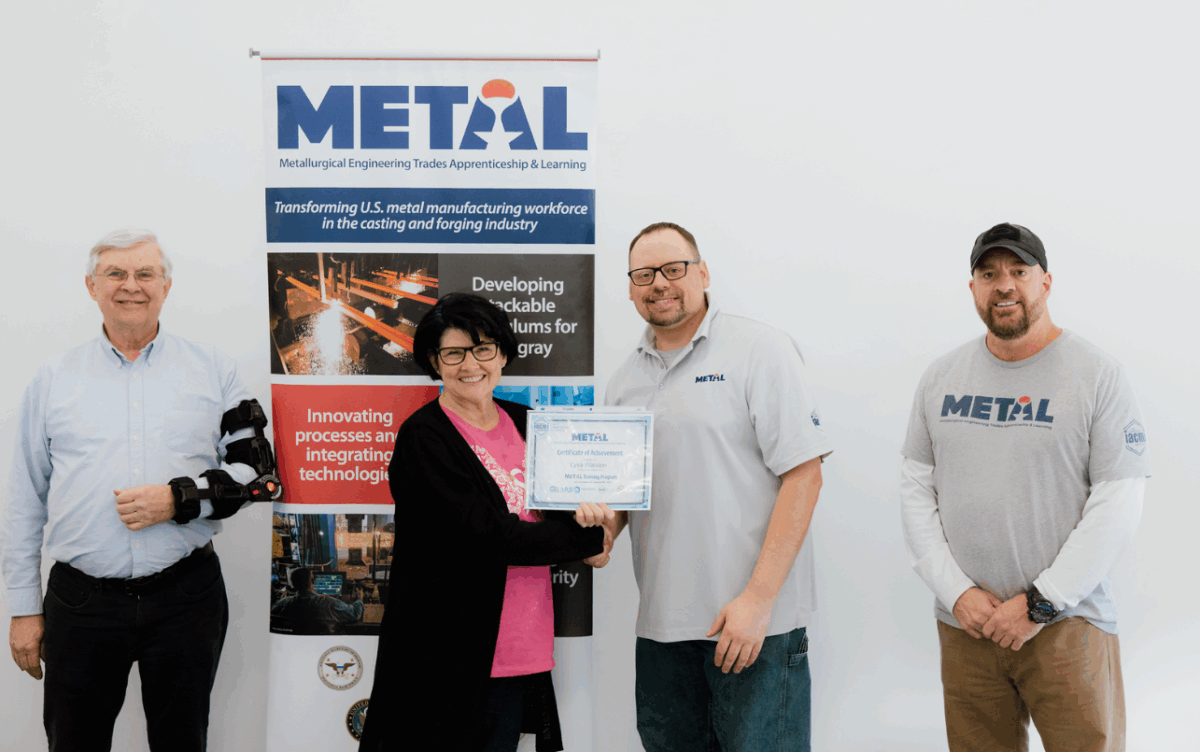
Penn State Industrial and Manufacturing Engineering Professor Robert Voigt, Melissa Walston, Professor Paul Lynch and Ralph Workman celebrate Walston’s graduation from Penn State’s METAL bootcamp.

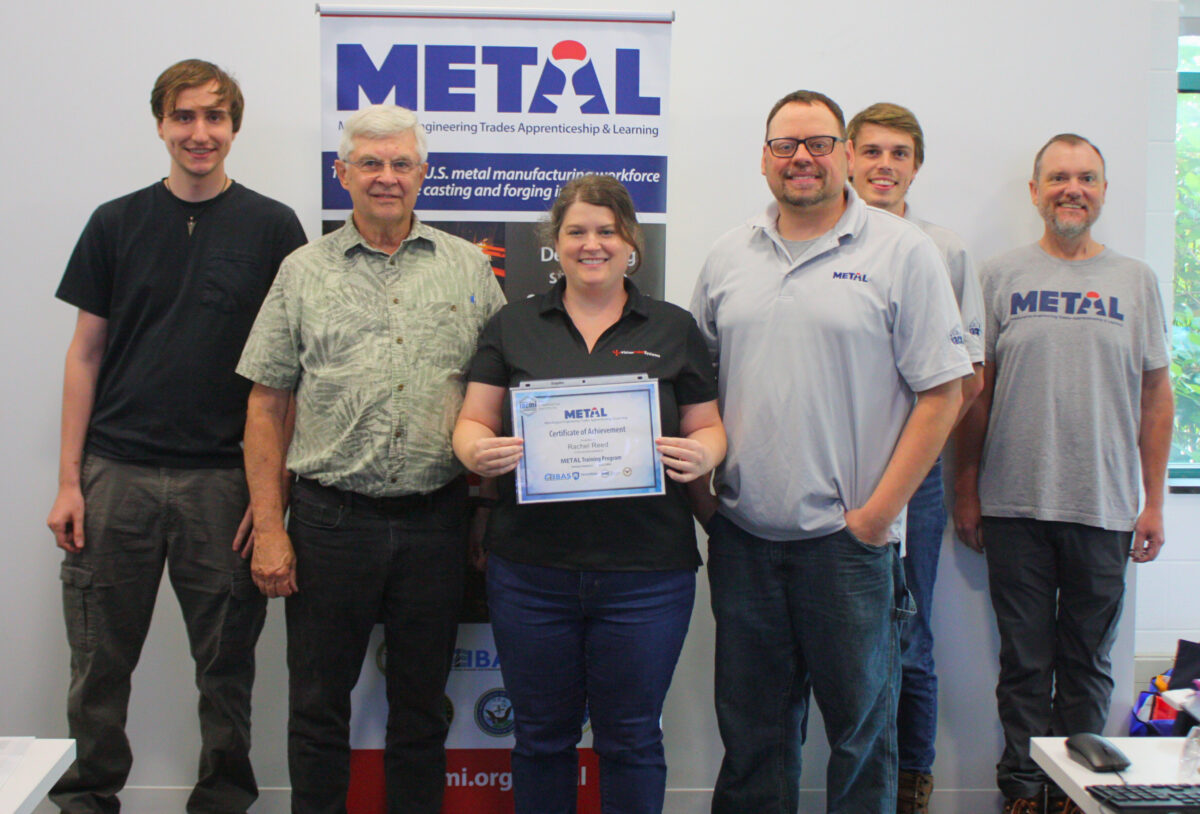
Rachel Reed graduates from METAL’s week-long, hands-on bootcamp experience with students and fellow industry professionals who expanded their skills in metallurgy.

Changing Lives: Manufacturing Works Fuels Ohio’s Metal Industry with Registered Apprenticeships

Manufacturing Works has been the right hand of Northeast Ohio’s manufacturing community for nearly 40 years. Through life-changing apprenticeships and strategic funding, the organization helps manufacturers grow their talent and produce high-quality parts faster. Now, at a pivotal time for our nation, Manufacturing Works is forging a skilled workforce for the metal industry.

Foundries today need one thing: people. More than 65% of manufacturers said attracting and retaining talent is their top business challenge, according to a 2024 National Association of Manufacturers survey. By 2033, almost 4 million manufacturing jobs will be available in the U.S., but half could go unfilled due to an unprecedented skills gap in the workforce. 

Beth Dawson, director of apprenticeship programs at Manufacturing Works, explained that the COVID-19 pandemic catalyzed the nation’s labor shortage. Before the end of 2020, almost 29 million Baby Boomers in the U.S. retired—200% more than in 2019.

“When you look at the skilled workforce in manufacturing, most of them are planning to retire,” Dawson said. “The need for new talent and knowledge transfer is critical.”

Casting Solutions to the Talent Crisis

When metal workers are in short supply, America’s strength is, too. Metalcasting, forging and rolling are vital for producing fighter jets, naval ships, weapons, and components in transportation, medical and agricultural industries.

In April, the White House issued an executive order to ensure national security and economic resilience related to critical minerals like metal and its manufactured products. 

“A strong national defense depends on a robust economy and price stability, a resilient manufacturing and defense industrial base, and secure domestic supply chains,” President Trump wrote.

Together with METAL and Jobs for the Future (JFF), group sponsors like Manufacturing Works are part of the solution. Manufacturers, who are often short on time and budget, can partner with group sponsors to manage apprenticeships and workforce development programs for them, JFF’s Director of Solutions Design and Delivery Mark Genua explained.    

“It’s an easy lift for small to mid-sized employers. They could have an apprentice the next day,” Genua said. “Instead of taking the time to develop a program, employers can do what they do best—train.”

METAL, led by IACMI – the Composites Institute and supported by the Department of Defense’s IBAS program, and JFF work with community colleges and nonprofit organizations across the country to administer apprenticeship programs for metal manufacturers. Through this partnership, casting, forging, and plate rolling companies can access up to $24,000 per year for in-person or online learning programs. The funding can cover training equipment and trainer costs, curriculum development, program design and implementation, and support services for apprentices. Manufacturing Works was awarded incentive funding from JFF through METAL earlier this year.

So far, JFF and Manufacturing Works have sponsored and supported seven forging apprentices. But this is only the beginning. Since Dawson joined Manufacturing Works in 2020, the organization’s apprenticeship programs have grown 400%—making it clear, manufacturers need help.

“I met a company with machines that can produce 30,000 parts a day,” Dawson said. “But because they don’t have the talent to run the machines, they’re only producing 14,000 parts. Think about what that does to their production.” 

Dawson works closely with her teammates Angilique Cole, workforce program and data coordinator, and Tiffany Rashada, director of strategic marketing, to connect manufacturers with apprentices—and transform metal workers’ lives.

Training Metal Workers—And Changing Lives

In Northeast Ohio, the road to a manufacturing career can feel out of reach. Many residents face hurdles that extend far beyond the foundry—from reading and transportation to the high cost of childcare. In East Cleveland, where household incomes are around $37,500—less than half the national average—families must overcome steep economic challenges.

Most apprenticeship programs take about four years to complete. But when metal workers graduate, they have the skills to support a fulfilling, in-demand career, with salaries starting at $57,500 a year, according to Manufacturing Works’ data.

That’s exactly what Manufacturing Works’ apprentice Alexandra Wagoner was looking for.

“I wanted to go into a career path that wouldn’t require a long academic education,” Wagoner said. “This is the only option for me that provides a stable career without needing a bunch of college.”


When Manufacturing Works visits high schools, Dawson said their goal is to help students and parents see the potential and career opportunities the metal industry offers.

“Their earning potential coming out of college is likely going to be lower than a journey-level person completing their apprenticeship, and with an apprenticeship, they won’t have college debt,” Dawson said. 

Cleveland is also one of the most diverse cities in Ohio. To help apprentices and metal workers find success, manufacturers need to build welcoming environments with a strong learning culture, Rashada said. 

“Most manufacturers care about employee engagement and retention,” Rashada explained. “But to even engage people that are non-traditional in manufacturing, your culture matters.”

With a deep passion for their communities, the Manufacturing Works team is dedicated to helping Ohio’s manufacturers overcome workforce challenges. Through mentorship, supervisor training, high school outreach and math- and literacy-focused pre-apprenticeships, Manufacturing Works is forging an industry where metal workers thrive.

Thanks to Cole, manufacturers can trust that their apprentices are on the track to success.

“I have to fuss at them sometimes, but it is all for the good,” she joked. “I just want them to let me know if they encounter and stumble across anything, professionally and personally. We can get over this hump together.”

Cole said the most rewarding part of her job is seeing people’s humble beginnings before finding a career in manufacturing. 

“When they get to the finish line, I’m probably more emotional than they are,” she said. “They don’t realize the difference they’ve made in their lives.”  

Ready to forge a stronger workforce? Apply for JFF’s apprenticeship incentive program here. 

Cast a new career: Register for our free online training, then visit our events page to attend the next METAL bootcamp near you.