Reshaping the Future: Machinist Robert Myers Casts a New Career with METAL and FEF

Robert Myers followed his passion for hands-on work and became a welder and machinist after high school. But after an accident caused him to put his career on hold, Myers returned to school and discovered metalcasting through the Foundry Educational Foundation (FEF)’s Georgia Southern University metalcasting program, turning a life-altering setback into a career-defining stepping stone.  
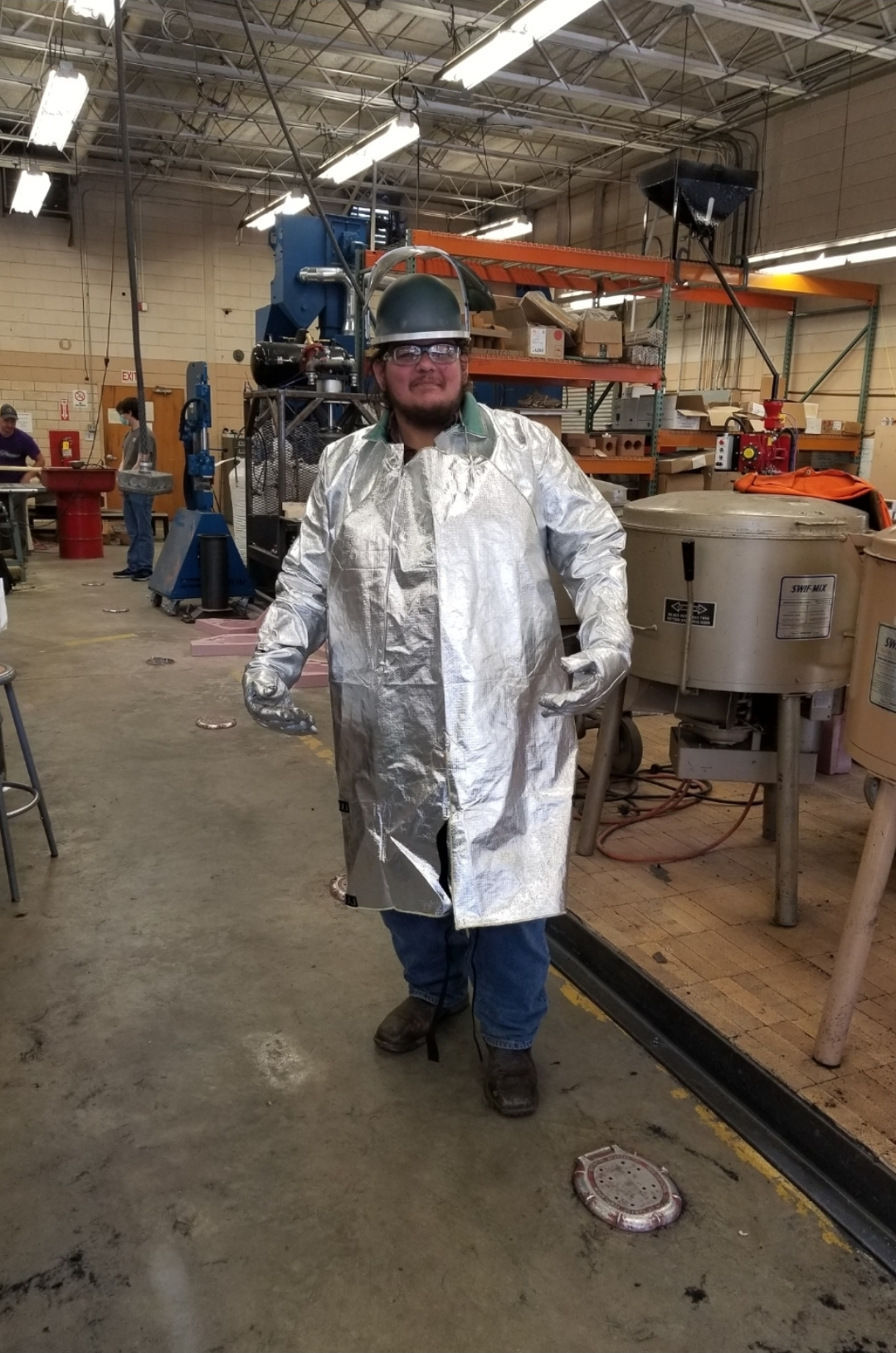
Myers was 23 when he decided to apply to Georgia Southern University in mechanical engineering. He’d injured his welding arm in a car accident and after a series of surgeries, Myers was ready for a fresh start. What he didn’t expect to find at GSU was a future in metalcasting. Today, Myers is a junior who’s had three FEF internships and a research assistantship through FEF’s METAL Internship Program. But he never meant to join GSU’s foundry program. 

“I was going to a meeting for our motorsport club. I walked into the metalcasting lab and was like, ‘hey, do you guys know where this meeting is?’ and they said ‘well, ours is about to start,’” Myers said. “They made me feel really welcome. The whole industry is like that.”

After his first American Foundry Society Student Chapter meeting, Myers found himself back at the foundry again and again. He soon became more curious about the casting process and caught the attention of FEF Key Professor Mingzhi Xu. 

“He always asked good questions,” said Xu, who was once an FEF student himself. “I was shocked he was a freshman—it was like finding a treasure.” 

A Curiosity for Casting — From Skillets to WWII Bombers

With support from Xu and FEF, Myers grabbed every opportunity to cast. One of his first projects was assisting the National Museum of the Mighty Eighth Air Force with the restoration of a WWII B-17 bomber. Myers cast an aluminum H-bracket for the plane’s machine gun turret, which won second place in the 2023 AFS Casting Competition and is still showcased in the museum today. In the AFS competition the following year, Myers led a GSU team that won $1,000.

Myers says it’s the constant creativity of metalcasting that inspires him. From melting scrap metal and analyzing its properties to designing 3D molds and casting custom skillets for industry leaders that visit GSU’s foundry, there isn’t a cast he won’t try.  

“I love starting with absolutely nothing, the bare bones, and turning the metal into something else,” Myers said. “It’s amazing to see that and to know how things are made.”

By his sophomore year, Myers was eager to apply his industry experience and growing talent to commercial foundries through FEF internships. He said his internships have resembled an assembly line as he’s learned about the metalcasting process from start to finish.

During his first internship at the Refractory and Insulation Supply in Iowa, Myers molded the heat-resistant ceramics that line furnaces, ladles and crucibles so metallurgists can safely contain molten metal. From there, he was all-gloves-in at Lodge Cast Iron in Tennessee. Myers poured the perfect liquid mix of iron and steel from a 20-ton furnace, cleaned red-hot slag, monitored the extreme temperatures of equipment, and even developed a software to optimize the production of the company’s historic dutch ovens.  

“We were doing trials, modifying the chemistry, so the metal would flow better,” he explained. Even as an intern, Myers was encouraged to try everything the foundry had to offer. “I was literally doing the entire process with the team.” 

Opening New Doors to Manufacturing

His latest internship at Norican Group in Georgia through the FEF METAL Internship Program taught Myers about the final step in metal production: cleaning, refining and delivering a finished product. The global technology leader builds equipment like cookware, manhole covers and critical parts for transportation infrastructures. Myers is enjoying another hands-on opportunity—and learning new ways to solve industry problems.    

“The number one thing I’ve enjoyed about my internships is the variety. The scope of the industry is ginormous, and there are so many different paths,” he said. 

Myers doesn’t think he’d have any metalcasting experience or continued pursuing his degree without Professor Xu, METAL and FEF. As he looks toward his future, Myers knows he wants to help push the limits of manufacturing. Whether that’s through robotics or quality control and optimization, the opportunities are endless.

“This industry is one of the blocks the world is built on. We need people who are willing to keep it alive,” he said. “I’m so glad I found metalcasting when I did.” 

Since partnering to address the critical workforce shortage in the casting and forging industry, METAL and FEF have provided hands-on internships to 38 interns from more than 20 colleges and universities across the U.S. Interns have a rare opportunity to learn from professional metallurgists who are working to solve real-world problems that move the manufacturing industry forward. 

To learn more about FEF’s METAL internship opportunities, email nbacik@fefinc.org. 

To learn more about METAL, including apprenticeships and online training, visit metalforamerica.org or fill out our contact form.
Casting the Future: Ianto Woolridge’s Journey into Metalcasting with FEF

Metallurgical Engineering Trades Apprenticeship & Learning (METAL) partners with the Foundry Educational Foundation (FEF) to help build the next generation of talent in U.S. manufacturing. 

Established in 1947, FEF is the liaison between students, educators and industry leaders, ensuring young engineering talent enters the metalcasting industry. Today, it continues that mission by supporting scholarships, engineering programs and internships that shape the next generation of professionals in the field.

As part of this partnership, FEF has placed 24 interns from 10 universities in its first program phase and secured multiple industry partners to develop 10 more internships. 

FEF Interns work on real-world projects, assist with student outreach and gain critical networking opportunities that help shape their careers.

Meet Ianto Woolridge

Through our collaboration with FEF, METAL supports students like Ianto Woolridge, a freshman at Virginia Tech majoring in Materials Science and Engineering.

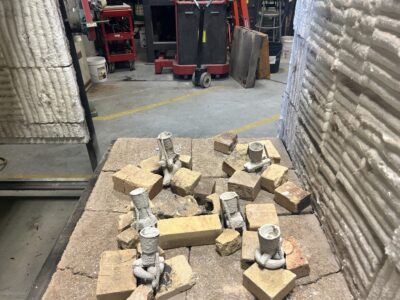
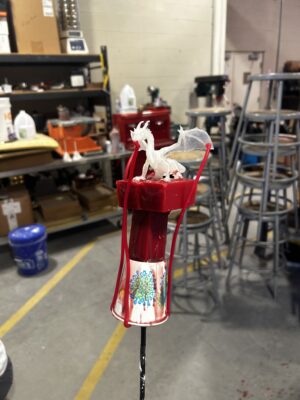
As part of FEF’s internship placement program, FEF placed Ianto at Virginia Tech as a foundry intern specializing in investment casting using 3D-printed expendable molds. His regular duties include setting up gating, creating molds around cast patterns and sintering molds under the direction of Virginia Tech foundry director Dr. Alan P. Druschitz.

Woolridge joined FEF in the Fall of 2024 and has since gained valuable insights and direction for his future career. Here’s what he said about how his FEF program experience has shaped his academic and professional goals.

Q: Tell us about your experience in metalcasting since joining the FEF program.

A: The FEF internship was my first real exposure to metalcasting and it’s been such a valuable experience. I joined the program in the fall of my freshman year. At that time, I had no idea what to expect. I knew I was interested in materials science, but I hadn’t explored the practical side of how those materials are used in manufacturing. Getting into the foundry for the first time was eye-opening. I saw firsthand how raw materials are transformed into usable products and that hands-on experience helped me understand the purpose behind what I’m learning in class. It was a huge shift from theory to practice and sparked a genuine interest in metalcasting.

Q: What essential skills have you learned from your time in the university foundry lab?

A: One of the biggest things I’ve developed is my problem-solving ability, especially under real-world conditions. In the foundry, things don’t always go according to plan. Whether it’s issues with temperature control, molds, or unexpected results in the casting process, I learned how to stay calm and work through challenges methodically. I also developed better communication skills. I leaned heavily on seniors in the foundry who had more experience and they were incredibly supportive. Collaborating with them taught me to ask the right questions, learn from feedback and troubleshoot effectively. I know I’ll take these skills with me into any engineering or professional setting.

Q: How do you see your metalcasting experiences influencing your career path?

A: When I first came to Virginia Tech, my plan was straightforward: get a degree, go to graduate school, earn a PhD and work in a research lab. But the FEF experience shifted my perspective. Working in the foundry made me realize that I prefer hands-on, outdoor work where I can physically interact with materials and processes. I enjoy the energy of the foundry, the teamwork and the tangible outcomes. While I still value academic research, I now see myself pursuing a more applied role in the industry—something that blends engineering with real-time problem-solving and production.


Examples of Ianto Woolridge’s work as part of the Virgina Tech FEF Program

 Q: In what ways has FEF supported your academic and industry experiences?

A: FEF has made a significant impact on both my education and my confidence as a student. Because I had early exposure to real casting and manufacturing techniques, I’ve felt more prepared and less intimidated by my coursework – especially in classes like manufacturing, where we’re expected to understand casting principles. That’s been a game changer for me. It’s one thing to study manufacturing, but it’s another to see and do it for yourself. FEF allowed me to apply what I’m learning and to connect the dots between theory and practice.

Q: What message would you share with supporters of FEF who help make these opportunities possible?

A: I can’t thank FEF and its supporters enough. Without the scholarship and the opportunity to get involved early in the foundry, I probably wouldn’t have discovered how much I enjoy this type of work. It’s not just about the financial support – though that certainly helps – it’s about being given a space to learn and explore. Because of this program, I’ve explored options for a future career after graduation. I hope donors and industry partners continue to invest in FEF because their impact on students like me is life-changing.

Q: What would you say to other students or the general public who may not be aware of opportunities in metalcasting or manufacturing?

A: There’s a gap in awareness. Many students go into engineering just thinking about high-paying jobs, but they often overlook careers in metallurgy or manufacturing. These fields are essential to the U.S. economy but don’t get the visibility they deserve. Programs like FEF help change that by exposing students to what these careers look like. They show us that hands-on, high-technology work in these industries can be just as impactful and rewarding as more traditional engineering paths.

Learn more about FEF’s programs and its mission here: https://www.fefinc.org/