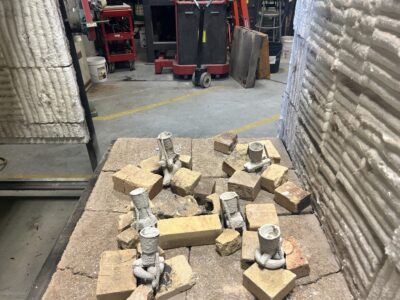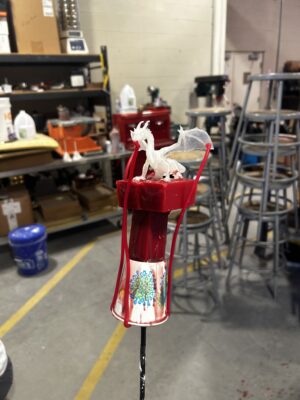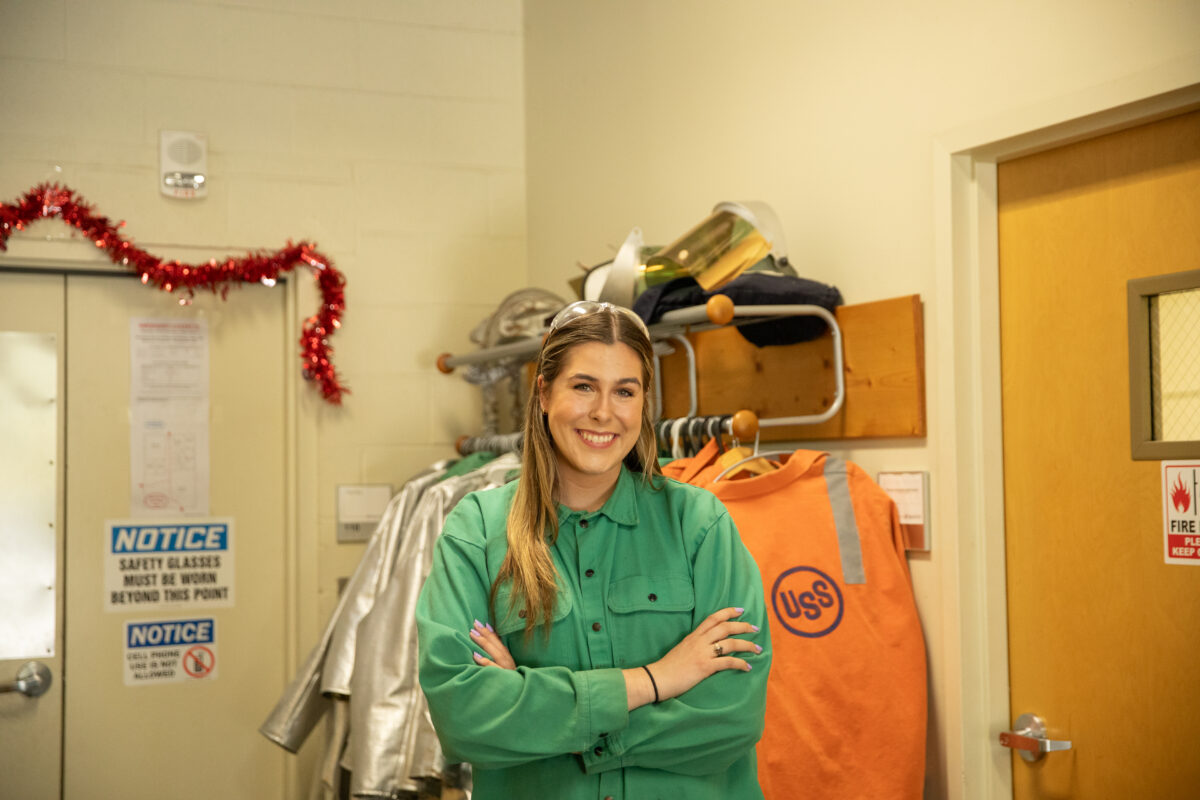
After starting college during the COVID-19 pandemic, Victoria Rambo began to doubt her future as an engineer. But everything changed when she discovered Virginia Tech’s foundry and resources through the Foundry Educational Foundation (FEF) and METAL. The partnership, funded by the Industrial Base Analysis and Sustainment office within the Department of Defense, accelerates the development of a skilled workforce through hands-on training and internship opportunities. Rambo quickly molded her doubt into a promising future in metal.
One year after graduating, Rambo, 23, is an associate metallurgist at Carpenter Technology Corporation who focuses on alloy research and development. The enthusiasm she stoked in Virginia Tech’s foundry has led her to creating replica missile fins for the National Museum of the Marine Corps, presenting at the American Foundry Society (AFS) national conference and being featured in the book Women in Steel Volume II.
If you told Rambo about her current job as a freshman, she wouldn’t have believed this career path was possible.
“When I started college during COVID, I was thrown into online classes. I was struggling to make connections with professors and with other students,” she explained. “I started with a low GPA and thought, is engineering really worth it?”
By her sophomore year, a friend recommended Rambo visit Virginia Tech’s foundry, one of 20 FEF-certified university foundries in the country. She met FEF Key Professor Alan Druschitz and was eager to learn more about what the metal industry had to offer. Druschitz’s mentorship was exactly what Rambo needed to spark a sense of purpose—and her comeback to engineering.
“He was one of the first professors I connected with who cared about the student to teacher relationship,” she said. Soon, Rambo’s confidence lifted, her academic performance improved, and the foundry became her second home.
Igniting a Future in Metalcasting
Rambo’s first stint in engineering was in high school. Both of her parents are mechanical engineers with the Department of Defense, and she planned to follow in their footsteps. She went to a vocational high school where she took classes like drafting and began to explore robotics competitions and STEM programs. Her first internship was at Aberdeen Proving Ground with the Army Educational Outreach Program working on weather-detection sensors for drones.
What drew her toward a degree in material science and engineering was bringing concepts and designs to life off the paper. In the foundry, Rambo used fire and metal to do just that.
“I was basically living there by my senior year,” she joked, as she became enamored with learning the casting process. In her classes, she studied the basics—how to make molds, steps to pouring molten metal and when to use an induction or resistance furnace. Before long, she was ready to apply these skills to innovative research and mentoring other metallurgy students.
Through research assistantships funded by FEF and METAL, Rambo was able to support graduate students’ metalcasting projects and soon she was leading cutting-edge research of her own.
Together, Drushitz and Rambo launched first-time research in the properties of ductile iron, which is often used in pipes, automotive parts and agricultural equipment that can withstand fluctuating temperatures. Thanks to FEF’s funding, Rambo was able to experiment with the iron for more than a year, exploring how to make the production process less expensive with manganese and aluminum instead of nickel.
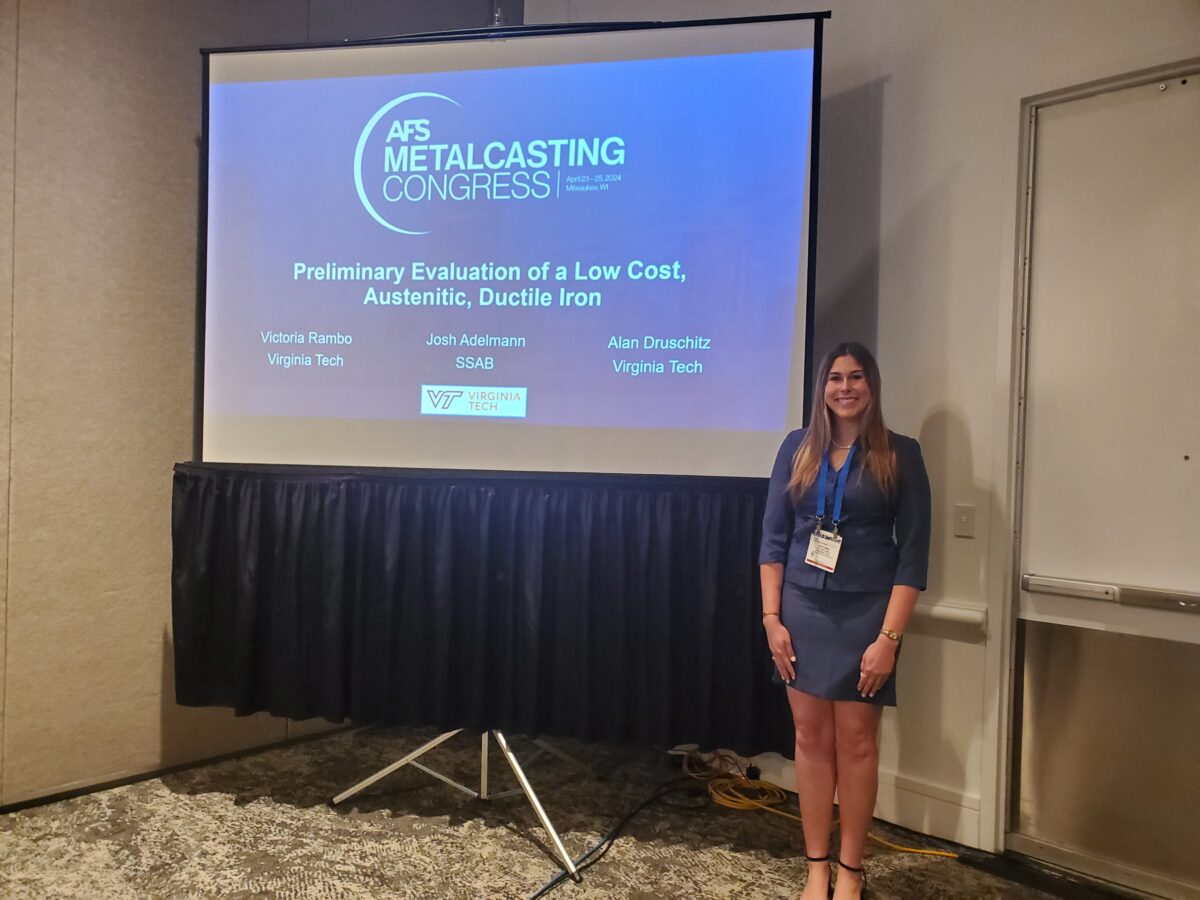
This research is ongoing at Virginia Tech’s foundry, but Rambo had the opportunity to present her preliminary findings at the American Foundry Society’s 2024 Metalcasting Congress. She said opportunities like this one provided her with the skills to be successful in her career.
“It helped me with my professional development and the technical knowledge when I was applying for the job that I have now,” Rambo said. “With the conferences, you’re also developing your soft skills, communicating and building your social network and meeting students from other universities. I think that is so important.”
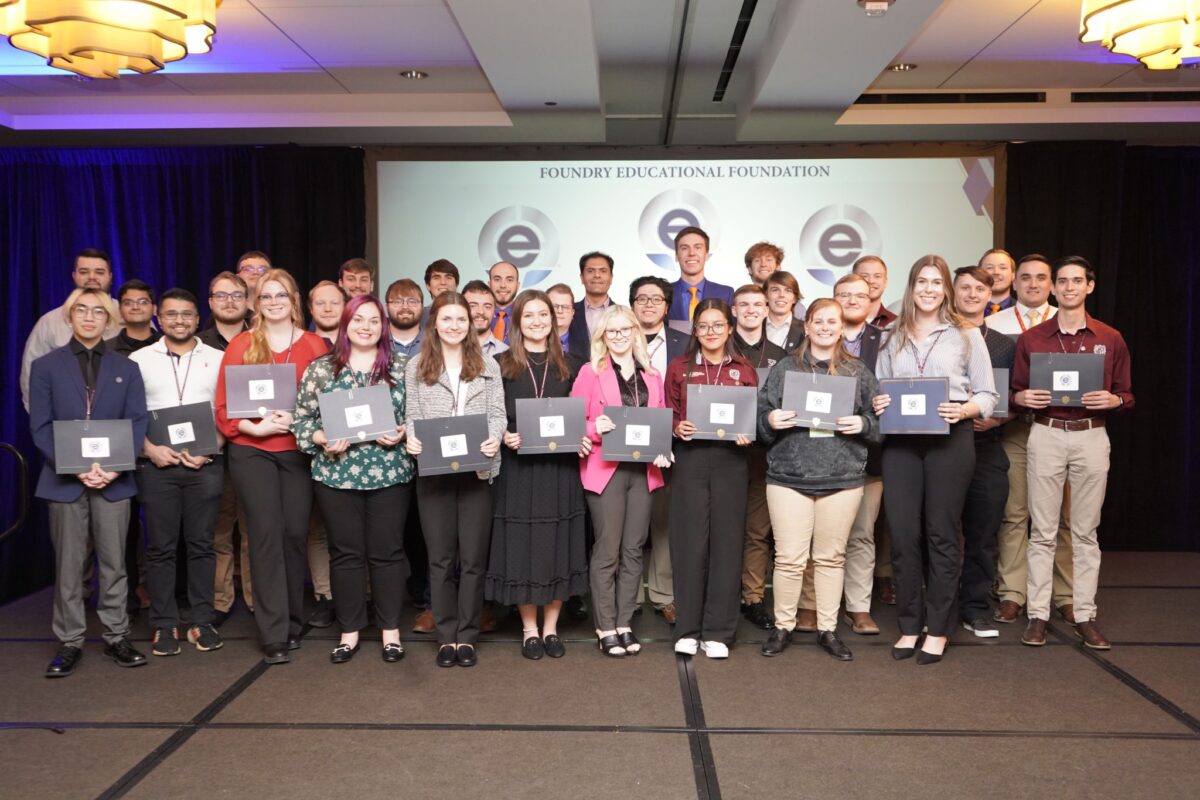
Drushitz continued to mentor Rambo, encouraging her to apply to internships with the Swedish steel company SSAB and for scholarships with FEF and the American Institute for Steel and Technology. In 2023, she received FEF’s Keith Dwight Millis Scholarship for students interested in the advancement of ductile iron.
Rambo said having a great mentor is even more important for women in the metal industry. Less than one-third of employees in manufacturing are women, according to a report from the Institute for Women’s Policy Research.
“Drushitz was always there to make sure my voice was heard,” she added. “I don’t think I would’ve been able to accomplish what I have without him.”
Molding an Industry Leader
By her senior year, Rambo served as Virginia Tech’s AFS President, taught three classes in the metalcasting program and had six job offers before she graduated. Most engineering students struggle to excel after a low GPA, Druschitz said, but Rambo’s involvement with the foundry gave her the spark she needed to thrive.
“Victoria was highly recruited by foundries and the steel industry,” Druschitz added. “She started to get involved with the Women in Steel conferences and those are great for support with people who will say, ‘you can do it.’”
In addition to her research experience, Rambo believes her expertise in the MAGMA casting design software helped her stand out to potential employers. She learned how to use the industry program through an FEF student training session and later earned a level 1 certification so she could teach MAGMA to other students. Not only was the software essential in student casting competitions, Rambo said it’s a core skill manufacturers are looking for.
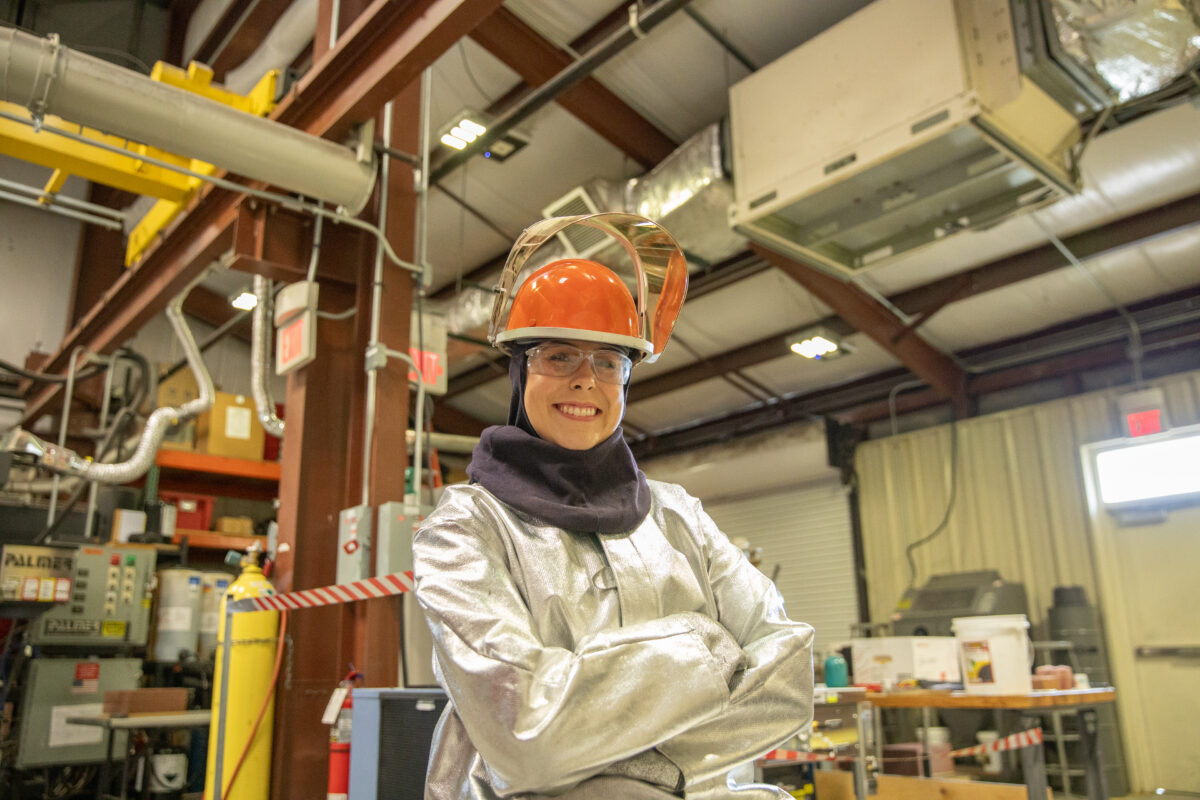
“I think that shows how much FEF is trying to make metallurgy and metalcasting innovative and part of the future,” she said. Rambo added that there’s often a misconception with students that metallurgy is an “old science,” but new technology is always pushing the industry forward.
Sometimes Rambo still can’t believe the metalcasting and leadership experience she gained while earning her undergraduate degree. She’s thankful to FEF and METAL for the financial opportunities and support that helped mold her career.
“FEF wants to support the future generation of students coming into the industry,” Rambo said. “If you fall in love with metalcasting, give it your all because the opportunities will be there. The connections you make with professors and students will be your biggest support along the way.”
To learn more about FEF’s METAL internship opportunities, email nbacik@fefinc.org.
To learn more about METAL, including apprenticeships and online training, visit metalforamerica.org or fill out our contact form.