Bring Your Best: Wisconsin Aluminum Foundry Pushes Metal Workers to Their Fullest Potential

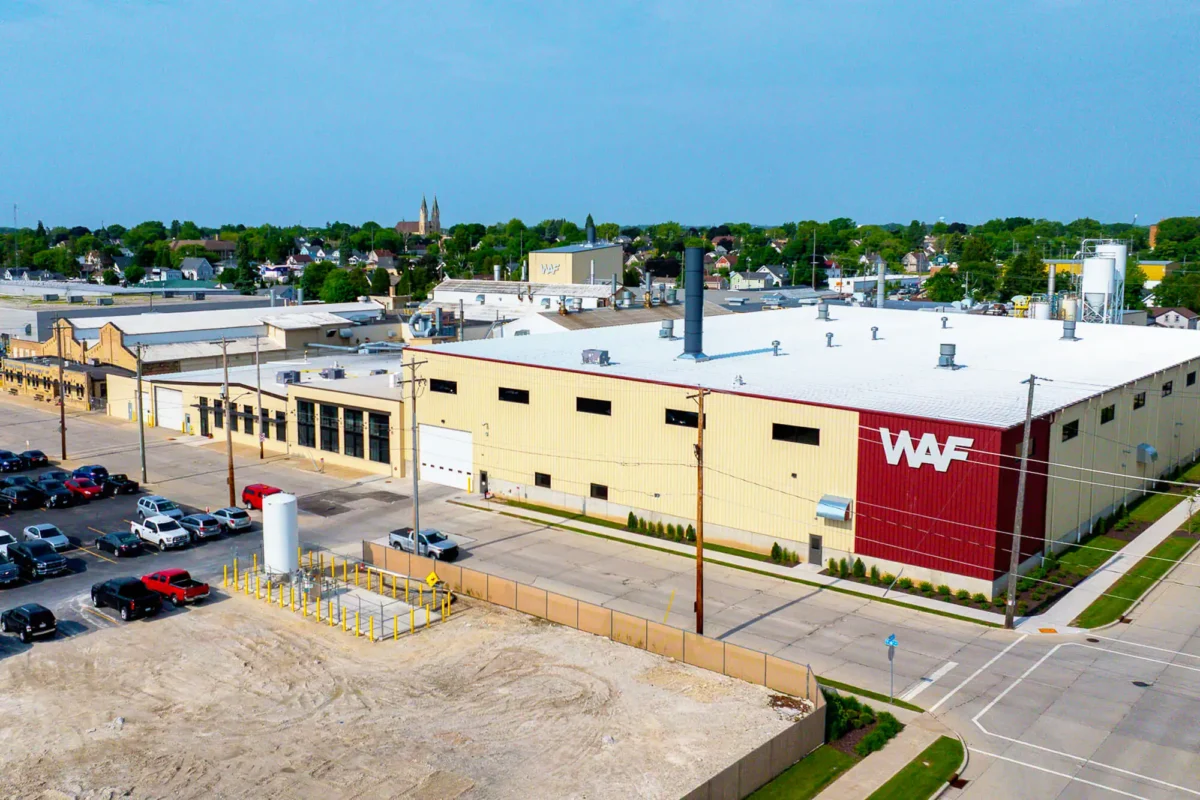
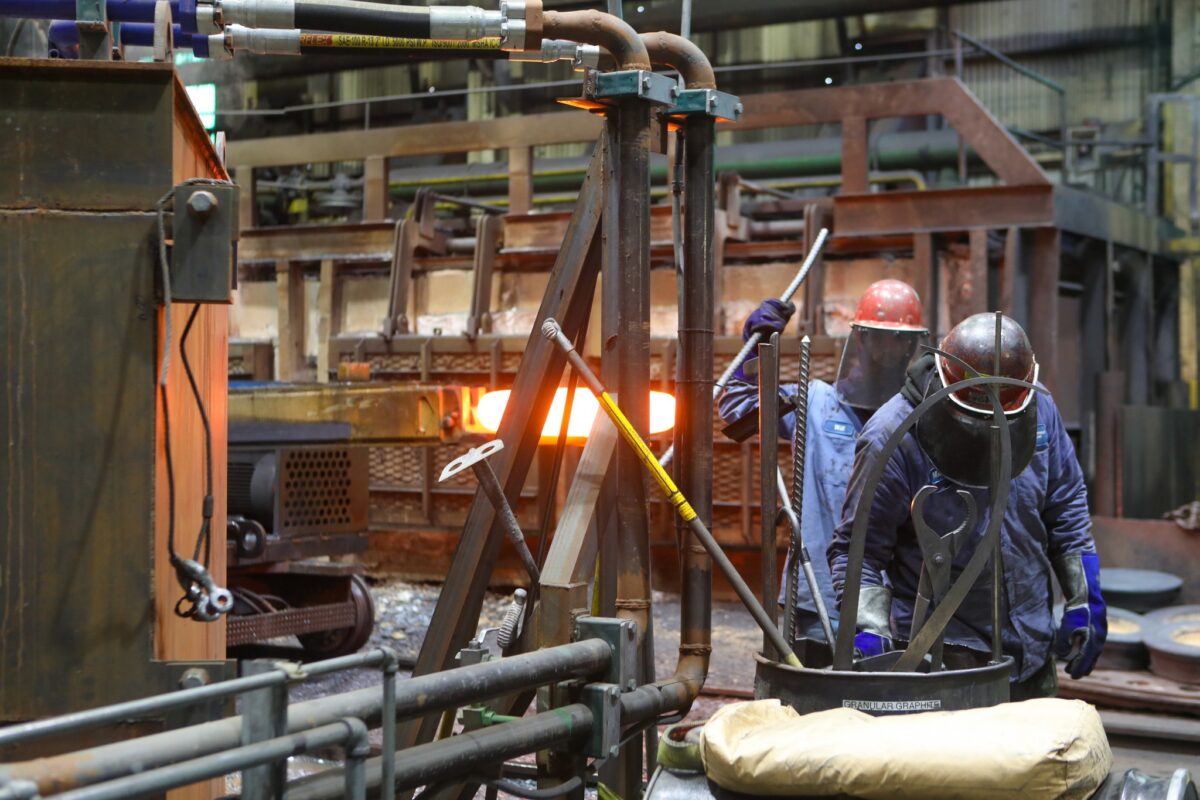
Wisconsin Aluminum Foundry has earned a reputation for forging aluminum, bronze and brass castings that meet rigorous, high-quality standards of excellence—and the same can be said for the foundry’s metal workers. 

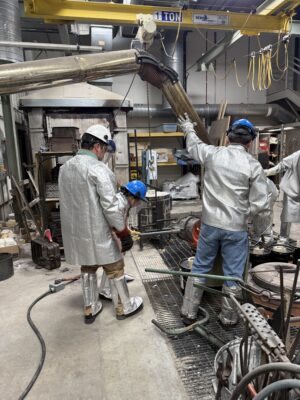
With almost 1,000 team members across the midwest, Wisconsin Aluminum Foundry (WAF) supports critical manufacturing needs in the U.S. defense, agriculture, medical and automotive industries. Every employee, from intern to executive, aligns goals and performance with the foundry’s core values: “bring your best, engage to succeed together, pursue potential and invest in our future.To WAF’s Vice President of Human Resources Michelle Szymik, investing in the future means equipping metal workers and apprentices with the skills to move the industry – and our nation – forward. 

“We have to educate people about how important metalcasting is to our infrastructure and to sustaining our military,” Szymik said. “If we can’t get more people to come in and get trained and interested, that’s at risk.”

But to make better training opportunities possible at WAF, Szymik needed more resources and funding.

“There isn’t a lot of structured training in the foundry. You have to rely on your tenured employees to train new people who may have never even walked into a manufacturing environment before,” she explained.  

It wasn’t until the AFS Leadership Summit 2024 that Szymik discovered Jobs for the Future (JFF)—and the solution to her problem. 

In partnership with METAL, led by IACMI – the Composites Institute and supported by the Department of Defense’s IBAS program, JFF helps metals manufacturers overcome industry talent shortages with financial support and assistance in designing and implementing an apprenticeship or other work-based learning program. With the goal of growing the casting, forging, and plate rolling workforce, JFF provides manufacturers up to $24,000 per year for training equipment and services. So far, the organization has engaged more than 150 metal companies across the country and funded learning programs for nearly 77 participants—from maintenance technicians and machinists, to moldmakers and casters. 

Mark Genua, director of solutions design and delivery at JFF, believes apprenticeships and other work-based learning programs provide a custom, structured approach to train highly skilled metal workers. But the expense of facilitating these programs isn’t always affordable for manufacturers. 

“Like any training, there are costs associated with program implementation and operation,” Genua said. “We’re helping companies offset the costs and even enhance their programs with cutting-edge training, new equipment and participant support.”

Szymik couldn’t wait to get started. 

Casting the Future of Metal

Apprenticeships and work-based learning is critical during a time when the U.S. casting and forging industry urgently needs thousands more skilled workers. But with the right resources, apprenticeships can result in 90% employment retention. Today, there’s 27% more apprentices in advanced manufacturing than in 2024, thanks to partners like JFF and METAL.

This support was exactly what WAF needed to build, expand, and strengthen its work-based learning programs.  

Szymik has a brimming wish list for how she’d like to use JFF’s funding—from finishing training for new employees to pattern maker apprenticeships and on-the-job learning for quality control team members and maintenance techs. For now, she plans to put the funds toward WAF’s new trainer position and offsetting training program costs.

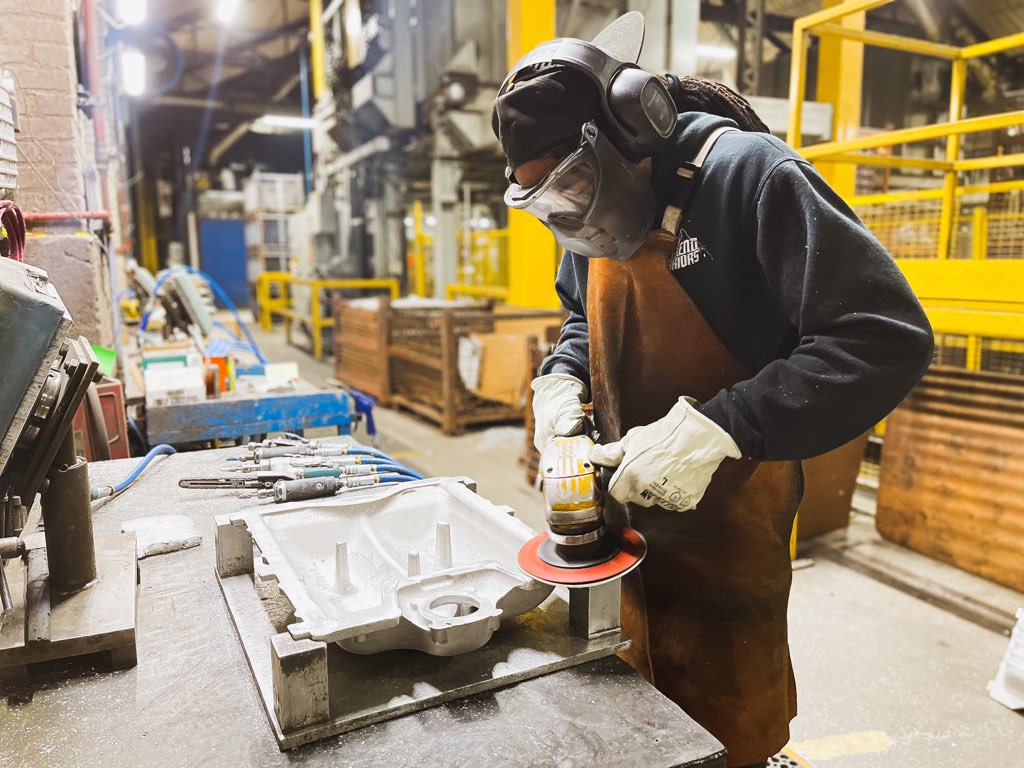
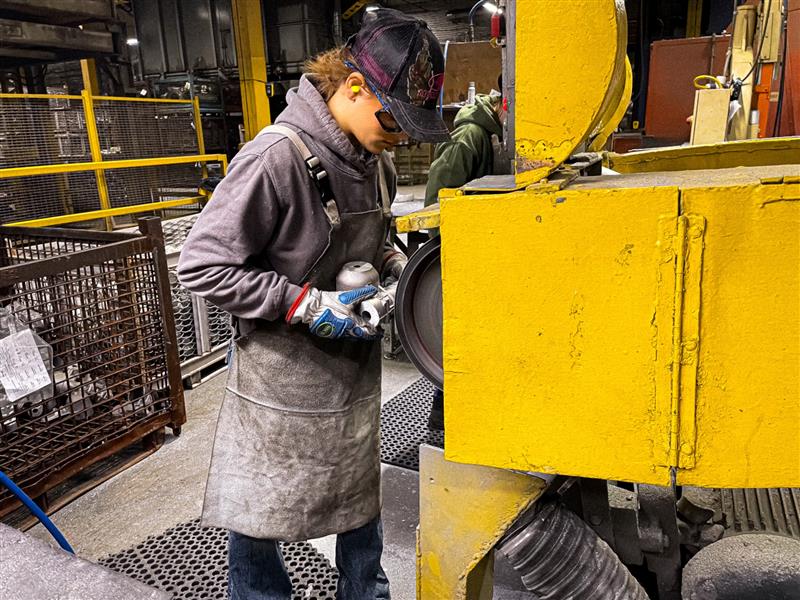
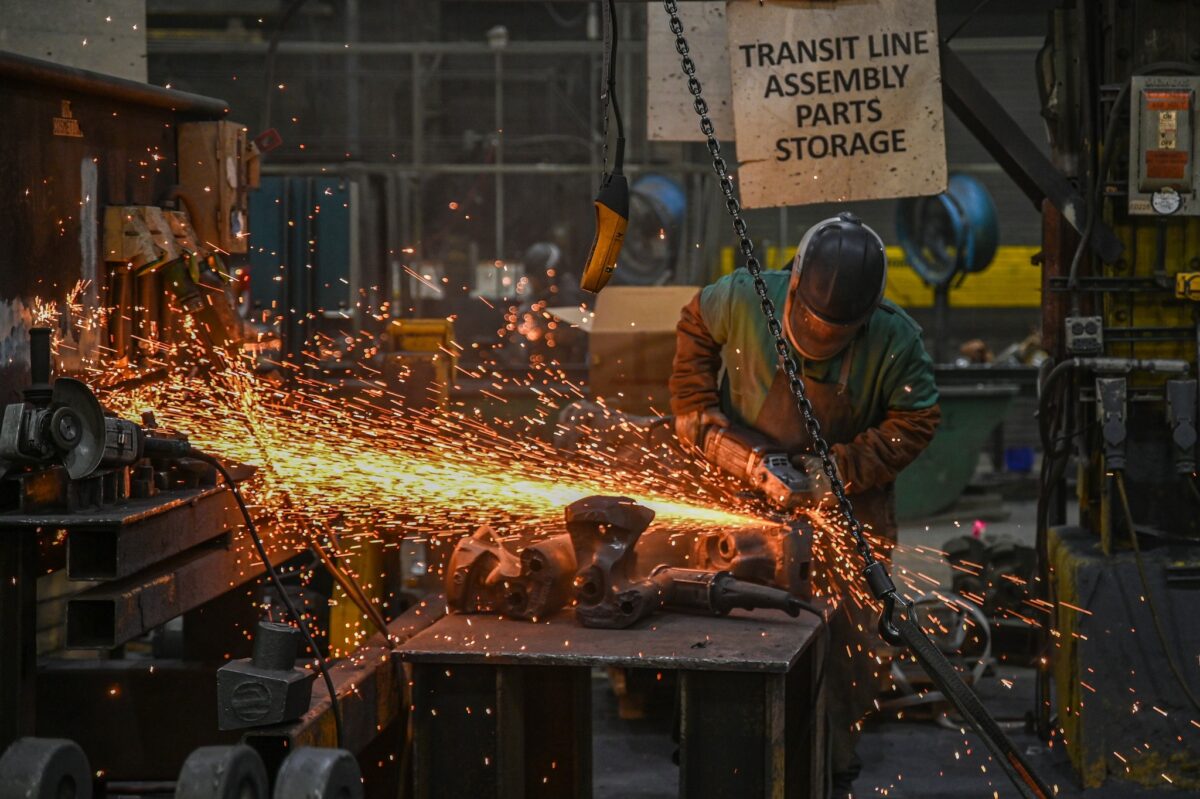
Team trainer Shane Chase was one of the best finishing sanders and mentors on the production line. Now, he’s teaching the next generation of quality metal workers and growing his career. 

“Something I noticed over the years is just because you are good at your job doesn’t mean you would be a good trainer,” Chase said. “It’s so important we have the training program because not everyone has the patience and the ability to work with anyone.” 

Chase added that he sees this role as a stepping stone toward becoming a supervisor or manager. “When that day comes I hope I can find someone like myself to pass the reins to.”

WAF will be able to put their funding toward Chase’s salary as well as new supplies, such as sander belts, for the training program. But Szymik said this is only the beginning for WAF’s training and apprenticeship development.

Forging Metal’s Finest

Szymik’s dream is to fund career growth and education in the metal industry all the way through the funnel—from high school to first jobs and beyond. Most of all, she wants to show people what being a metal worker has to offer.

“We’re teaching people a career when they walk in the door. It’s not just a job,” Szymik said. “We want to show people you can build a rewarding career and support your family, and it’s work that’s needed.”

She recommends that all metalcasting companies apply to partner with JFF and METAL so together we can forge a resilient metal workforce. 

“I talk to so many smaller companies that don’t have a budget for training,” she said. “I tell them, tap into this. You have the opportunity and it’s so easy to apply and get your metal workers the training they need. This funding has been huge for us.”

Ready to fuel your foundry’s future? Apply for JFF’s apprenticeship incentive program here. 


Learn more about youth apprenticeships in a recent webinar featuring Szymik. 

Fast Track to Success: FerroWorks Trains Next Generation of Metal Workers

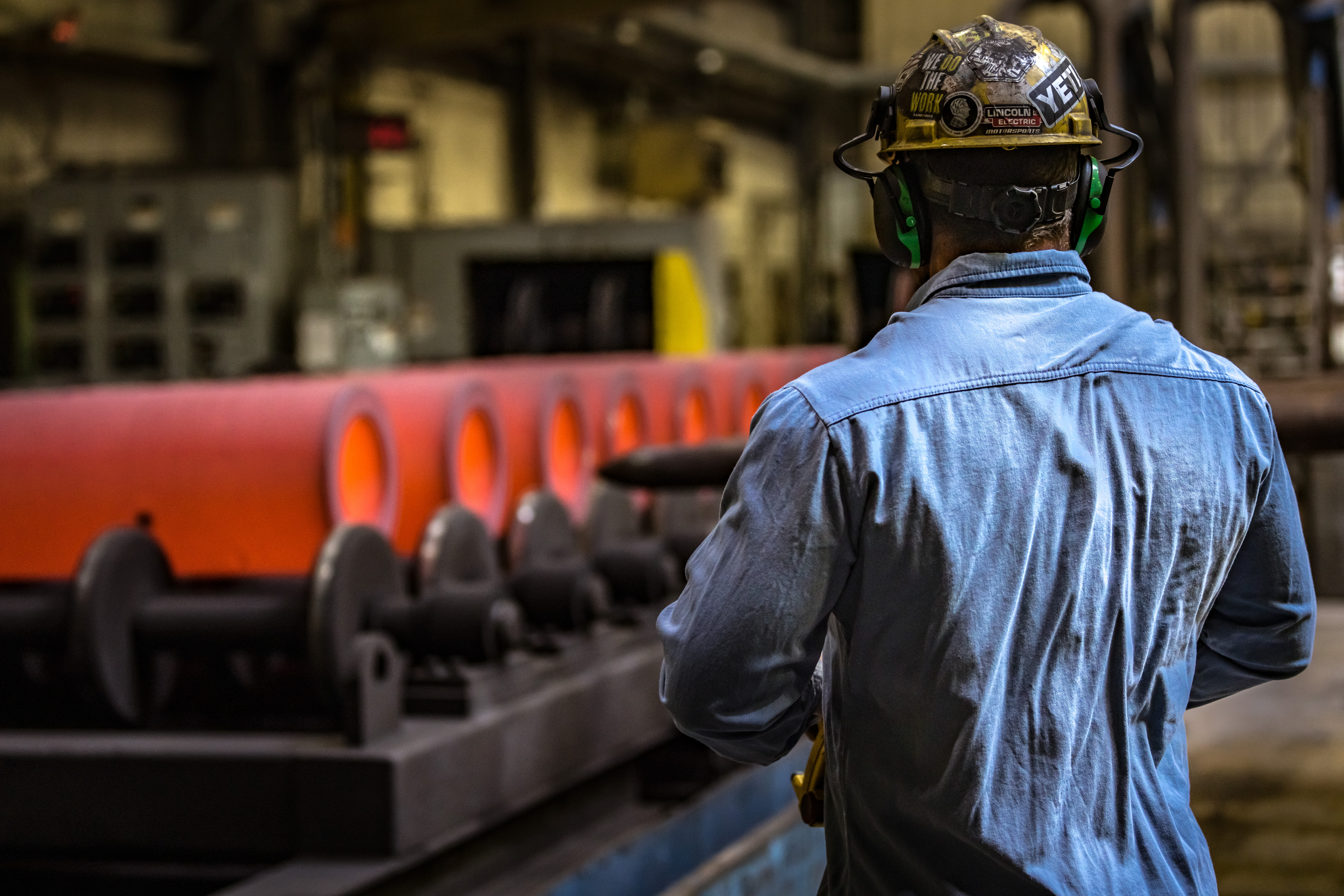
For more than 150 years, FerroWorks’ foundries have powered trains and railroads in America. Now, the steel company is keeping manufacturing in the U.S. on track by training the next generation of highly skilled metal workers. 

Metalworkers working in factory

FerroWorks, which manages McConway & Torley, Standard Forged Products, Kutztown Foundry and Machining, and McKees Rocks Forgings in Pennsylvania, is known for its excellence in casting couplers, knuckles, and yokes—all parts that connect train cars together. The U.S. rail system transports 1.5 billion tons of goods and more than 28 million passengers each year, and keeps growing. Between 2022 and 2026, $66 billion will go toward improving railways and expanding train services, according to the American Society of Civil Engineers. In addition to casting critical train parts, FerroWorks is forging the growth and development of its employees. With funding from METAL and its partner Jobs for the Future (JFF), which supports companies in the development of high-quality apprenticeship programs, FerroWorks is training more metallurgists to keep up with the industry’s high-speed growth. 

Kara Keith, a human resources generalist at FerroWorks, leads internal enrollment for the Industrial Manufacturing Technician (IMT) program—one of the pillar continuing education programs FerroWorks offers. 

The 18-month apprenticeship program is hosted by the Community College of Allegheny County (CCAC) in Pittsburgh, Pennsylvania. Once a week, instructors from CCAC offer on-site training to a select cohort of FerroWorks’ team members. The classes range from industry topics like blueprint reading, mechanical and electrical systems, and pneumatics to leadership training and communication skills. Keith said the program is essential to providing employees with a well-rounded understanding of industrial manufacturing.

“Transferring knowledge is something that we struggle with in this industry,” she said. “This program makes our employees feel like they’ve been invested in and gives them a chance to learn more about other departments that they wouldn’t get to explore in their day-to-day roles.”

So far, 12 FerroWorks employees have graduated from the IMT program. This year, JFF will help sponsor training for six FerroWorks team members with its apprenticeship/work-based learning incentive funding, in partnership with METAL. 

A Freight of Opportunities 

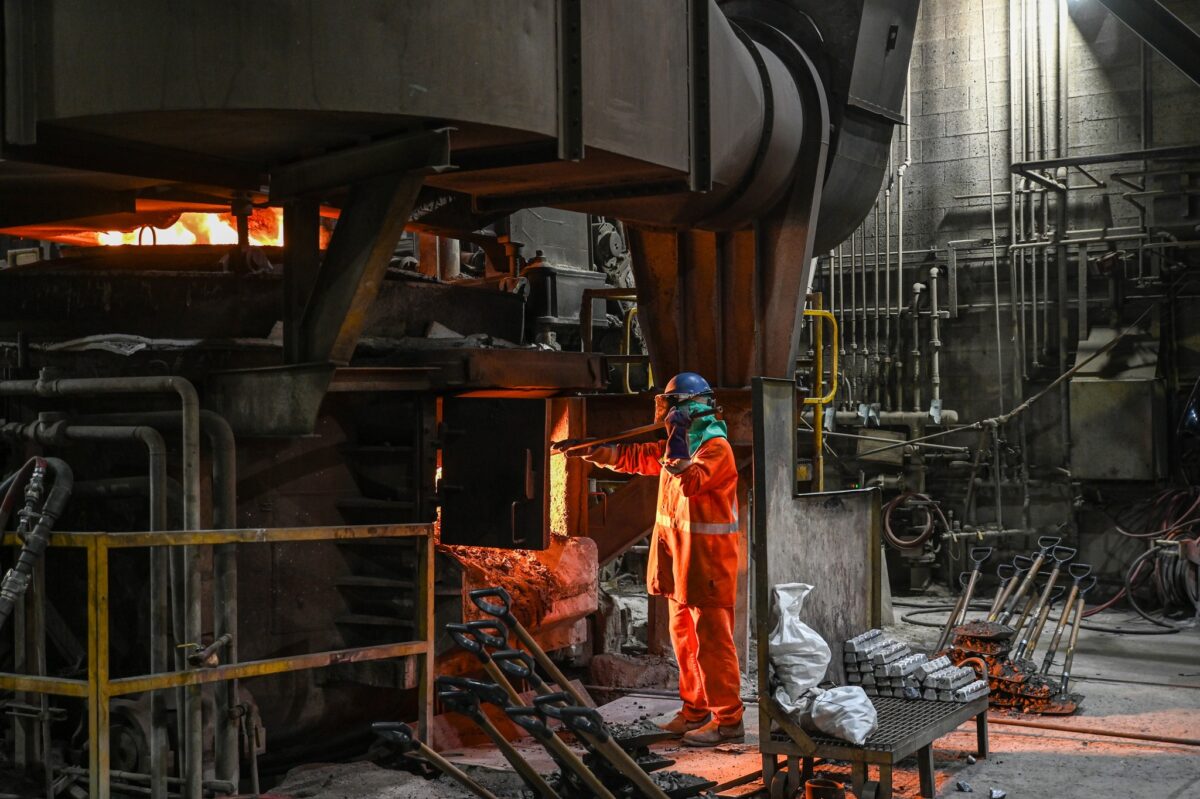
Steel workers at FerroWorks’ historic McKees Rocks Forgings, located just outside Pittsburgh, cast and forge critical components for railcars and heavy industry, supporting everything from transportation to national infrastructure. Photos courtesy of FerroWorks.

The U.S. casting and forging industry faces a pressing need for 122,000 skilled professionals by 2028 as workers retire and industry growth surges. In addition to a shortage of skilled metal workers, about 60% of manufacturers said attracting and retaining employees is a top challenge in a National Association of Manufacturers survey. 

Through METAL, led by IACMI – the Composites Institute and supported by the Department of Defense’s IBAS program, JFF has helped seven companies to date build, expand and sustain work-based learning programs, including apprenticeships. These programs allow manufacturers to improve training and retention in casting and forging roles—while offsetting the cost. JFF’s incentive funding can be applied to in-person or online learning programs, training equipment and trainer costs, curriculum development, program design and implementation, and support services for apprentices. 

“America’s casting and forging industry is essential to our country’s national security, infrastructure and other industries,” said Mark Genua, director of solutions design and delivery at JFF. “So we need a robust, well-trained workforce to fill these much-needed roles.” 

For Keith, applying to JFF’s incentive funding was an easy decision and process. The funding FerroWorks receives will go toward tuition for CCAC’s IMT courses—and educating the company’s future leaders.   

Man standing in front of furnace

FerroWorks’ Rob Cain earned his IMT apprenticeship certificate before becoming a production operations supervisor. Cain started with the company as a grinder and said the apprenticeship program gave him the confidence to take the next step in his career. 

“I already had the technical skills, but the IMT training gave me a more well-rounded understanding of the bigger picture, like how different systems and processes come together,” Cain said. “I still use what I learned in the program every day in my leadership role.”

IMT’s apprenticeship program is a nationally recognized certification that advances participants’ careers wherever they work in manufacturing. For FerroWorks, programs like IMT help the steel company reach production and retention goals, but Keith said the greatest benefit is employee development.  

“At the end of the day, the more leaders we can grow and grow people who can teach others, the more knowledge sharing and learning takes place,” Keith said. “We’re ultimately fostering a more skilled, versatile and engaged workforce.”

Ready to forge a stronger manufacturing workforce? Apply for JFF’s apprenticeship incentive program here.

Apprenticeships Strengthen the U.S. Industrial Workforce

On National Apprenticeship Day, Metallurgical Engineering Trades Apprenticeship & Learning (METAL) recognizes the powerful impact of apprenticeships in addressing workforce gaps and supporting the U.S. defense and industrial bases.

The need to fill major gaps in the U.S. defense workforce is critical. Between now and 2028, the U.S. defense industrial base is projected to require at least 122,000 additional skilled professionals, including shipbuilders, engineers and others in critical roles supporting the Department of Defense

As defense manufacturing competes with other sectors for these critical workers, failure to meet the growing demand for skilled professionals could exacerbate vulnerabilities within the defense industrial base and the U.S. manufacturing economy.

Photo courtesy of Scot Forge

Training Partnerships Drive Success

METAL, led by IACMI – The Composites Institute, has a strategic partnership with Jobs for the Future (JFF) to provide apprenticeship opportunities that strengthen the nation’s metalcasting workforce while supporting the security and sustainability of America’s defense and manufacturing industrial bases.

METAL also provides consulting services, connections to funding opportunities and apprenticeship curriculum for companies to create custom training and on-the-job learning experiences. 

A good example of this is Goodwin Engineering Training Company. Goodwin partnered with METAL to share their highly successful apprenticeship model and curriculum to address critical skill gaps in the metal manufacturing workforce – their model is “a radical, new approach needed to raise the skill level of the individual worker to the standard that they required for future growth” said Natalie Jellyman, Goodwin Apprenticeship Manager.

By combining METAL’s workforce development mission with Goodwin’s proven training expertise, our partnership has delivered a specialized curriculum that integrates classroom instruction with practical, industry-relevant experience.

The curriculum can be easily adopted by companies that want to implement a turn-key apprenticeship program at no charge. In some cases, incentive funding is available to launch the new program. 

“We can learn so much from textbooks, from word of mouth,” said Lee McCue, Teacher at Goodwin Engineering Training Center, “But actually doing the job itself, and putting that knowledge into practice is where you find your feet and find those experiences.”

Apprenticeship programs, like the one at Goodwin, tackle workforce shortages, strengthen national security, boost U.S. economic competitiveness and build lasting career pathways in U.S. manufacturing.

Apprenticeships in Action

You can see the impact of apprenticeships in action at  CWC Textron, a leading manufacturer of high-quality castings for the automotive and industrial sectors.

CWC Textron’s apprenticeship pipeline provides apprentices with skills in machine repair, millwrighting and electrician apprenticeships. 

“By investing in apprenticeships, companies can support the development of individual careers and secure their future and the industry’s future,” said Holly Rolewicz, apprenticeship program lead for CWC Textron. “These trades are vital to our success, particularly in maintaining a foundry that has been operational for 117 years and relies on aging equipment.” 

Apprentices from CWC Textron


For more information on apprenticeship opportunities and curriculum development, connect with Lucinda Curry at lcurry@iacmi.org.