Changing Lives: Manufacturing Works Fuels Ohio’s Metal Industry with Registered Apprenticeships

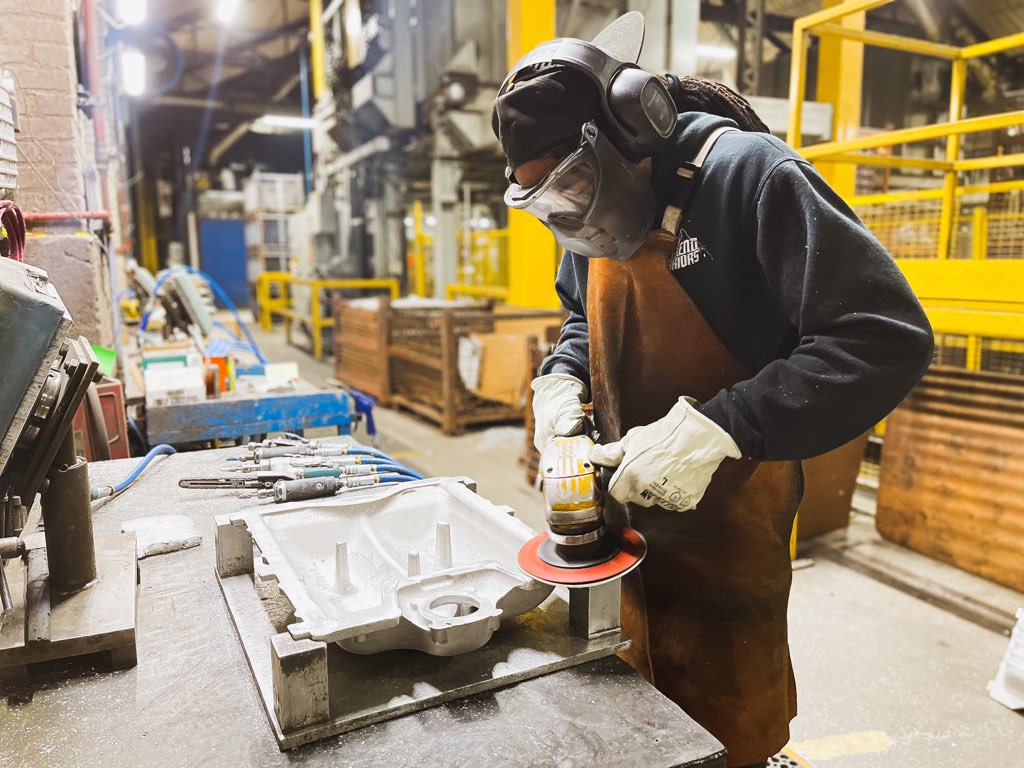
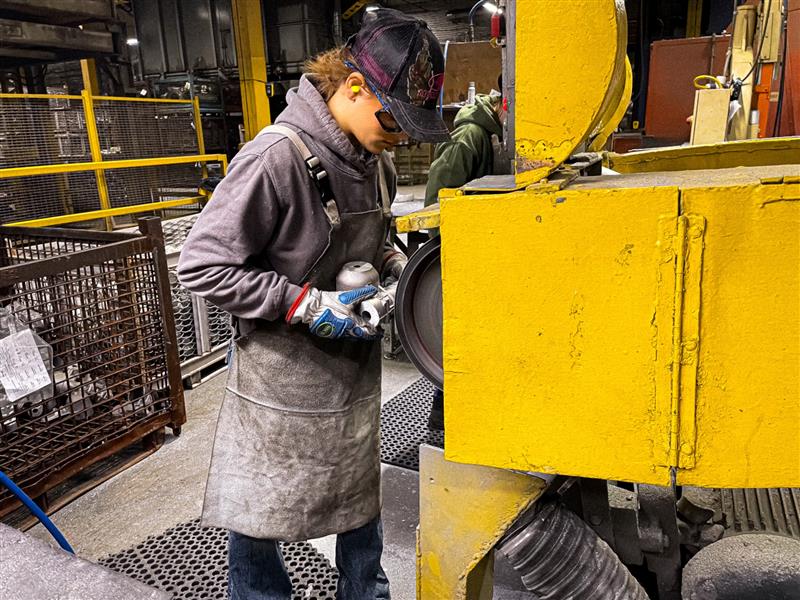
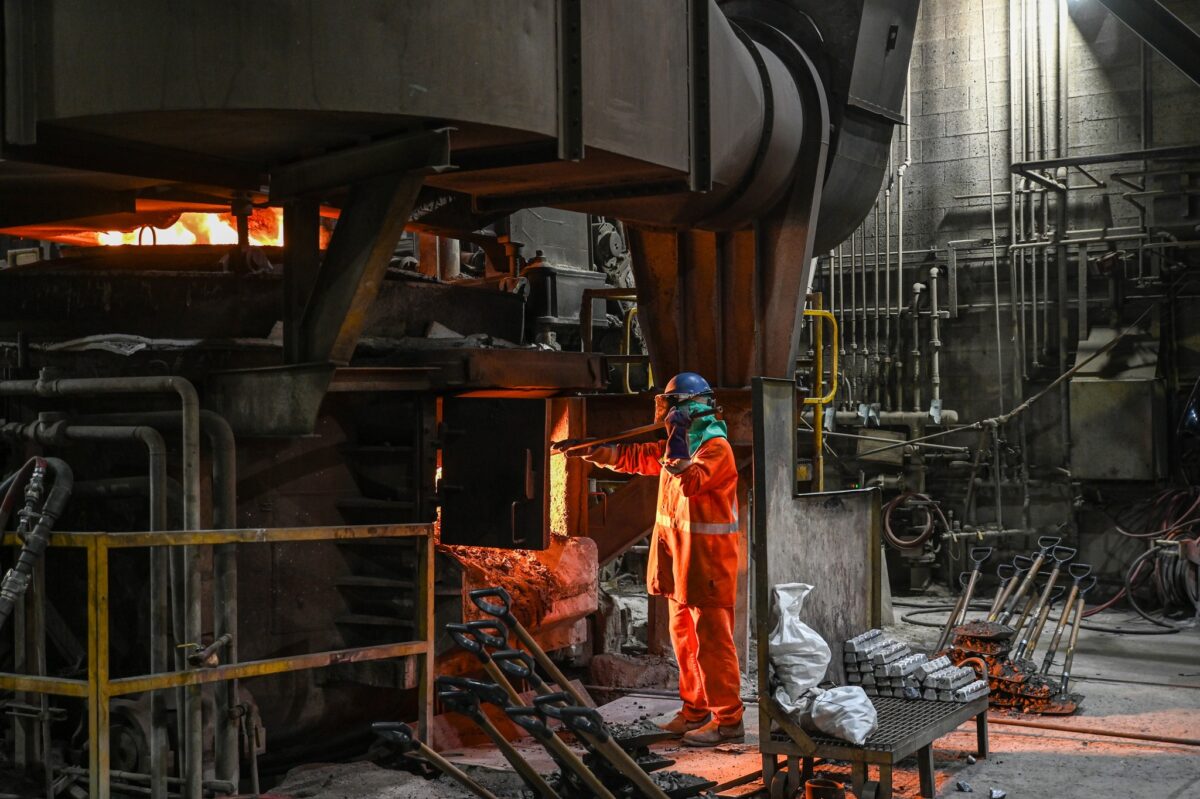
Manufacturing Works has been the right hand of Northeast Ohio’s manufacturing community for nearly 40 years. Through life-changing apprenticeships and strategic funding, the organization helps manufacturers grow their talent and produce high-quality parts faster. Now, at a pivotal time for our nation, Manufacturing Works is forging a skilled workforce for the metal industry.
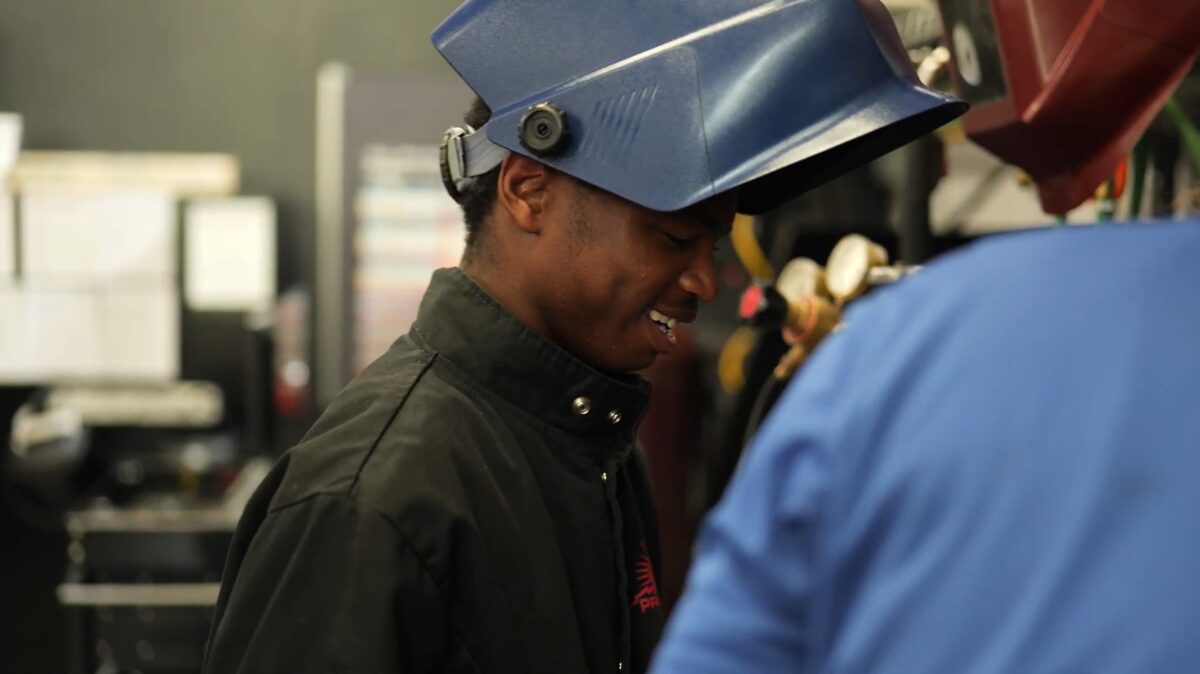
Foundries today need one thing: people. More than 65% of manufacturers said attracting and retaining talent is their top business challenge, according to a 2024 National Association of Manufacturers survey. By 2033, almost 4 million manufacturing jobs will be available in the U.S., but half could go unfilled due to an unprecedented skills gap in the workforce. 

Beth Dawson, director of apprenticeship programs at Manufacturing Works, explained that the COVID-19 pandemic catalyzed the nation’s labor shortage. Before the end of 2020, almost 29 million Baby Boomers in the U.S. retired—200% more than in 2019.

“When you look at the skilled workforce in manufacturing, most of them are planning to retire,” Dawson said. “The need for new talent and knowledge transfer is critical.”

Casting Solutions to the Talent Crisis

When metal workers are in short supply, America’s strength is, too. Metalcasting, forging and rolling are vital for producing fighter jets, naval ships, weapons, and components in transportation, medical and agricultural industries.

In April, the White House issued an executive order to ensure national security and economic resilience related to critical minerals like metal and its manufactured products. 

“A strong national defense depends on a robust economy and price stability, a resilient manufacturing and defense industrial base, and secure domestic supply chains,” President Trump wrote.

Together with METAL and Jobs for the Future (JFF), group sponsors like Manufacturing Works are part of the solution. Manufacturers, who are often short on time and budget, can partner with group sponsors to manage apprenticeships and workforce development programs for them, JFF’s Director of Solutions Design and Delivery Mark Genua explained.    

“It’s an easy lift for small to mid-sized employers. They could have an apprentice the next day,” Genua said. “Instead of taking the time to develop a program, employers can do what they do best—train.”
METAL, led by IACMI – the Composites Institute and supported by the Department of Defense’s IBAS program, and JFF work with community colleges and nonprofit organizations across the country to administer apprenticeship programs for metal manufacturers. Through this partnership, casting, forging, and plate rolling companies can access up to $24,000 per year for in-person or online learning programs. The funding can cover training equipment and trainer costs, curriculum development, program design and implementation, and support services for apprentices. Manufacturing Works was awarded incentive funding from JFF through METAL earlier this year.

So far, JFF and Manufacturing Works have sponsored and supported seven forging apprentices. But this is only the beginning. Since Dawson joined Manufacturing Works in 2020, the organization’s apprenticeship programs have grown 400%—making it clear, manufacturers need help.

“I met a company with machines that can produce 30,000 parts a day,” Dawson said. “But because they don’t have the talent to run the machines, they’re only producing 14,000 parts. Think about what that does to their production.” 

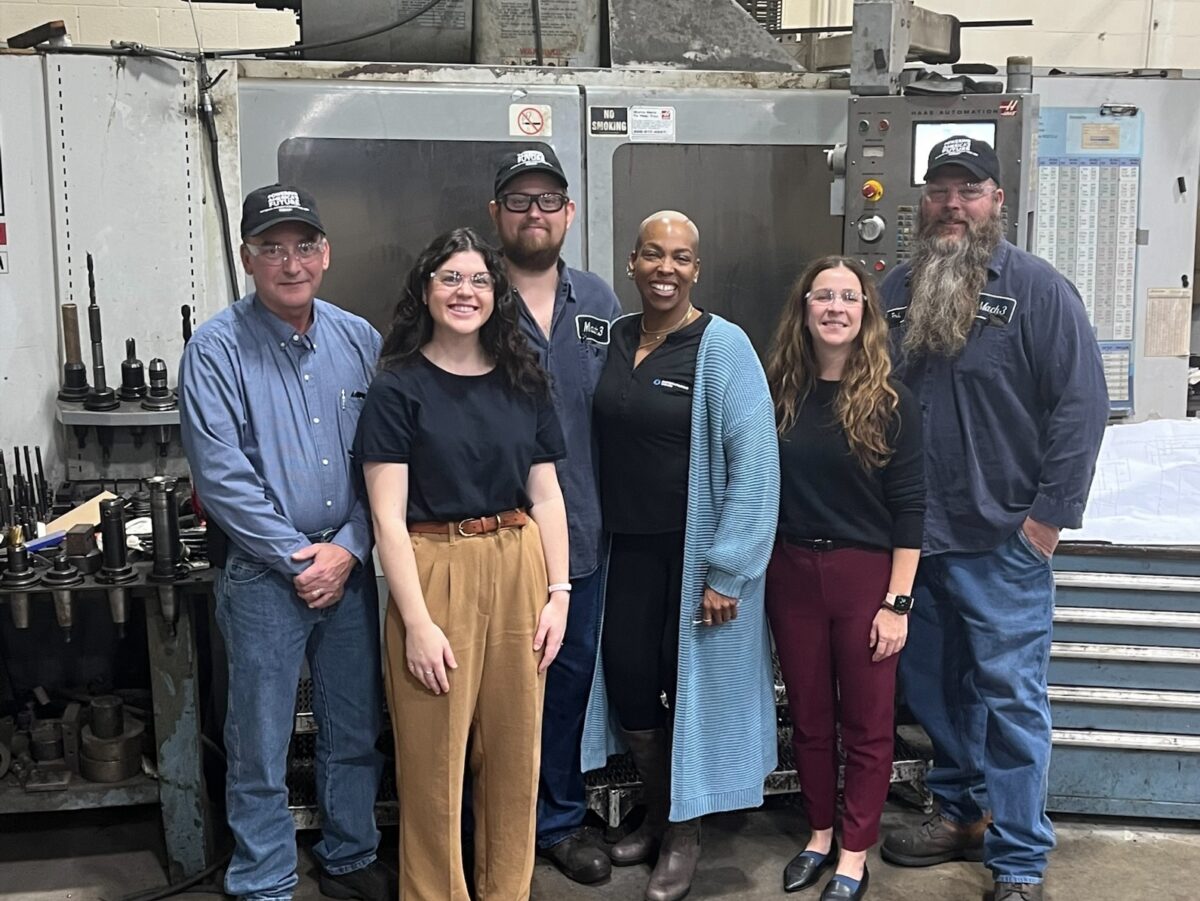
Dawson works closely with her teammates Angilique Cole, workforce program and data coordinator, and Tiffany Rashada, director of strategic marketing, to connect manufacturers with apprentices—and transform metal workers’ lives.
Training Metal Workers—And Changing Lives

In Northeast Ohio, the road to a manufacturing career can feel out of reach. Many residents face hurdles that extend far beyond the foundry—from reading and transportation to the high cost of childcare. In East Cleveland, where household incomes are around $37,500—less than half the national average—families must overcome steep economic challenges.

Most apprenticeship programs take about four years to complete. But when metal workers graduate, they have the skills to support a fulfilling, in-demand career, with salaries starting at $57,500 a year, according to Manufacturing Works’ data.

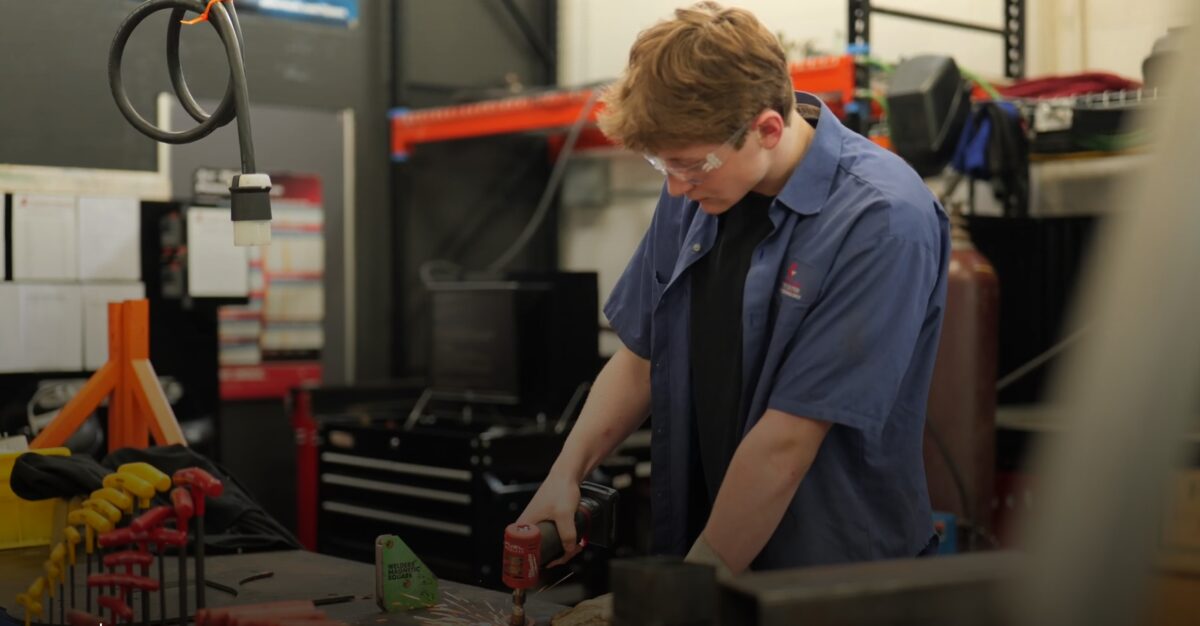
That’s exactly what Manufacturing Works’ apprentice Alexandra Wagoner was looking for.

“I wanted to go into a career path that wouldn’t require a long academic education,” Wagoner said. “This is the only option for me that provides a stable career without needing a bunch of college.”


When Manufacturing Works visits high schools, Dawson said their goal is to help students and parents see the potential and career opportunities the metal industry offers.

“Their earning potential coming out of college is likely going to be lower than a journey-level person completing their apprenticeship, and with an apprenticeship, they won’t have college debt,” Dawson said. 

Cleveland is also one of the most diverse cities in Ohio. To help apprentices and metal workers find success, manufacturers need to build welcoming environments with a strong learning culture, Rashada said. 

“Most manufacturers care about employee engagement and retention,” Rashada explained. “But to even engage people that are non-traditional in manufacturing, your culture matters.”

With a deep passion for their communities, the Manufacturing Works team is dedicated to helping Ohio’s manufacturers overcome workforce challenges. Through mentorship, supervisor training, high school outreach and math- and literacy-focused pre-apprenticeships, Manufacturing Works is forging an industry where metal workers thrive.

Thanks to Cole, manufacturers can trust that their apprentices are on the track to success.

“I have to fuss at them sometimes, but it is all for the good,” she joked. “I just want them to let me know if they encounter and stumble across anything, professionally and personally. We can get over this hump together.”

Cole said the most rewarding part of her job is seeing people’s humble beginnings before finding a career in manufacturing. 

“When they get to the finish line, I’m probably more emotional than they are,” she said. “They don’t realize the difference they’ve made in their lives.”  

Ready to forge a stronger workforce? Apply for JFF’s apprenticeship incentive program here. 

Cast a new career: Register for our free online training, then visit our events page to attend the next METAL bootcamp near you. 
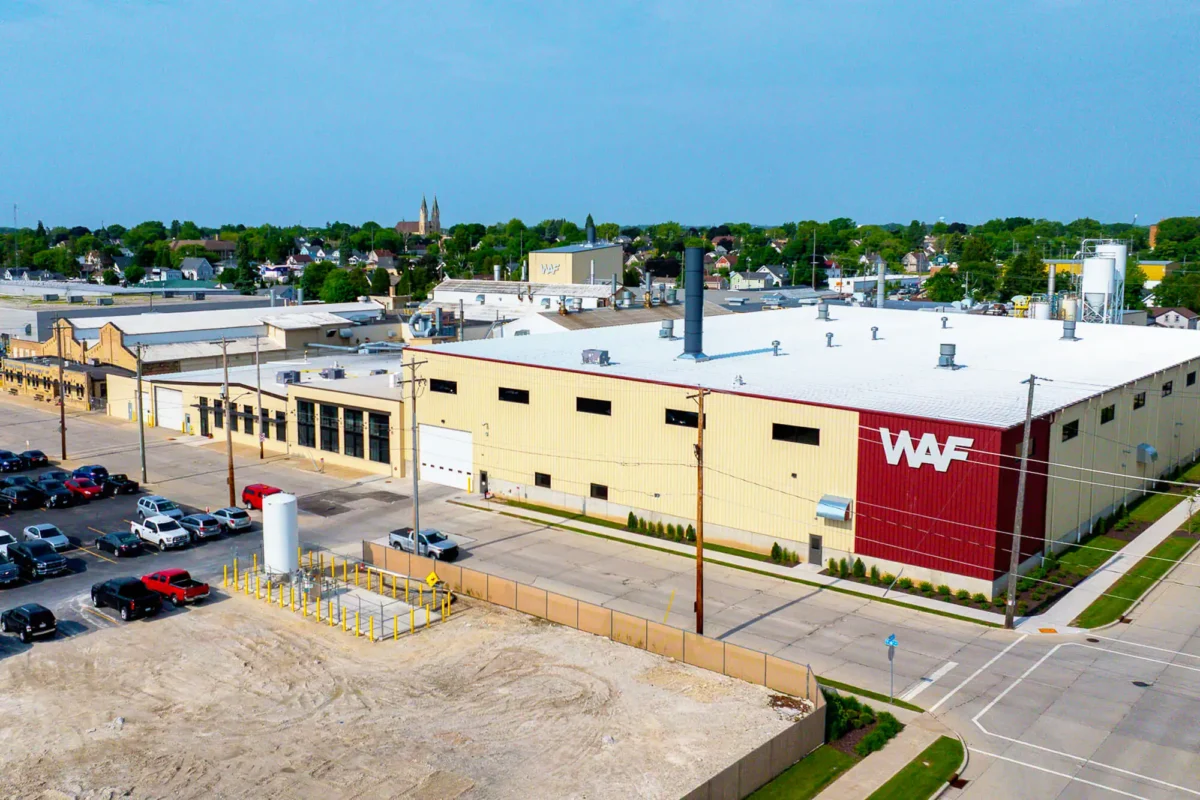
Bring Your Best: Wisconsin Aluminum Foundry Pushes Metal Workers to Their Fullest Potential

Wisconsin Aluminum Foundry has earned a reputation for forging aluminum, bronze and brass castings that meet rigorous, high-quality standards of excellence—and the same can be said for the foundry’s metal workers. 

With almost 1,000 team members across the midwest, Wisconsin Aluminum Foundry (WAF) supports critical manufacturing needs in the U.S. defense, agriculture, medical and automotive industries. Every employee, from intern to executive, aligns goals and performance with the foundry’s core values: “bring your best, engage to succeed together, pursue potential and invest in our future.To WAF’s Vice President of Human Resources Michelle Szymik, investing in the future means equipping metal workers and apprentices with the skills to move the industry – and our nation – forward. 

“We have to educate people about how important metalcasting is to our infrastructure and to sustaining our military,” Szymik said. “If we can’t get more people to come in and get trained and interested, that’s at risk.”

But to make better training opportunities possible at WAF, Szymik needed more resources and funding.

“There isn’t a lot of structured training in the foundry. You have to rely on your tenured employees to train new people who may have never even walked into a manufacturing environment before,” she explained.  

It wasn’t until the AFS Leadership Summit 2024 that Szymik discovered Jobs for the Future (JFF)—and the solution to her problem. 

In partnership with METAL, led by IACMI – the Composites Institute and supported by the Department of Defense’s IBAS program, JFF helps metals manufacturers overcome industry talent shortages with financial support and assistance in designing and implementing an apprenticeship or other work-based learning program. With the goal of growing the casting, forging, and plate rolling workforce, JFF provides manufacturers up to $24,000 per year for training equipment and services. So far, the organization has engaged more than 150 metal companies across the country and funded learning programs for nearly 77 participants—from maintenance technicians and machinists, to moldmakers and casters. 

Mark Genua, director of solutions design and delivery at JFF, believes apprenticeships and other work-based learning programs provide a custom, structured approach to train highly skilled metal workers. But the expense of facilitating these programs isn’t always affordable for manufacturers. 

“Like any training, there are costs associated with program implementation and operation,” Genua said. “We’re helping companies offset the costs and even enhance their programs with cutting-edge training, new equipment and participant support.”

Szymik couldn’t wait to get started. 

Casting the Future of Metal

Apprenticeships and work-based learning is critical during a time when the U.S. casting and forging industry urgently needs thousands more skilled workers. But with the right resources, apprenticeships can result in 90% employment retention. Today, there’s 27% more apprentices in advanced manufacturing than in 2024, thanks to partners like JFF and METAL.

This support was exactly what WAF needed to build, expand, and strengthen its work-based learning programs.  

Szymik has a brimming wish list for how she’d like to use JFF’s funding—from finishing training for new employees to pattern maker apprenticeships and on-the-job learning for quality control team members and maintenance techs. For now, she plans to put the funds toward WAF’s new trainer position and offsetting training program costs.

Team trainer Shane Chase was one of the best finishing sanders and mentors on the production line. Now, he’s teaching the next generation of quality metal workers and growing his career. 

“Something I noticed over the years is just because you are good at your job doesn’t mean you would be a good trainer,” Chase said. “It’s so important we have the training program because not everyone has the patience and the ability to work with anyone.” 

Chase added that he sees this role as a stepping stone toward becoming a supervisor or manager. “When that day comes I hope I can find someone like myself to pass the reins to.”

WAF will be able to put their funding toward Chase’s salary as well as new supplies, such as sander belts, for the training program. But Szymik said this is only the beginning for WAF’s training and apprenticeship development.

Forging Metal’s Finest

Szymik’s dream is to fund career growth and education in the metal industry all the way through the funnel—from high school to first jobs and beyond. Most of all, she wants to show people what being a metal worker has to offer.

“We’re teaching people a career when they walk in the door. It’s not just a job,” Szymik said. “We want to show people you can build a rewarding career and support your family, and it’s work that’s needed.”

She recommends that all metalcasting companies apply to partner with JFF and METAL so together we can forge a resilient metal workforce. 

“I talk to so many smaller companies that don’t have a budget for training,” she said. “I tell them, tap into this. You have the opportunity and it’s so easy to apply and get your metal workers the training they need. This funding has been huge for us.”

Ready to fuel your foundry’s future? Apply for JFF’s apprenticeship incentive program here. 


Learn more about youth apprenticeships in a recent webinar featuring Szymik. 

Fast Track to Success: FerroWorks Trains Next Generation of Metal Workers

For more than 150 years, FerroWorks’ foundries have powered trains and railroads in America. Now, the steel company is keeping manufacturing in the U.S. on track by training the next generation of highly skilled metal workers. 

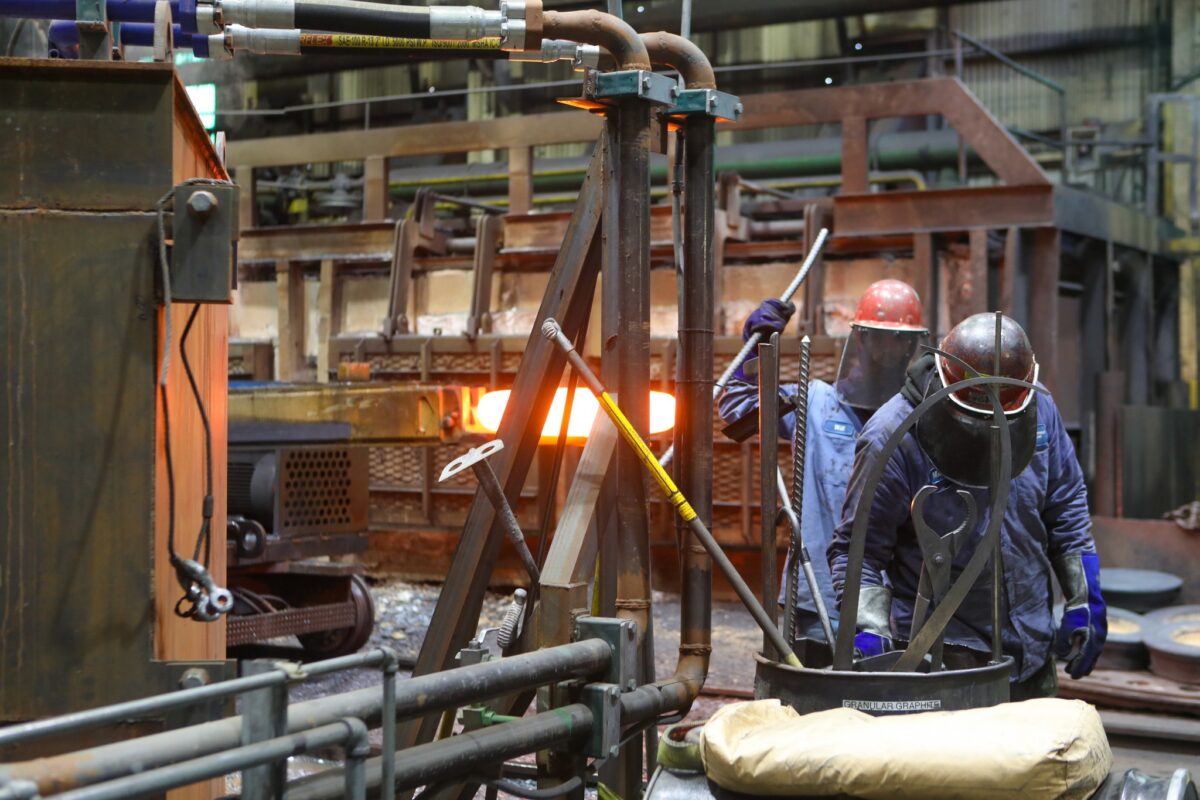
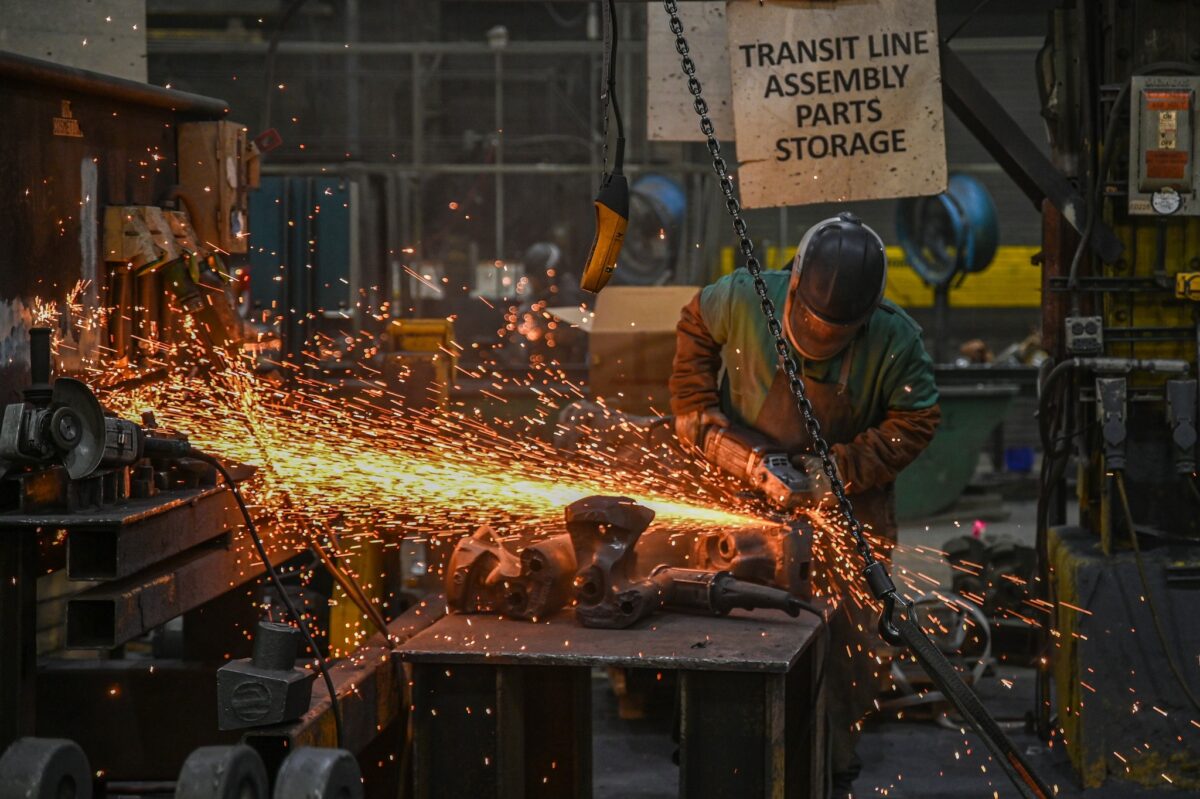
Metalworkers working in factory

FerroWorks, which manages McConway & Torley, Standard Forged Products, Kutztown Foundry and Machining, and McKees Rocks Forgings in Pennsylvania, is known for its excellence in casting couplers, knuckles, and yokes—all parts that connect train cars together. The U.S. rail system transports 1.5 billion tons of goods and more than 28 million passengers each year, and keeps growing. Between 2022 and 2026, $66 billion will go toward improving railways and expanding train services, according to the American Society of Civil Engineers. In addition to casting critical train parts, FerroWorks is forging the growth and development of its employees. With funding from METAL and its partner Jobs for the Future (JFF), which supports companies in the development of high-quality apprenticeship programs, FerroWorks is training more metallurgists to keep up with the industry’s high-speed growth. 

Kara Keith, a human resources generalist at FerroWorks, leads internal enrollment for the Industrial Manufacturing Technician (IMT) program—one of the pillar continuing education programs FerroWorks offers. 

The 18-month apprenticeship program is hosted by the Community College of Allegheny County (CCAC) in Pittsburgh, Pennsylvania. Once a week, instructors from CCAC offer on-site training to a select cohort of FerroWorks’ team members. The classes range from industry topics like blueprint reading, mechanical and electrical systems, and pneumatics to leadership training and communication skills. Keith said the program is essential to providing employees with a well-rounded understanding of industrial manufacturing.

“Transferring knowledge is something that we struggle with in this industry,” she said. “This program makes our employees feel like they’ve been invested in and gives them a chance to learn more about other departments that they wouldn’t get to explore in their day-to-day roles.”

So far, 12 FerroWorks employees have graduated from the IMT program. This year, JFF will help sponsor training for six FerroWorks team members with its apprenticeship/work-based learning incentive funding, in partnership with METAL. 

A Freight of Opportunities 

Steel workers at FerroWorks’ historic McKees Rocks Forgings, located just outside Pittsburgh, cast and forge critical components for railcars and heavy industry, supporting everything from transportation to national infrastructure. Photos courtesy of FerroWorks.

The U.S. casting and forging industry faces a pressing need for 122,000 skilled professionals by 2028 as workers retire and industry growth surges. In addition to a shortage of skilled metal workers, about 60% of manufacturers said attracting and retaining employees is a top challenge in a National Association of Manufacturers survey. 

Through METAL, led by IACMI – the Composites Institute and supported by the Department of Defense’s IBAS program, JFF has helped seven companies to date build, expand and sustain work-based learning programs, including apprenticeships. These programs allow manufacturers to improve training and retention in casting and forging roles—while offsetting the cost. JFF’s incentive funding can be applied to in-person or online learning programs, training equipment and trainer costs, curriculum development, program design and implementation, and support services for apprentices. 

“America’s casting and forging industry is essential to our country’s national security, infrastructure and other industries,” said Mark Genua, director of solutions design and delivery at JFF. “So we need a robust, well-trained workforce to fill these much-needed roles.” 

For Keith, applying to JFF’s incentive funding was an easy decision and process. The funding FerroWorks receives will go toward tuition for CCAC’s IMT courses—and educating the company’s future leaders.   

Man standing in front of furnace

FerroWorks’ Rob Cain earned his IMT apprenticeship certificate before becoming a production operations supervisor. Cain started with the company as a grinder and said the apprenticeship program gave him the confidence to take the next step in his career. 

“I already had the technical skills, but the IMT training gave me a more well-rounded understanding of the bigger picture, like how different systems and processes come together,” Cain said. “I still use what I learned in the program every day in my leadership role.”

IMT’s apprenticeship program is a nationally recognized certification that advances participants’ careers wherever they work in manufacturing. For FerroWorks, programs like IMT help the steel company reach production and retention goals, but Keith said the greatest benefit is employee development.  

“At the end of the day, the more leaders we can grow and grow people who can teach others, the more knowledge sharing and learning takes place,” Keith said. “We’re ultimately fostering a more skilled, versatile and engaged workforce.”

Ready to forge a stronger manufacturing workforce? Apply for JFF’s apprenticeship incentive program here.