METAL Wows at Grainger County World of Work Fair

RUTLEDGE, Tenn. — The METAL team joined more than 75 business and industry leaders at the Grainger County Schools Career and Technical Education World of Work (WoW) Fair on Tuesday, April 29, to showcase career opportunities to local students.
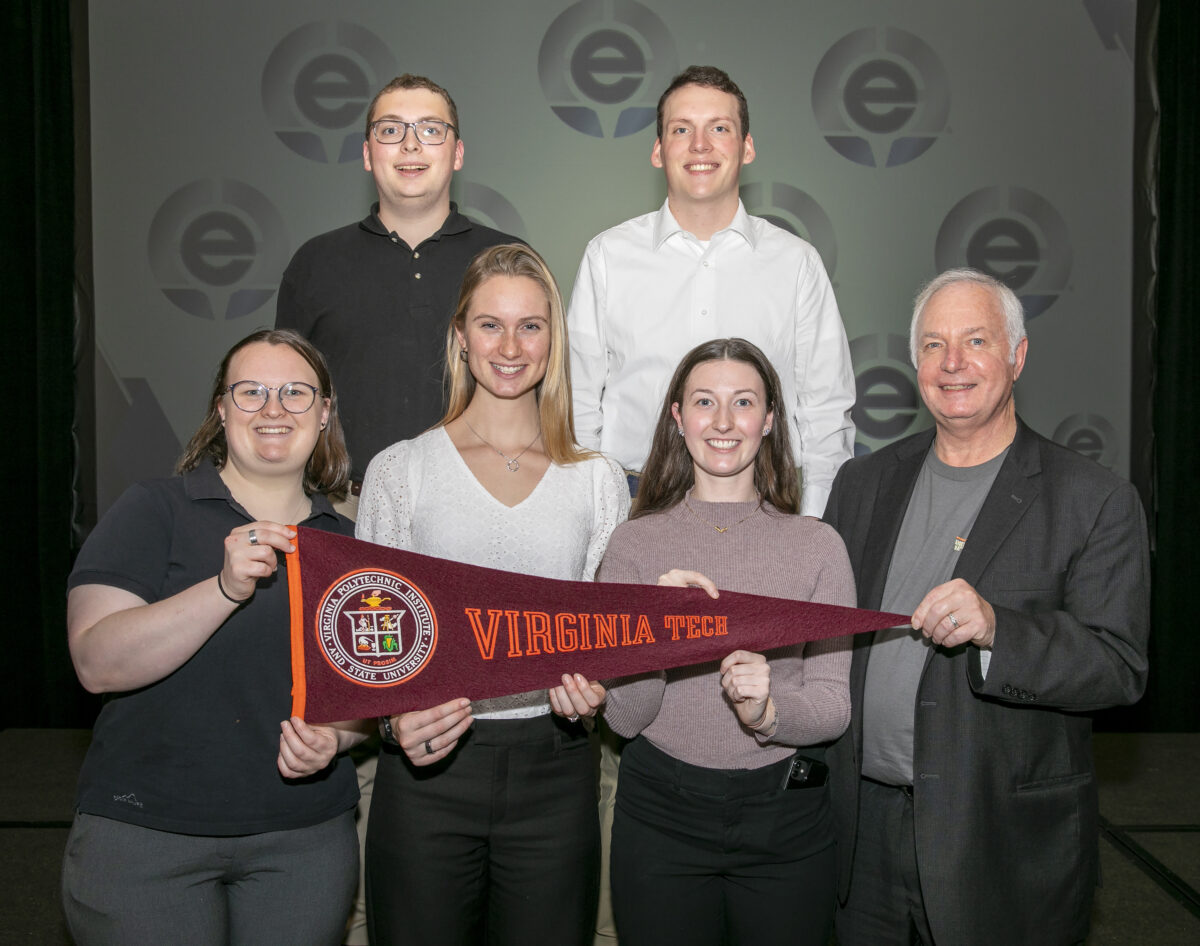
The event welcomed over 1,300 Grainger County students from grades 7-12 to explore interactive career fair booths and learn about careers in a wide range of industries. 

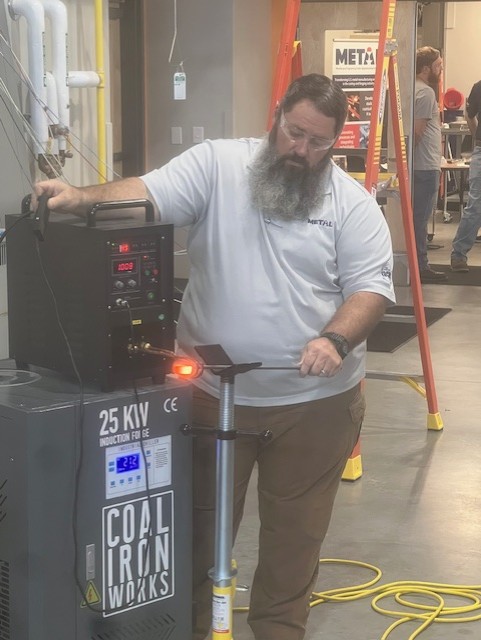
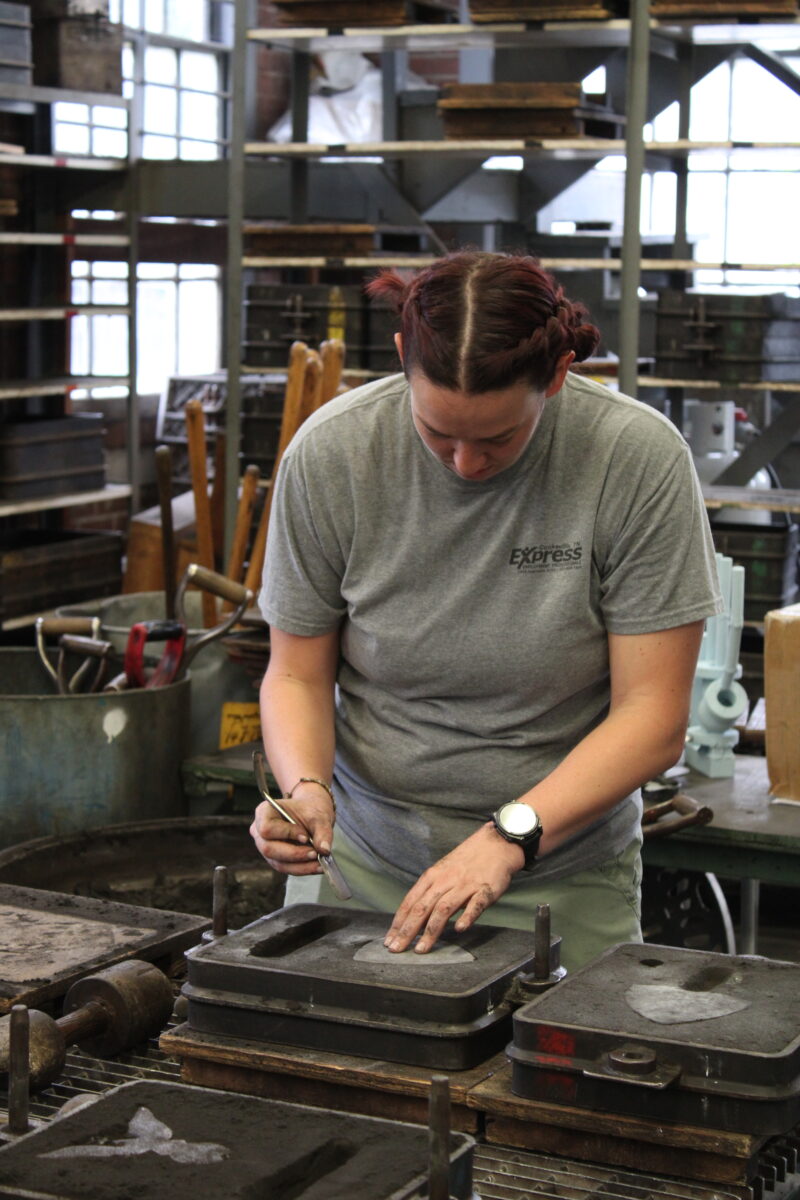
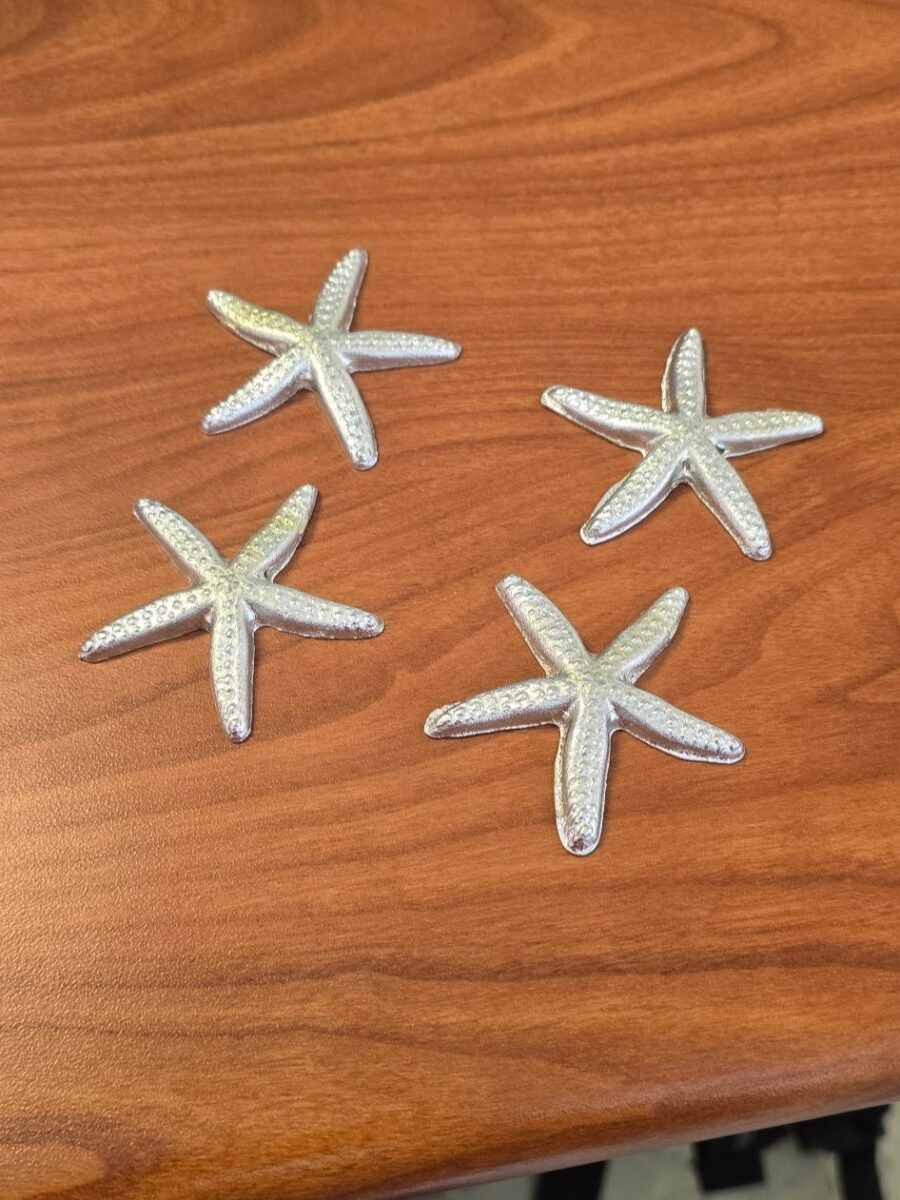
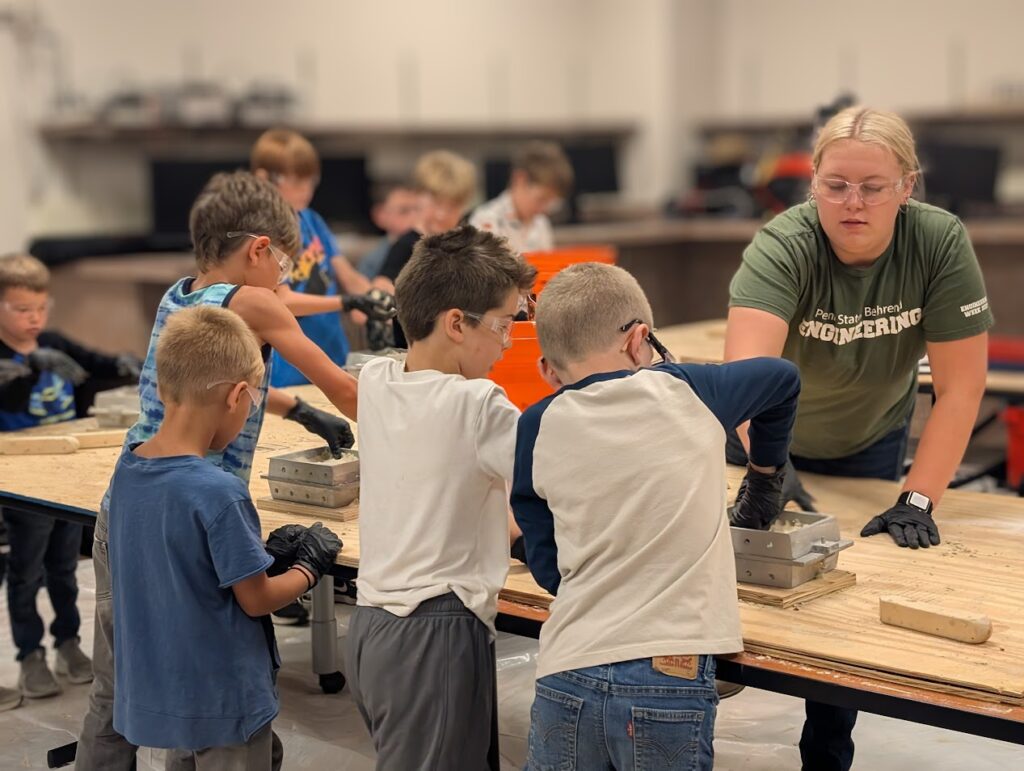
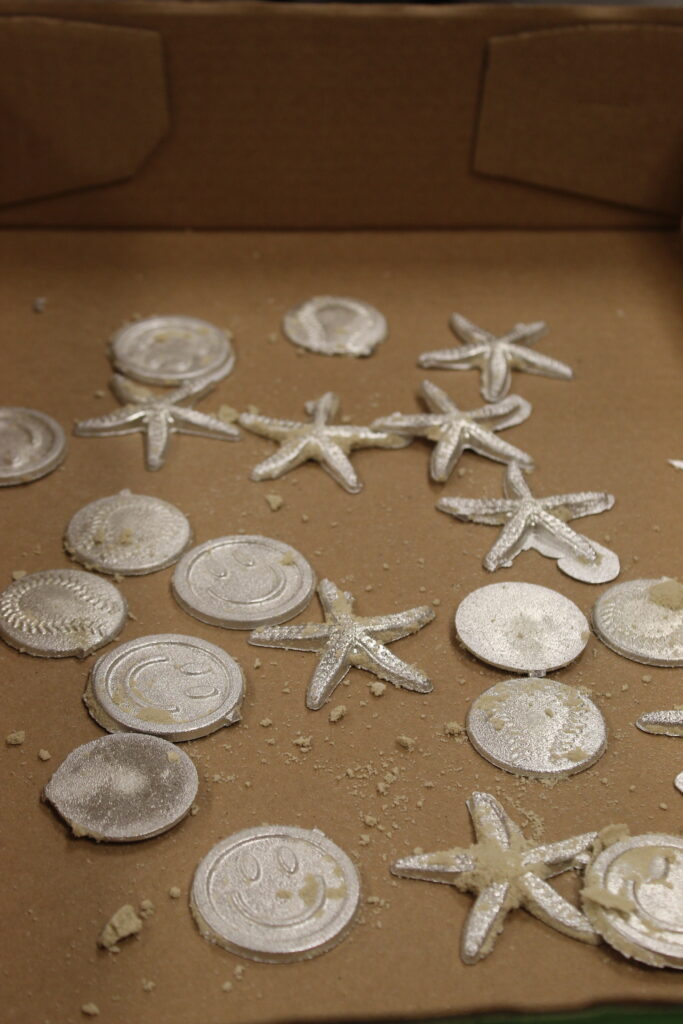
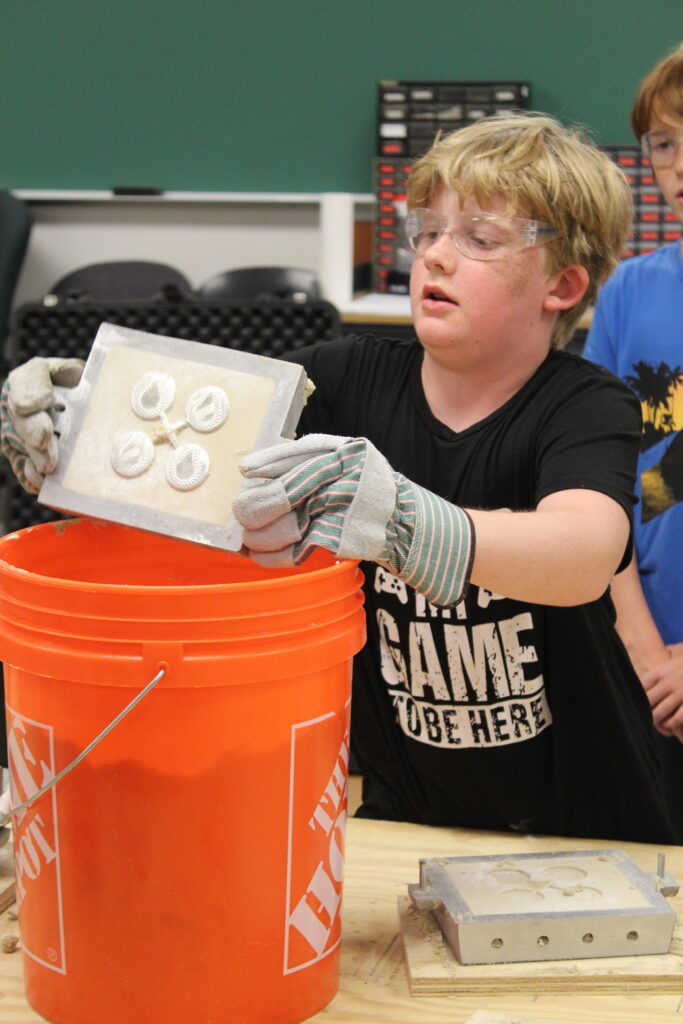
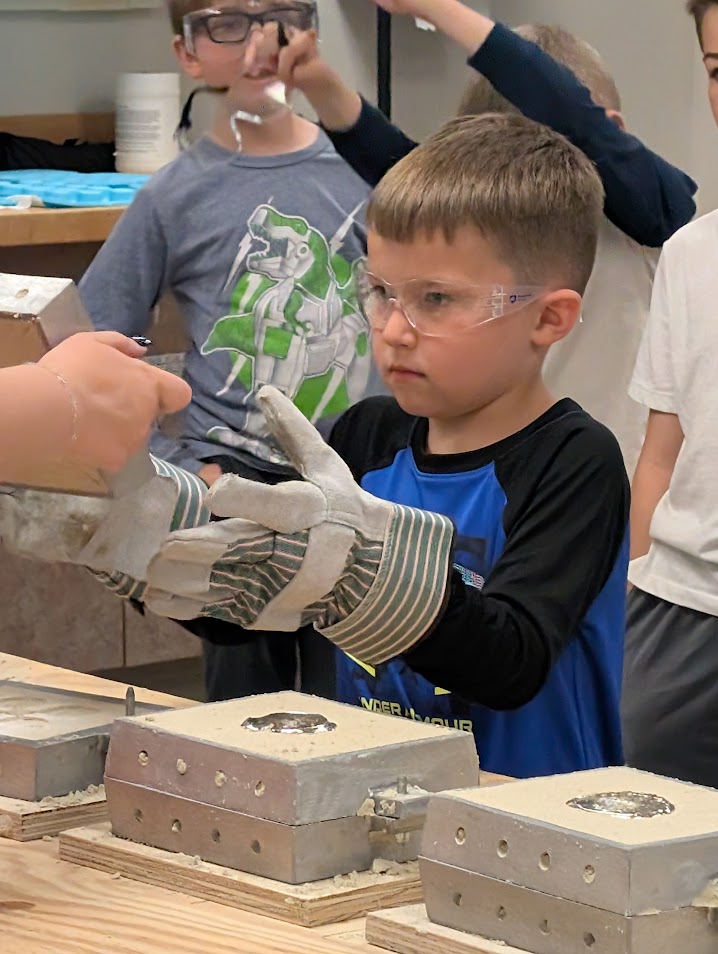
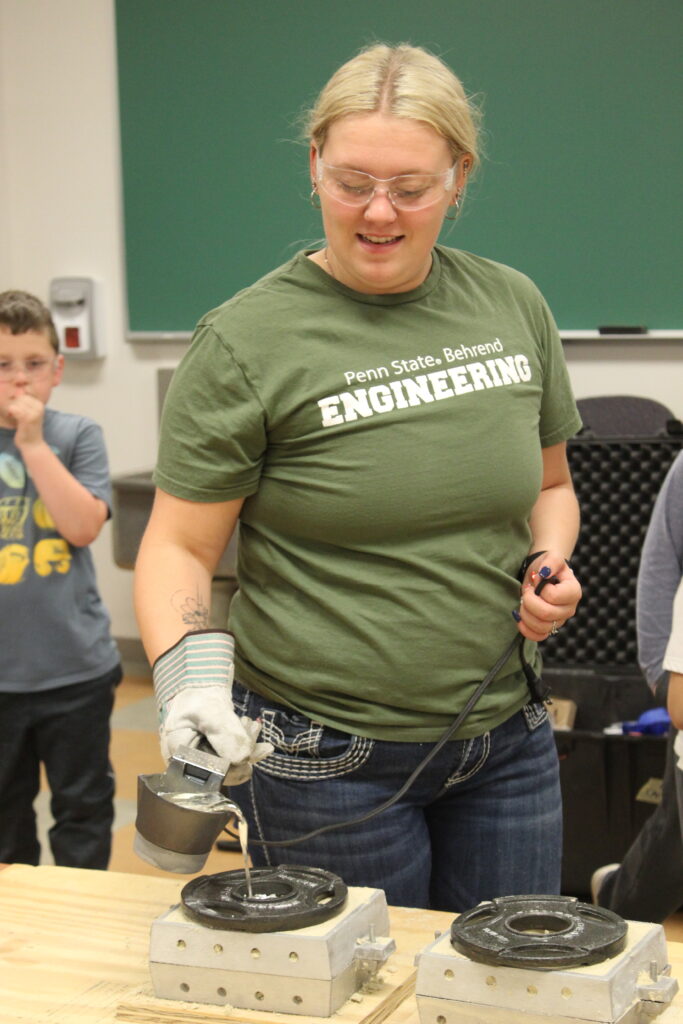
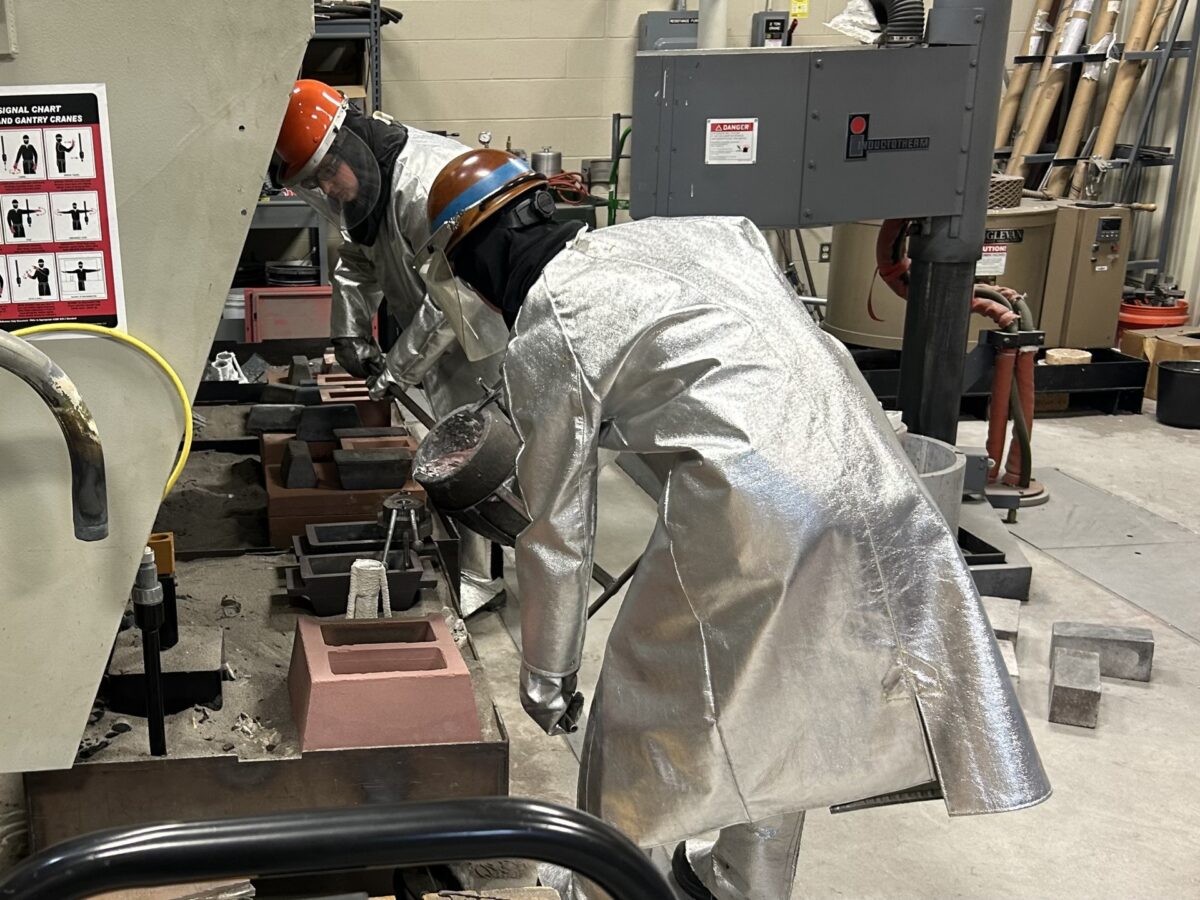
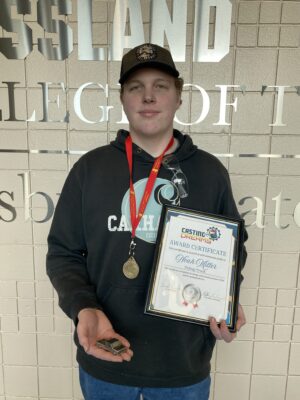
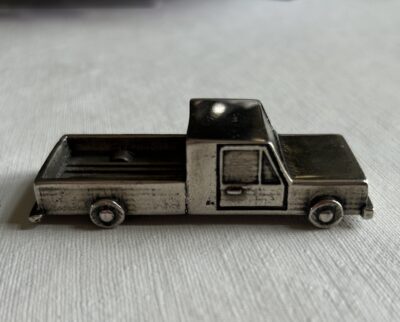
At the METAL booth, METAL Workforce Coordinator Greg Harrell and other IACMI facilitators led students through an interactive sand casting experience. Students packed their own sand molds and took them to a METAL facilitator to see aluminum pour into the molds (referred to as casting). The end result? An aluminum METAL keepsake to take home.  

While the aluminum cooled, METAL team members spoke with students about careers in the skilled trades and the pathways available through technical education and apprenticeships.

“Seeing them put the metal into the sand was really cool,” said Marley Hipshire, a senior at Grainger County High School. “They were showing us that this is a job you can do in the future that doesn’t take a lot of schooling like some other pathways.”

METAL focuses on equipping students with real-world skills and industry knowledge through structured learning and mentorship. METAL’s participation in the WoW Fair provided another outlet to spark curiosity and encourage students to consider high-demand, hands-on careers that contribute to the advanced manufacturing industry.

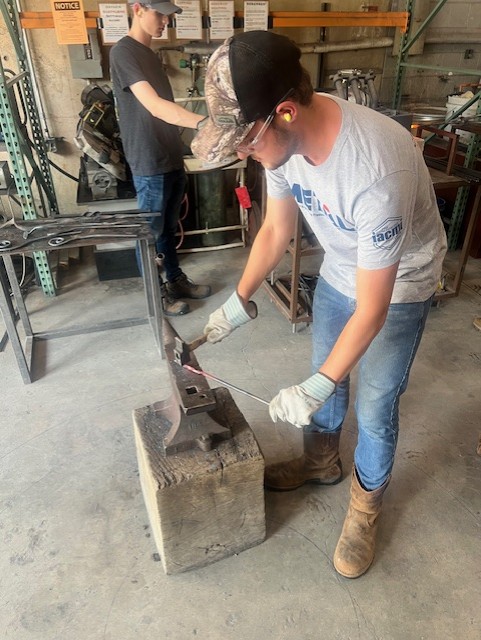
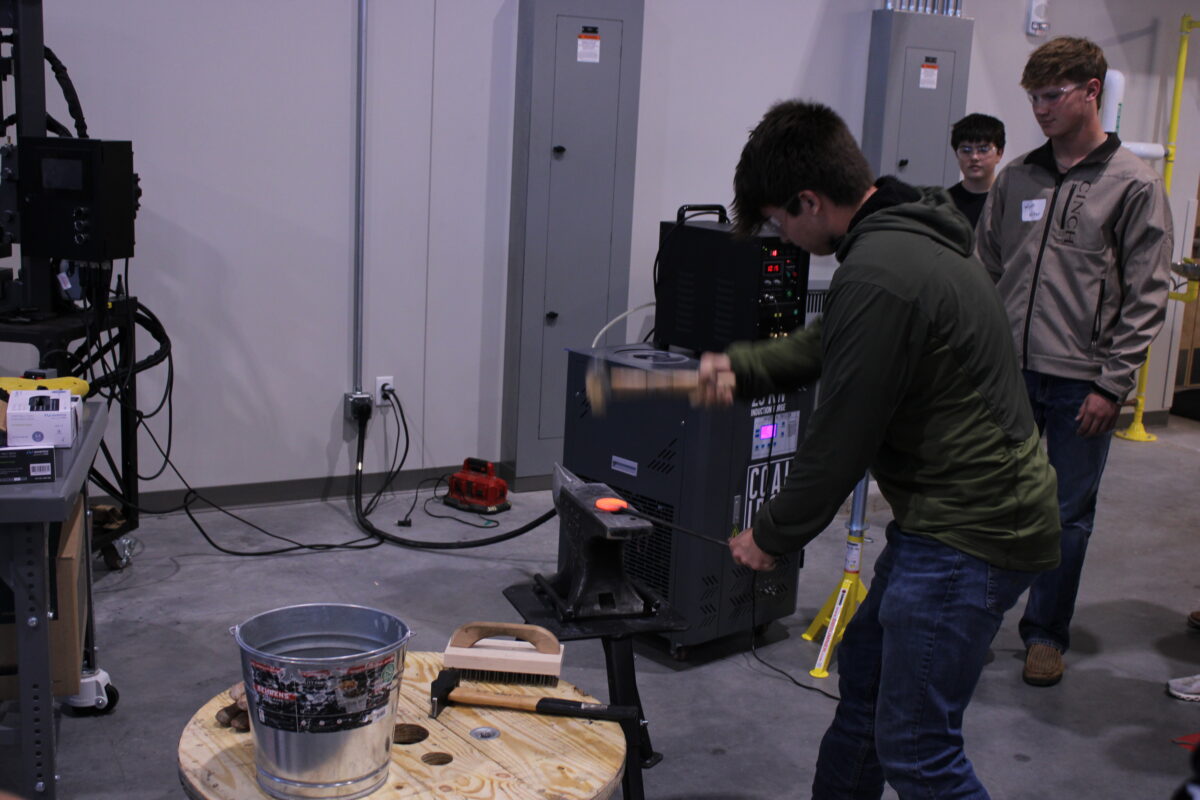
“There’s a gap in the workforce for metallurgical trades and skills out there,” said METAL Workforce Coordinator Greg Harrell. “Being in schools and exposing students to things like casting and forging that they would not ordinarily be exposed to ignites interest in this field and helps us build a pipeline.”

“Just making the cast parts and showing them how simple keepsakes like pendants and paperweights can be made demonstrates how things in the real world are made, whether that’s parts for vehicles, ships or submarines,” Harrell said.

For more information about METAL, visit www.METALforAmerica.org. To get started with a free, eight-hour course on casting, register for our online training. Bootcamps are also now open for registration at various locations

Magic of Metallurgy brings ‘Wizard of Oz’ Character to Life at Seymour Primary School

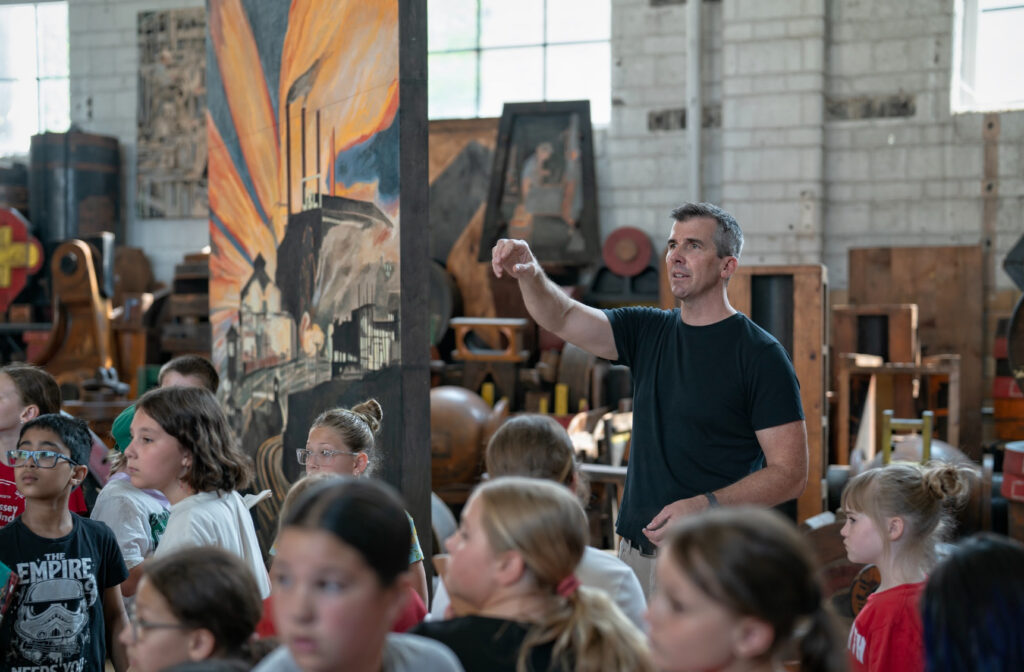
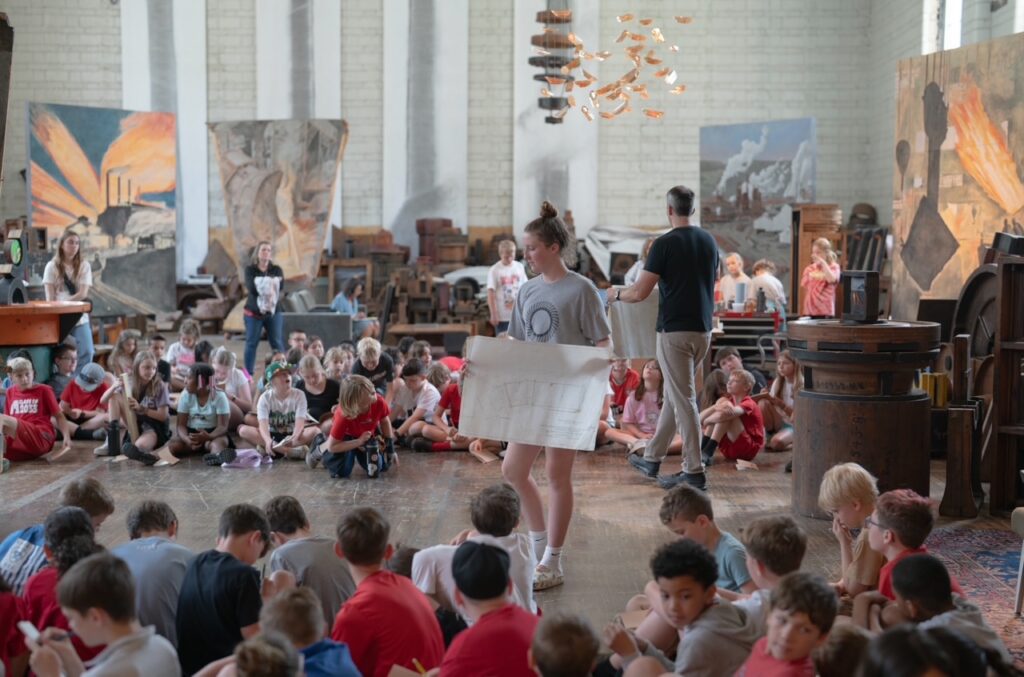
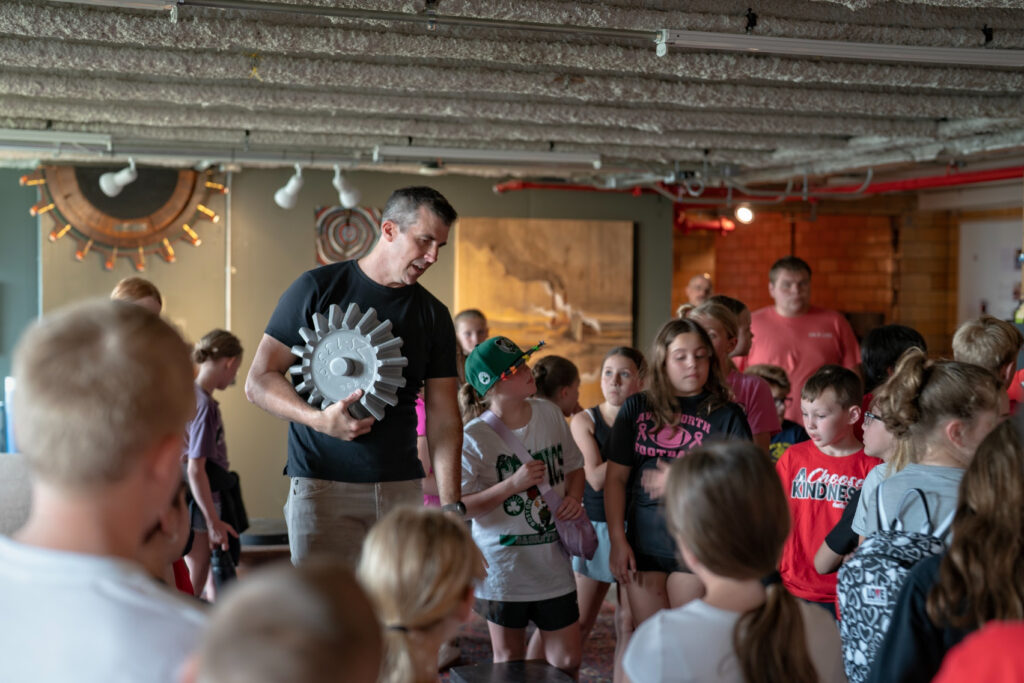
Students at Seymour Primary School recently experienced metallurgy first-hand during a live sand casting demonstration at the school’s annual Book Bash celebration. METAL (Metallurgical Engineering Trades Apprenticeships & Learning) and IACMI – The Composites Institute® supported the event by showing students how metal is shaped through a process called sand casting.

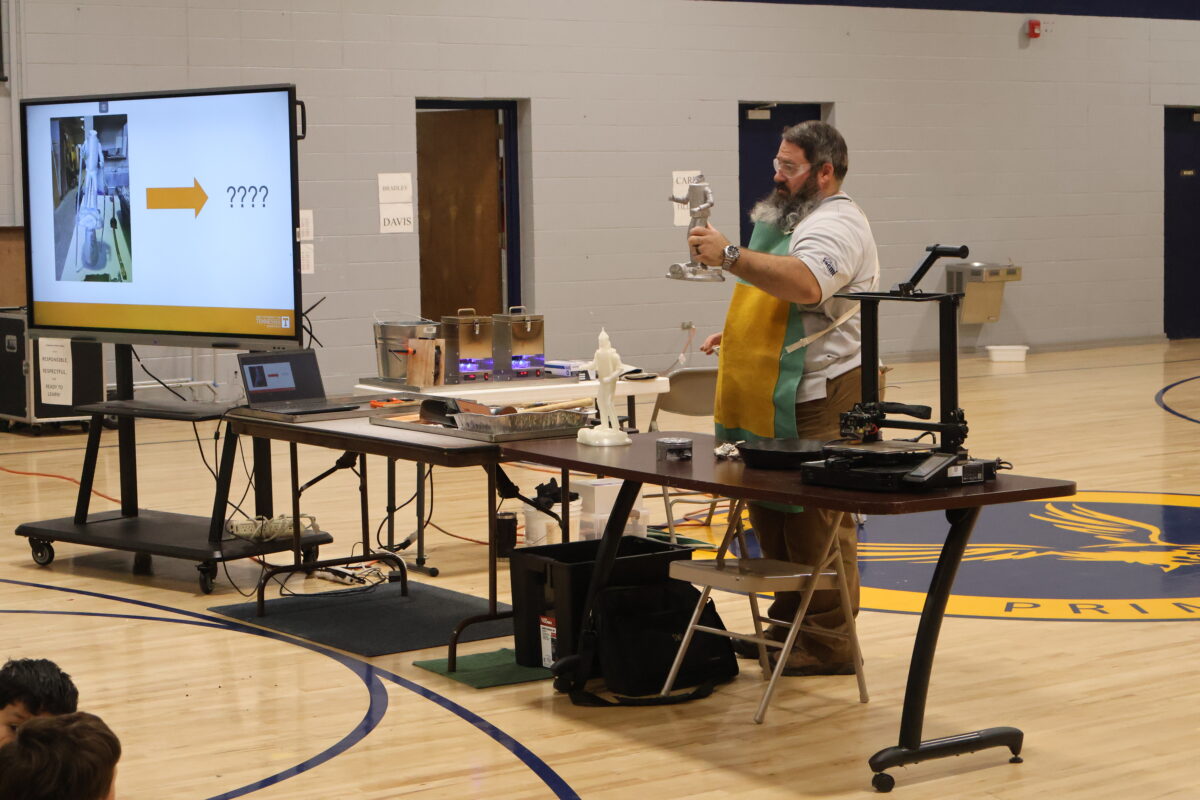
This year’s Book Bash book selection was The Wizard of Oz. Seymour Primary’s Book Bash is an annual celebration of reading that brings the entire school community together. For one month each year, students, staff, families and friends all share the experience of reading the same book. The story inspired school-wide participation in a STEM-focused sand casting presentation, where METAL facilitators used a mold of a Tin Man figurine to pour metal into, bringing the iconic character to life. 

The Tin Man casting project served as both a technical demonstration and a creative introduction to the magic of metallurgy, perfectly paired with the school’s elaborately decorated halls, featuring a yellow brick road and an Emerald City.

The Process of Casting the Tin Man

Sand casting is one of the oldest metal fabrication techniques; The process uses compacted sand to form a mold around a solid pattern of the desired object.

Prior to the event at Seymour Primary, team members at the University of Tennessee School of Art and the Tickle College of Engineering collaborated to investment cast a headless Tin Man’s body and base.  During the demo, instructors created the Tin Man’s head mold by tightly packing specialized sand around a 3D-printed pattern. Once the mold was removed and the cavity formed, instructors melted tin to over 600°F and poured it into the mold. 

The room erupted into ‘oohs’ and ahhs’ when students learned the metal had to be heated to 600 degrees. After cooling, instructors broke the sand mold away, revealing a solid metal replica of the Tin Man’s head. 

Igniting Curiosity Through Creativity

“We’re taking a character from the book, the Tin Man, and we’re talking about engineering principles, like 3D modeling, 3D printing and metal casting,” said Stephen Sheriff, Process Engineer and Research Associate II at the University of Tennessee’s Fibers and Composites Manufacturing Facility in Knoxville. “But beyond the science, it’s about sparking creativity, whether it leads to a career or just a new curiosity.”

Following the demonstration, students were curious and eager to ask questions. They wanted to know where the metals came from, what materials can be melted and how various metals are molded.

Building the Workforce of Tomorrow

Sand casting demonstrations aren’t just about science; they help students explore future opportunities in critical career fields.

“We’re hoping to spark students’ interest in trades like metallurgy and help fill critical workforce gaps in areas like ship and submarine building for the Department of Defense,” said Greg Harrell, Workforce Coordinator at IACMI.

METAL is part of a larger effort, supported by the Department of Defense, to build a robust pipeline of skilled tradespeople. By introducingthese concepts early, the METAL program aims to inspire the next generation of metallurgical engineers, technicians and craftsmen.

“The key takeaway is that this kind of creativity and problem-solving isn’t out of reach,” said Sheriff. “With some imagination and the right tools, an idea can become a finished project.”

Interested in Hosting a Workshop or Live Demonstration?

Sand casting is just one of the many techniques METAL uses to introduce students to the world of casting, forging, manufacturing and design.

Demonstrations like these offer students a firsthand look at traditional metalworking processes, helping them understand how raw materials are transformed through engineering and craftsmanship. Watching an idea come to life shows students the diverse applications of metallurgy – both creative and functional – and offers an introduction to the industry. 

To learn more, visit: metalforamerica.org

Apprenticeships Strengthen the U.S. Industrial Workforce

On National Apprenticeship Day, Metallurgical Engineering Trades Apprenticeship & Learning (METAL) recognizes the powerful impact of apprenticeships in addressing workforce gaps and supporting the U.S. defense and industrial bases.

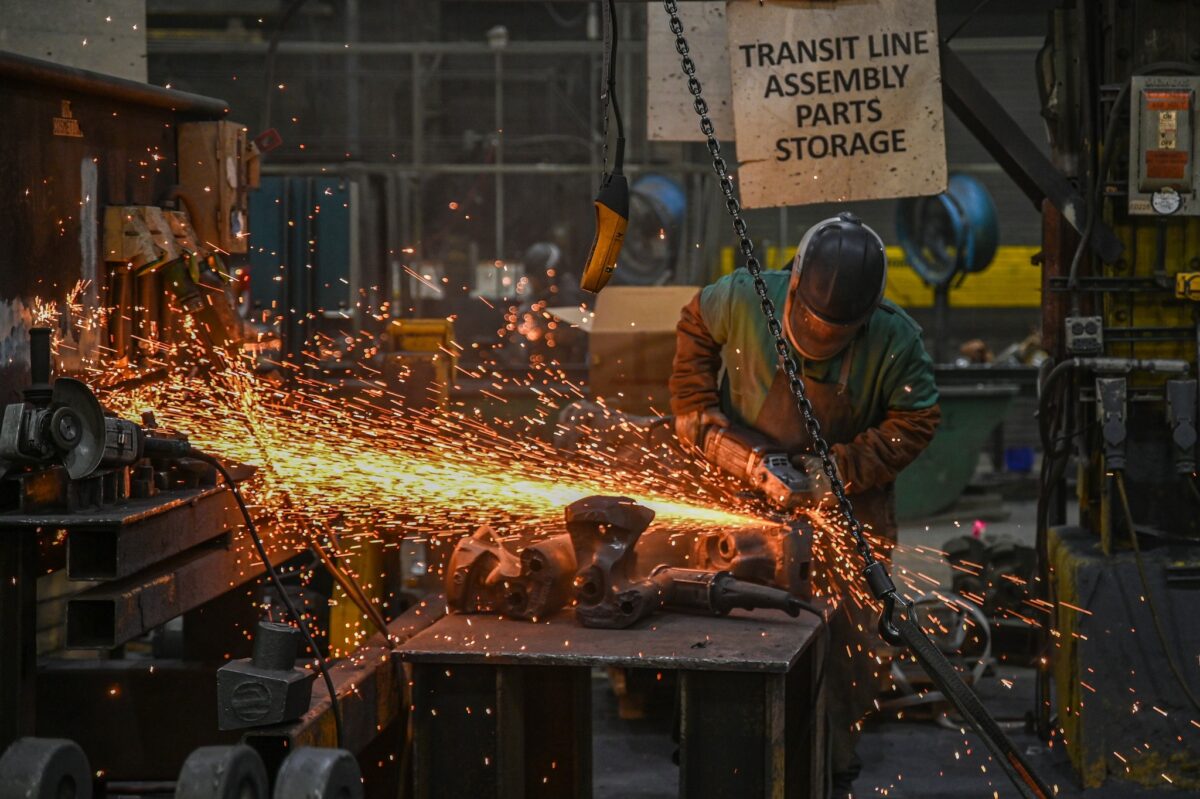
The need to fill major gaps in the U.S. defense workforce is critical. Between now and 2028, the U.S. defense industrial base is projected to require at least 122,000 additional skilled professionals, including shipbuilders, engineers and others in critical roles supporting the Department of Defense

As defense manufacturing competes with other sectors for these critical workers, failure to meet the growing demand for skilled professionals could exacerbate vulnerabilities within the defense industrial base and the U.S. manufacturing economy.

Photo courtesy of Scot Forge

Training Partnerships Drive Success

METAL, led by IACMI – The Composites Institute, has a strategic partnership with Jobs for the Future (JFF) to provide apprenticeship opportunities that strengthen the nation’s metalcasting workforce while supporting the security and sustainability of America’s defense and manufacturing industrial bases.

METAL also provides consulting services, connections to funding opportunities and apprenticeship curriculum for companies to create custom training and on-the-job learning experiences. 

A good example of this is Goodwin Engineering Training Company. Goodwin partnered with METAL to share their highly successful apprenticeship model and curriculum to address critical skill gaps in the metal manufacturing workforce – their model is “a radical, new approach needed to raise the skill level of the individual worker to the standard that they required for future growth” said Natalie Jellyman, Goodwin Apprenticeship Manager.

By combining METAL’s workforce development mission with Goodwin’s proven training expertise, our partnership has delivered a specialized curriculum that integrates classroom instruction with practical, industry-relevant experience.

The curriculum can be easily adopted by companies that want to implement a turn-key apprenticeship program at no charge. In some cases, incentive funding is available to launch the new program. 

“We can learn so much from textbooks, from word of mouth,” said Lee McCue, Teacher at Goodwin Engineering Training Center, “But actually doing the job itself, and putting that knowledge into practice is where you find your feet and find those experiences.”

Apprenticeship programs, like the one at Goodwin, tackle workforce shortages, strengthen national security, boost U.S. economic competitiveness and build lasting career pathways in U.S. manufacturing.

Apprenticeships in Action

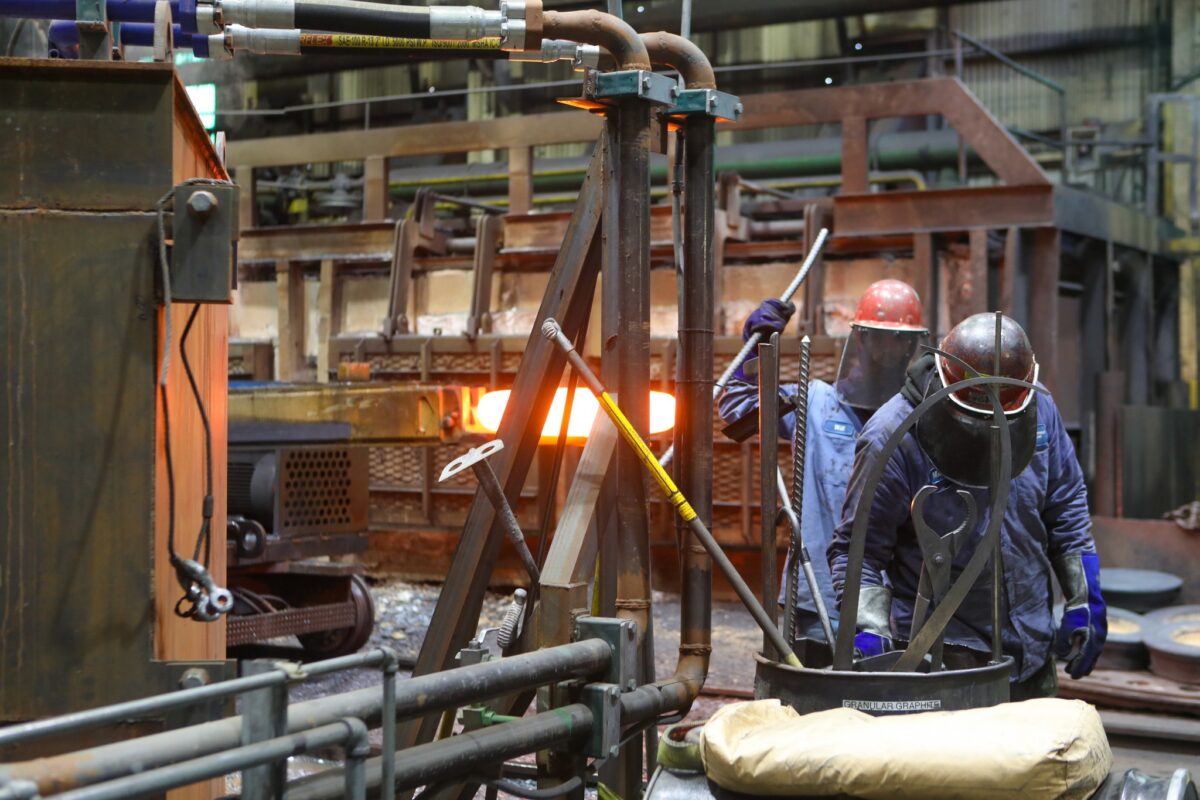
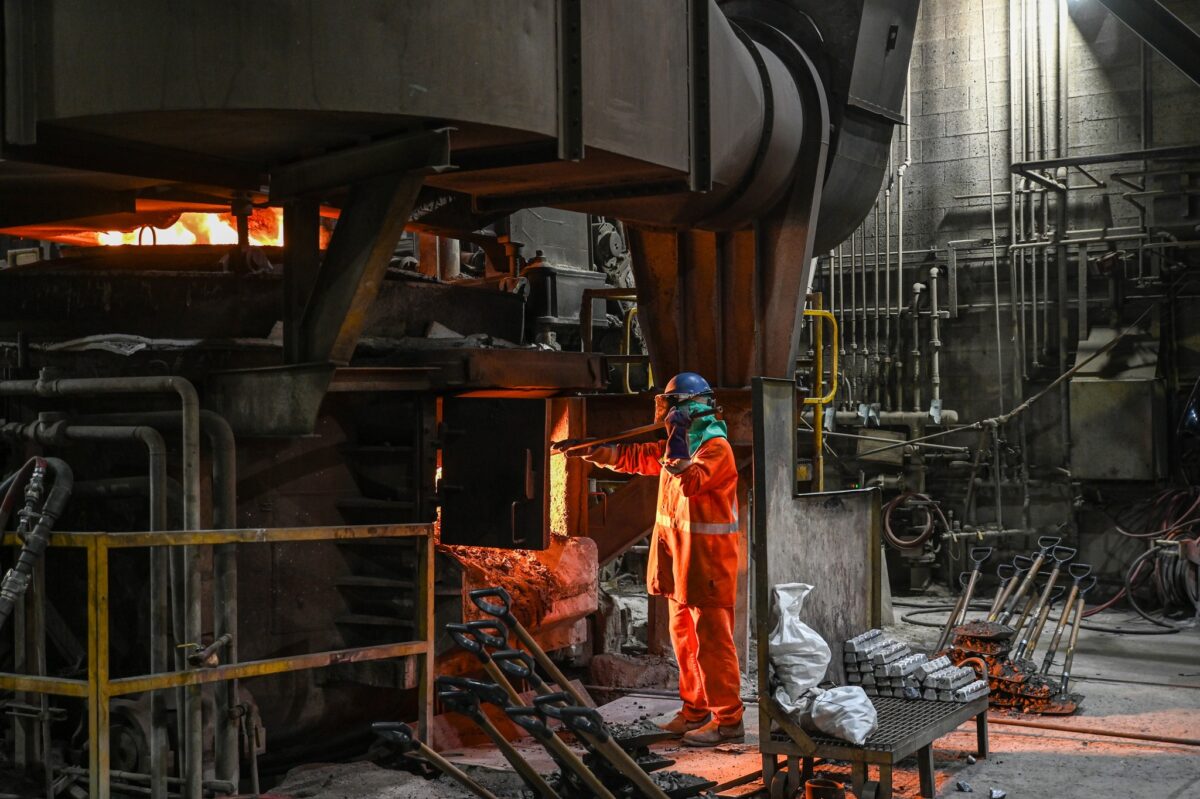
You can see the impact of apprenticeships in action at  CWC Textron, a leading manufacturer of high-quality castings for the automotive and industrial sectors.

CWC Textron’s apprenticeship pipeline provides apprentices with skills in machine repair, millwrighting and electrician apprenticeships. 

“By investing in apprenticeships, companies can support the development of individual careers and secure their future and the industry’s future,” said Holly Rolewicz, apprenticeship program lead for CWC Textron. “These trades are vital to our success, particularly in maintaining a foundry that has been operational for 117 years and relies on aging equipment.” 

Apprentices from CWC Textron


For more information on apprenticeship opportunities and curriculum development, connect with Lucinda Curry at lcurry@iacmi.org.

Casting the Future: Ianto Woolridge’s Journey into Metalcasting with FEF

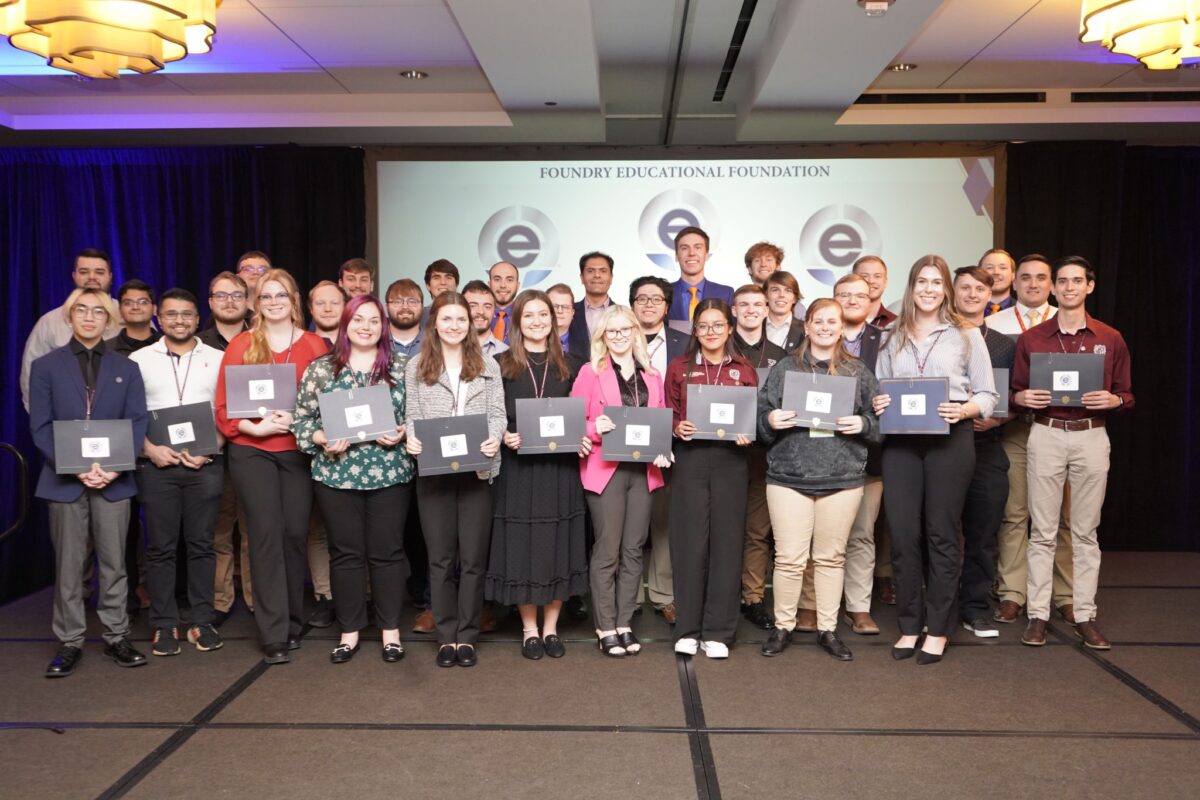
Metallurgical Engineering Trades Apprenticeship & Learning (METAL) partners with the Foundry Educational Foundation (FEF) to help build the next generation of talent in U.S. manufacturing. 

Established in 1947, FEF is the liaison between students, educators and industry leaders, ensuring young engineering talent enters the metalcasting industry. Today, it continues that mission by supporting scholarships, engineering programs and internships that shape the next generation of professionals in the field.

As part of this partnership, FEF has placed 24 interns from 10 universities in its first program phase and secured multiple industry partners to develop 10 more internships. 

FEF Interns work on real-world projects, assist with student outreach and gain critical networking opportunities that help shape their careers.

Meet Ianto Woolridge

Through our collaboration with FEF, METAL supports students like Ianto Woolridge, a freshman at Virginia Tech majoring in Materials Science and Engineering.

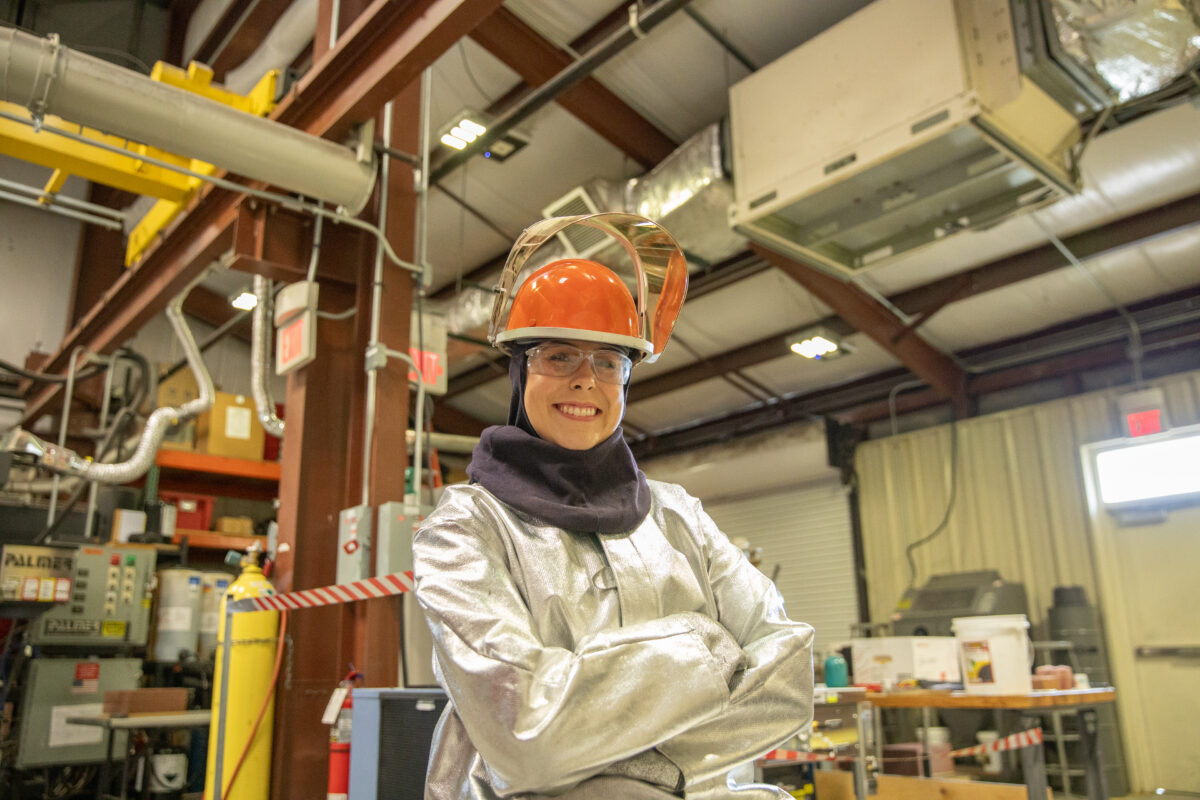
As part of FEF’s internship placement program, FEF placed Ianto at Virginia Tech as a foundry intern specializing in investment casting using 3D-printed expendable molds. His regular duties include setting up gating, creating molds around cast patterns and sintering molds under the direction of Virginia Tech foundry director Dr. Alan P. Druschitz.

Woolridge joined FEF in the Fall of 2024 and has since gained valuable insights and direction for his future career. Here’s what he said about how his FEF program experience has shaped his academic and professional goals.

Q: Tell us about your experience in metalcasting since joining the FEF program.

A: The FEF internship was my first real exposure to metalcasting and it’s been such a valuable experience. I joined the program in the fall of my freshman year. At that time, I had no idea what to expect. I knew I was interested in materials science, but I hadn’t explored the practical side of how those materials are used in manufacturing. Getting into the foundry for the first time was eye-opening. I saw firsthand how raw materials are transformed into usable products and that hands-on experience helped me understand the purpose behind what I’m learning in class. It was a huge shift from theory to practice and sparked a genuine interest in metalcasting.

Q: What essential skills have you learned from your time in the university foundry lab?

A: One of the biggest things I’ve developed is my problem-solving ability, especially under real-world conditions. In the foundry, things don’t always go according to plan. Whether it’s issues with temperature control, molds, or unexpected results in the casting process, I learned how to stay calm and work through challenges methodically. I also developed better communication skills. I leaned heavily on seniors in the foundry who had more experience and they were incredibly supportive. Collaborating with them taught me to ask the right questions, learn from feedback and troubleshoot effectively. I know I’ll take these skills with me into any engineering or professional setting.

Q: How do you see your metalcasting experiences influencing your career path?

A: When I first came to Virginia Tech, my plan was straightforward: get a degree, go to graduate school, earn a PhD and work in a research lab. But the FEF experience shifted my perspective. Working in the foundry made me realize that I prefer hands-on, outdoor work where I can physically interact with materials and processes. I enjoy the energy of the foundry, the teamwork and the tangible outcomes. While I still value academic research, I now see myself pursuing a more applied role in the industry—something that blends engineering with real-time problem-solving and production.


Examples of Ianto Woolridge’s work as part of the Virgina Tech FEF Program

 Q: In what ways has FEF supported your academic and industry experiences?

A: FEF has made a significant impact on both my education and my confidence as a student. Because I had early exposure to real casting and manufacturing techniques, I’ve felt more prepared and less intimidated by my coursework – especially in classes like manufacturing, where we’re expected to understand casting principles. That’s been a game changer for me. It’s one thing to study manufacturing, but it’s another to see and do it for yourself. FEF allowed me to apply what I’m learning and to connect the dots between theory and practice.

Q: What message would you share with supporters of FEF who help make these opportunities possible?

A: I can’t thank FEF and its supporters enough. Without the scholarship and the opportunity to get involved early in the foundry, I probably wouldn’t have discovered how much I enjoy this type of work. It’s not just about the financial support – though that certainly helps – it’s about being given a space to learn and explore. Because of this program, I’ve explored options for a future career after graduation. I hope donors and industry partners continue to invest in FEF because their impact on students like me is life-changing.

Q: What would you say to other students or the general public who may not be aware of opportunities in metalcasting or manufacturing?

A: There’s a gap in awareness. Many students go into engineering just thinking about high-paying jobs, but they often overlook careers in metallurgy or manufacturing. These fields are essential to the U.S. economy but don’t get the visibility they deserve. Programs like FEF help change that by exposing students to what these careers look like. They show us that hands-on, high-technology work in these industries can be just as impactful and rewarding as more traditional engineering paths.

Learn more about FEF’s programs and its mission here: https://www.fefinc.org/