Fast Track to Success: FerroWorks Trains Next Generation of Metal Workers

For more than 150 years, FerroWorks’ foundries have powered trains and railroads in America. Now, the steel company is keeping manufacturing in the U.S. on track by training the next generation of highly skilled metal workers. 

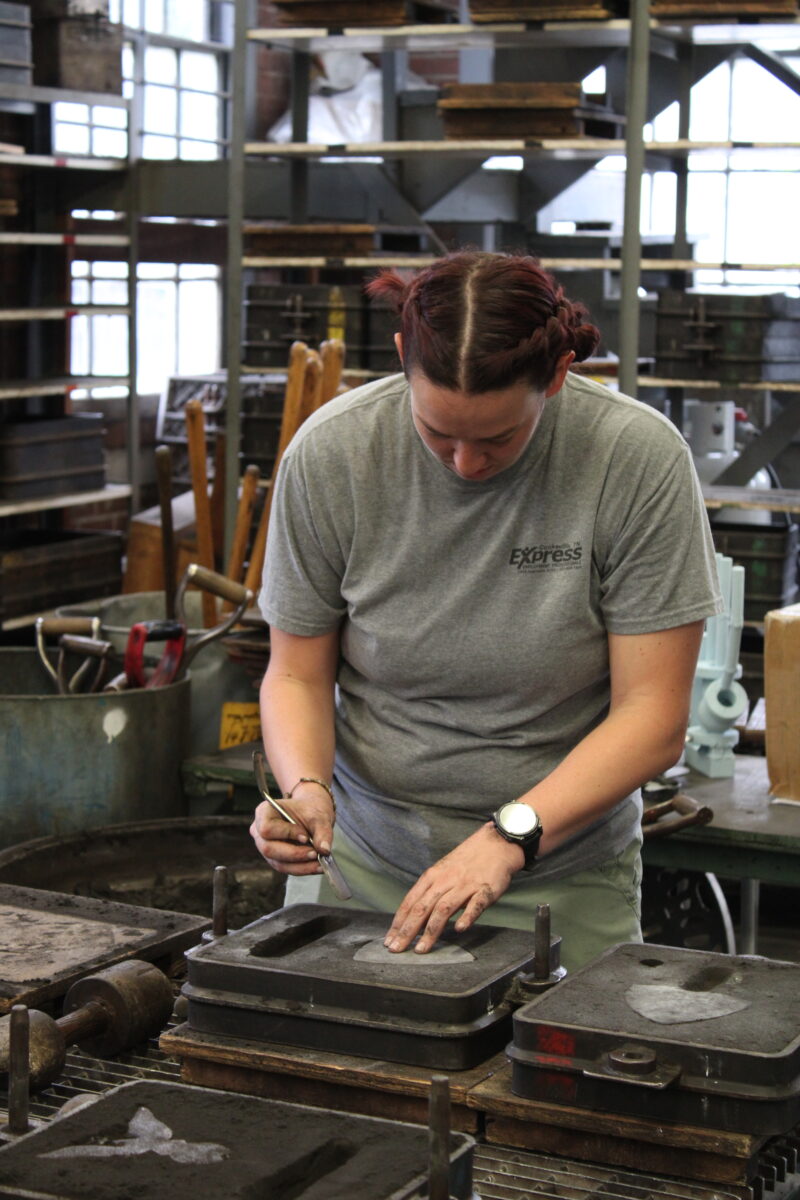
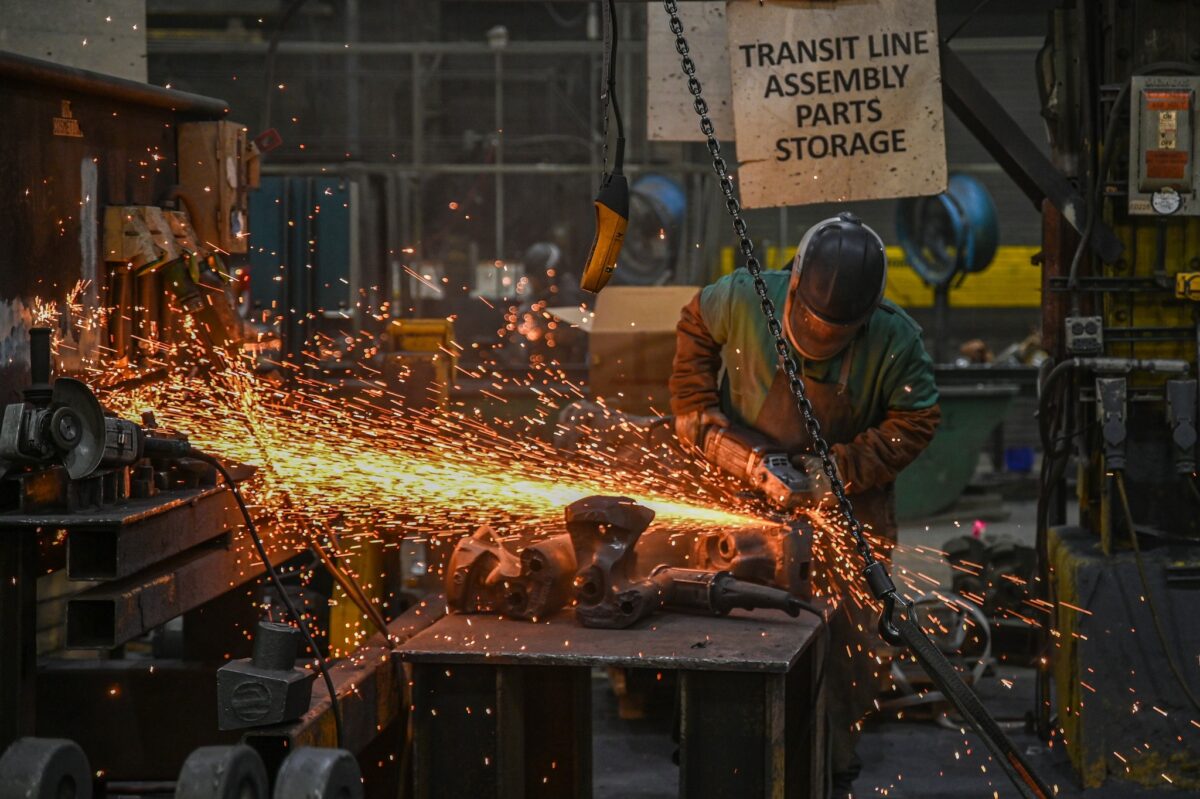
Metalworkers working in factory

FerroWorks, which manages McConway & Torley, Standard Forged Products, Kutztown Foundry and Machining, and McKees Rocks Forgings in Pennsylvania, is known for its excellence in casting couplers, knuckles, and yokes—all parts that connect train cars together. The U.S. rail system transports 1.5 billion tons of goods and more than 28 million passengers each year, and keeps growing. Between 2022 and 2026, $66 billion will go toward improving railways and expanding train services, according to the American Society of Civil Engineers. In addition to casting critical train parts, FerroWorks is forging the growth and development of its employees. With funding from METAL and its partner Jobs for the Future (JFF), which supports companies in the development of high-quality apprenticeship programs, FerroWorks is training more metallurgists to keep up with the industry’s high-speed growth. 

Kara Keith, a human resources generalist at FerroWorks, leads internal enrollment for the Industrial Manufacturing Technician (IMT) program—one of the pillar continuing education programs FerroWorks offers. 

The 18-month apprenticeship program is hosted by the Community College of Allegheny County (CCAC) in Pittsburgh, Pennsylvania. Once a week, instructors from CCAC offer on-site training to a select cohort of FerroWorks’ team members. The classes range from industry topics like blueprint reading, mechanical and electrical systems, and pneumatics to leadership training and communication skills. Keith said the program is essential to providing employees with a well-rounded understanding of industrial manufacturing.

“Transferring knowledge is something that we struggle with in this industry,” she said. “This program makes our employees feel like they’ve been invested in and gives them a chance to learn more about other departments that they wouldn’t get to explore in their day-to-day roles.”

So far, 12 FerroWorks employees have graduated from the IMT program. This year, JFF will help sponsor training for six FerroWorks team members with its apprenticeship/work-based learning incentive funding, in partnership with METAL. 

A Freight of Opportunities 

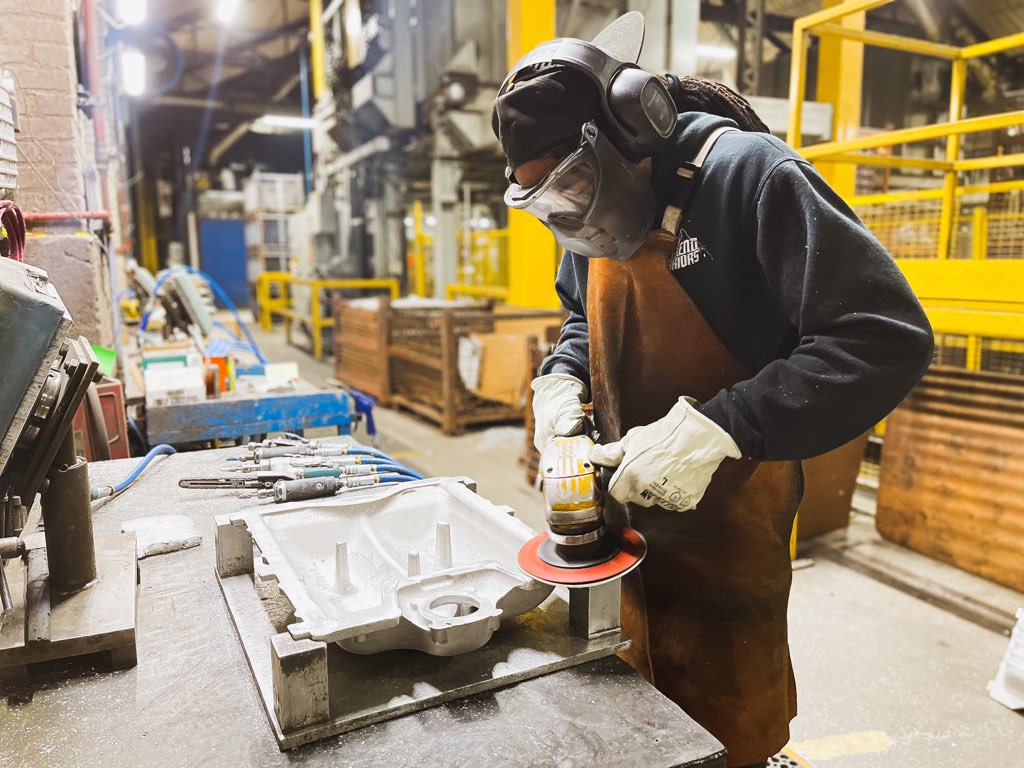
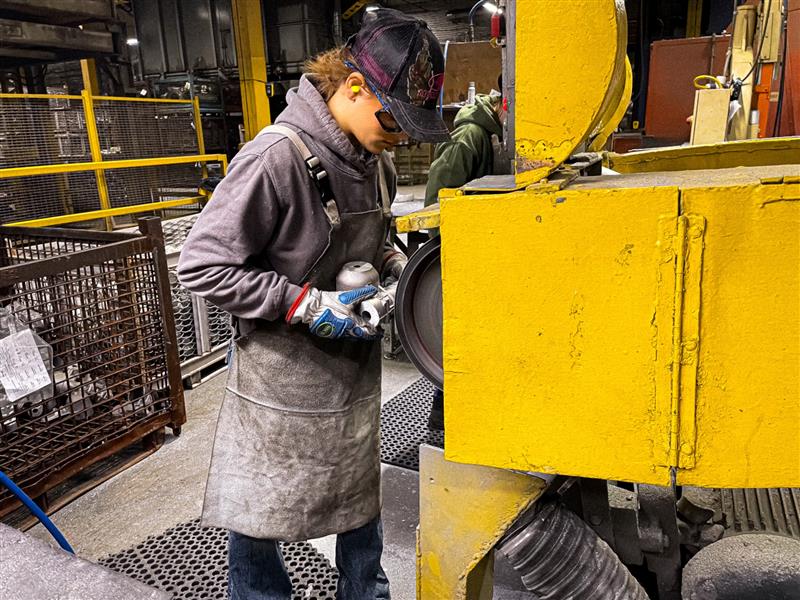
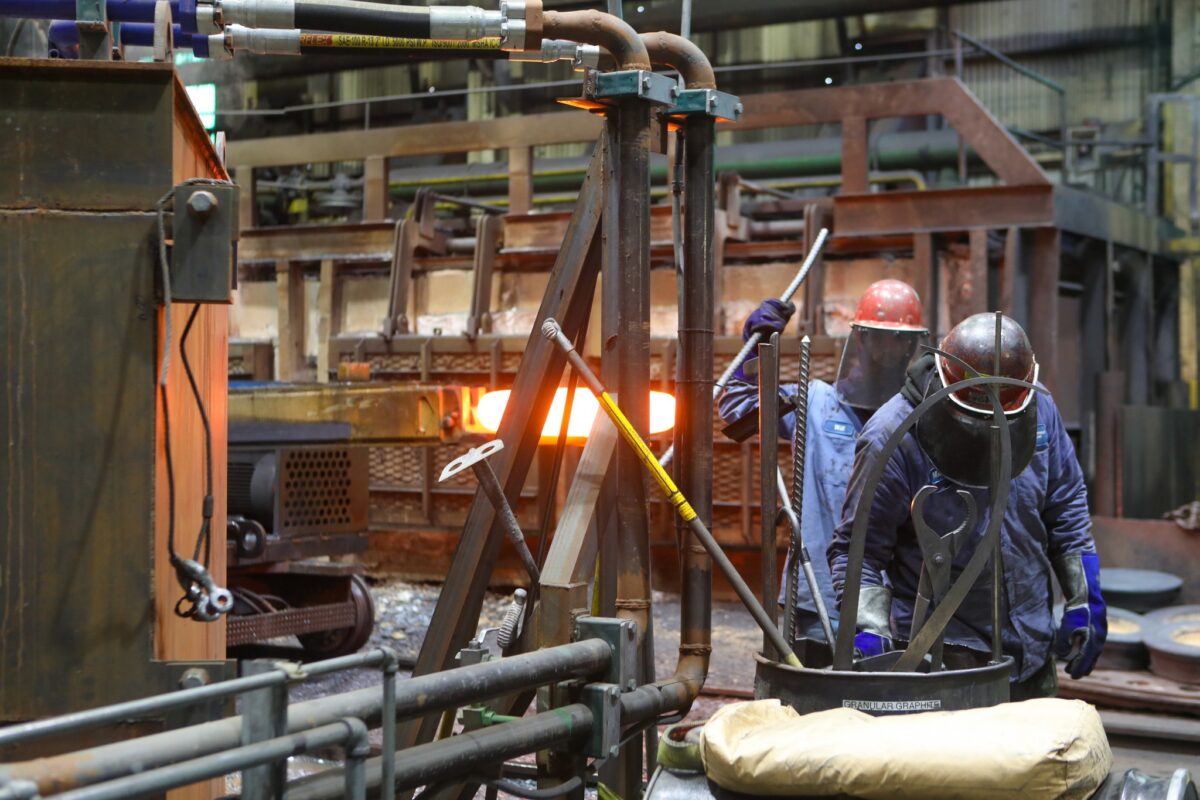
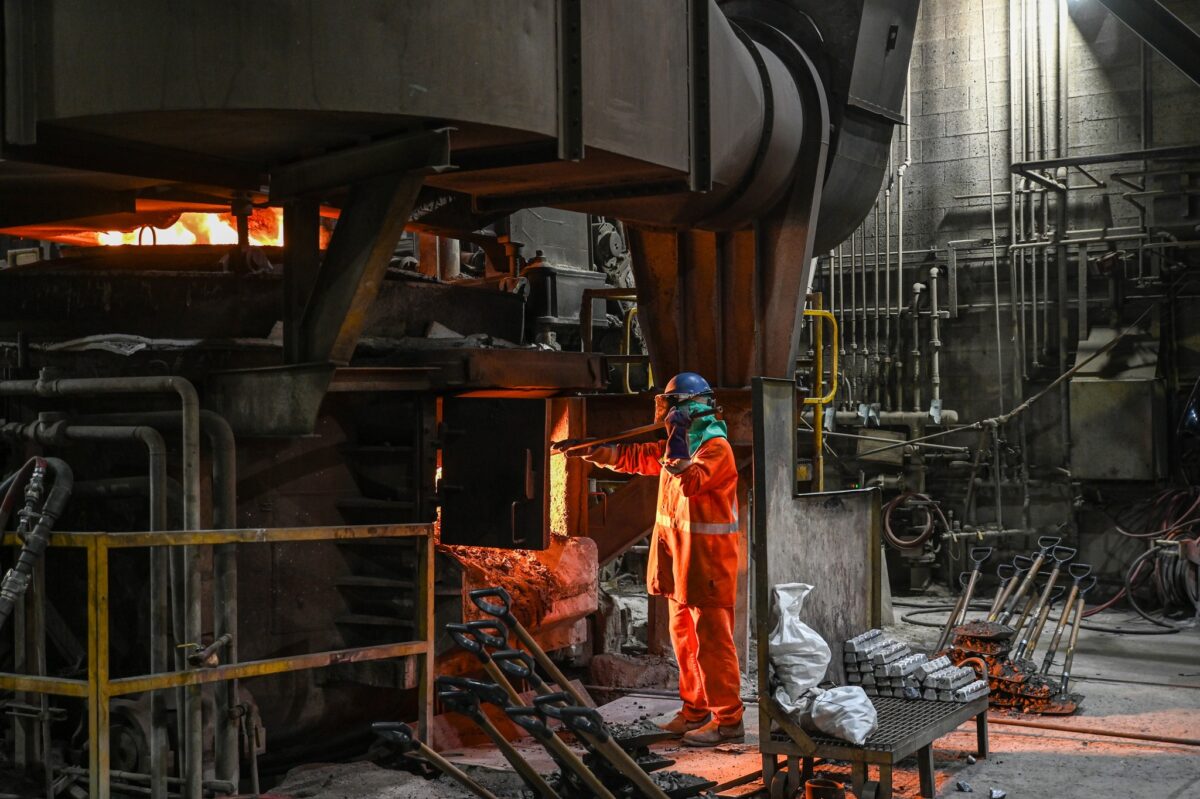
Steel workers at FerroWorks’ historic McKees Rocks Forgings, located just outside Pittsburgh, cast and forge critical components for railcars and heavy industry, supporting everything from transportation to national infrastructure. Photos courtesy of FerroWorks.

The U.S. casting and forging industry faces a pressing need for 122,000 skilled professionals by 2028 as workers retire and industry growth surges. In addition to a shortage of skilled metal workers, about 60% of manufacturers said attracting and retaining employees is a top challenge in a National Association of Manufacturers survey. 

Through METAL, led by IACMI – the Composites Institute and supported by the Department of Defense’s IBAS program, JFF has helped seven companies to date build, expand and sustain work-based learning programs, including apprenticeships. These programs allow manufacturers to improve training and retention in casting and forging roles—while offsetting the cost. JFF’s incentive funding can be applied to in-person or online learning programs, training equipment and trainer costs, curriculum development, program design and implementation, and support services for apprentices. 

“America’s casting and forging industry is essential to our country’s national security, infrastructure and other industries,” said Mark Genua, director of solutions design and delivery at JFF. “So we need a robust, well-trained workforce to fill these much-needed roles.” 

For Keith, applying to JFF’s incentive funding was an easy decision and process. The funding FerroWorks receives will go toward tuition for CCAC’s IMT courses—and educating the company’s future leaders.   

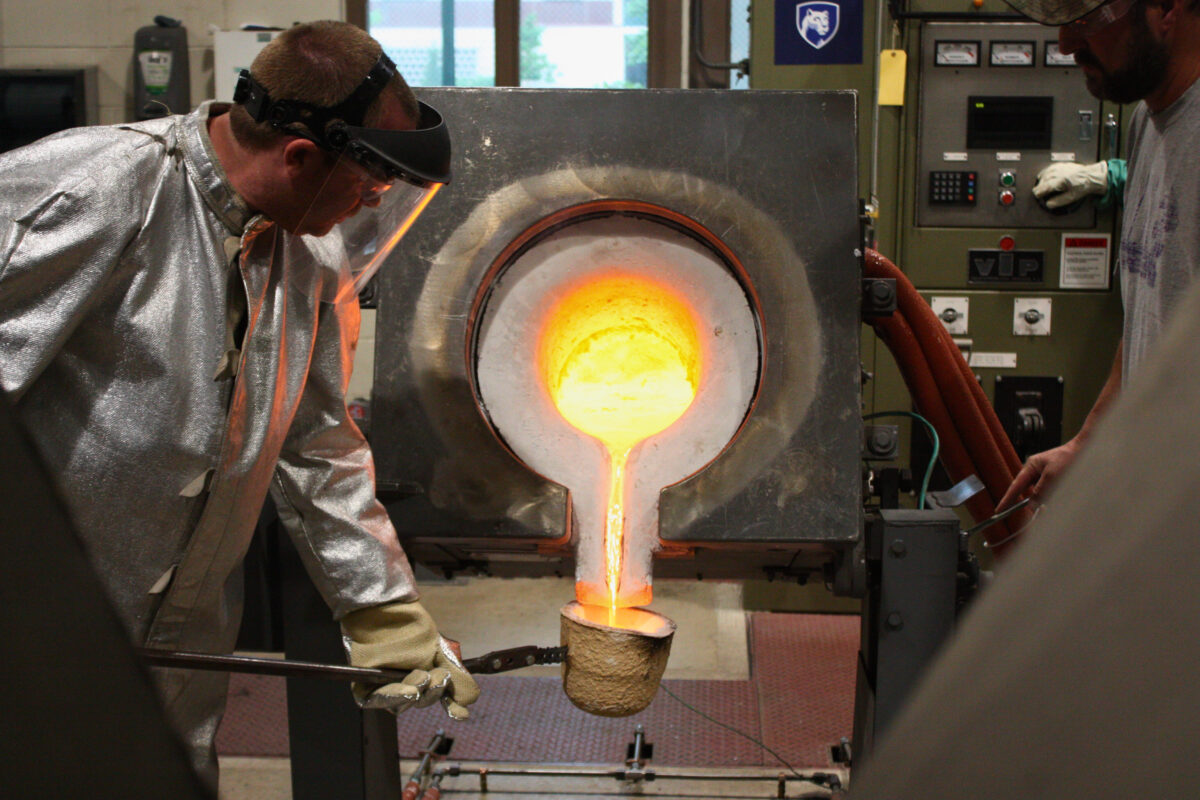
Man standing in front of furnace

FerroWorks’ Rob Cain earned his IMT apprenticeship certificate before becoming a production operations supervisor. Cain started with the company as a grinder and said the apprenticeship program gave him the confidence to take the next step in his career. 

“I already had the technical skills, but the IMT training gave me a more well-rounded understanding of the bigger picture, like how different systems and processes come together,” Cain said. “I still use what I learned in the program every day in my leadership role.”

IMT’s apprenticeship program is a nationally recognized certification that advances participants’ careers wherever they work in manufacturing. For FerroWorks, programs like IMT help the steel company reach production and retention goals, but Keith said the greatest benefit is employee development.  

“At the end of the day, the more leaders we can grow and grow people who can teach others, the more knowledge sharing and learning takes place,” Keith said. “We’re ultimately fostering a more skilled, versatile and engaged workforce.”

Ready to forge a stronger manufacturing workforce? Apply for JFF’s apprenticeship incentive program here.

Where Industry Meets Art

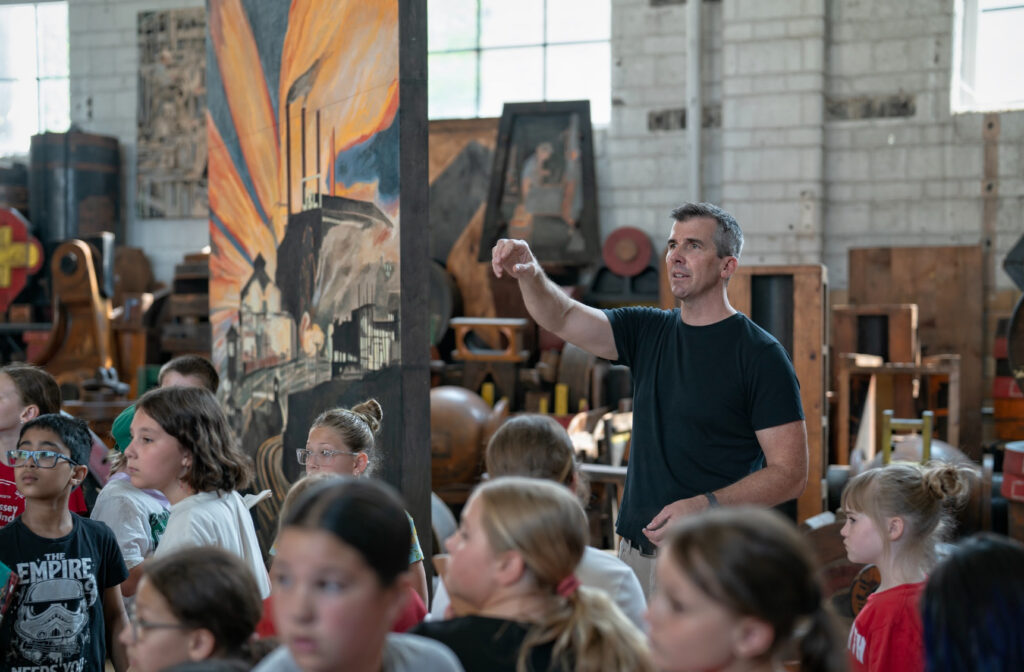
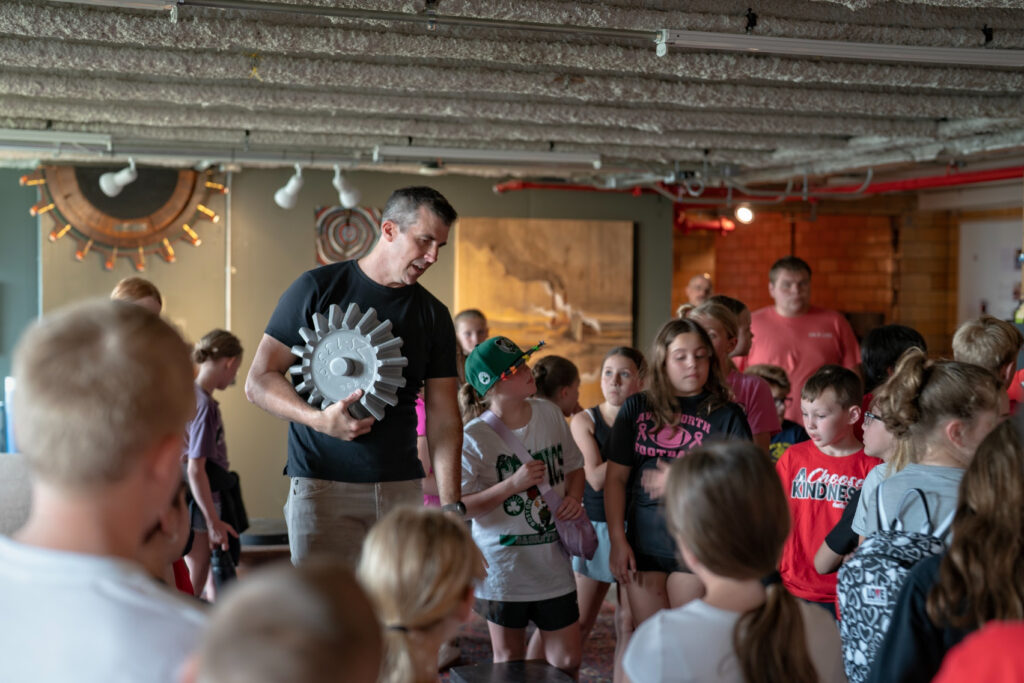
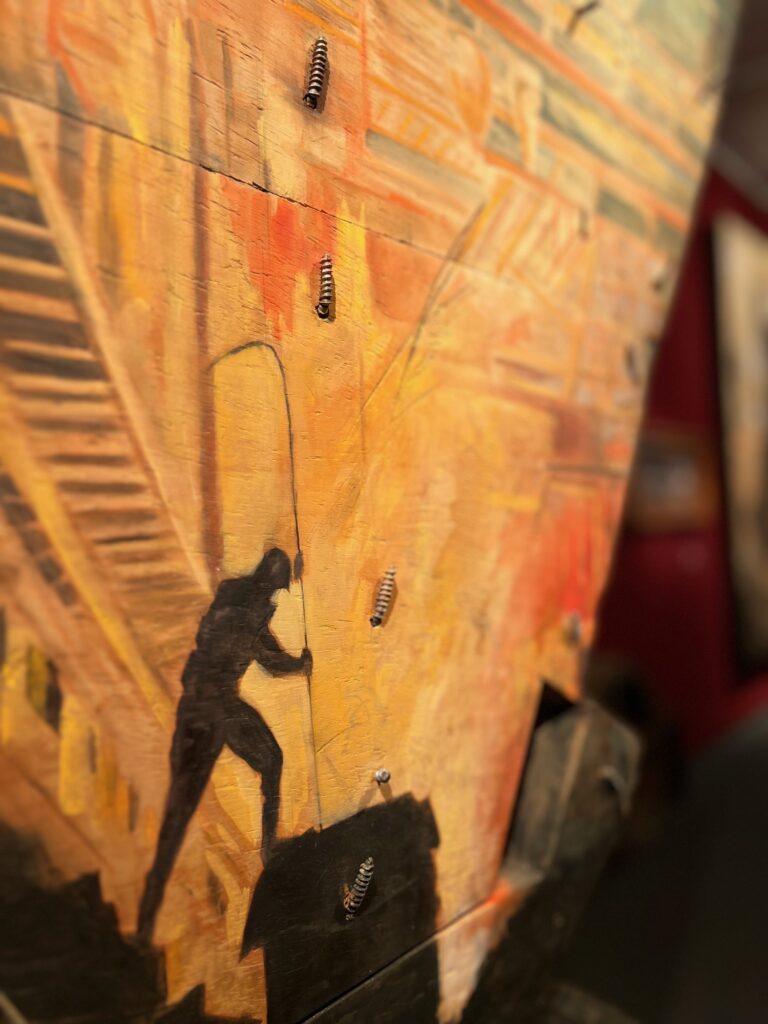
In a sunlit studio in Pittsburgh’s Hill District, surrounded by stacks of century-old wooden foundry patterns and oil paintings drenched in rust-colored nostalgia, artist Cory Bonnet is quietly revolutionizing the way young people see their future. His initiative, Patterns of Meaning, is more than an art project—it’s a movement designed to reconnect communities with the history, creativity, and possibility embedded in manufacturing. And at the heart, is a plan to inspire future makers through workshops that carry an urgent and compelling promise.

Cory is spearheading a new outreach collaboration with the Metallurgical Engineering Trades Apprenticeship & Learning (METAL) program to inspire students to pursue careers in the casting and forging industries. The partnership with METAL will be piloted in public schools in Pennsylvania’s Allegheny County and surrounding counties. By connecting the industrial history of their community with the imagination of hands-on art projects, Cory is aiming to ignite that spark in more than 1,000 kids within the first year.

“I want them to look at manufacturing not as factory work but as a creative endeavor,” he explains. “It’s problem-solving. It’s invention. It’s creation.”

Trash to Treasure

Cory’s studio is a time machine built from weathered wood, technical blueprints, and bold new ways to showcase them. The patterns—hand-carved forms once used to cast the components of steel mills—serve as both historical artifacts and creative springboards. “These things were all built by hand,” Cory says. “Before CAD, before CNC machines. Built with skill, sweat, and imagination.” Each salvaged artifact—some dating back to the 1890s—tells a story.

His journey into combining art and industry began with collecting a few scrap metal pieces from a salvage dealer named Chip Barletto. Chip was used to hauling big stuff—like 80-ton pieces of iron—and shared how these hunks of metal reveal the rich history of the region where they both grew up. Wanting to preserve these relics of the Steel Belt, Cory bought one of the most complete collections of industrial casting patterns and blueprints from this era in the world. He’s now working with a consortium of artists who use the collection in unique mediums: oil, glass, ceramics, and sculpture. They take what previously was forgotten in a warehouse and revitalize it.

Ingenuity Through Art

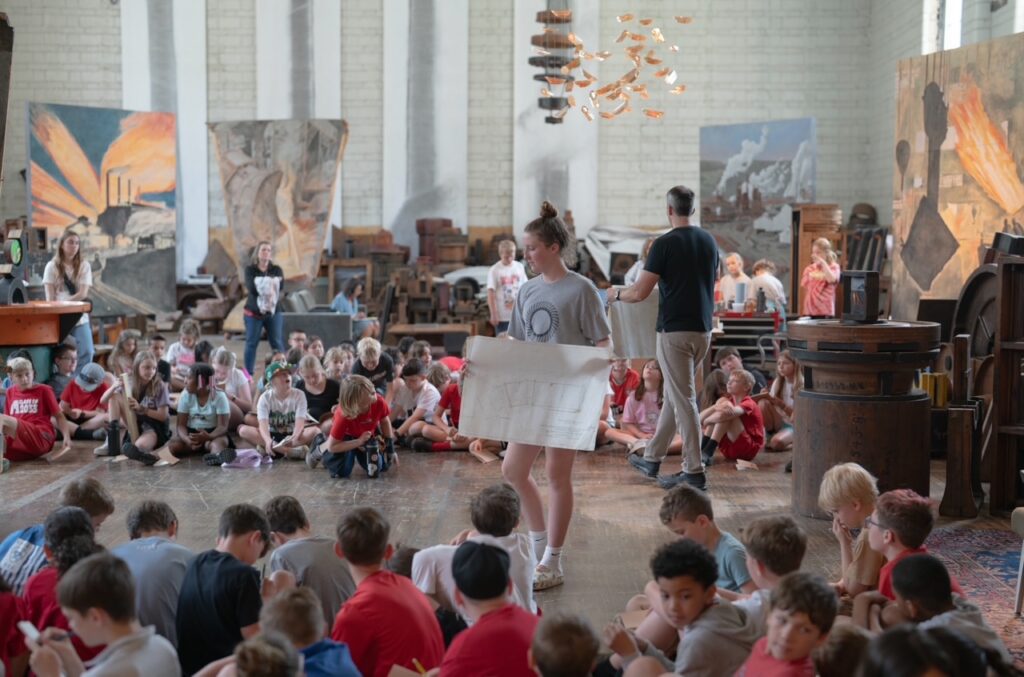
It’s this spirit of ingenuity that Cory wants students to encounter. Led by IACMI—The Composites Institute®, METAL is supporting a variety of K-12 workshops across the country. This workshop will immerse students in a curriculum that merges fine arts with technical learning. Younger students might paint, draw, or create collages inspired by the patterns and their stories. Older ones may get hands-on with wax models, CAD tools, sand casting, and 3D printing. “It’s a way to Trojan horse creativity into technical education,” Cory says with a grin. “Art with technology is how young people will create the next unbelievable things.”

“Right now, there’s a disconnect,” he continues. “Young people don’t see metalworking or manufacturing as exciting, meaningful careers. But they are. These are industries that built the modern world. And they were built by people whose greatest assets were human spirit and ingenuity.”

Through classroom presentations, field trips, and hands-on instruction that focus on creative opportunities through fine art, the initiative aims to reach students not traditionally tracked for careers in engineering and science. The goal is to inspire all students to think about careers in advanced manufacturing while they’re young.

Why Here, Why Now?

Through a pilot, Cory has already seen how this program rekindles a sense of wonder and gratitude—not only for the objects themselves, but for the people and processes that made them. Their parents, grandparents, and great-grandparents. The workshops aim to bridge the gap between past and future, between abstract creativity and tangible creation. Cory sees today’s students as uniquely positioned to imagine new possibilities. “They’re starting at a level the steelworkers of 100 years ago couldn’t even dream of,” he says. “They have the tools. Now we just have to help them realize the power of their own ideas.”

Ultimately, Cory hopes that students leave the Patterns of Meaning workshops with new skills and a new sense of identity—one rooted in both art and industry. “I worked solo for 20 years,” he reflects. “But the real magic happens in collaboration. When no one claims to know everything, and everyone listens and builds together—your work will be magnitudes greater than anything you could accomplish on your own.”

The compelling message he wants students and their parents to hear is that their country needs them to explore careers in manufacturing again, and when they do, it can be a win-win. They can look forward to good, well-paying jobs that won’t be the same as the ones even a generation ago. The need is urgent, and the time to embrace those opportunities is now.

To learn more about upcoming workshops, please contact Cory Bonnet: corybonnet@gmail.com

Original article credit: Margaret Slattery, Communications Manager at IACMI

Making Dreams Reality: High School Sophomore Yash Babar Discovers New Possibilities with METAL

Yash Babar always imagined the kind of engineer he could be. From robotics to car designs, the high school sophomore hasn’t decided what he might build one day, but he’s sure about one thing—he wants a career where he can create with his hands. When Babar’s dad told him about METAL’s bootcamp at The Ohio State University, he was ready to give metalcasting a try.

Babar, 15, is a sophomore at Coffman High School in Dublin, Ohio, and he’s the youngest person to ever participate in a METAL bootcamp. The week-long workshops on college campuses across the nation aim to ignite curiosity and passion about metallurgy for participants from all industry and educational backgrounds. Through a unique, hands-on foundry experience, bootcamp participants leave with essential metalcasting skills as METAL inspires the next generation of innovators and builders.

“For me, the number one goal is exposure,” said METAL bootcamp instructor Dr. Jason Walker. 

Walker, who’s the Director of Materials and Process at The Ohio State University’s Center for Design and Manufacturing Excellence, said METAL’s bootcamps are truly for anyone who’s interested in learning more about the metallurgy trade. “In four days, we give participants a solid look into what it really means to be in manufacturing,” he added.  

Other than taking his high school’s intro to engineering and industrial design class, Babar had no previous experience in manufacturing or metalcasting. He jumped at METAL’s hands-on opportunity over his summer break, hoping to build on the skills he learned in his robotics club. 

“I’m still trying to find out what I want to do in the future,” Babar said. “So I thought I should do the camp and see how it goes and see if I learn something new. I ended up loving it.”

Getting His Bearings

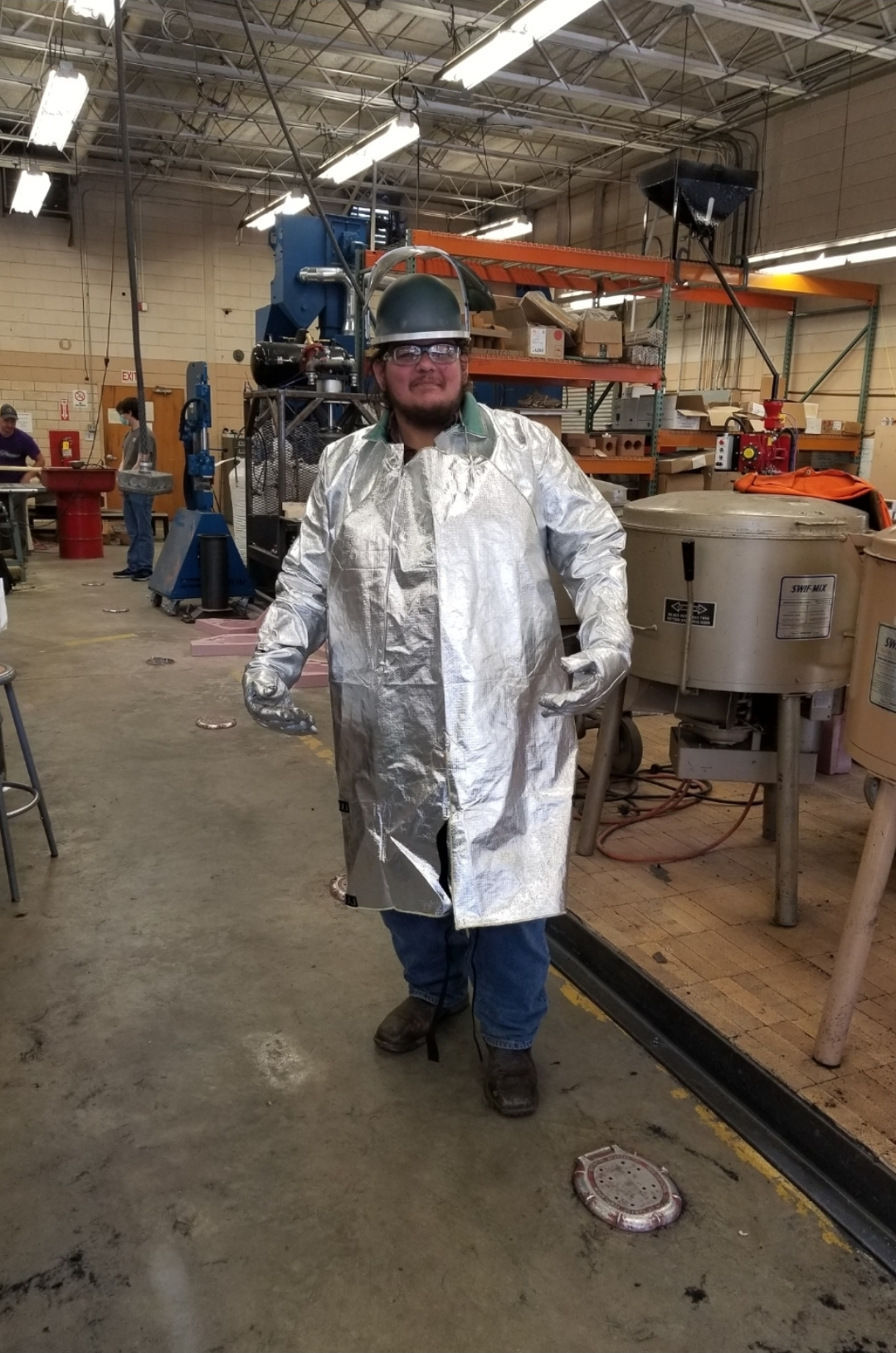
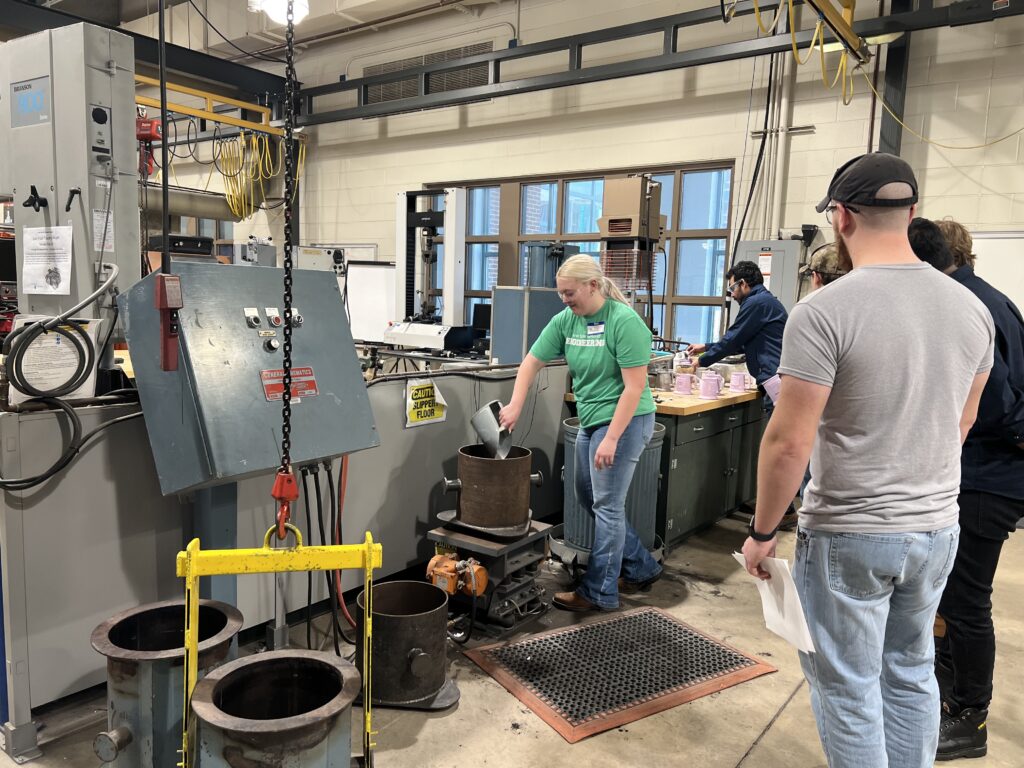
For four days, bootcamp participants switched between instructor lessons, workbook time and making their own castings in the university foundry. From aluminum anvils and mugs to brass medallions, the students leave each day with their creation and the practical skills to cast again in the future. 

But Babar said the best part for him was that the bootcamp was just plain fun. 

“Something that surprised me was the first day, maybe 30 minutes in, we’re pouring metal,” he said. “You’d think you’d go through days of training to be able to pour a thousand degree metal. The hands-on was what made me come back every day.”

During METAL’s bootcamp, Babar learned how to use a hot wire cutter, milling machine and hand tools like grinders and belt sanders. When it was time to design a casting of his choice, he followed the lost foam process step-by-step to make an aluminum Nike sneaker, complete with the swoosh logo and a hollow center for a tiny foot. Babar was able to expand his previous CAD software experience to make a 3D design of the mold and, with the instructors’ help, he completed his very first pour.    

“I had never seen liquid metal in person, so that was super cool,” Babar said. “You’re like, will it work? I crossed my fingers. It was a learning experience, but I really loved it.”

Walker encourages high school students to participate in METAL’s bootcamps so they can discover what career options are available. 

“I was a first-generation college student. I went into engineering because somebody told me to, and I didn’t even know what it meant,” Walker admitted. “We want high school students to be able to make better, more informed decisions.”

Casting a Bright Future

Babar said METAL’s bootcamp was the best STEM-related camp he’s ever attended. Beyond getting first-hand experience pouring molten metal, he also learned basic thermodynamics, such as how different temperatures affect the strength of certain metals. What stood out to him the most was using the foundry’s impressive furnace and the one-on-one time with professional metallurgists. 

“The instructors were amazing. I was the youngest person there and some things just did not make sense to me. So they were easy to approach,” Babar said. “When you’re new to something, you might be shy. They made you feel like you belong here.”

Babar’s mom, Supriya Babar, participated in METAL’s bootcamp alongside her son and said the sense of community was an unexpected but pleasant surprise. 

“We had incredible support from the faculty who went above and beyond to help us shape our ideas into tangible products,” said Supriya, who is an instrumentation engineer and a senior business systems analyst at Specialized Bicycle Components in Columbus, Ohio. “The experience was truly a fusion of art and science.”

Babar loved the bootcamp so much, he’s already told his friends they should attend too. 

“[METAL] is giving people experience that helps you grow with different skills. It can help you choose what you might want to do,” Babar said. He added he was surprised by how many jobs there are in metalcasting—jobs right in his backyard in Ohio’s robust manufacturing industry.  

For now, Babar plans to take what he learned back to his STEM classes and robotics club at school. He’s still not sure how his career will evolve, but becoming an engineer feels more like a realistic pursuit than a distant dream. 

“This definitely makes me want to do more engineering,” Babar said. “It showed me that I don’t have to have a desk job when I grow up. I could be doing something with my hands, I could be creating something. It opened up a new perspective.”

Ready to turn up the heat on your career? Register for our free online training then visit our events page to attend the next METAL bootcamp near you. 
***

Reshaping the Future: Machinist Robert Myers Casts a New Career with METAL and FEF

Robert Myers followed his passion for hands-on work and became a welder and machinist after high school. But after an accident caused him to put his career on hold, Myers returned to school and discovered metalcasting through the Foundry Educational Foundation (FEF)’s Georgia Southern University metalcasting program, turning a life-altering setback into a career-defining stepping stone.  

Myers was 23 when he decided to apply to Georgia Southern University in mechanical engineering. He’d injured his welding arm in a car accident and after a series of surgeries, Myers was ready for a fresh start. What he didn’t expect to find at GSU was a future in metalcasting. Today, Myers is a junior who’s had three FEF internships and a research assistantship through FEF’s METAL Internship Program. But he never meant to join GSU’s foundry program. 

“I was going to a meeting for our motorsport club. I walked into the metalcasting lab and was like, ‘hey, do you guys know where this meeting is?’ and they said ‘well, ours is about to start,’” Myers said. “They made me feel really welcome. The whole industry is like that.”

After his first American Foundry Society Student Chapter meeting, Myers found himself back at the foundry again and again. He soon became more curious about the casting process and caught the attention of FEF Key Professor Mingzhi Xu. 

“He always asked good questions,” said Xu, who was once an FEF student himself. “I was shocked he was a freshman—it was like finding a treasure.” 

A Curiosity for Casting — From Skillets to WWII Bombers

With support from Xu and FEF, Myers grabbed every opportunity to cast. One of his first projects was assisting the National Museum of the Mighty Eighth Air Force with the restoration of a WWII B-17 bomber. Myers cast an aluminum H-bracket for the plane’s machine gun turret, which won second place in the 2023 AFS Casting Competition and is still showcased in the museum today. In the AFS competition the following year, Myers led a GSU team that won $1,000.

Myers says it’s the constant creativity of metalcasting that inspires him. From melting scrap metal and analyzing its properties to designing 3D molds and casting custom skillets for industry leaders that visit GSU’s foundry, there isn’t a cast he won’t try.  

“I love starting with absolutely nothing, the bare bones, and turning the metal into something else,” Myers said. “It’s amazing to see that and to know how things are made.”

By his sophomore year, Myers was eager to apply his industry experience and growing talent to commercial foundries through FEF internships. He said his internships have resembled an assembly line as he’s learned about the metalcasting process from start to finish.

During his first internship at the Refractory and Insulation Supply in Iowa, Myers molded the heat-resistant ceramics that line furnaces, ladles and crucibles so metallurgists can safely contain molten metal. From there, he was all-gloves-in at Lodge Cast Iron in Tennessee. Myers poured the perfect liquid mix of iron and steel from a 20-ton furnace, cleaned red-hot slag, monitored the extreme temperatures of equipment, and even developed a software to optimize the production of the company’s historic dutch ovens.  

“We were doing trials, modifying the chemistry, so the metal would flow better,” he explained. Even as an intern, Myers was encouraged to try everything the foundry had to offer. “I was literally doing the entire process with the team.” 

Opening New Doors to Manufacturing

His latest internship at Norican Group in Georgia through the FEF METAL Internship Program taught Myers about the final step in metal production: cleaning, refining and delivering a finished product. The global technology leader builds equipment like cookware, manhole covers and critical parts for transportation infrastructures. Myers is enjoying another hands-on opportunity—and learning new ways to solve industry problems.    

“The number one thing I’ve enjoyed about my internships is the variety. The scope of the industry is ginormous, and there are so many different paths,” he said. 

Myers doesn’t think he’d have any metalcasting experience or continued pursuing his degree without Professor Xu, METAL and FEF. As he looks toward his future, Myers knows he wants to help push the limits of manufacturing. Whether that’s through robotics or quality control and optimization, the opportunities are endless.

“This industry is one of the blocks the world is built on. We need people who are willing to keep it alive,” he said. “I’m so glad I found metalcasting when I did.” 

Since partnering to address the critical workforce shortage in the casting and forging industry, METAL and FEF have provided hands-on internships to 38 interns from more than 20 colleges and universities across the U.S. Interns have a rare opportunity to learn from professional metallurgists who are working to solve real-world problems that move the manufacturing industry forward. 

To learn more about FEF’s METAL internship opportunities, email nbacik@fefinc.org. 

To learn more about METAL, including apprenticeships and online training, visit metalforamerica.org or fill out our contact form.

From Student to Teacher: Hannah Kemmet’s Journey Through the METAL Program

When Hannah Kemmet first walked into a summer camp at age 10, she had no idea she was taking the first step on a path that would one day bring her full circle—from eager student to inspiring instructor.

Now a rising senior at Penn State Behrend and an IACMI intern, Hannah has been instrumental in shaping the Made in America program, an interactive summer course that teaches kids the fundamentals of casting, forging, and modern manufacturing—with just enough chocolate to keep things sweet.

A Trailblazer in METAL

As a college sophomore, Hannah was the very first student to sign up for the pilot bootcamp with the new program at Penn State, METAL (Metallurgical Engineering Trades Apprenticeship & Learning). Her advisor Paul Lynch was helping stand up the national initiative for casting and forging, supported by the Department of Defense IBAS program and led by IACMI—The Composites Institute®. Hannah was getting her degree in Industrial Engineering and was looking for creative opportunities.

“I’m definitely a hands-on learner. I have to see it to do it,” Hannah told us in January 2024. By February she was helping with a STEAM fair where hundreds of young kids were seeing poured metal for the first time, and by March, she was spending her spring break casting aluminum and bronze.

“My favorite part was making the steins with the lost foam process,” she says. “It’s how engine blocks used to be made. I’m currently putting a new engine in my truck, and when I look at it, I think, ‘Wow! I know how that was made! I’ve done that!’”

Hannah’s curiosity and enthusiasm made her the ideal candidate to join IACMI as an intern, primarily to support Dr. Lynch as he developed the METAL curriculum for multiple audiences. How were they going to inspire young people and educate their parents to consider pursuing advanced manufacturing—to even get it on their radar? For 33 years, Penn State Behrend had been offering College for Kids, a summer camp with 190 classes for ages 6-14. This was the perfect avenue.

Bring on the Fun!

Hannah shares, “When I was young, I took College for Kids classes like Dissection, Sculpting, and even one called Girls Just Want to Have Fun. It was a wide range from dissecting owl pellets to making lip gloss. And I remember thinking ‘this is summer camp, not school; we’re here to have fun!’”

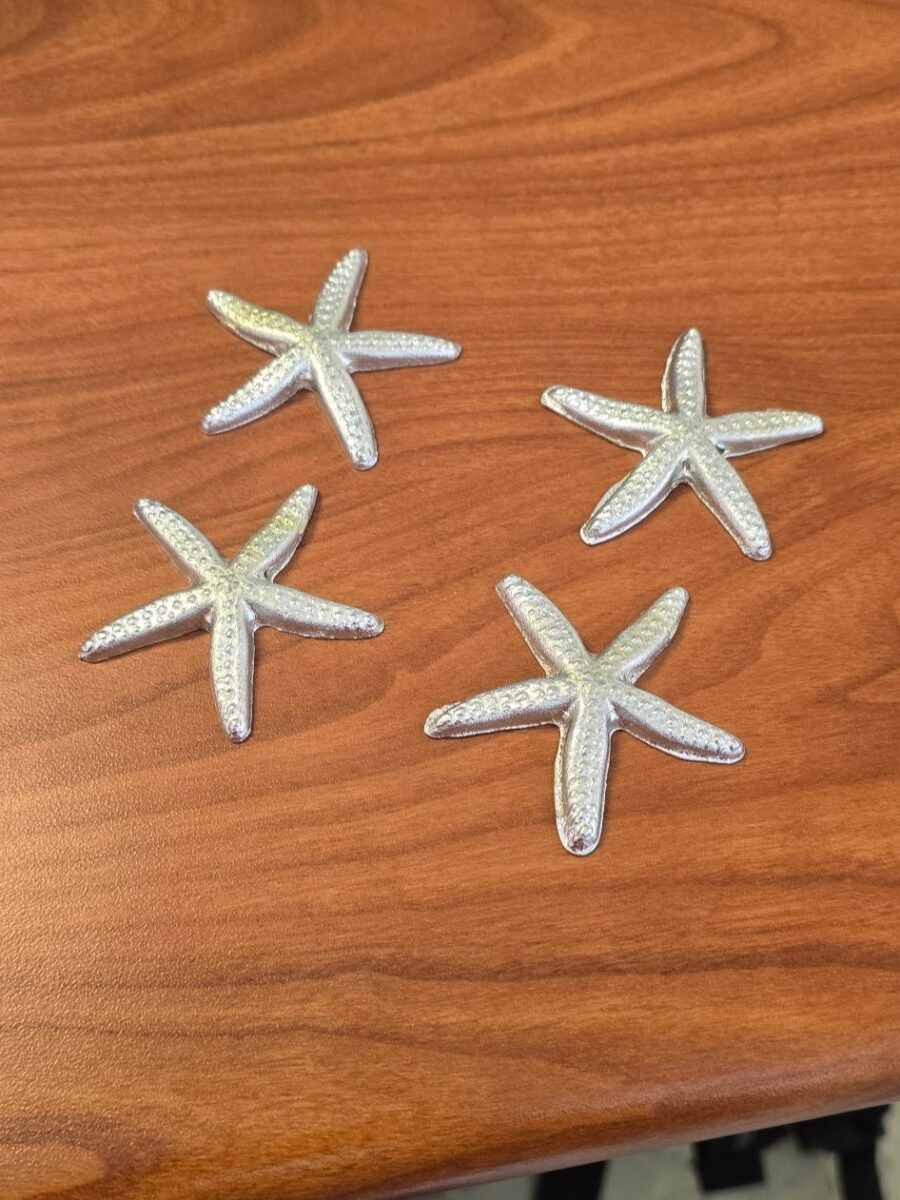
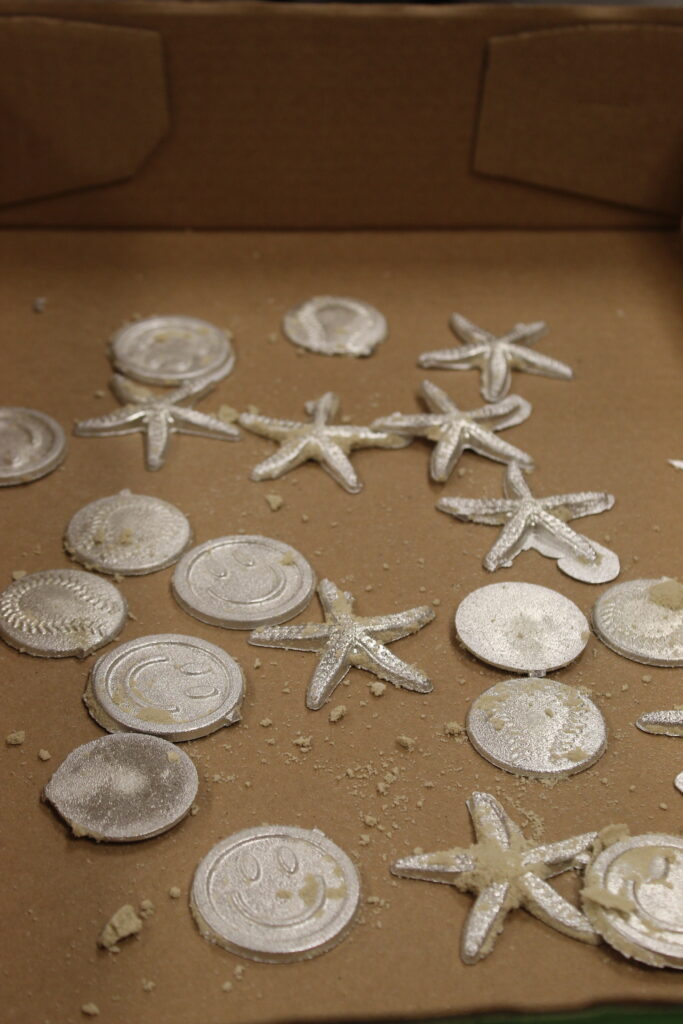
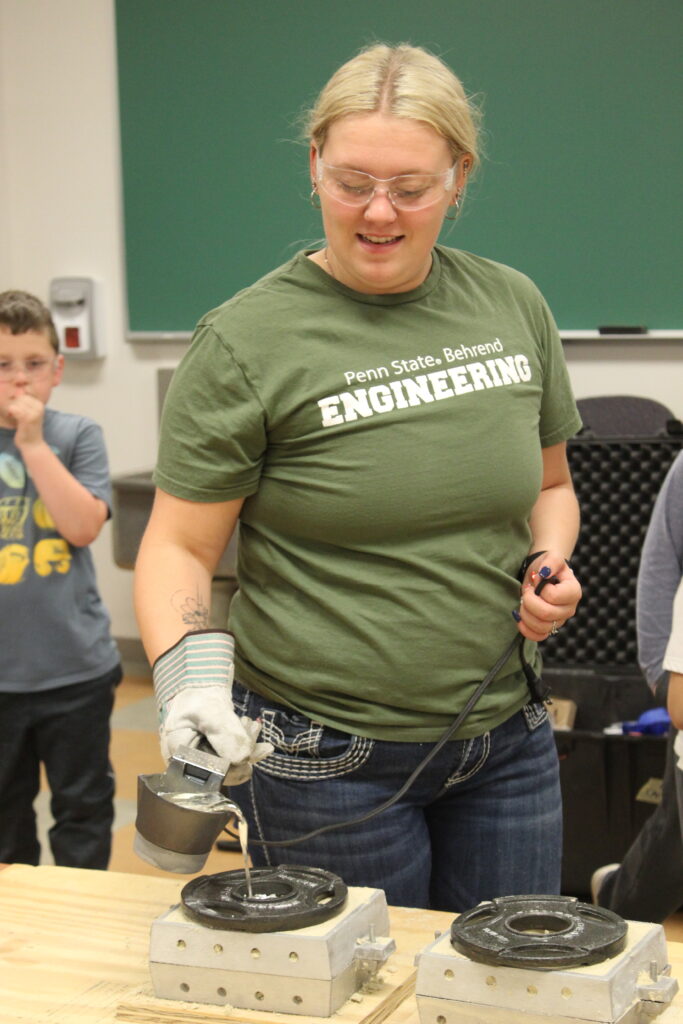
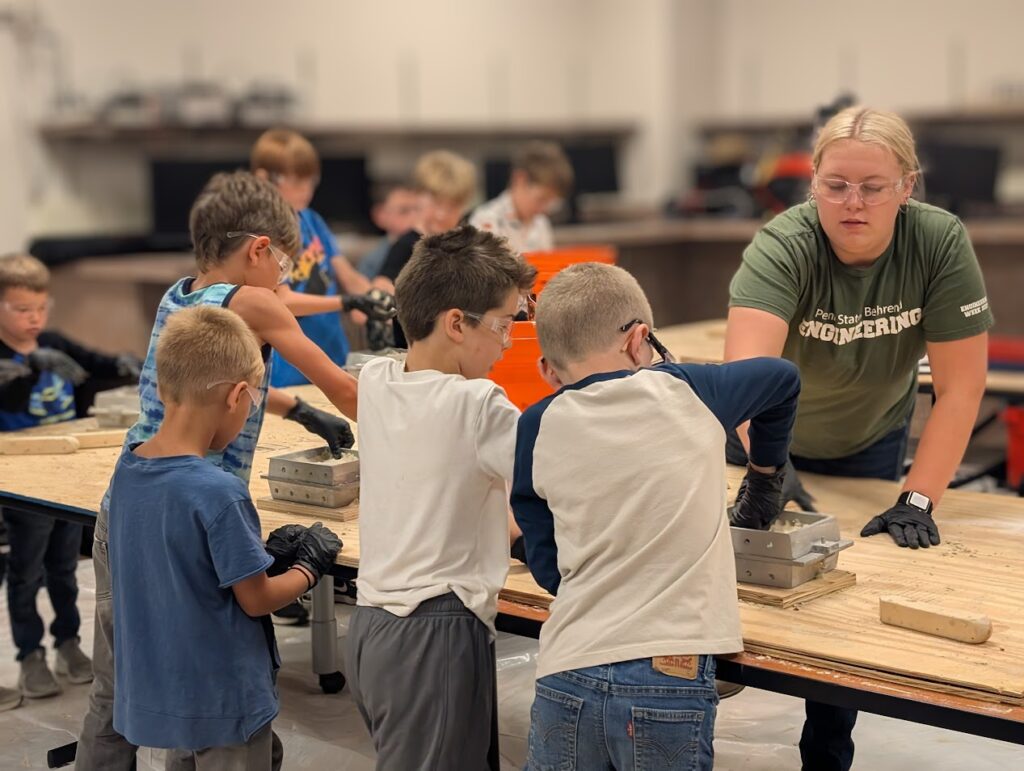
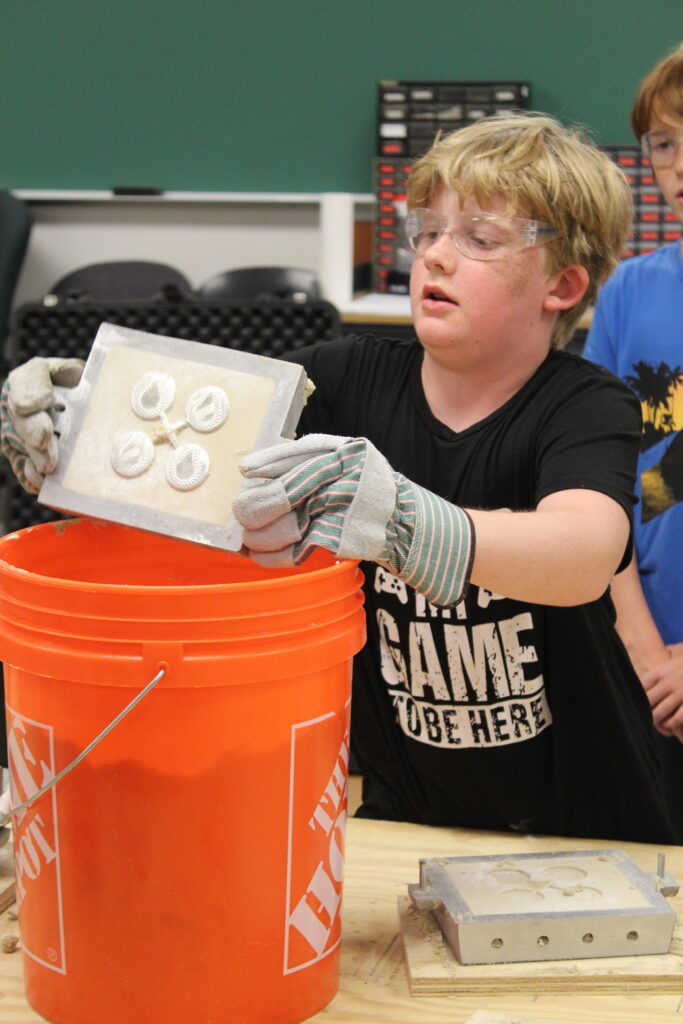
She kept that top of mind last summer, as she helped plan and run 3-hour additions to Engineering Challenges and Chemistry. Kids as young as kindergarteners were pounding sand molds, to take home metal keepsakes like smiley faces, starfish, and baseballs.

“The kids were super into it,” Hannah remembers. “It was something totally different, something they’d never done before or even heard of. Then after, a lot of them were like oh, I want to be an engineer or work in metallurgy.”

The experiment was such a hit that College for Kids asked Dr. Lynch’s team to run week-long camps with a focus on manufacturing. Their challenge: how do we plan age-appropriate activities for a wide range of techniques that will keep them engaged for five days? Once again, Dr. Lynch turned to Hannah.

“With her wide technical background and outreach experience, I knew Hannah was the perfect fit for this,” he says. “I told her preparation is paramount.”

So, as lead instructor, Hannah prepared a curriculum for kids who love to build, explore, and create. They start with 3D printing, where they print custom name plaques and wind-up cars which they assemble. The next two days they move onto sandcasting, where they mold and pour tin objects like the Nittany lion, Lake Erie fish, and METAL keychains. Thursday, they melt chocolate into food-grade molds; getting to eat their creations is a definite bonus. They wrap up the week with a showcase for their parents to see how all these methods are connected.

“I didn’t just want to send home the items they made,” says Hannah. “I wanted the kids to show and explain to their parents what they did and how they did it. They were proud to display their work. And for the kids whose parents already work in manufacturing, they realized, ‘Oh my gosh, I get to see what my parents do all day!’”

Looking Back, Looking Ahead

Looking back on six weeks of camps and working with 154 students, Hannah shares, “Their favorite parts were melting the metal, eating the chocolate, and smashing the molds. It was messy, a little chaotic, and they absolutely loved it.”

But the kids weren’t the only ones learning. This has helped Hannah reflect on her skills and interests as she plans to make her next career move after graduation.

“On parent day, I got to talk with one dad who works at Electric Materials. As he described what he did, I thought it sounded way different from what I’ve seen in other factories. I haven’t found the thing I want to do every day,” she admits, “but this class helped me see something about myself: I like understanding why problems occur and how to fix them–the whole process from start to finish.”

Dr. Lynch adds, “I’ve seen tremendous growth in Hannah these past two years—from her technical education to work ethic to leadership. She was recently elected president of our student chapter of the American Foundry Society, and this will be her fourth year with Cast in Steel. I don’t know where she’ll end up, but I’m very happy to see that growth.”

Whatever is next for Hannah, you can bet it will be something hands-on. From dissecting frogs at age 10 to teaching kids how to cast metal a decade later, she’s living proof of what these programs can spark—and sustain.

Photo Credits: Heather Cass, Penn State Behrend

Original story from IACMI.

From NFL to National Defense: Tim Johnson Tackles Helmet Safety in METAL Bootcamp

Retired NFL linebacker Tim Johnson knows how to deliver a hit—and he knows what it takes to stop the impact of one. 

Johnson, a professional football player for more than 20 years, launched his career as NCAA Division 1-AA Defensive Player of the Year in 2000. He went on to play for the Baltimore Ravens, Chicago Bears and the Oakland Raiders, where he blocked a punt that advanced the Raiders in Super Bowl XXXVII. Now retired, he’s an entrepreneur who’s supporting the National Football League – and the nation – with a new type of defense. 

Traumatic brain injuries (TBIs) have become a top concern for the NFL. In 2022, the NFL saw 18% more concussions than the year before, and 10% of TBIs in the U.S. are from sports and recreational activities. When the NFL kicked off the Helmet Challenge to enhance player safety, Johnson decided he had a new mission to tackle. He started the Head Impact Prevention youth football league in 2017 to create an inclusive, safer game for kids, but he was ready to find better ways to protect players. Professional athletes are not the only ones at higher risk for head injuries and their long-term effects. Between 2000 and 2019, almost 414,000 veterans sustained severe head trauma, making TBIs one of the most common wounds from the Iraq and Afghanistan wars. Even mild concussions can increase the chances of Alzheimer’s Disease, Parkinson’s Disease, dementia and seizures—and Johnson is determined to find a solution. 

With his business H.I.P. MD, Johnson is developing a first-of-its-kind helmet for military personnel, first responders and athletes. He’s always had a natural instinct to defend, but watching fighter jets fly over NFL stadiums and being part of the league’s patriotism inspired Johnson to protect Team USA.

“We’re fortunate to play the game, but our war fighters put their lives on the line for their families and their country,” he said. “I learned a lot from the league, and I want to build a business to help our defense, our infrastructure and our communities. That’s the team I want to be on.”

Gearing up for his next big play in manufacturing, Johnson headed to METAL’s Ohio State University bootcamp to see how metal can be used to protect service members from blast impacts and ballistic materials like shrapnel.   

“We want to put the war fighters first,” Johnson said. “The military is the most important entity in the world.”

Engineering a Winning Solution

Johnson’s H.I.P. helmet, the Brain Crown, is inspired by nature to be both strong and resilient. Its design, based on biomimicking, replicates animal traits that are essential to survival after a head-to-head collision or an enemy attack. By mimicking the horns on a ram, an armadillo’s armor and the protection of a woodpecker’s beak, the helmet distributes force from an impact around its structure, away from the skull and brain.

With a prototype in development, Johnson wondered if metal could be a critical missing piece. As a self-described “steel guy,” growing up in manufacturing towns like Fairfield, Alabama and  Youngstown, Ohio, he was ready to melt some metal and find out for himself.

For four days, Johnson got a hands-on look at the possibilities of metal manufacturing. He cast a mini anvil engraved with “H.I.P. MD,” an aluminum mug, a bronze coin, and finally a creation of his own—a football on a pedestal that ironically resembles a helmet. The best part for Johnson was practicing every part of a pour: guiding the ladle, filling it with liquid metal, and carefully turning it over onto a mold to create something new. 

“The hands-on participation was amazing,” Johnson said, adding that he also gained experience using CAD software to develop 3D mold designs. “It was a really thorough four days. If you’re looking for a metalcasting opportunity, this is the place to go.”

What stood out the most to METAL instructor Jason Walker was Johnson’s enthusiasm. Walker’s number one goal for METAL’s bootcamps is to introduce participants to manufacturing skills and experiences they won’t get in a classroom.

“Most engineering students graduate from universities having never seen a metalcasting or a rolling mill and they’ve never been in a machine shop,” said Walker, who serves as the Director of Materials and Process at The Ohio State University’s Center for Design and Manufacturing Excellence. “I believe it makes them much better at their job, whether it’s engineering or not, to understand the process better.”

But the bootcamp isn’t just for students—it’s for anyone who wants to learn more about metalcasting. Walker invites everyone from high school students to manufacturing professionals and business owners like Johnson, even if they’ve never stepped foot inside a foundry before. 

“All of this is helping to build a workforce and a country that is resilient and able to manufacture the products we need,” Walker said, which Johnson agrees will be critical to the future of H.I.P. helmets. 

Training MVPs in Manufacturing

Johnson’s helmet prototype has been in development for five years. As he thinks about how to build, test and deliver a product that can protect the nation’s Armed Forces, he’ll need foundry-ready engineers. 

“We need to figure out how to make something that’s tested and proven, and then we can go to market. We’re going to need people,” Johnson emphasized. “I’m really interested in learning about manufacturing, whether it’s additive or subtractive, and learning how to create jobs and opportunities for people.” 

Eventually, Johnson would like H.I.P. MD to expand beyond helmets to shoulder pads and other body armor options for all professions and ages, from aerospace to youth sports. But first, Johnson needs to understand the processes, materials and teamwork that will make the Brain Crown a reality—and METAL’s bootcamp helped him do just that. 

“The passion and the mission behind the business is driving it. It’s not a sale or a product—it’s saving the minds of our youth and protecting the future of sports and our war fighters,” Johnson said. “We want to make an impact in the world.”

Ready to explore what’s possible with metalcasting? Register for our free online training then visit our events page to attend the next METAL Bootcamp. 


California State Polytechnic University, Pomona Joins METAL to Expand Metallurgical Workforce Training on the West Coast

POMONA, California, July 29, 2025 – The Metallurgical Engineering Trades Apprenticeship & Learning (METAL) program, led by IACMI – The Composites Institute®, is proud to announce a new partnership with California State Polytechnic University, Pomona (CPP) to establish a West Coast hub for advanced workforce training in metalworking and manufacturing. Funded by the Department of Defense’s Industrial Base Analysis and Sustainment Program, METAL strengthens and diversifies the U.S. metal manufacturing workforce, focusing on casting, forging and plate rolling.

As the newest METAL hub operator, CPP will serve as a regional training and coordination center, integrating METAL training across educational institutions.

“This new hub in Southern California marks an exciting expansion of our national training footprint,” said Lucinda Curry, METAL National Workforce Manager at IACMI. “CPP brings strong regional connections, a commitment to innovation in engineering education, and a proven track record of engaging learners. Through this partnership, we will ensure that current and future professionals in the West Coast have access to critical metallurgical skills training.”

CPP will implement METAL’s nationally recognized curriculum, beginning with a combination of online training and immersive, in-person boot camps held at CPP’s state-of-the-art manufacturing labs, which are equipped for melting, machining and heat treatment. 

Participants will gain practical experience in foundational processes, with access to advanced training in automation and specialized industry needs as they progress through the METAL curriculum.

In addition to adult training, CPP will lead outreach efforts for K–12 students by offering half-day workshops and partnering with high schools, technical schools and community colleges to spark early interest in metallurgical careers. 

“We are proud to join the METAL program and help shape the future of manufacturing talent in California and beyond,” said Winny Dong, the chemical and materials engineering professor leading the CPP METAL program. “This program aligns with our polytechnic mission to provide hands-on, industry-relevant education and reinforces our commitment to workforce readiness in advanced manufacturing.”

CPP’s addition to the METAL network strengthens a growing national network of METAL hubs, including the University of Alabama at Birmingham, The Ohio State University, Pennsylvania State University, the University of Tennessee at Knoxville, Tennessee Tech and Michigan Technological University. Together, these institutions are revitalizing American manufacturing by delivering responsive, scalable and sustainable workforce development programs.

For more information about METAL at Cal Poly Pomona, please contact:

Sarah Pope
Email: Sarah@piper-communications.com
Phone: 865-329-0553

About METAL
Metallurgical Engineering Trades Apprenticeship & Learning (METAL), led by IACMI, is an industry-driven initiative aimed at providing high-quality, hands-on training in the metalworking and manufacturing sectors. The program is designed to address workforce development needs by offering comprehensive curricula in casting, forging and metallurgy, with an emphasis on automation and modern manufacturing technologies.

About IACMI
IACMI – The Composites Institute® is a national public-private partnership focused on advancing composite materials and process technologies. Supported by the U.S. Department of Energy and the Department of Defense, IACMI brings together over 170 members from industry, academia, and government to drive manufacturing innovation and workforce development.

###

Pittsburgh-based Patterns of Meaning art initiative partners with METAL to engage K-12 students in steel and metal manufacturing

KNOXVILLE, Tenn. – The Metallurgical Engineering Trades Apprenticeship & Learning (METAL) program, led by IACMI – The Composites Institute® with funding from the U.S. Department of Defense’s Industrial Base Analysis and Sustainment Program, today announced a new partnership with the Pittsburgh-based Patterns of Meaning Initiative, an innovative program that introduces steel, specialty materials and metal manufacturing to K-12 students through the arts. 

“Manufacturing – including steel and metal production – is necessary for the future and depends on new artisans capable of the creativity and innovation it requires,” said Cory Bonnet, Pittsburgh-based artist and Patterns of Meaning founder. “The goal of Patterns of Meaning is to help change the cultural perception of heavy manufacturing from a dying industry to a creative and vital essential human contribution. Ultimately, we want to encourage future generations to pursue industrial trades, a much-needed trend for future workforce development.”

Patterns of Meaning is an unprecedented collection of industrial artifacts, paintings and sculptures honoring the industrial era. Its K-12 initiative is a unique curriculum that combines classroom project-based learning with experiential fine art exhibits, including artwork in steel, glass, ceramics and wood. 

The partnership with METAL will be piloted in the Pittsburgh Public School District and surrounding counties. It includes classroom presentations, field trips to Patterns of Meaning Exhibit Hall, and hands-on instruction guided by local faculty for class art projects focused on the metalworking industry. Projects may include drawing, painting or collage for younger students, then progress to more complex projects using computer-aided design, wax models, sand casting and additive manufacturing processes for advanced learners.

By introducing students to the creative and technical opportunities within engineering and sciences through fine art, the initiative will reach students not traditionally tracked for careers in these fields.

Since its kickoff in 2023, METAL—a U.S. Department of Defense-funded program that is developing a skilled trade pipeline to fill gaps in the U.S. metallurgical and manufacturing workforce—has gained significant momentum, including a rapidly expanding network of university hubs that assist with K-12 and adult metallurgical training. Tennessee Tech, University of Alabama and Michigan Tech are the two most recent additions, but the network also includes The Ohio State University, Penn State and the University of Tennessee.  

“We applaud Patterns of Meaning for its innovative efforts to transform public perceptions of the steel industry and manufacturing through fine arts,” said METAL National Workforce Manager Lucinda Curry. “Patterns of Meaning engages youth in metal manufacturing, aligning with METAL’s mission to strengthen the future metalworking workforce.”

Visit the Patterns of Meaning Workshop and Exhibit Hall in the Energy Innovation Center in Pittsburgh, Pa. and for a limited time in Brooklyn, N.Y. Patterns of Meaning recently announced a new partnership with Brooklyn Waterfront Artists Coalition, displaying its works in an exhibit entitled “Brooklyn X Pittsburgh: The Industry of Art” in Brooklyn, New York from July 19 to August 24. 

About METAL

Metallurgical Engineering Trades Apprenticeship & Learning (METAL), led by IACMI, is an industry-driven initiative aimed at providing high-quality, hands-on training in the metalworking and manufacturing sectors. The program is designed to address workforce development needs by offering comprehensive curricula in casting, forging and metallurgy, with an emphasis on automation and modern manufacturing technologies.

About IACMI
IACMI – The Composites Institute® is a national public-private partnership focused on advancing composite materials and process technologies. Supported by the U.S. Department of Energy and the Department of Defense, IACMI brings together over 170 members from industry, academia, and government to drive manufacturing innovation and workforce development.

About Patterns of Meaning

The Patterns of Meaning Initiative offers an innovative solution to address the critical challenges facing the manufacturing and steel industries—an aging workforce, difficulty in attracting young talent, and a weak public perception. Recognizing that these industries require new artisans, Patterns of Meaning embarks on an initiative to use fine arts to engage K-12 students by combining interactive, project-based classroom learning with experiential art exhibits featuring large-scale paintings and sculptures from the Patterns collection. To learn more, visit https://patternsofmeaning.org/

###

Forging a New Passion: How Hannah Desai Cast Her Future in the Steel Industry with FEF

Hannah Desai comes from a family of engineers. Her three older brothers specialize in civil, mechanical and electrical, and aerospace engineering, but after a semester focused on cutting-edge metallurgy research as an FEF intern, Desai knew she wanted to forge her future in metalcasting.  

FEF intern Hannah Desai pours molten aluminum for a cast at Virginia Tech’s foundry.

The U.S. casting and forging industry will need 122,000 more skilled professionals by 2028 to meet national production demands. METAL and the Foundry Educational Foundation (FEF) have partnered to accelerate the development of a highly skilled, adaptive manufacturing workforce with hands-on training and internship programs. So far, 16 interns from seven universities have had the opportunity to gain foundry experience before graduating, propelling their careers and strengthening the workforce pipeline. 

Desai, a 2025 materials science and engineering graduate from Virginia Tech, was certain she’d go into ceramics before taking her first metalcasting class. She’d never seen molten metal, never experienced the teamwork it takes to melt and shape a material like iron. But after discovering what was possible in Virginia Tech’s foundry, Desai hit the ground running.  

She began to cast everything from HokieBirds and turtles to a detailed TI-89 calculator with inscribed buttons. For her advanced casting lab final project, she took on the challenge of casting small, thumbnail-size steel magnets for the pure joy of trying something new.

“I loved the hands-on learning and seeing the process take place right before my eyes,” Desai said. “It’s different than collecting data. It’s actually seeing the process, being a part of it and then learning something from it.”

Desai carried this enthusiasm and curiosity for metalcasting into her FEF internship experience. 

Driving Industry Impact 

Hannah Desai, second from left, and FEF Key Professor Alan Druschitz, right, pose with Virginia Tech metallurgy students at the 2024 FEF College Industry Conference.

With guidance from FEF Key Professor Alan Druschitz, Desai applied her chemistry and engineering lessons to real-life foundry projects—from forging new combinations of metals to performing thermal and chemical analyses and even testing the electromagnetics of steel using a forklift battery.    

The foundry became Desai’s playground to experiment and learn, and that’s exactly what Druschitz wants for his metalcasting students. 

“If a student said, ‘can we come into the foundry and do something on a weekend or an evening?’ the answer’s going to be yes,” he said. “FEF professors are unique because we’re dedicated to the industry and growing the future workforce.”

Druschitz started the metalcasting program at Virginia Tech 15 years ago. Today, the school has an FEF-certified curriculum and operating foundry. Thanks to funding from FEF, Druschitz is able to buy new equipment, award scholarships, and pay student researchers who are eagerly driving the metal industry forward. 

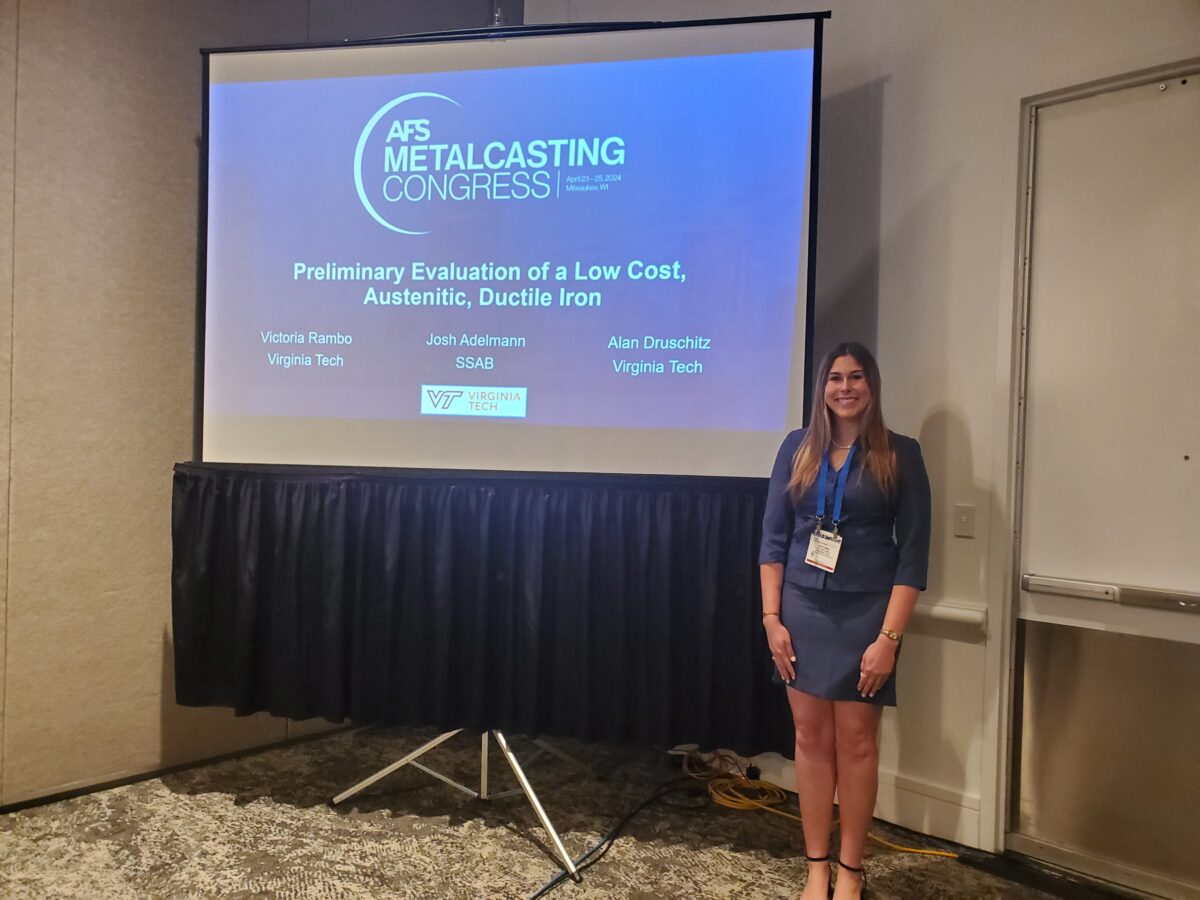
Desai joined Druschitz and a team of metallurgy students in researching the impact of adding manganese to ductile iron, a high-strength metal used across manufacturing industries, instead of nickel. Nickel is mixed with ductile iron to make products such as pipes, automotive parts and agricultural equipment more durable in fluctuating temperatures, but it’s more expensive than manganese. 

His team’s research could help manufacturers make critical parts stronger and tougher at a lower cost, Druschitz said. “We’ve got the potential for some real industrial significance, and students love that.”

During her internship, Desai learned how to perform heat treatment, modeling, and charge calculations to determine the exact mix of raw materials and ideal melting temperatures for a pour. Then her team turned calculation into action. Together, Desai and three other researchers cast the ductile iron with manganese: two holding the ladle and pouring the molten metal, one running the overhead crane, and another student taking samples.     

Desai’s favorite part was seeing the sparks fly—and advancing the future of metal production.   

“Research in university foundries is so important because they can do smaller projects that large companies can’t take the time for. That’s why this FEF internship is so special,” she said. “I’m grateful I got the opportunity to help the industry in a small way, but it also made a big impact on my career.” 

Forging a Career in Steel

Today Desai works at Gerdau, a leading global steel producer, in the Petersburg, VA steel mill. As a trainee in the G.Future Leadership Development Program, she supports Gerdau’s production of steel products for the agricultural, automotive, construction, distribution, energy, industrial and mining industries—and now she enjoys watching the melt shop’s arc furnace spark as it melts 150 tons of steel.  

“It’s really cool to see what I did at the foundry, but on a much larger scale,” she said.

In the future, Desai hopes to continue advancing her education and career in the metalcasting industry. She’s not sure she would have ever explored this passion without her FEF internship and scholarships. 

“Without the foundry, I definitely would not be where I am today,” she said. “This experience has been pivotal in my career.” 

To learn more about METAL’s FEF internship opportunities, email lcurry@iacmi.org.

Hannah Desai, right, trains with fellow G.Future Leadership Development Program participants in Gerdau’s melt shop in the Petersburg, VA steel mill.

Life-size replica of TI-89 calculator cast by Desai at Virginia Tech’s foundry

Hannah Desai, left, received FEF’s Chester V. Nass Memorial Scholarship in 2024.

Igniting Curiosity: Casting Dreams Winner Noah Miller Creates and Imagines with Metalcasting

Noah Miller never thought he’d win the Casting Dreams competition. But after learning how to metalcast, refine, and finish a miniature truck in his high school’s material science class, he was ready to give it a try—and he took home the national prize. 

Miller, 18, from Spring Hill, Kansas, got his first glimpse of metalcasting when his twin brother, Levi, won second place in the inaugural Casting Dreams competition last year. Through resources and materials provided by Foundry Educational Foundation (FEF) High School Outreach program, a METAL partner, Miller gained rare hands-on experience in a field he’d never learned about before. 

But, more than anything, Miller was excited to cast a creation of his own.

“What made it interesting to me was how you can make a mold of something and pour metal and it comes out so detailed, so perfect,” Miller said. “My favorite part was pouring the metal into the mold.”

Miller credits his material science teacher, Matthew Lundy, for igniting his interest in metalcasting.

Firing Up Curiosity in Manufacturing

Lundy’s class introduces students to a variety of manufacturing disciplines—from ceramics and glass, to polymers, plastics and composites, to metal material properties and casting. Using FEF’s Foundry in a Box kits and video tutorials, he walks students through simple sand casts and tin casts before they explore investment casting with FEF Key Professor Russell Rosmait.

With Lundy and Rosmait’s help, students learn how to metalcast small items such as school mascots, sports team logos, rings and even their favorite books. Each student designs their project in CAD, 3D prints the design, encases the object in plaster to create a ceramic mold, and finally has the chance to pour red-hot bronze or brass into the desired shape. 

“There’s not really any limitation,” Lundy said. “If you have the imagination for something that you want to cast and it can be made into three dimensions, you can cast it.”

 For both Lundy and Rosmait, the best part is seeing students’ eyes go wide and light up during the molten pour. Rosmait, a professor emeritus of engineering technology at Pittsburg State University, has partnered with Spring Hill High School for more than eight years to show high school students what’s possible in a metalcasting career—and many students continue on to engineering programs at Pittsburg State and other schools across the country. 

“Part of FEF is making sure students have great hands-on experiences,” Rosmait said. “I know I have a student hooked when I watch them pour the metal and their tongue is hanging out of their mouth. They’re just so excited and can’t wait to break out the mold and see their success.”

What’s most important is that students have the opportunity to try metalcasting, Rosmait added. “It teaches our youth today that you can build things to advance the future,” he said. 

For Miller, entering the Casting Dreams competition was an opportunity he couldn’t resist. 

Forging Ahead of the Competition

After learning the fundamentals of metalcasting, Miller was ready to design and cast his own creation for Casting Dreams. 

In its second year, Casting Dreams is hosted by the Steel Founders’ Society of America for seventh through twelfth grade students who want to test the skills they’ve learned with help from programs like METAL and FEF. In 2024, Casting Dreams had 67 students participate. This year, more than 600 students submitted their own metalcasted projects to be judged by professional metallurgists.  

Miller’s project was inspired by his love of working on cars with his dad. He spent a month perfecting his investment cast Ford truck (complete with hubcaps and bumpers) before submitting it to Casting Dreams. After placing second and third at the local and regional levels, Miller said he was surprised when he won at nationals.  

“The most rewarding thing from participating in Casting Dreams was winning first place,” Miller said. “When I was making my truck, I felt most accomplished when I polished it up and saw how good it looked. It blew me away.”

With help from FEF Key Professor Russell Rosmait, Spring Hill High School senior Noah Miller investment-cast an antique Ford truck and submitted it to the Casting Dreams student metalcasting competition where it won the national grand prize.

Michelle Kerns, program director for FEF’s Metalcasting High School Outreach, said reaching students in high school and middle school is the perfect time to engage, inspire, and get them curious about metalcasting careers.

“By the time we reach engineering students in junior or senior year of college, they’ve already decided where they want to go,” Kerns said. “We’re trying to get the best and brightest students into the metalcasting industry. There’s a lot of jobs coming back to the United States and we need talented people in the workforce to fill those jobs and meet the needs of the foundries.”

For now, Miller plans to pursue his passion for science at Kansas State University, putting his Casting Dreams prize money toward tuition. More than the grand prize, Miller’s grateful for the hands-on metalcasting experience and skills he gained, thanks to his teacher and FEF. 

Last year, FEF’s Metalcasting High School Outreach program piloted its two-week basic metalcasting unit in 13 schools. This fall, the program will launch in 50 high schools across the U.S. – teaching students of all ages how to create, imagine, and forge new paths in metalcasting.

For more information on METAL’s K-12 workshops, visit here

Casting Dreams winner Noah Miller, fourth from left, stands with his classmates, teacher Matthew Lundy, second from right, and FEF Key Professor Russell Rosmait, far right, at the local Casting Dreams competition at Pittsburg State University.

Spring Hill High School senior Noah Miller won the national Casting Dreams student metalcasting competition, judged by professional metallurgists, with a bronze Ford truck he investment casted with the help of FEF mentors and resources.


Firing Up Success: William Goehl Launches His Manufacturing Career with METAL


During a week-long METAL bootcamp at the University of Tennessee, mechanical engineering student William Goehl gained the experience to design and forge a scratch mold, medallion and a mug through the investment casting process.

William Goehl always considered himself a jack of all trades. Growing up fixing old cars with his dad and driving go-karts inspired him to pursue a career in the high-performance automotive industry – and thanks to METAL, Goehl received the hands-on experience he needed to propel his career.

As the U.S. faces a surging demand for skilled metalcasting and manufacturing professionals, METAL, led by IACMI – The Composites Institute® with funding from the Department of Defense’s Industrial Base Analysis and Sustainment Program, is strengthening and diversifying the metal manufacturing workforce. With a focus on casting, forging and plate rolling, METAL’s workforce development programs deliver hands-on experience to people of all ages.

Goehl, a mechanical engineering graduate from the University of Tennessee, Knoxville, learned about METAL his senior year. Striving toward his dream of supporting the racing industry, Goehl focused his studies on material science and aerospace. He wanted a career where he could combine his engineering knowledge and creativity with the sport he loved, but he also knew the jobs he sought were extremely competitive.

He’d need a way to boost his chances – and his career.

“F1 race cars are like airplanes on the ground because their parts are made to airplane specs,” Goehl said. “With my educational background, I can do aerospace or automotive, which at the highest level are becoming one industry.”

Goehl specifically wanted to focus on engineering tight tolerances, or extremely precise measurements for maximizing performance, reliability and safety in manufacturing, especially at high speeds. A deeper understanding of metalcasting felt like the best way to get ahead and earn his spot in automotive and aerospace innovation.

Supercharged with Metalcasting

While most UT college students enjoyed downtime during spring break, Goehl was on campus gaining metalcasting experience in a week-long METAL bootcamp. Greg Harrell, a METAL workforce coordinator with more than 20 years of metalcasting experience, said Goehl’s curiosity and work ethic immediately stood out to him.

“Will always came in early and stayed late. He had valuable hands-on learning already instilled in him and that’s exactly what engineers need,” Harrell said. “You need to take what you learn in the classroom and be mechanically inclined to apply it. That’s such an advantage in the casting and forging industries.”

Through METAL’s online and in-person learning opportunities, Goehl got a first-hand look at the investment casting process – from mixing slurry for a mold, to firing up the furnace to strengthen the shell and Goehl’s favorite part, pouring molten metal to form the final product. He also observed sand casting for the first time which is often used to cast heavy machinery such as engine blocks, machine bases and wind turbine hubs.

Goehl previously attended an ACE bootcamp, another IACMI workforce development program that focuses on CNC machining. In the ACE program, Goehl designed and built an air piston engine for the first time. By applying dynamic techniques for drilling, roughing and finishing the engine, Goehl learned critical skills to manufacture an essential part used in pneumatic tools, lifting systems and assembly robotics in the automotive industry.

Goehl said these experiences were eye-opening and he wouldn’t have received this training anywhere else.

“The hands-on experience helps you learn what’s possible,” Goehl said. “You can design parts and think about how they’ll be made so we can make it easier for metalcasters who are doing the work every day.”

Thanks to his training in metalcasting, Goehl’s career has taken off in one of his dream fields – the aerospace industry.

Forging a New Path

After attending METAL’s bootcamp, Goehl applied at Howmet Aerospace, based in Morristown, TN, with his new credentials and was quickly met with a job offer within weeks of graduating. There, he’ll have the opportunity to apply his metalcasting experience to build molds for high-performance industry solutions, such as more fuel-efficient engines for airplanes and gas turbines and longer-lasting aluminum truck wheels.

Without METAL, Goehl said he wouldn’t be the mechanical engineer he is today.

“I probably still wouldn’t fully understand what I understand now. Learning about manufacturing and metalcasting in class and actually using casting methods are two different things,” Goehl said. “I will be an accomplished engineer quicker because of this program.”

Since 2023, METAL has trained 336 workshop participants, placed 16 interns and reached more than 2,000 prospective metal workers. Through university bootcamps across the country, METAL is planting the seeds of a brighter, more resilient future – showing students what’s possible in the vital, often overlooked, metallurgy industry.

William Goehl, a mechanical engineering student at the University of Tennessee, participated in printing 3D sand molds that were used to cast the base of an air piston engine during his METAL bootcamp, similar to the base machined during his hands-on ACE training experience.

During a week-long METAL bootcamp at the University of Tennessee, mechanical engineering student William Goehl gained the experience to design and forge a scratch mold, medallion and a mug through the investment casting process.

William Goehl, left, pours slurry into a mold that will later be used in the investment casting process during a week-long METAL bootcamp at the University of Tennessee.

Anything is Possible: James Votava Forged a Future in Metalcasting with FEF

James Votava’s passion for building began as a kid with his legos. When the time came to choose a college major, mechanical engineering felt like the right fit, but his career path was unclear – until he discovered METAL’s Foundry Educational Foundation (FEF) internship program.

Metallurgical Engineering Trades Apprenticeship & Learning (METAL) and FEF partner to address the critical workforce shortage in the casting and forging industry through hands-on learning experiences. As the U.S. faces a pressing need for 122,000 more skilled casting and forging professionals by 2028, this internship program is one way METAL is accelerating the development of a talented, adaptive and prepared manufacturing workforce. Bringing awareness to opportunities in metalcasting is the critical first step. Today, more than 24 FEF interns from 10 universities have worked on real-world casting, forging and plate rolling projects while gaining access to networking opportunities that shape their careers.

Votava, a 2025 graduate from Georgia Southern University, said the first time he saw a molten metal pour at an FEF open house, he was hooked. He started working with Dr. Mingzhi Xu, associate professor of mechanical engineering, who showed him what was possible when he combined his engineering skills with the art of metalcasting.  

James Votava, far left, receives an FEF scholarship and is joined by his metalcasting professor and mentor Dr. Mingzhi Xu, far right, at Georgia Southern University.

“You design and bring your own metal creation to life,” Votava said. He began regularly attending meetings at his university’s foundry and decided metallurgy was the career he wanted to pursue. “I stuck with it and loved what I did. I realized this is something I would enjoy doing in the future.”

Turning Up the Heat on Metalcasting

After discovering the FEF program in 2021, Votava found new inspiration at the foundry. Collaborating with Xu and fellow casters-in-training empowered Votava to experiment, apply his ingenuity, and find solutions to unsolved problems. 

His proudest moment was designing and manufacturing a new slurry mixer for his foundry group. Slurry, or the mixture of refractory powder, binding material, and carrier liquid used to create a metalcasting mold, must be combined slowly to avoid clumps. When GSU’s mixer needed an upgrade to hold and move more slurry, Votava was eager for the challenge. 

“It was hands-on, and I was a freshman working on an actual engineering project,” Votava said. “Other people’s ideas helped me a lot, but that was something I worked on solely by myself and seeing it complete made me very proud.”

Thanks to the paid opportunities and scholarships provided by FEF, Votava spent his summers focused on projects like the slurry mixer, learning the pour process, and supporting his classmates’ metalcasting projects. He also participated in non-destructive iron tests, which used resonance frequencies, or natural vibration rates, to determine possible defects in metal materials. This research could help foundries avoid critical imperfections in ductile iron (commonly used in transportation, infrastructure, and heavy machinery) in the future.

“On the show ‘Forged in Fire,’ it looks like you just pour or hit out molds, and that’s not all [metalcasting] is – it’s more engineering,” Votava said. “I don’t think people understand you can create anything.” 

Votava carried this innovative mindset with him into his FEF internship, and it powered a strong start to his career. In 2024, Votava and GSU’s metalcasting team came in first place at the American Foundry Society Southeast Regional Conference student competition. He also engineered a side cradle for the B-17 machine gun turret for another AFS conference. 

Thanks to the skills, experiences, and connections Votava made through FEF, he believes the sky’s the limit for his career—and he shares the possibilities of metalcasting with younger students. When GSU won a Foundry Educational Foundation grant to build Foundry In A Box kits for local high schools, Votava helped lead the kit-building efforts. 

“I enjoyed this opportunity because a lot of students don’t know about metalcasting. It’s really cool that through FEF we can reach out to these kids and then hopefully continue their interest when we graduate and get jobs,” he said.

Beginning his career is Votava’s next adventure.

Firing Up New Opportunities

Since graduating, Votava has accepted a job with C&H Precision Weapons in his hometown of Richmond Hill, GA. He’ll be able to apply everything he’s learned with FEF – from a deeper understanding of different metal properties to CAD simulations and metallurgy best practices – to the design and manufacturing of special projects in the firearms industry.

Votava credits this opportunity to Xu, his mentor and metalcasting professor, as much as to his FEF experience. If there’s one thing he could say to FEF’s sponsors and professors, it would be thank you. 
“I am so grateful for this opportunity and FEF’s scholarships,” Votava said. “Without them, I would have needed another job instead of learning and researching with Dr. Xu. Instead, I’ve been able to focus on my academics, which has helped me get internships and jobs.”
Even though his next career move won’t be to a foundry, Votava isn’t giving up on that dream – a dream he didn’t know existed when he started college.
“Without FEF and Dr. Xu, I’d be going through life without knowing what metalcasting is,” he said. “FEF is helping younger generations discover an interest in something they might not have expected, learn hands-on skills, and then pass this knowledge down. Without these programs, metalcasting skills will be lost.” 

His advice for up-and-coming metallurgists? Don’t give up and ask for help. 

“A lot of freshmen get discouraged when they first start. Some things are hard to make, but if you have an idea, try to make it a reality,” Votava said. “You can create whatever you want if you put in the effort – and the foundry will help you along the way.”

James Votava, second from the left, celebrates with fellow metalcasters from Georgia Southern University after the team takes first, second, and third place in the 2023 American Foundry Society Southeast Regional Conference student casting competition.

James Votava, far right, and his metalcasting team from Georgia Southern University won first place in the 2024 American Foundry Society Southeast Regional Conference student casting competition.

James Votava, third from right, and his Georgia Southern University metalcasting team share their creations at the 2022 American Foundry Society Southeast Regional Conference.

James Votava, right, was awarded the Birtwistle Scholarship from FEF in 2024.