Penn State’s Sand Science Bootcamp Sparks New Thinking Across the Foundry Industry

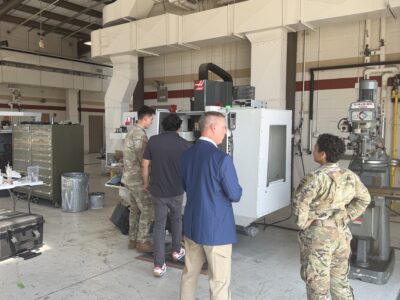
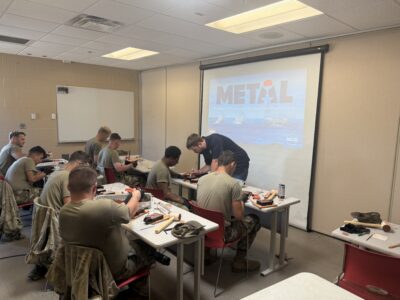
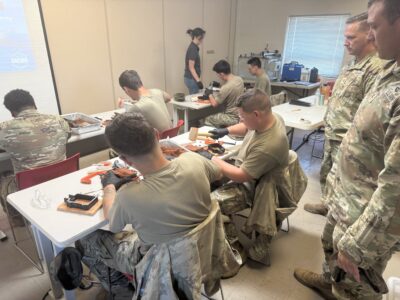
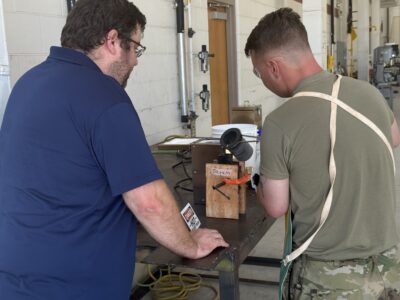
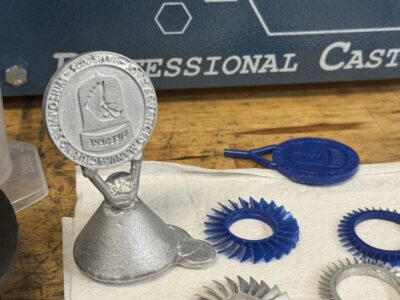
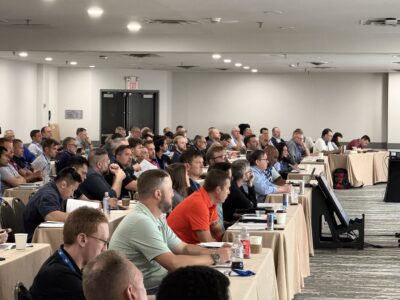
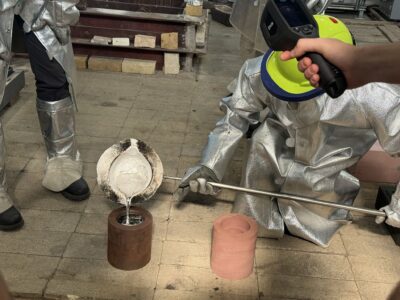
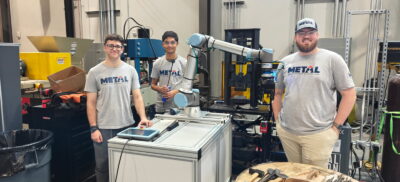
In October, Penn State hosted its first METAL Sand Science Bootcamp, a hands-on course exploring the chemical and physical principles behind green sand and chemically bonded sand. These are two essential materials used to create molds for casting metal parts. From engine blocks and pipe fittings to aerospace and defense components, these molds form the foundation of American manufacturing.

Led by IACMI – The Composites Institute®, with funding from the Department of Defense’s IBAS Program, METAL is closing critical labor gaps in U.S. metal manufacturing. By 2030, almost 4 million manufacturing jobs will need to be filled, from entry level positions to trained production workers and specialized engineers. However, half of those positions might be left empty—putting the supply chain and our national defense at risk.

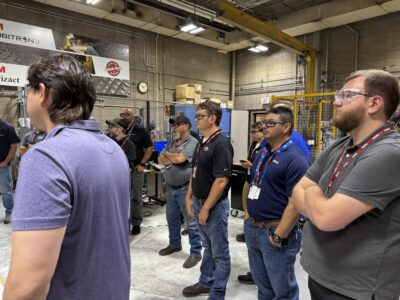
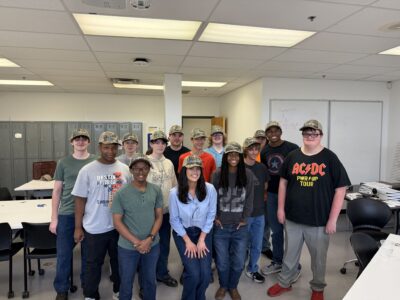
The free course encouraged participants to connect theory with practice and return home ready to improve their operations. A large contingent of industry professionals attended this bootcamp and came away with many new insights. 

“I appreciated the collaborative conversation about broad topics and how it relates to what we’re doing in the real world,” said Olin Covington from Benton Foundry.. “Hearing from foundries, coremakers, sand guys—brainstorming and sharing. Mold energy was the best topic. The industry does drag its feet on certain things, but metalcasting has been around for thousands of years and there’s a reason it’s still here.”

For Justin Kinslow of Victaulic, the session on advanced oxidation stood out. “I hadn’t been exposed to that before. It ties into other projects we’re working on. I liked the setup—enough guidelines for it to be effective but informal enough for good conversations. I learned about other foundries and people.”

Penn State Professor Dr. Paul Lynch, Justin Kinslow with Victaulic, Penn State Professor Bob Voigt, and METAL Workforce Manager Greg Harrell.

His colleague Ian Erb, a plant manager at Victaulic, agreed that the course offered clarity: “I had some misconceptions about the theory behind mulling to energy. Glad I was here to crystallize exactly what we need to do. Pretty clear actions we’ll take when I get back.”

Joe Kramer from CWC Textron, where his team produces about 40,000 crankshafts a year, found the content directly applicable to ongoing projects. “We got some info on specific stuff we’re looking at: bond reclamation, a subset of advanced oxidant. CWC is the odd one out in scope and process, but it was nice to get a glimpse at what different shops look like. We also discussed 3D printing core molds, which is a new technology for us.”

For Bryan Rash of Spring City Electrical, the best part was realizing how much others share the same challenges. “Spring City is insular with our production, so it was nice to hear and see what other people have. Even though we’re low volume, we deal with some of the same struggles—not just technical, but hiring too. 3D sand printing on the design end, the basics of science—I’m not necessarily exposed to the difficulty of sand, and this helped me be aware of that on the front end.”

On the supplier side, Jim Kundratic of Badger Mining Corporation saw a broader opportunity for the industry. “I like where the program is going. I see a lot of foundries that need this program. We need more people to come in and learn the basics. The next piece is to promote it internally to my customers. Leadership is strained because they’re the only ones who know these things, and mid- to high-level management gets burned out.”

The Sand Science Bootcamp is part of a growing effort to equip metalworkers with the knowledge to optimize their systems and push new technology forward. As course leader Paul Lynch summarized, “The goal is for people to take these ideas back to improve their systems. What are the challenges? What are the opportunities?”

Want to get involved? Register for our free online training then visit our events page to attend the next METAL bootcamp near you.

Bringing Back the “Knowhow”: How Penn State Rebuilds America’s Manufacturing Workforce

Paul Lynch grew up in a town that hummed with manufacturing. In a small community hugging the Appalachian mountains of eastern Pennsylvania, he learned first-hand the impact foundries can have on the local economy. Today, Lynch is honoring the past by driving the future of metal manufacturing forward.

Dr. Lynch, who’s an associate professor of industrial engineering at Penn State Behrend, has dedicated his career to supporting the growth and innovation of Pennsylvania’s metal industry. Like many towns in the region, Lynch’s hometown, Gordon, was developed in the 19th century from the booming anthracite coal industry. For more than 150 years, coal mining powered homes, jobs and the economy—and fueled U.S. steel production. 

“My dad owned a mechanic shop and he could tell you, without talking to the folks from the local foundry, if business was up or down,” Lynch explained. “If people are doing really well, they’ll buy new tires, or if they’re not, they’ll put off maintenance on their car. That’s how important manufacturing was to our area.”

The state’s deep history of enterprise manufacturing continues today. Pennsylvania is in the top five states for the most foundries in the nation. Its top manufacturing exports are computer and electronic products, machinery, primary metal manufacturing and transportation equipment—multi-billion dollar industries that require metalcasting, forging and rolling.

But the future of manufacturing in Pennsylvania – and our nation – depends on metal workers. 

In partnership with METAL, Lynch and his colleagues at Penn State University are rebuilding the manufacturing workforce and bringing metalcasting back to American communities.


Advancing U.S. Manufacturing

Led by IACMI – The Composites Institute®, with funding from the Department of Defense’s IBAS Program, METAL is closing critical labor gaps in U.S. metal manufacturing. By 2030, almost 4 million manufacturing jobs will need to be filled, from entry level positions to trained production workers and specialized engineers. However, half of those positions might be left empty—putting the supply chain and our national defense at risk.

With universities across the country, METAL is rekindling metallurgy for job seekers and students of all ages with unique, hands-on casting and forging experiences. Lynch couldn’t wait to get started at Penn State. 

I can tell you our leadership, from our chancellor to myself and the faculty, everyone here is so excited about this program,” he said. “If you talk to somebody that works in the industry, they’ll tell you this has been needed for 30 years.”

Since 2024, METAL team members at Penn State Behrend and Penn State University Park

have taught 12 K-12 workshops with 150 students and eight bootcamps, where 115 participants graduated with foundational and specialized metallurgical skills.

Through bootcamps that cover cutting-edge topics like the science behind sand casts and virtual reality applications, Penn State aims to upskill metal industry professionals. Advanced bootcamps are also open to beginner bootcamp graduates who want to expand their expertise. 

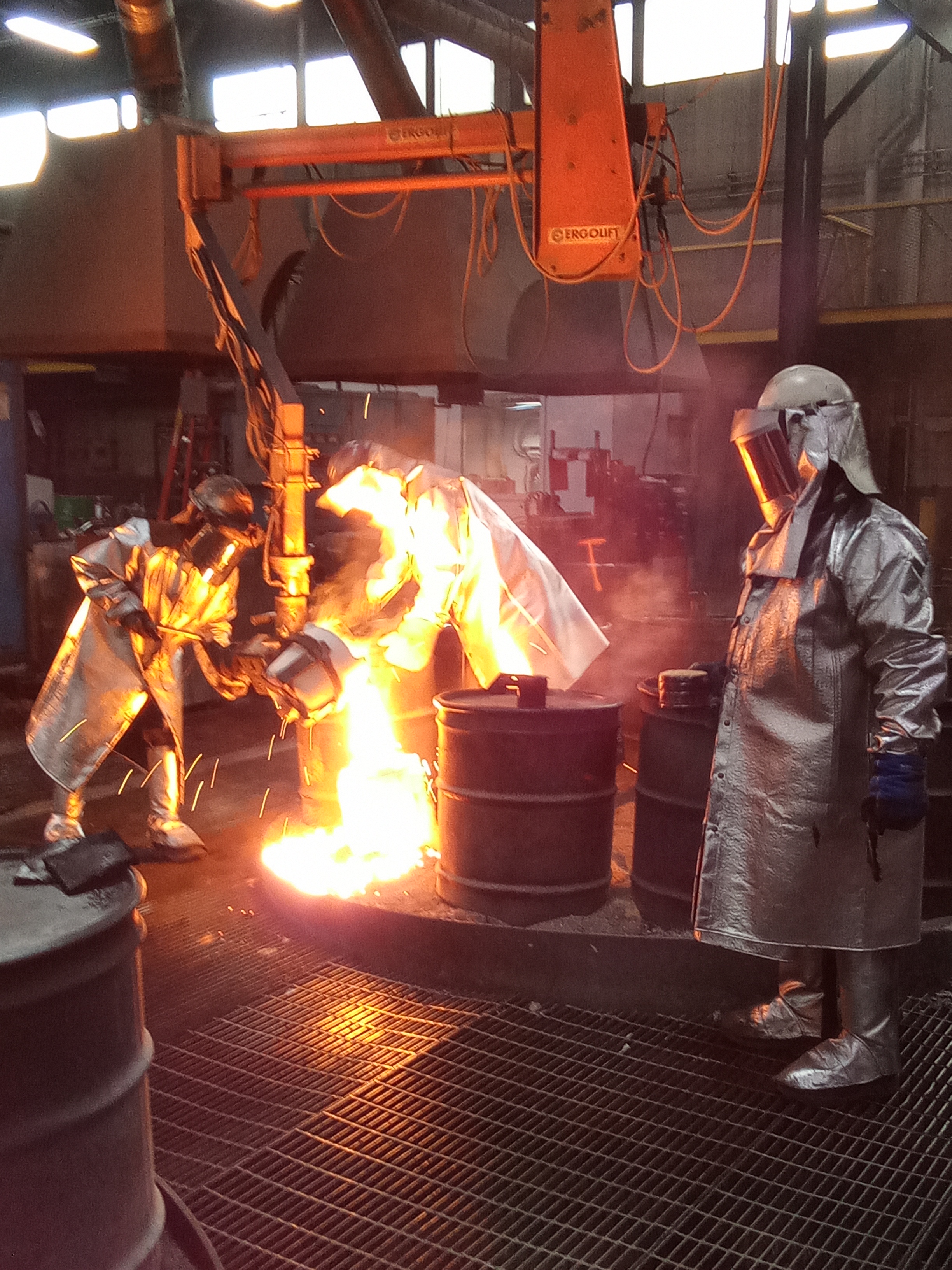
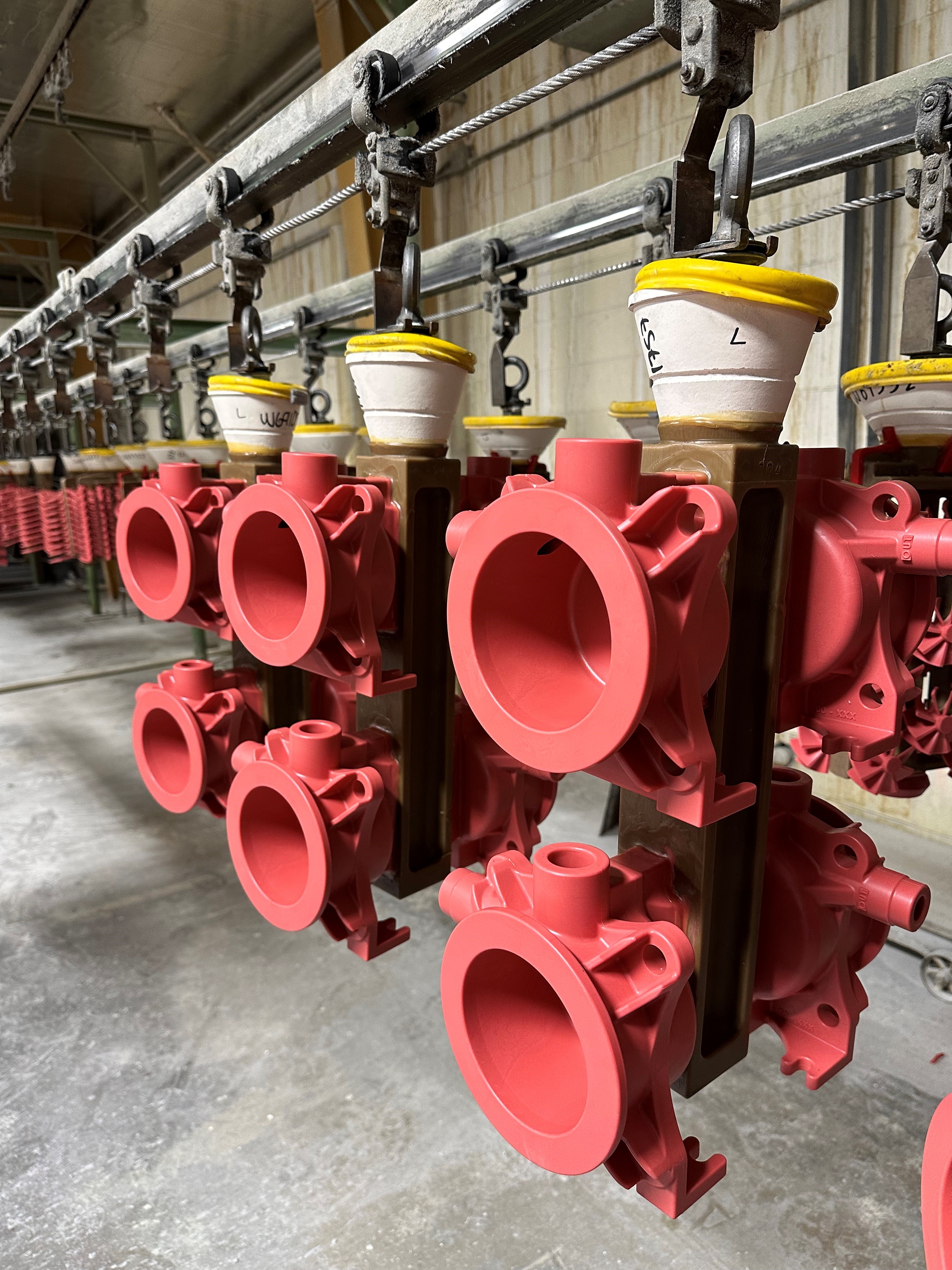
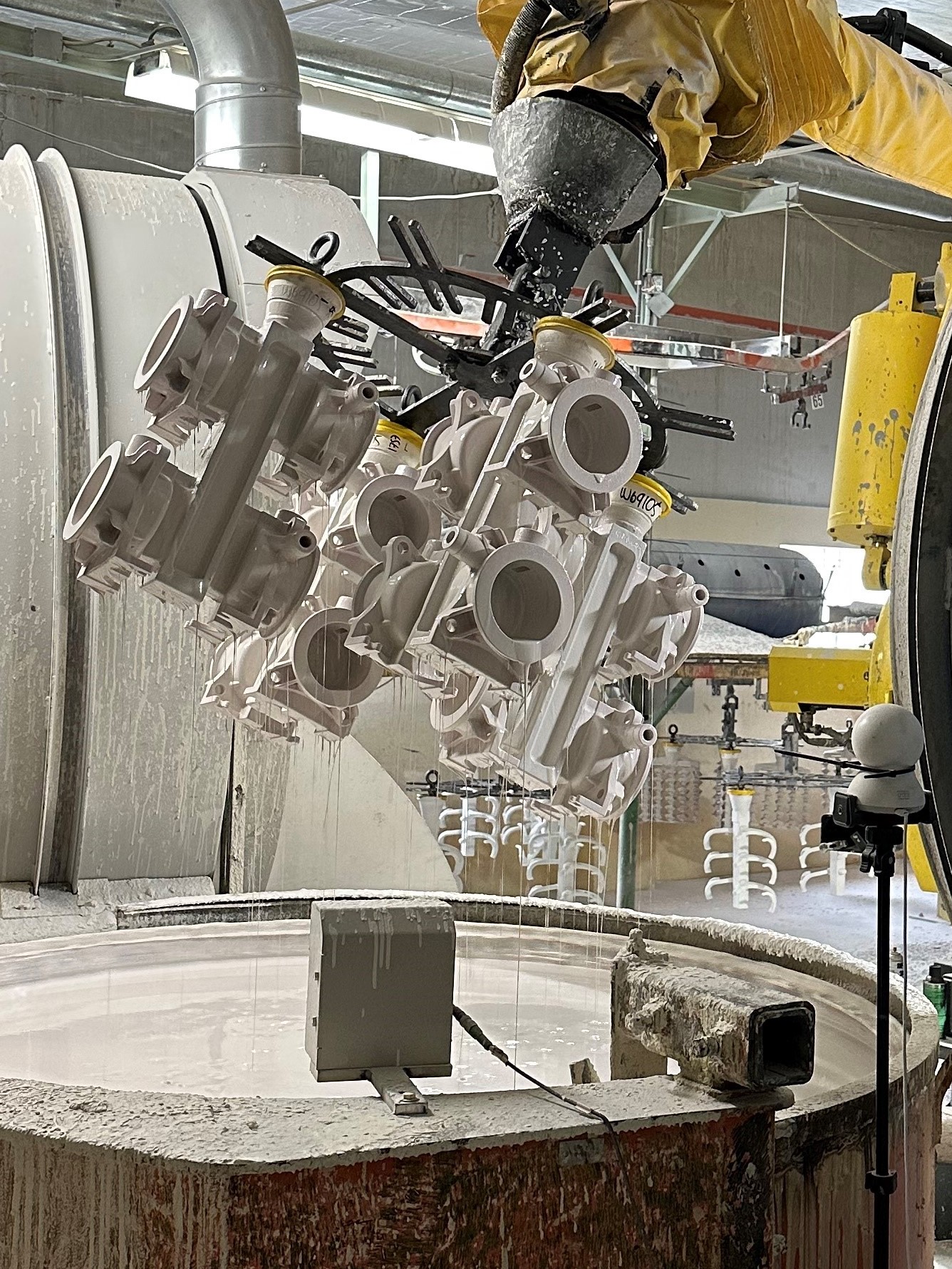
In the new Sand Science Bootcamp, which launched in October, participants explored the chemical properties of green sand, or sand that’s bonded by clay, and chemically-bonded sand. Both materials are used in manufacturing to create molds that liquid metal can be poured into for casting metals. These molds can be used to create engine blocks, pipe fittings, agricultural and construction tools, and core components for the aerospace and defense industries.

Lynch hopes the advanced bootcamps will equip metal workers to optimize operations—and push innovative technology forward. “How can people take these ideas back to improve their systems?” he asked. “What are the challenges? What are the opportunities?”

In November, the university plans to host a level three advanced bootcamp for digital technologies in casting. The online lessons, which include data analytics, are already available. In the foundry, participants will learn how to incorporate immersive technologies like virtual

reality, along with sensors, data analytics and additive manufacturing, into the casting process.

In addition to strengthening today’s manufacturing workforce, Penn State inspires students and career changers to become the metal workers of tomorrow.

Learning Casting—From the Ground Up

Lynch said the goal for elementary, middle and high school workshops is to capture students’ interest—and their imagination. Every week this summer, students from ages six to 14 brought metallurgy to life. They assembled parts, crafted their own sand molds, and poured liquid aluminum into starfish, softballs and smiley faces. Students also had opportunities to practice their new skills, casting chocolate.  

“Research shows that as early as five and six years old, children are connecting the dots, thinking about what they like and putting that toward a career,” Lynch said. “You want to get them thinking about metals and metallurgy, and you want the parents to understand the career opportunities that exist for the students now and in the future.”

Penn State’s beginner bootcamps, on the other hand, are designed to teach adults the metalcasting skills needed to explore and start a new career. Participants start their learning at home with METAL’s free, self-paced online training. Then, with a glimpse of metallurgy, college students, professionals and job seekers are ready for the hands-on METAL bootcamp experience.  

For four days, the casters-in-training meet at Penn State to learn about life and work in a foundry. Participants who attend the beginner bootcamp learn industry terminology, design and print 3D molds, and finally pour molten metal into new, solid creations. They also cover the basics of heat treatments, forging and machining—all skills required to deliver a finished part.  

“I was surprised by how many pieces we created from beginning to end,” said Rachel Reed, a program analyst at Vision Point Systems who attended the August bootcamp. “You actually walk away with a lost foam casting that you made yourself and a cast medallion. I left with a big goodie bag of things I made, and that’s just an awesome feeling.”

At the end of the day, Lynch believes the real driver of manufacturing’s future won’t be machines or automation—it will be people.

“I don’t care if it’s getting K-12 students involved, if it’s an introductory bootcamp or if it’s upskilling with advanced technologies—we need all of it and we need it fast,” he urged. “We gave our knowhow and our facilities away. We need to train people and get the knowhow back.”Ready to spark your future in metal? Register for our free online training then visit our events page to attend the next METAL bootcamp near you.

From Workshops to Workforce: UT Knoxville Forges the Future of Manufacturing in Tennessee

The first time Stephen Sheriff cast metal – a replica of the Wizard of Oz’s Tin Man – in front of an auditorium of elementary school students, he was hooked. Now, alongside his colleagues at the University of Tennessee, Knoxville (UTK), he’s determined to give students and job seekers exciting, in-person forging experiences. 

Sheriff, who’s an engineer and research associate with the Fiber Composites Manufacturing Facility at Innovation South, is part of a team of almost 30 UTK staff and students who are bringing metalcasting to communities in East Tennessee. 

In partnership with METAL, a program led by IACMI – The Composites Institute®, with funding from the Department of Defense’s Industrial Base Analysis and Sustainment (IBAS) Program, UTK has hosted four bootcamps for adults interested in metalcasting and 20 K-12 workshops. Both bootcamps and workshops cover metalcasting basics, including techniques for sand and investment casting. But now forging is becoming just as important to UTK’s education programs. 

Forging, the art of blacksmiths and swordmakers, is the process of re-shaping metal using extreme pressure to form a high-strength tool. Unlike casting, where metal is melted down, poured and cooled to become a new creation, a forger hammers, presses, or rolls solid metal into shape. Most of the time, forgers heat the metal to make it more pliable, but not always. A metal part can be both cast and then forged to completion—and both processes are critical to modern manufacturing. 

Today, there are about 3,000 stamping and forging companies in the U.S., but this number is declining. More than 240 forging plants closed and 21,000 jobs were eliminated as manufacturing left the U.S. However, the importance of forging is only growing for industry innovation and national security. Forging is necessary to produce critical parts in automotive, transportation, aerospace, energy and defense industries—from hand tools, hooks and chains to navy ships and fighter jets.     

“When people think of forging, they think of Forged in Fire or making anvils, knives and horseshoes—that sort of thing,” Sheriff explained. “We’re exposing students to the differences between cast and forged parts and how you’re affected by them every day.”  

New Irons In the Fire 

Sheriff loves the spark he sees in students when they learn how metal can be transformed. This spring, he awed students at Seymour Primary School with a live sand casting demonstration, bringing one of their favorite characters to life at the school’s annual Book Bash.

Now, as UTK plans to roll out a new K-12 blacksmithing workshop, Sheriff is ready to create more moments that spark curiosity for forging. 

“Seeing kids light up about what we’re doing is great,” he said. “When students get that metal part from whatever pattern they picked in their hands, and say, ‘This is really cool, I want to learn how to do this,’ it turns into a career or a hobby.”

Sheriff’s team recently tested the blacksmithing workshop’s new curriculum, which will include lessons on how to shape metal and use a forging press. Middle and high school students will have the opportunity to practice heating and flattening steel with an anvil before stamping the puck with a design.

One of the most important goals for Sheriff is helping students overcome their fear of working with red-hot metal.  

“A lot of people are very intimidated when you hand them a piece of metal that’s glowing orange,” he said. “Some students might have experience with shop safety, but when you get students that aren’t involved with those types of activities, you need more time with them.”

Sheriff said clay forging will be one activity offered to help students practice without feeling the heat. Polymer modeling clay moves similarly to hot metal, Sheriff explained. With a palm-sized clay cube, students will use a plastic ballpoint hammer to draw the shape out and then stamp it with UTK’s “Power T” before baking it into a finished forging.    

“I’m looking forward to getting students involved,” Sheriff said. “I think it’s going to be a lot of fun.”

Soon, UTK’s blacksmithing workshop will be available to schools across East Tennessee.  

The university is also adding an introduction to forging to their free week-long bootcamps. UTK’s bootcamps, hosted in partnership with METAL, offer college students, professionals and career seekers a rare, hands-on opportunity to learn about metallurgy—from designing 3D molds, to melting, pouring and casting metal, to now forging a finished product.   

Dustin Gilmer, an assistant professor in materials science and engineering at UTK who helps lead the bootcamps, believes forging skills will better prepare tomorrow’s workforce.     

“We were up and running really quickly with casting, but forging is a little bit more specialized,” Gilmer said. Through partnerships with METAL, Pennsylvania State University, and The Ohio State University, UTK is developing a forging curriculum for bootcamp participants who see a future for themselves in manufacturing. 

“We’re looking for people who think they have a career in this industry, and we’re trying to get them ready to enter the workforce,” Gilmer said. “That’s the goal of the bootcamps.”

Gilmer and his team plan to incorporate forging lessons and hands-on learning into UTK’s December bootcamp

Forging Community

Beyond skills training, Gilmer and Sheriff are focused on connecting students and bootcamp participants to the forging community. 

“We’ve lost a lot of this type of manufacturing in the U.S.,” Sheriff said. “We haven’t refreshed our workforce, and as foundry employees retire, there’s not many people coming up behind them learning the craft.”

The good news is, more than 3.8 million U.S. jobs will be there for metalworkers, engineers and manufacturing professionals who are ready to make an impact in the next decade. Gilmer said he’s been surprised by the number of metallurgical opportunities and support he’s found in Tennessee.

“When we first started our programs, I would’ve said we do not have a good metalcasting ecosystem. Since then, I have been proven wrong,” Gilmer said. “Having people champion us at the local level is why we’re so successful.”

For UTK’s team, the future of manufacturing starts with auditoriums of wide-eyed students and foundries where eager learners can discover the magic of metallurgy. 

“The first time you see somebody pouring molten metal, it’s an experience,” Gilmer said. “It’s something you don’t usually forget.”

Ready to forge your future? Register for our free online training then visit our events page to attend the next METAL bootcamp or workshop near you. 


Bring Your Best: Wisconsin Aluminum Foundry Pushes Metal Workers to Their Fullest Potential

Wisconsin Aluminum Foundry has earned a reputation for forging aluminum, bronze and brass castings that meet rigorous, high-quality standards of excellence—and the same can be said for the foundry’s metal workers. 

With almost 1,000 team members across the midwest, Wisconsin Aluminum Foundry (WAF) supports critical manufacturing needs in the U.S. defense, agriculture, medical and automotive industries. Every employee, from intern to executive, aligns goals and performance with the foundry’s core values: “bring your best, engage to succeed together, pursue potential and invest in our future.To WAF’s Vice President of Human Resources Michelle Szymik, investing in the future means equipping metal workers and apprentices with the skills to move the industry – and our nation – forward. 

“We have to educate people about how important metalcasting is to our infrastructure and to sustaining our military,” Szymik said. “If we can’t get more people to come in and get trained and interested, that’s at risk.”

But to make better training opportunities possible at WAF, Szymik needed more resources and funding.

“There isn’t a lot of structured training in the foundry. You have to rely on your tenured employees to train new people who may have never even walked into a manufacturing environment before,” she explained.  

It wasn’t until the AFS Leadership Summit 2024 that Szymik discovered Jobs for the Future (JFF)—and the solution to her problem. 

In partnership with METAL, led by IACMI – the Composites Institute and supported by the Department of Defense’s IBAS program, JFF helps metals manufacturers overcome industry talent shortages with financial support and assistance in designing and implementing an apprenticeship or other work-based learning program. With the goal of growing the casting, forging, and plate rolling workforce, JFF provides manufacturers up to $24,000 per year for training equipment and services. So far, the organization has engaged more than 150 metal companies across the country and funded learning programs for nearly 77 participants—from maintenance technicians and machinists, to moldmakers and casters. 

Mark Genua, director of solutions design and delivery at JFF, believes apprenticeships and other work-based learning programs provide a custom, structured approach to train highly skilled metal workers. But the expense of facilitating these programs isn’t always affordable for manufacturers. 

“Like any training, there are costs associated with program implementation and operation,” Genua said. “We’re helping companies offset the costs and even enhance their programs with cutting-edge training, new equipment and participant support.”

Szymik couldn’t wait to get started. 

Casting the Future of Metal

Apprenticeships and work-based learning is critical during a time when the U.S. casting and forging industry urgently needs thousands more skilled workers. But with the right resources, apprenticeships can result in 90% employment retention. Today, there’s 27% more apprentices in advanced manufacturing than in 2024, thanks to partners like JFF and METAL.

This support was exactly what WAF needed to build, expand, and strengthen its work-based learning programs.  

Szymik has a brimming wish list for how she’d like to use JFF’s funding—from finishing training for new employees to pattern maker apprenticeships and on-the-job learning for quality control team members and maintenance techs. For now, she plans to put the funds toward WAF’s new trainer position and offsetting training program costs.

Team trainer Shane Chase was one of the best finishing sanders and mentors on the production line. Now, he’s teaching the next generation of quality metal workers and growing his career. 

“Something I noticed over the years is just because you are good at your job doesn’t mean you would be a good trainer,” Chase said. “It’s so important we have the training program because not everyone has the patience and the ability to work with anyone.” 

Chase added that he sees this role as a stepping stone toward becoming a supervisor or manager. “When that day comes I hope I can find someone like myself to pass the reins to.”

WAF will be able to put their funding toward Chase’s salary as well as new supplies, such as sander belts, for the training program. But Szymik said this is only the beginning for WAF’s training and apprenticeship development.

Forging Metal’s Finest

Szymik’s dream is to fund career growth and education in the metal industry all the way through the funnel—from high school to first jobs and beyond. Most of all, she wants to show people what being a metal worker has to offer.

“We’re teaching people a career when they walk in the door. It’s not just a job,” Szymik said. “We want to show people you can build a rewarding career and support your family, and it’s work that’s needed.”

She recommends that all metalcasting companies apply to partner with JFF and METAL so together we can forge a resilient metal workforce. 

“I talk to so many smaller companies that don’t have a budget for training,” she said. “I tell them, tap into this. You have the opportunity and it’s so easy to apply and get your metal workers the training they need. This funding has been huge for us.”

Ready to fuel your foundry’s future? Apply for JFF’s apprenticeship incentive program here. 


Learn more about youth apprenticeships in a recent webinar featuring Szymik. 

Ready for Anything: Army Engineer Sydney Parks Finds New Strength at METAL Bootcamp

When Sydney Parks first stepped onto Tennessee Tech University’s campus, she planned to be a nurse—and she had no idea about the school’s foundry. This summer, almost a decade later, Parks returned as an Army technical engineer to become field-ready in a new essential skill: metalcasting.   

Sydney Parks at METAL bootcamp

Parks, 29, never quite knew where her career would take her. After high school, she tried everything from the food service industry to manufacturing management to email marketing and website building. But Parks was always certain of one thing: she wanted to have as many new experiences as possible. The Army felt like her perfect opportunity.   

She decided to pause her nursing degree and soon pursued training in places like Cuba and Kuwait. “I thought it would be a good time to absorb as many of those experiences as I could,” she said. 

The Army also led Parks to her passion for engineering. She first became curious about how rotors, gears and other parts work together as a teen repairing her first car. But joining the military reignited her “find a fix” attitude. 

“The military teaches you a lot of resiliency,” Parks said. “Even though I’m a technical engineer, if the vehicle I’m associated with needs maintenance, I have to learn how to do that. I believe that carries into my life and how I solve problems.” 

In her career, Parks has led engineering teams for critical products and buildings, draining assessments and survey work across the Middle East. After returning home from her first deployment this year, Parks was eager to learn more skills that could be an asset in the field. 

That’s when she discovered METAL’s metalcasting bootcamp at Tennessee Tech University. Led by IACMI – The Composites Institute®, with funding from the Department of Defense’s Industrial Base Analysis and Sustainment (IBAS) Program, METAL strengthens the U.S. metal manufacturing workforce. Before diving into the on-campus experience, she completed METAL’s free, self-paced online training. The course is designed to support bootcamp readiness, but it’s also available on its own for anyone eager to explore metalcasting. When she realized the bootcamp was hands-on and so close to home, she jumped in—boots first.

Register for online training

“I wanted to go into it full force,” Parks mused, adding that she was especially interested in the lessons on CAD software. “Being from a military engineering background, I find it very exciting to learn as much about it as I can.”

“I felt like a sponge”

Through METAL’s free week-long bootcamps, participants from diverse education and career backgrounds have a unique, hands-on opportunity to learn metalcasting from professional metallurgists. The bootcamps are not just for college students, but for anyone who’s interested in metal manufacturing, said Dr. Ismail Fidan, a professor of manufacturing and engineering technology at Tennessee Tech University. 

“As an instructor, it makes me excited because most schools teach metalcasting, but they teach it through the book and hands-on is limited,” Dr. Fidan explained. “These opportunities through the top universities give people their first training.” 

Through METAL’s bootcamps, Dr. Fidan has taught engineering students, professors, job seekers, retirees and service members like Parks skills that advance the entire metal industry.

“The nation is in a transformation to smart manufacturing. You get a product with a high volume, high quality, and you get a product that you want,” Dr. Fidan said. Smart manufacturing allows metal manufacturers to have more control of the production process using automation, robotics, AI and machine learning and other smart technologies. But the U.S. workforce needs more metal workers and engineers who can bring metalcasting to the 21st century, he said. 

Parks was up to the casting and forging challenge. From welding and fabrication equipment to furnaces that liquify metal, she couldn’t believe what was possible in Tennessee Tech’s foundry.

“I felt like a sponge,” Parks said. “There was so much to learn and it’s a lot to take in, but the more I listened, the more it all made sense. The instructors and the assistants were really good at breaking it down to where I could understand everything at my level.” 

After the first day, Parks invited her boyfriend Nicholas Bartik to attend the rest of the bootcamp with her. Bartik, who’s been an automotive technician for eight years, recently made the decision to start his own auto parts business. Parks thought the bootcamp could help Bartik better understand processes for designing and casting car parts, and he agreed.

“There is a lot of cool tech in the automotive industry,” Bartik said. “I’ve met engineers in the field who are using casting, 3D modeling and printing and different forging processes to produce components that improve engine performance. I want to integrate this type of engineering into my new company.”

Together, Parks, Bartik and the bootcamp’s participants each had the rare opportunity to sand-cast a creation of their own. 

“We have hundreds of patterns to choose from,” Dr. Fidan said, adding that participants get to execute every step of the sand casting process—from picking a mold to pouring molten aluminum to learning about high quality testing. “They make it and grind it, polish it and they take it home for themselves. They have all this experience from the first day of the bootcamp to the last.”

Besides forging her own piece of art – a starfish – Parks was most fired up about visiting a professional foundry.

metal cast starfish   

Casting in Action

On the last day, the casters-in-training spent the morning at Triple C Machine in Livingston, Tennessee. Triple C Machine specializes in cold forging operations and other tools used for precise metal cutting and pressing, as well as production machining, metal stamping and MIG and TIG welding. Parks said the demonstrations gave her the basic understanding and inspiration to make her own custom creations.

“It’s really cool knowing how to go from zero to a completed part,” she said. 

As Parks looks for her next civilian opportunity, she’s excited to try more workshops where she can make connections and learn skills that help her at home and while protecting the nation. Thanks to METAL, Parks feels more prepared to face challenges in her next deployment—from casting critical parts to supporting mobile welding services for the Department of Defense. 

“Now I can apply what I learned to help myself or my peers in certain situations,” Parks said. 

She would love to bring more Army technical engineers to future bootcamps. But she recommends the experience to anyone, even for the pure joy of learning something new. 

“Forging and casting have become forgotten. People don’t realize what it takes to create the items we use everyday,” she said. “I’m very appreciative of this opportunity. It’s available to anyone who’s willing to take the time to sit and learn.”

Tennessee Tech METAL Bootcamp

Ready to cast a new future—together? Register for our free online training then visit our events page to attend the next METAL bootcamp near you. 


Casting Confidence: How Victoria Rambo Ignited Her Career in Metal with FEF

After starting college during the COVID-19 pandemic, Victoria Rambo began to doubt her future as an engineer. But everything changed when she discovered Virginia Tech’s foundry and resources through the Foundry Educational Foundation (FEF) and METAL. The partnership, funded by the Industrial Base Analysis and Sustainment office within the Department of Defense, accelerates the development of a skilled workforce through hands-on training and internship opportunities. Rambo quickly molded her doubt into a promising future in metal. 

One year after graduating, Rambo, 23, is an associate metallurgist at Carpenter Technology Corporation who focuses on alloy research and development. The enthusiasm she stoked in Virginia Tech’s foundry has led her to creating replica missile fins for the National Museum of the Marine Corps, presenting at the American Foundry Society (AFS) national conference and being featured in the book Women in Steel Volume II

If you told Rambo about her current job as a freshman, she wouldn’t have believed this career path was possible. 

“When I started college during COVID, I was thrown into online classes. I was struggling to make connections with professors and with other students,” she explained. “I started with a low GPA and thought, is engineering really worth it?” 

By her sophomore year, a friend recommended Rambo visit Virginia Tech’s foundry, one of 20 FEF-certified university foundries in the country. She met FEF Key Professor Alan Druschitz and was eager to learn more about what the metal industry had to offer. Druschitz’s mentorship was exactly what Rambo needed to spark a sense of purpose—and her comeback to engineering. 

“He was one of the first professors I connected with who cared about the student to teacher relationship,” she said. Soon, Rambo’s confidence lifted, her academic performance improved, and the foundry became her second home.

Igniting a Future in Metalcasting

Rambo’s first stint in engineering was in high school. Both of her parents are mechanical engineers with the Department of Defense, and she planned to follow in their footsteps. She went to a vocational high school where she took classes like drafting and began to explore robotics competitions and STEM programs. Her first internship was at Aberdeen Proving Ground with the Army Educational Outreach Program working on weather-detection sensors for drones. 

What drew her toward a degree in material science and engineering was bringing concepts and designs to life off the paper. In the foundry, Rambo used fire and metal to do just that. 

“I was basically living there by my senior year,” she joked, as she became enamored with learning the casting process. In her classes, she studied the basics—how to make molds, steps to pouring molten metal and when to use an induction or resistance furnace. Before long, she was ready to apply these skills to innovative research and mentoring other metallurgy students. 

Through research assistantships funded by FEF and METAL, Rambo was able to support graduate students’ metalcasting projects and soon she was leading cutting-edge research of her own. 

Together, Drushitz and Rambo launched first-time research in the properties of ductile iron, which is often used in pipes, automotive parts and agricultural equipment that can withstand fluctuating temperatures. Thanks to FEF’s funding, Rambo was able to experiment with the iron for more than a year, exploring how to make the production process less expensive with manganese and aluminum instead of nickel. 

This research is ongoing at Virginia Tech’s foundry, but Rambo had the opportunity to present her preliminary findings at the American Foundry Society’s 2024 Metalcasting Congress. She said opportunities like this one provided her with the skills to be successful in her career.

“It helped me with my professional development and the technical knowledge when I was applying for the job that I have now,” Rambo said. “With the conferences, you’re also developing your soft skills, communicating and building your social network and meeting students from other universities. I think that is so important.”

Drushitz continued to mentor Rambo, encouraging her to apply to internships with the Swedish steel company SSAB and for scholarships with FEF and the American Institute for Steel and Technology. In 2023, she received FEF’s Keith Dwight Millis Scholarship for students interested in the advancement of ductile iron.

Rambo said having a great mentor is even more important for women in the metal industry. Less than one-third of employees in manufacturing are women, according to a report from the Institute for Women’s Policy Research

“Drushitz was always there to make sure my voice was heard,” she added. “I don’t think I would’ve been able to accomplish what I have without him.”

Molding an Industry Leader

By her senior year, Rambo served as Virginia Tech’s AFS President, taught three classes in the metalcasting program and had six job offers before she graduated. Most engineering students struggle to excel after a low GPA, Druschitz said, but Rambo’s involvement with the foundry gave her the spark she needed to thrive. 

“Victoria was highly recruited by foundries and the steel industry,” Druschitz added. “She started to get involved with the Women in Steel conferences and those are great for support with people who will say, ‘you can do it.’”

In addition to her research experience, Rambo believes her expertise in the MAGMA casting design software helped her stand out to potential employers. She learned how to use the industry program through an FEF student training session and later earned a level 1 certification so she could teach MAGMA to other students. Not only was the software essential in student casting competitions, Rambo said it’s a core skill manufacturers are looking for. 

“I think that shows how much FEF is trying to make metallurgy and metalcasting innovative and part of the future,” she said. Rambo added that there’s often a misconception with students that metallurgy is an “old science,” but new technology is always pushing the industry forward. 

Sometimes Rambo still can’t believe the metalcasting and leadership experience she gained while earning her undergraduate degree. She’s thankful to FEF and METAL for the financial opportunities and support that helped mold her career. 

“FEF wants to support the future generation of students coming into the industry,” Rambo said. “If you fall in love with metalcasting, give it your all because the opportunities will be there. The connections you make with professors and students will be your biggest support along the way.” 

To learn more about FEF’s METAL internship opportunities, email nbacik@fefinc.org. 

To learn more about METAL, including apprenticeships and online training, visit metalforamerica.org or fill out our contact form.

Fast Track to Success: FerroWorks Trains Next Generation of Metal Workers

For more than 150 years, FerroWorks’ foundries have powered trains and railroads in America. Now, the steel company is keeping manufacturing in the U.S. on track by training the next generation of highly skilled metal workers. 

Metalworkers working in factory

FerroWorks, which manages McConway & Torley, Standard Forged Products, Kutztown Foundry and Machining, and McKees Rocks Forgings in Pennsylvania, is known for its excellence in casting couplers, knuckles, and yokes—all parts that connect train cars together. The U.S. rail system transports 1.5 billion tons of goods and more than 28 million passengers each year, and keeps growing. Between 2022 and 2026, $66 billion will go toward improving railways and expanding train services, according to the American Society of Civil Engineers. In addition to casting critical train parts, FerroWorks is forging the growth and development of its employees. With funding from METAL and its partner Jobs for the Future (JFF), which supports companies in the development of high-quality apprenticeship programs, FerroWorks is training more metallurgists to keep up with the industry’s high-speed growth. 

Kara Keith, a human resources generalist at FerroWorks, leads internal enrollment for the Industrial Manufacturing Technician (IMT) program—one of the pillar continuing education programs FerroWorks offers. 

The 18-month apprenticeship program is hosted by the Community College of Allegheny County (CCAC) in Pittsburgh, Pennsylvania. Once a week, instructors from CCAC offer on-site training to a select cohort of FerroWorks’ team members. The classes range from industry topics like blueprint reading, mechanical and electrical systems, and pneumatics to leadership training and communication skills. Keith said the program is essential to providing employees with a well-rounded understanding of industrial manufacturing.

“Transferring knowledge is something that we struggle with in this industry,” she said. “This program makes our employees feel like they’ve been invested in and gives them a chance to learn more about other departments that they wouldn’t get to explore in their day-to-day roles.”

So far, 12 FerroWorks employees have graduated from the IMT program. This year, JFF will help sponsor training for six FerroWorks team members with its apprenticeship/work-based learning incentive funding, in partnership with METAL. 

A Freight of Opportunities 

Steel workers at FerroWorks’ historic McKees Rocks Forgings, located just outside Pittsburgh, cast and forge critical components for railcars and heavy industry, supporting everything from transportation to national infrastructure. Photos courtesy of FerroWorks.

The U.S. casting and forging industry faces a pressing need for 122,000 skilled professionals by 2028 as workers retire and industry growth surges. In addition to a shortage of skilled metal workers, about 60% of manufacturers said attracting and retaining employees is a top challenge in a National Association of Manufacturers survey. 

Through METAL, led by IACMI – the Composites Institute and supported by the Department of Defense’s IBAS program, JFF has helped seven companies to date build, expand and sustain work-based learning programs, including apprenticeships. These programs allow manufacturers to improve training and retention in casting and forging roles—while offsetting the cost. JFF’s incentive funding can be applied to in-person or online learning programs, training equipment and trainer costs, curriculum development, program design and implementation, and support services for apprentices. 

“America’s casting and forging industry is essential to our country’s national security, infrastructure and other industries,” said Mark Genua, director of solutions design and delivery at JFF. “So we need a robust, well-trained workforce to fill these much-needed roles.” 

For Keith, applying to JFF’s incentive funding was an easy decision and process. The funding FerroWorks receives will go toward tuition for CCAC’s IMT courses—and educating the company’s future leaders.   

Man standing in front of furnace

FerroWorks’ Rob Cain earned his IMT apprenticeship certificate before becoming a production operations supervisor. Cain started with the company as a grinder and said the apprenticeship program gave him the confidence to take the next step in his career. 

“I already had the technical skills, but the IMT training gave me a more well-rounded understanding of the bigger picture, like how different systems and processes come together,” Cain said. “I still use what I learned in the program every day in my leadership role.”

IMT’s apprenticeship program is a nationally recognized certification that advances participants’ careers wherever they work in manufacturing. For FerroWorks, programs like IMT help the steel company reach production and retention goals, but Keith said the greatest benefit is employee development.  

“At the end of the day, the more leaders we can grow and grow people who can teach others, the more knowledge sharing and learning takes place,” Keith said. “We’re ultimately fostering a more skilled, versatile and engaged workforce.”

Ready to forge a stronger manufacturing workforce? Apply for JFF’s apprenticeship incentive program here.

Where Industry Meets Art

In a sunlit studio in Pittsburgh’s Hill District, surrounded by stacks of century-old wooden foundry patterns and oil paintings drenched in rust-colored nostalgia, artist Cory Bonnet is quietly revolutionizing the way young people see their future. His initiative, Patterns of Meaning, is more than an art project—it’s a movement designed to reconnect communities with the history, creativity, and possibility embedded in manufacturing. And at the heart, is a plan to inspire future makers through workshops that carry an urgent and compelling promise.

Cory is spearheading a new outreach collaboration with the Metallurgical Engineering Trades Apprenticeship & Learning (METAL) program to inspire students to pursue careers in the casting and forging industries. The partnership with METAL will be piloted in public schools in Pennsylvania’s Allegheny County and surrounding counties. By connecting the industrial history of their community with the imagination of hands-on art projects, Cory is aiming to ignite that spark in more than 1,000 kids within the first year.

“I want them to look at manufacturing not as factory work but as a creative endeavor,” he explains. “It’s problem-solving. It’s invention. It’s creation.”

Trash to Treasure

Cory’s studio is a time machine built from weathered wood, technical blueprints, and bold new ways to showcase them. The patterns—hand-carved forms once used to cast the components of steel mills—serve as both historical artifacts and creative springboards. “These things were all built by hand,” Cory says. “Before CAD, before CNC machines. Built with skill, sweat, and imagination.” Each salvaged artifact—some dating back to the 1890s—tells a story.

His journey into combining art and industry began with collecting a few scrap metal pieces from a salvage dealer named Chip Barletto. Chip was used to hauling big stuff—like 80-ton pieces of iron—and shared how these hunks of metal reveal the rich history of the region where they both grew up. Wanting to preserve these relics of the Steel Belt, Cory bought one of the most complete collections of industrial casting patterns and blueprints from this era in the world. He’s now working with a consortium of artists who use the collection in unique mediums: oil, glass, ceramics, and sculpture. They take what previously was forgotten in a warehouse and revitalize it.

Ingenuity Through Art

It’s this spirit of ingenuity that Cory wants students to encounter. Led by IACMI—The Composites Institute®, METAL is supporting a variety of K-12 workshops across the country. This workshop will immerse students in a curriculum that merges fine arts with technical learning. Younger students might paint, draw, or create collages inspired by the patterns and their stories. Older ones may get hands-on with wax models, CAD tools, sand casting, and 3D printing. “It’s a way to Trojan horse creativity into technical education,” Cory says with a grin. “Art with technology is how young people will create the next unbelievable things.”

“Right now, there’s a disconnect,” he continues. “Young people don’t see metalworking or manufacturing as exciting, meaningful careers. But they are. These are industries that built the modern world. And they were built by people whose greatest assets were human spirit and ingenuity.”

Through classroom presentations, field trips, and hands-on instruction that focus on creative opportunities through fine art, the initiative aims to reach students not traditionally tracked for careers in engineering and science. The goal is to inspire all students to think about careers in advanced manufacturing while they’re young.

Why Here, Why Now?

Through a pilot, Cory has already seen how this program rekindles a sense of wonder and gratitude—not only for the objects themselves, but for the people and processes that made them. Their parents, grandparents, and great-grandparents. The workshops aim to bridge the gap between past and future, between abstract creativity and tangible creation. Cory sees today’s students as uniquely positioned to imagine new possibilities. “They’re starting at a level the steelworkers of 100 years ago couldn’t even dream of,” he says. “They have the tools. Now we just have to help them realize the power of their own ideas.”

Ultimately, Cory hopes that students leave the Patterns of Meaning workshops with new skills and a new sense of identity—one rooted in both art and industry. “I worked solo for 20 years,” he reflects. “But the real magic happens in collaboration. When no one claims to know everything, and everyone listens and builds together—your work will be magnitudes greater than anything you could accomplish on your own.”

The compelling message he wants students and their parents to hear is that their country needs them to explore careers in manufacturing again, and when they do, it can be a win-win. They can look forward to good, well-paying jobs that won’t be the same as the ones even a generation ago. The need is urgent, and the time to embrace those opportunities is now.

To learn more about upcoming workshops, please contact Cory Bonnet: corybonnet@gmail.com

Original article credit: Margaret Slattery, Communications Manager at IACMI

Making Dreams Reality: High School Sophomore Yash Babar Discovers New Possibilities with METAL

Yash Babar always imagined the kind of engineer he could be. From robotics to car designs, the high school sophomore hasn’t decided what he might build one day, but he’s sure about one thing—he wants a career where he can create with his hands. When Babar’s dad told him about METAL’s bootcamp at The Ohio State University, he was ready to give metalcasting a try.

Babar, 15, is a sophomore at Coffman High School in Dublin, Ohio, and he’s the youngest person to ever participate in a METAL bootcamp. The week-long workshops on college campuses across the nation aim to ignite curiosity and passion about metallurgy for participants from all industry and educational backgrounds. Through a unique, hands-on foundry experience, bootcamp participants leave with essential metalcasting skills as METAL inspires the next generation of innovators and builders.

“For me, the number one goal is exposure,” said METAL bootcamp instructor Dr. Jason Walker. 

Walker, who’s the Director of Materials and Process at The Ohio State University’s Center for Design and Manufacturing Excellence, said METAL’s bootcamps are truly for anyone who’s interested in learning more about the metallurgy trade. “In four days, we give participants a solid look into what it really means to be in manufacturing,” he added.  

Other than taking his high school’s intro to engineering and industrial design class, Babar had no previous experience in manufacturing or metalcasting. He jumped at METAL’s hands-on opportunity over his summer break, hoping to build on the skills he learned in his robotics club. 

“I’m still trying to find out what I want to do in the future,” Babar said. “So I thought I should do the camp and see how it goes and see if I learn something new. I ended up loving it.”

Getting His Bearings

For four days, bootcamp participants switched between instructor lessons, workbook time and making their own castings in the university foundry. From aluminum anvils and mugs to brass medallions, the students leave each day with their creation and the practical skills to cast again in the future. 

But Babar said the best part for him was that the bootcamp was just plain fun. 

“Something that surprised me was the first day, maybe 30 minutes in, we’re pouring metal,” he said. “You’d think you’d go through days of training to be able to pour a thousand degree metal. The hands-on was what made me come back every day.”

During METAL’s bootcamp, Babar learned how to use a hot wire cutter, milling machine and hand tools like grinders and belt sanders. When it was time to design a casting of his choice, he followed the lost foam process step-by-step to make an aluminum Nike sneaker, complete with the swoosh logo and a hollow center for a tiny foot. Babar was able to expand his previous CAD software experience to make a 3D design of the mold and, with the instructors’ help, he completed his very first pour.    

“I had never seen liquid metal in person, so that was super cool,” Babar said. “You’re like, will it work? I crossed my fingers. It was a learning experience, but I really loved it.”

Walker encourages high school students to participate in METAL’s bootcamps so they can discover what career options are available. 

“I was a first-generation college student. I went into engineering because somebody told me to, and I didn’t even know what it meant,” Walker admitted. “We want high school students to be able to make better, more informed decisions.”

Casting a Bright Future

Babar said METAL’s bootcamp was the best STEM-related camp he’s ever attended. Beyond getting first-hand experience pouring molten metal, he also learned basic thermodynamics, such as how different temperatures affect the strength of certain metals. What stood out to him the most was using the foundry’s impressive furnace and the one-on-one time with professional metallurgists. 

“The instructors were amazing. I was the youngest person there and some things just did not make sense to me. So they were easy to approach,” Babar said. “When you’re new to something, you might be shy. They made you feel like you belong here.”

Babar’s mom, Supriya Babar, participated in METAL’s bootcamp alongside her son and said the sense of community was an unexpected but pleasant surprise. 

“We had incredible support from the faculty who went above and beyond to help us shape our ideas into tangible products,” said Supriya, who is an instrumentation engineer and a senior business systems analyst at Specialized Bicycle Components in Columbus, Ohio. “The experience was truly a fusion of art and science.”

Babar loved the bootcamp so much, he’s already told his friends they should attend too. 

“[METAL] is giving people experience that helps you grow with different skills. It can help you choose what you might want to do,” Babar said. He added he was surprised by how many jobs there are in metalcasting—jobs right in his backyard in Ohio’s robust manufacturing industry.  

For now, Babar plans to take what he learned back to his STEM classes and robotics club at school. He’s still not sure how his career will evolve, but becoming an engineer feels more like a realistic pursuit than a distant dream. 

“This definitely makes me want to do more engineering,” Babar said. “It showed me that I don’t have to have a desk job when I grow up. I could be doing something with my hands, I could be creating something. It opened up a new perspective.”

Ready to turn up the heat on your career? Register for our free online training then visit our events page to attend the next METAL bootcamp near you. 

***

Reshaping the Future: Machinist Robert Myers Casts a New Career with METAL and FEF

Robert Myers followed his passion for hands-on work and became a welder and machinist after high school. But after an accident caused him to put his career on hold, Myers returned to school and discovered metalcasting through the Foundry Educational Foundation (FEF)’s Georgia Southern University metalcasting program, turning a life-altering setback into a career-defining stepping stone.  

Myers was 23 when he decided to apply to Georgia Southern University in mechanical engineering. He’d injured his welding arm in a car accident and after a series of surgeries, Myers was ready for a fresh start. What he didn’t expect to find at GSU was a future in metalcasting. Today, Myers is a junior who’s had three FEF internships and a research assistantship through FEF’s METAL Internship Program. But he never meant to join GSU’s foundry program. 

“I was going to a meeting for our motorsport club. I walked into the metalcasting lab and was like, ‘hey, do you guys know where this meeting is?’ and they said ‘well, ours is about to start,’” Myers said. “They made me feel really welcome. The whole industry is like that.”

After his first American Foundry Society Student Chapter meeting, Myers found himself back at the foundry again and again. He soon became more curious about the casting process and caught the attention of FEF Key Professor Mingzhi Xu. 

“He always asked good questions,” said Xu, who was once an FEF student himself. “I was shocked he was a freshman—it was like finding a treasure.” 

A Curiosity for Casting — From Skillets to WWII Bombers

With support from Xu and FEF, Myers grabbed every opportunity to cast. One of his first projects was assisting the National Museum of the Mighty Eighth Air Force with the restoration of a WWII B-17 bomber. Myers cast an aluminum H-bracket for the plane’s machine gun turret, which won second place in the 2023 AFS Casting Competition and is still showcased in the museum today. In the AFS competition the following year, Myers led a GSU team that won $1,000.

Myers says it’s the constant creativity of metalcasting that inspires him. From melting scrap metal and analyzing its properties to designing 3D molds and casting custom skillets for industry leaders that visit GSU’s foundry, there isn’t a cast he won’t try.  

“I love starting with absolutely nothing, the bare bones, and turning the metal into something else,” Myers said. “It’s amazing to see that and to know how things are made.”

By his sophomore year, Myers was eager to apply his industry experience and growing talent to commercial foundries through FEF internships. He said his internships have resembled an assembly line as he’s learned about the metalcasting process from start to finish.

During his first internship at the Refractory and Insulation Supply in Iowa, Myers molded the heat-resistant ceramics that line furnaces, ladles and crucibles so metallurgists can safely contain molten metal. From there, he was all-gloves-in at Lodge Cast Iron in Tennessee. Myers poured the perfect liquid mix of iron and steel from a 20-ton furnace, cleaned red-hot slag, monitored the extreme temperatures of equipment, and even developed a software to optimize the production of the company’s historic dutch ovens.  

“We were doing trials, modifying the chemistry, so the metal would flow better,” he explained. Even as an intern, Myers was encouraged to try everything the foundry had to offer. “I was literally doing the entire process with the team.” 

Opening New Doors to Manufacturing

His latest internship at Norican Group in Georgia through the FEF METAL Internship Program taught Myers about the final step in metal production: cleaning, refining and delivering a finished product. The global technology leader builds equipment like cookware, manhole covers and critical parts for transportation infrastructures. Myers is enjoying another hands-on opportunity—and learning new ways to solve industry problems.    

“The number one thing I’ve enjoyed about my internships is the variety. The scope of the industry is ginormous, and there are so many different paths,” he said. 

Myers doesn’t think he’d have any metalcasting experience or continued pursuing his degree without Professor Xu, METAL and FEF. As he looks toward his future, Myers knows he wants to help push the limits of manufacturing. Whether that’s through robotics or quality control and optimization, the opportunities are endless.

“This industry is one of the blocks the world is built on. We need people who are willing to keep it alive,” he said. “I’m so glad I found metalcasting when I did.” 

Since partnering to address the critical workforce shortage in the casting and forging industry, METAL and FEF have provided hands-on internships to 38 interns from more than 20 colleges and universities across the U.S. Interns have a rare opportunity to learn from professional metallurgists who are working to solve real-world problems that move the manufacturing industry forward. 

To learn more about FEF’s METAL internship opportunities, email nbacik@fefinc.org. 

To learn more about METAL, including apprenticeships and online training, visit metalforamerica.org or fill out our contact form.

From Student to Teacher: Hannah Kemmet’s Journey Through the METAL Program

When Hannah Kemmet first walked into a summer camp at age 10, she had no idea she was taking the first step on a path that would one day bring her full circle—from eager student to inspiring instructor.

Now a rising senior at Penn State Behrend and an IACMI intern, Hannah has been instrumental in shaping the Made in America program, an interactive summer course that teaches kids the fundamentals of casting, forging, and modern manufacturing—with just enough chocolate to keep things sweet.

A Trailblazer in METAL

As a college sophomore, Hannah was the very first student to sign up for the pilot bootcamp with the new program at Penn State, METAL (Metallurgical Engineering Trades Apprenticeship & Learning). Her advisor Paul Lynch was helping stand up the national initiative for casting and forging, supported by the Department of Defense IBAS program and led by IACMI—The Composites Institute®. Hannah was getting her degree in Industrial Engineering and was looking for creative opportunities.

“I’m definitely a hands-on learner. I have to see it to do it,” Hannah told us in January 2024. By February she was helping with a STEAM fair where hundreds of young kids were seeing poured metal for the first time, and by March, she was spending her spring break casting aluminum and bronze.

“My favorite part was making the steins with the lost foam process,” she says. “It’s how engine blocks used to be made. I’m currently putting a new engine in my truck, and when I look at it, I think, ‘Wow! I know how that was made! I’ve done that!’”

Hannah’s curiosity and enthusiasm made her the ideal candidate to join IACMI as an intern, primarily to support Dr. Lynch as he developed the METAL curriculum for multiple audiences. How were they going to inspire young people and educate their parents to consider pursuing advanced manufacturing—to even get it on their radar? For 33 years, Penn State Behrend had been offering College for Kids, a summer camp with 190 classes for ages 6-14. This was the perfect avenue.

Bring on the Fun!

Hannah shares, “When I was young, I took College for Kids classes like Dissection, Sculpting, and even one called Girls Just Want to Have Fun. It was a wide range from dissecting owl pellets to making lip gloss. And I remember thinking ‘this is summer camp, not school; we’re here to have fun!’”

She kept that top of mind last summer, as she helped plan and run 3-hour additions to Engineering Challenges and Chemistry. Kids as young as kindergarteners were pounding sand molds, to take home metal keepsakes like smiley faces, starfish, and baseballs.

“The kids were super into it,” Hannah remembers. “It was something totally different, something they’d never done before or even heard of. Then after, a lot of them were like oh, I want to be an engineer or work in metallurgy.”

The experiment was such a hit that College for Kids asked Dr. Lynch’s team to run week-long camps with a focus on manufacturing. Their challenge: how do we plan age-appropriate activities for a wide range of techniques that will keep them engaged for five days? Once again, Dr. Lynch turned to Hannah.

“With her wide technical background and outreach experience, I knew Hannah was the perfect fit for this,” he says. “I told her preparation is paramount.”

So, as lead instructor, Hannah prepared a curriculum for kids who love to build, explore, and create. They start with 3D printing, where they print custom name plaques and wind-up cars which they assemble. The next two days they move onto sandcasting, where they mold and pour tin objects like the Nittany lion, Lake Erie fish, and METAL keychains. Thursday, they melt chocolate into food-grade molds; getting to eat their creations is a definite bonus. They wrap up the week with a showcase for their parents to see how all these methods are connected.

“I didn’t just want to send home the items they made,” says Hannah. “I wanted the kids to show and explain to their parents what they did and how they did it. They were proud to display their work. And for the kids whose parents already work in manufacturing, they realized, ‘Oh my gosh, I get to see what my parents do all day!’”

Looking Back, Looking Ahead

Looking back on six weeks of camps and working with 154 students, Hannah shares, “Their favorite parts were melting the metal, eating the chocolate, and smashing the molds. It was messy, a little chaotic, and they absolutely loved it.”

But the kids weren’t the only ones learning. This has helped Hannah reflect on her skills and interests as she plans to make her next career move after graduation.

“On parent day, I got to talk with one dad who works at Electric Materials. As he described what he did, I thought it sounded way different from what I’ve seen in other factories. I haven’t found the thing I want to do every day,” she admits, “but this class helped me see something about myself: I like understanding why problems occur and how to fix them–the whole process from start to finish.”

Dr. Lynch adds, “I’ve seen tremendous growth in Hannah these past two years—from her technical education to work ethic to leadership. She was recently elected president of our student chapter of the American Foundry Society, and this will be her fourth year with Cast in Steel. I don’t know where she’ll end up, but I’m very happy to see that growth.”

Whatever is next for Hannah, you can bet it will be something hands-on. From dissecting frogs at age 10 to teaching kids how to cast metal a decade later, she’s living proof of what these programs can spark—and sustain.

Photo Credits: Heather Cass, Penn State Behrend

Original story from IACMI.

From NFL to National Defense: Tim Johnson Tackles Helmet Safety in METAL Bootcamp

Retired NFL linebacker Tim Johnson knows how to deliver a hit—and he knows what it takes to stop the impact of one. 

Johnson, a professional football player for more than 20 years, launched his career as NCAA Division 1-AA Defensive Player of the Year in 2000. He went on to play for the Baltimore Ravens, Chicago Bears and the Oakland Raiders, where he blocked a punt that advanced the Raiders in Super Bowl XXXVII. Now retired, he’s an entrepreneur who’s supporting the National Football League – and the nation – with a new type of defense. 

Traumatic brain injuries (TBIs) have become a top concern for the NFL. In 2022, the NFL saw 18% more concussions than the year before, and 10% of TBIs in the U.S. are from sports and recreational activities. When the NFL kicked off the Helmet Challenge to enhance player safety, Johnson decided he had a new mission to tackle. He started the Head Impact Prevention youth football league in 2017 to create an inclusive, safer game for kids, but he was ready to find better ways to protect players. Professional athletes are not the only ones at higher risk for head injuries and their long-term effects. Between 2000 and 2019, almost 414,000 veterans sustained severe head trauma, making TBIs one of the most common wounds from the Iraq and Afghanistan wars. Even mild concussions can increase the chances of Alzheimer’s Disease, Parkinson’s Disease, dementia and seizures—and Johnson is determined to find a solution. 

With his business H.I.P. MD, Johnson is developing a first-of-its-kind helmet for military personnel, first responders and athletes. He’s always had a natural instinct to defend, but watching fighter jets fly over NFL stadiums and being part of the league’s patriotism inspired Johnson to protect Team USA.

“We’re fortunate to play the game, but our war fighters put their lives on the line for their families and their country,” he said. “I learned a lot from the league, and I want to build a business to help our defense, our infrastructure and our communities. That’s the team I want to be on.”

Gearing up for his next big play in manufacturing, Johnson headed to METAL’s Ohio State University bootcamp to see how metal can be used to protect service members from blast impacts and ballistic materials like shrapnel.   

“We want to put the war fighters first,” Johnson said. “The military is the most important entity in the world.”

Engineering a Winning Solution

Johnson’s H.I.P. helmet, the Brain Crown, is inspired by nature to be both strong and resilient. Its design, based on biomimicking, replicates animal traits that are essential to survival after a head-to-head collision or an enemy attack. By mimicking the horns on a ram, an armadillo’s armor and the protection of a woodpecker’s beak, the helmet distributes force from an impact around its structure, away from the skull and brain.

With a prototype in development, Johnson wondered if metal could be a critical missing piece. As a self-described “steel guy,” growing up in manufacturing towns like Fairfield, Alabama and  Youngstown, Ohio, he was ready to melt some metal and find out for himself.

For four days, Johnson got a hands-on look at the possibilities of metal manufacturing. He cast a mini anvil engraved with “H.I.P. MD,” an aluminum mug, a bronze coin, and finally a creation of his own—a football on a pedestal that ironically resembles a helmet. The best part for Johnson was practicing every part of a pour: guiding the ladle, filling it with liquid metal, and carefully turning it over onto a mold to create something new. 

“The hands-on participation was amazing,” Johnson said, adding that he also gained experience using CAD software to develop 3D mold designs. “It was a really thorough four days. If you’re looking for a metalcasting opportunity, this is the place to go.”

What stood out the most to METAL instructor Jason Walker was Johnson’s enthusiasm. Walker’s number one goal for METAL’s bootcamps is to introduce participants to manufacturing skills and experiences they won’t get in a classroom.

“Most engineering students graduate from universities having never seen a metalcasting or a rolling mill and they’ve never been in a machine shop,” said Walker, who serves as the Director of Materials and Process at The Ohio State University’s Center for Design and Manufacturing Excellence. “I believe it makes them much better at their job, whether it’s engineering or not, to understand the process better.”

But the bootcamp isn’t just for students—it’s for anyone who wants to learn more about metalcasting. Walker invites everyone from high school students to manufacturing professionals and business owners like Johnson, even if they’ve never stepped foot inside a foundry before. 

“All of this is helping to build a workforce and a country that is resilient and able to manufacture the products we need,” Walker said, which Johnson agrees will be critical to the future of H.I.P. helmets. 

Training MVPs in Manufacturing

Johnson’s helmet prototype has been in development for five years. As he thinks about how to build, test and deliver a product that can protect the nation’s Armed Forces, he’ll need foundry-ready engineers. 

“We need to figure out how to make something that’s tested and proven, and then we can go to market. We’re going to need people,” Johnson emphasized. “I’m really interested in learning about manufacturing, whether it’s additive or subtractive, and learning how to create jobs and opportunities for people.” 

Eventually, Johnson would like H.I.P. MD to expand beyond helmets to shoulder pads and other body armor options for all professions and ages, from aerospace to youth sports. But first, Johnson needs to understand the processes, materials and teamwork that will make the Brain Crown a reality—and METAL’s bootcamp helped him do just that. 

“The passion and the mission behind the business is driving it. It’s not a sale or a product—it’s saving the minds of our youth and protecting the future of sports and our war fighters,” Johnson said. “We want to make an impact in the world.”

Ready to explore what’s possible with metalcasting? Register for our free online training then visit our events page to attend the next METAL Bootcamp.